

Perspective of Dr. Pham Ha – Founding President & CEO, LuxGroup®
At the Vietnam Economic Growth Forum 2025, the ambition of achieving double-digit GDP growth was positioned not as aspiration, but as national necessity. Within that strategy, tourism has been identified as a key growth engine.
From the perspective of Dr. Pham Ha, however, Vietnam will not reach a 14–15% GDP contribution from tourism by 2030 without structural reform, infrastructure alignment, and a decisive shift in mindset.
35 Million Visitors by 2030: A Target That Requires Acceleration
Vietnam’s national tourism plan sets the following objectives by 2030:
- 35 million international arrivals
- Around 10 million jobs
- 14–15% contribution to GDP
Yet Thailand reached the 35-million-visitor mark as early as 2024–2025. The comparison is not about competition for its own sake; it is about urgency.
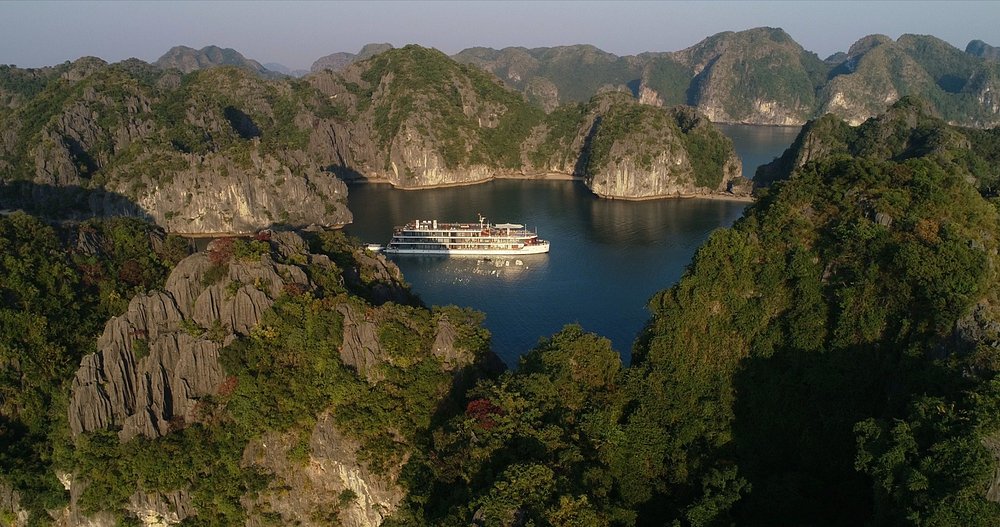
According to Dr. Pham Ha, Vietnam does not lack natural or cultural assets. With more than 3,260 kilometers of coastline, dense river systems, rich heritage, and a strategic geopolitical location, the country holds exceptional tourism capital.
What Vietnam lacks is structural execution.
“Tourism cannot grow sustainably through volume alone. It must grow through value. Luxury is not about excess — it is about cultural depth and experiential quality.”
River and Maritime Tourism: Vietnam’s Untapped Strategic Advantage
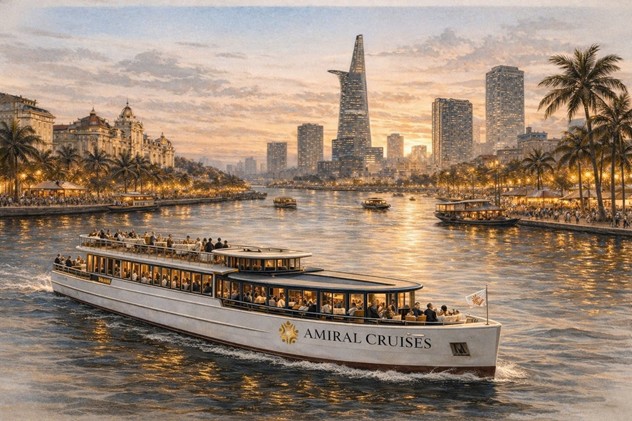
Vietnam is fundamentally a river–sea nation. Yet the country still lacks purpose-built cruise terminals that meet international standards. Many cruise ships dock at cargo ports or temporary facilities, limiting both visitor experience and spending potential.
Dr. Pham Ha argues that water-based tourism is not merely a product category; it is a new economic frontier.
To unlock this frontier, Vietnam must:
- Develop dedicated cruise terminals in major hubs such as Ha Long, Da Nang, Nha Trang, and Ho Chi Minh City
- Integrate seaports with airports and urban transport networks
- Build waterfront cities that combine tourism, culture, and commerce
- Modernize immigration and passenger logistics at maritime gateways
“We cannot promote Vietnam as a maritime destination if our cruise infrastructure remains improvised,” he emphasizes.
Cruise tourism represents high-spending visitors and strong spillover effects into hospitality, retail, cultural performance, and local supply chains. In the post-pandemic era, global cruise demand is rising again. Without proper infrastructure, Vietnam risks missing this wave.
Infrastructure Must Be Designed Around Traveler Behavior
Tourism growth cannot be separated from connectivity. Dr. Pham Ha stresses that infrastructure planning must shift from administrative logic to traveler-centric logic.
The connectivity challenge between Long Thanh International Airport and Tan Son Nhat International Airport requires high-speed transit solutions such as direct metro or express rail links. Similarly, efficient access between central Hanoi and Noi Bai International Airport is essential.
“If international passengers face complex or time-consuming transfers, we weaken our own competitiveness,” he notes.
Airports, cruise terminals, and metro systems should function as an integrated ecosystem serving both tourism and economic mobility.
Visa Policy: An Economic Instrument, Not Just a Procedure
Vietnam currently grants visa exemptions to roughly 26 countries and e-visas to around 80. Many ASEAN peers offer visa-free access to over 100 nations.
Following the pandemic, countries such as Singapore and Malaysia recovered rapidly by proactively reopening and simplifying entry procedures.
“Visa policy is an economic lever. If the door opens slowly, travelers choose other destinations. By the time we adjust, the opportunity may have passed,” Dr. Pham Ha explains.
He advocates expanding visa exemptions strategically for high-spending and MICE markets while maintaining national security safeguards.
Tour Operators and Global Promotion: Building Strong National Champions
Vietnam’s tour operator sector remains dominated by small and micro-sized enterprises, limiting their ability to penetrate major source markets.
For tourism to contribute 15% of GDP, Vietnam needs:
- Strong tour operator groups capable of global market expansion
- Long-term financing mechanisms and guarantee funds
- Public-private partnerships for overseas tourism promotion
- A sustained international presence beyond trade fairs and slogans
“Tourism cannot rely on fragmented promotion. It requires scale, consistency, and investment,” he says.
Night Economy: Culture as Economic Capital
Globally, up to 70% of tourist spending occurs after dark. Yet many Vietnamese destinations still lack compelling nighttime cultural products.
For Dr. Pham Ha, night economy development must be rooted in:
- Performing arts
- Heritage storytelling
- Culinary identity
- Creative urban spaces
“Luxury is culture. If our nights lack cultural substance, we diminish our own competitive advantage.”
Night economy growth demands coordination across culture, urban planning, commerce, and security authorities — not isolated efforts by tourism agencies alone.
Vision 2045: 45 Million International Visitors
Looking ahead to 2045, Dr. Pham Ha believes Vietnam can reach 45 million international arrivals if it undertakes bold reforms in infrastructure, visa policy, maritime development, and institutional flexibility.
In that vision, tourism becomes more than a service sector. It becomes:
- An on-site export industry
- A soft-power instrument
- A platform for showcasing Vietnamese culture globally
Vietnam does not lack rivers, seas, or heritage. It does not lack ambition.
What is required now is a decisive shift in governance mindset — from administration to facilitation, from quantity to value, from isolated projects to integrated ecosystems.
“Tourism does not ask for privilege,” Dr. Pham Ha concludes. “It asks for a competitive environment, coherent infrastructure, and the confidence to unlock Vietnam’s river–sea identity.”
If Vietnam succeeds in doing so, tourism can indeed become a core driver of double-digit growth and a pillar of national prosperity.