

There are places that dazzle at first glance — and there are places that reveal themselves slowly, layer by layer. The Gulf of Tonkin belongs to the latter.
Stretching across northeastern Vietnam, the Gulf cradles some of Asia’s most extraordinary seascapes: the limestone labyrinths of Lan Ha Bay and Ha Long Bay, the forested highlands of Cat Ba Island, and a network of fishing communities that have lived by tide and moon for generations.
For decades, travelers came here for a single night — a postcard cruise through mist and karsts. But today, a different rhythm is redefining the region. A 4 days, 3 nights expedition aboard Heritage Cruises Binh Chuan, a small giant of LuxGroup, has quietly become one of the most immersive ways to experience the Gulf of Tonkin — not as a stopover, but as a destination in its own right.
This is not sightseeing.
It is inhabiting a landscape.
A Seascape Sculpted by Time
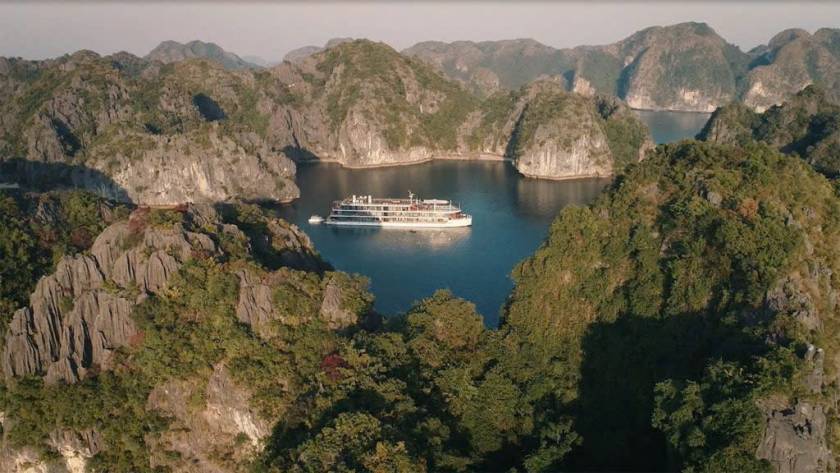
The limestone towers rising from these emerald waters are the result of geological processes that began over 500 million years ago. Wind, rain, and tidal erosion hollowed caverns into cathedral-like chambers; tectonic uplift thrust vertical cliffs skyward in improbable formations.
Ha Long Bay may be the global icon — a UNESCO World Heritage Site known for cinematic silhouettes — but Lan Ha Bay, just to its south, offers a quieter counterpoint. With fewer cruise vessels and a more intimate geography, Lan Ha feels contemplative. Its lagoons are narrower, its beaches more secluded, its anchorages more private.
From the deck of a heritage-inspired vessel, sunrise unfolds in near silence. Mist drifts through karst valleys. Light fractures against water and stone. With three nights at sea, travelers witness not just one golden hour, but the entire choreography of dawn, noon, and dusk across shifting horizons.
Time becomes part of the luxury.
The Island at the Heart of It All
At the center of this seascape lies Cat Ba Island — rugged, biodiverse, and surprisingly untamed.
Protected within Cat Ba National Park, a UNESCO Biosphere Reserve, the island shelters dense tropical forests, mangroves, coral ecosystems, and rare wildlife. Trekking through the jungle reveals an entirely different Vietnam: cicadas humming in the canopy, limestone outcrops wrapped in vines, and ridgelines opening onto panoramic bay views.
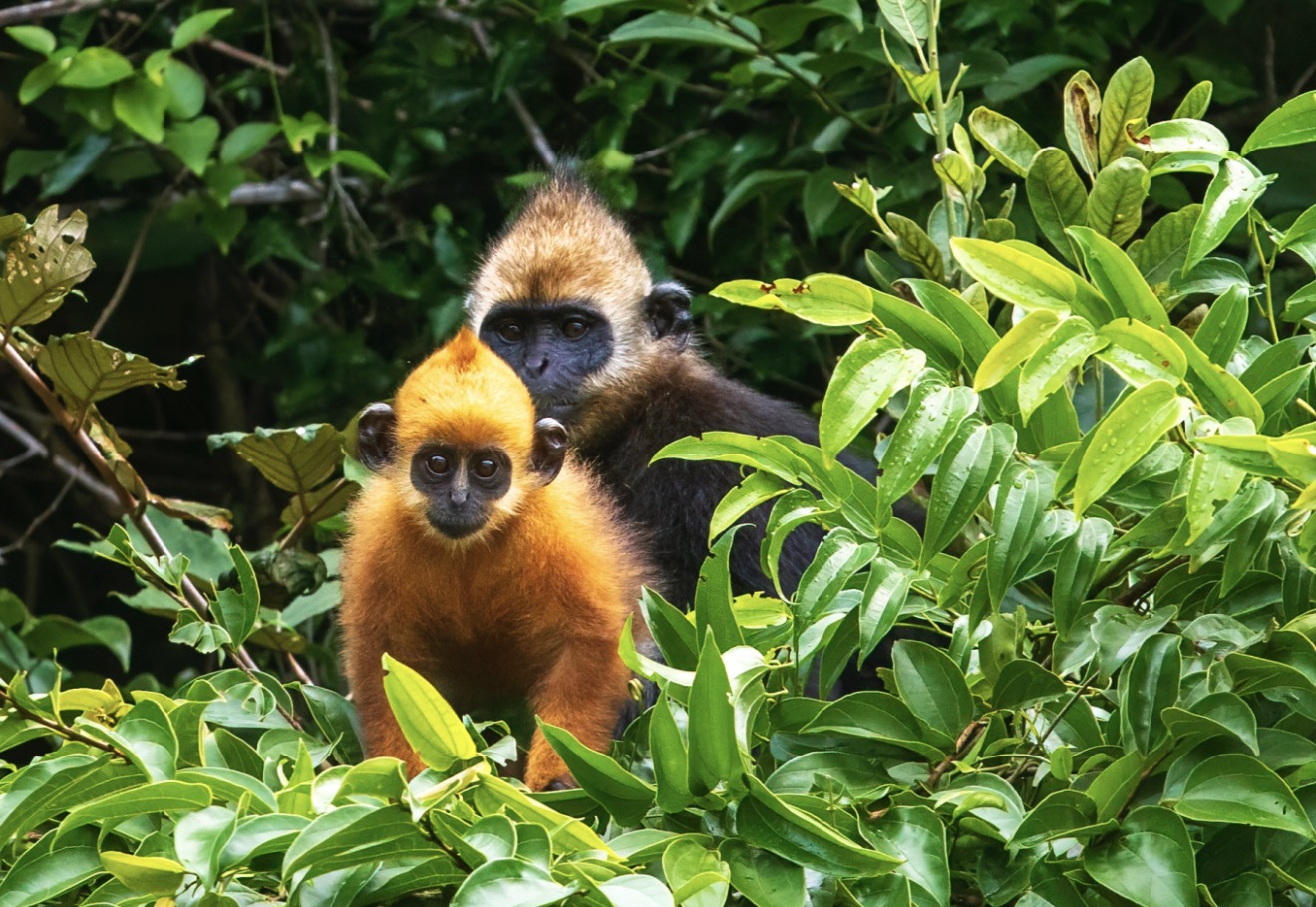
Among the island’s most extraordinary inhabitants is the critically endangered Voọc Cát Bà — the golden-headed langur found nowhere else on Earth. With fewer than a hundred remaining in the wild, this elusive primate symbolizes both the fragility and resilience of the archipelago. Even without a sighting, the awareness of its presence transforms the cliffs into something more than scenery.
Travel here becomes ecological awareness.
Inside the Cliff: Trung Trang Cave
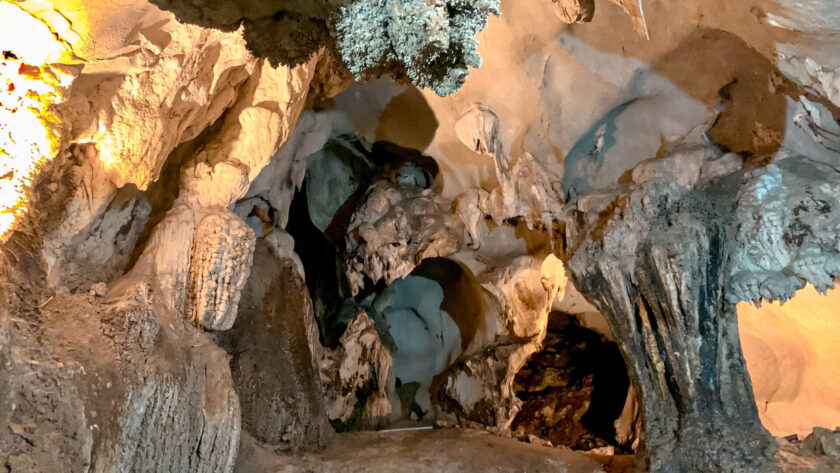
Deep within Cat Ba’s forested interior lies Trung Trang Cave, a 300-meter limestone corridor carved through the heart of a mountain.
Entering the cave feels like stepping into geological memory. Stalactites descend in mineral cascades; stalagmites rise like ancient sentinels. Shafts of filtered jungle light illuminate chambers shaped over millennia.
Unlike more trafficked cave systems elsewhere in the bay, Trung Trang retains a raw stillness. It reminds visitors that the Gulf of Tonkin is not merely a marine spectacle. It is a multi-layered organism — sea, cliff, forest, cavern — interconnected and alive.
With an extended expedition, guests have the luxury of absorbing each dimension.
Life Between Tides
The 4D3N journey extends beyond nature into culture.
Cycling toward Viet Hai Village reveals a settlement cradled by mountains and sea, where agriculture, fishing, and daily rituals continue at an unhurried pace. In Cat Ba Town, markets pulse with seafood fresh from dawn catches, tropical fruits stacked in vibrant pyramids, and traditional cakes still warm from morning kitchens.
At fishing ports and family-run fish sauce workshops, guests encounter Vietnam’s maritime heritage firsthand. Barrels of fermenting anchovies line shaded courtyards. Salt, sun, and patience produce nước mắm — the culinary backbone of Vietnamese cuisine. The aroma is strong, authentic, unmistakably local.
These are not curated spectacles. They are working environments sustained by tide and trade.
The sea here is not decoration.
It is livelihood.
The Art of Slowness at Sea
What distinguishes three nights is not merely duration — it is depth.
Two nights allow you to see the bay.
Three nights allow you to feel it.
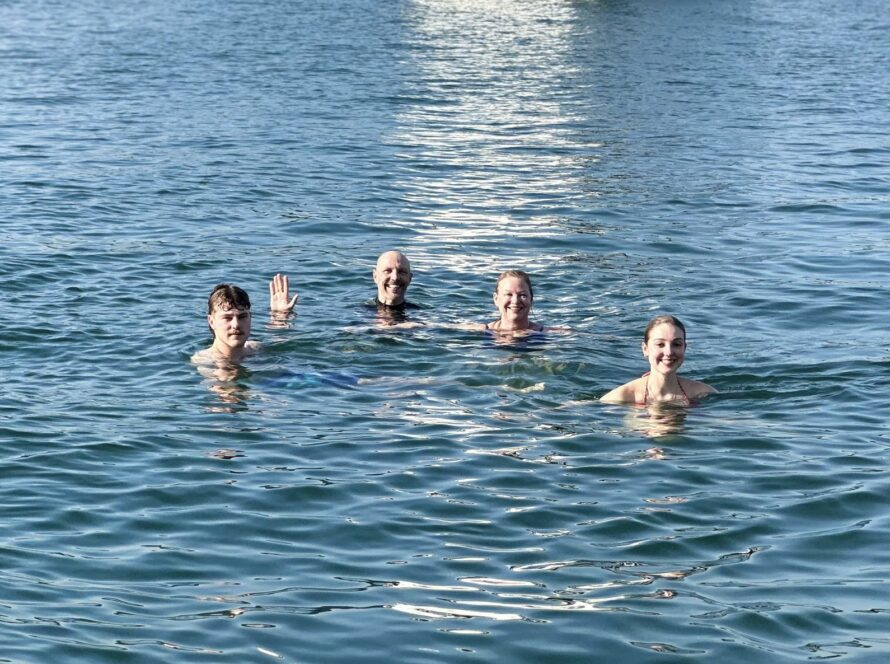
Kayaking into hidden lagoons becomes meditative rather than hurried. Swimming at secluded beaches unfolds without pressure. Sunrise Vovinam or tai chi on deck becomes ritual rather than activity. Cooking demonstrations evolve into shared culinary storytelling.
The vessel itself operates at boutique scale. Spacious suites, ocean-facing bathtubs, Indochine design sensibilities, and a high crew-to-guest ratio create intimacy rather than spectacle. Service feels relational — guests often recall crew members by name, a subtle but powerful measure of hospitality.
On certain sailings, with fewer than a dozen travelers onboard, the experience feels almost private — as if the limestone seascape were momentarily yours alone.
 A
A
Gulf Reframed
For years, the Gulf of Tonkin has been marketed as a highlight — a luminous stop on a broader Vietnam itinerary.
But a highlight implies brevity.
A single bright moment.
The 4D3N Heritage Expedition reframes the Gulf as a narrative arc.
It is geology and biodiversity.
It is jungle and coral reef.
It is fishing port and forest trail.
It is cave chamber and sunrise deck.
It is Vietnam’s northern maritime identity in motion.
In an era when travelers increasingly seek meaning over mileage and sustainability over spectacle, this slower approach resonates. Extended itineraries distribute tourism more responsibly, deepen engagement with local communities, and reduce the rushed cadence of short-format cruises.
For the Modern Traveler
There is a quiet distinction emerging in global travel.
Tourists collect images.
Travelers collect understanding.
In the Gulf of Tonkin, understanding comes from watching tides shift across three mornings, from cycling through a village path rather than driving past it, from tasting fish sauce at its source, from standing inside a cave carved long before human memory.
A 4-day, 3-night expedition is not about adding more excursions.
It is about granting the landscape time to speak.
And when it does — in the hush of Lan Ha’s anchorages, beneath the canopy of Cat Ba’s forests, inside the limestone corridors of Trung Trang — the Gulf of Tonkin reveals itself not as a backdrop, but as a living system.
For those willing to stay longer, the reward is rare:
not simply a cruise,
but a relationship with the sea.