

Trekking through rainforest, crossing rivers, spending three nights underground, swimming in a cold subterranean river and climbing the Great Wall of Vietnam taught me that Son Doong is not a place to prove how strong we are. It is a journey into fear, adaptation, trust, teamwork—and the quiet conviction that says: “I can do this.”
By Dr. Pham Ha – Founder & CEO, LuxGroup
I entered Son Doong as someone who has spent more than two decades in travel and has been fortunate enough to experience extraordinary places around the world. I emerged feeling remarkably small. Before the expedition, I too spoke about “conquering” Son Doong. After days of trekking through rainforest, wading across streams, scrambling over rocks and sleeping beneath the Earth, I no longer believe the cave needs to be conquered. Instead, it repeatedly asked me one deceptively simple question: Can you take one more step?
The challenge begins before the cave
Son Doong is no ordinary trek. The expedition involves approximately 25 kilometres of mountainous jungle terrain, around 50 river and stream crossings, eight kilometres of cave exploration and three nights camping underground. Explorers descend roughly 90 metres into the cave before eventually facing another 90-metre technical ascent at the Great Wall of Vietnam. It is classified at the highest difficulty level in the expedition operator’s system.
The numbers sound impressive before departure. They become real only when your legs begin to feel every metre: slippery rock, mud, water, steep slopes and constantly changing terrain. Son Doong tests endurance, but it also tests concentration, patience and the ability to remain calm.
Hang En — the first reward
From Km35, we descended the rugged Ba Gian slopes, trekked through primary rainforest, crossed streams and passed Ban Doong, home to a small Bru–Van Kieu community, before continuing towards Hang En. By the end of that first day, I understood that strength alone would not carry me through the expedition. Rhythm, energy management and patience mattered just as much.
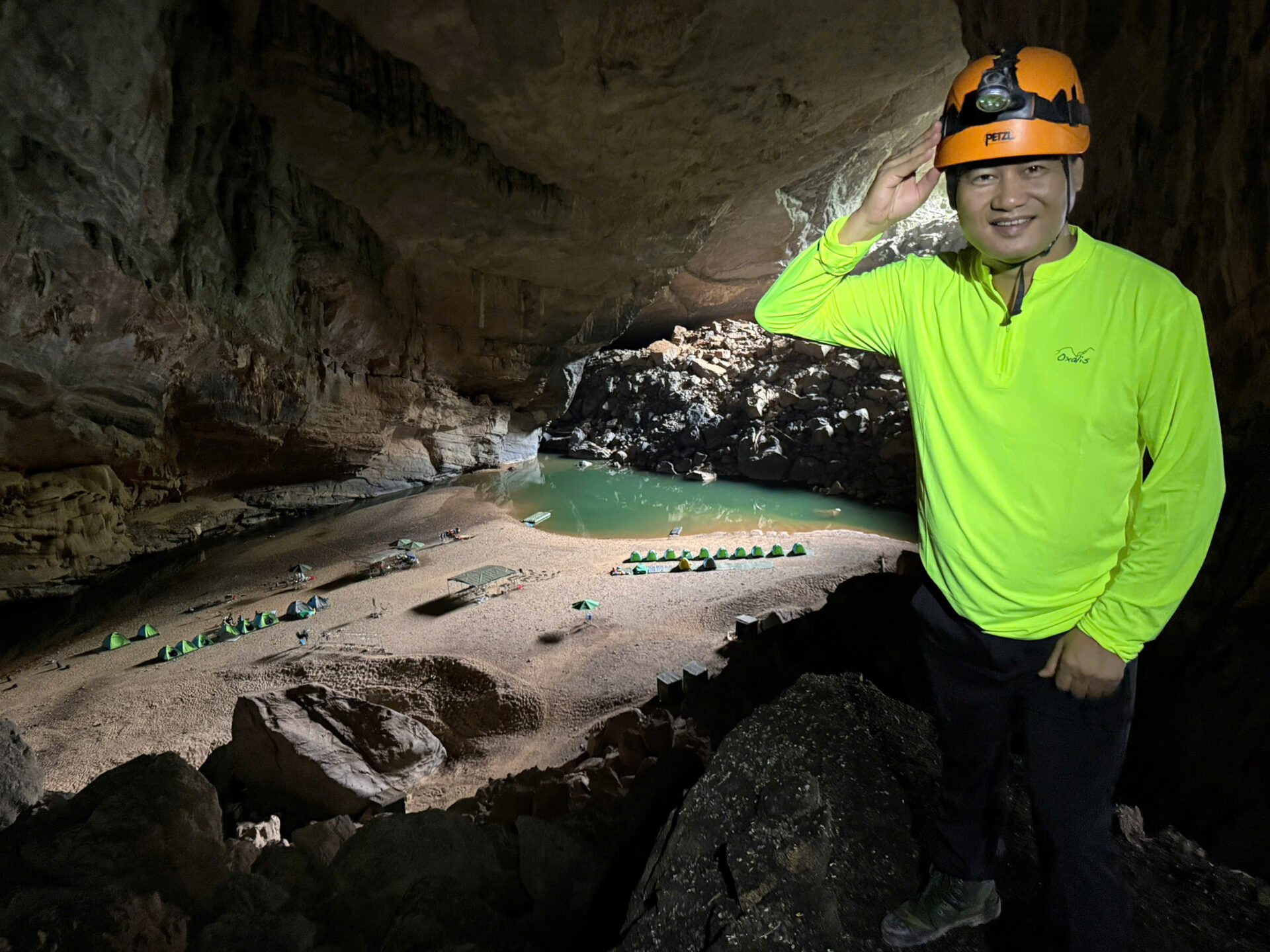
Then Hang En appeared like a reward. Its enormous entrance opened above a sandy campsite, with swifts overhead and a beautiful pool beside the camp. After hours of sweat, mud and steep terrain, entering that cool water felt like pure luxury. No spa. No infinity pool. Just a tired body, pristine water and enough time to appreciate both.
Following the water, I thought about Ho Khanh
Leaving Hang En for Son Doong, we followed streams through dark rocks polished by water. Sometimes the current was visible; sometimes it disappeared while the sound of water continued somewhere beneath the stone.
I thought of Ho Khanh, the local forest man who discovered Son Doong’s entrance in 1990 and later helped the British-Vietnamese cave exploration team return to survey it.
tour_tham-hiem-son-doong-4n3d.pdf
Walking through that landscape made the story easier to understand. Forest hides forest. Rock follows rock. Water appears and disappears. Even an enormous cave entrance can vanish within the Truong Son wilderness. Scientific expertise and equipment were indispensable, yet rediscovering one of the world’s great natural wonders also depended on something technology could not replace: a local man’s intimate knowledge and memory of his forest.
Black rock, white water and millions of years
Some of the scenes I remember most have no famous names: black boulders surrounded by rushing white water, dense rainforest overhead and tiny human figures carefully negotiating stone and stream.
Nothing had been arranged for us. Rocks were not positioned for beauty. Sand had not been levelled for comfort. Rivers did not change direction for our convenience.
At times I looked at a black boulder beside the water and wondered whether this landscape might have looked surprisingly similar millions of years ago.
We were the temporary element.
The forest, water and stone were not.
Against that scale of time, the human desire to “conquer” nature suddenly felt strangely misplaced.
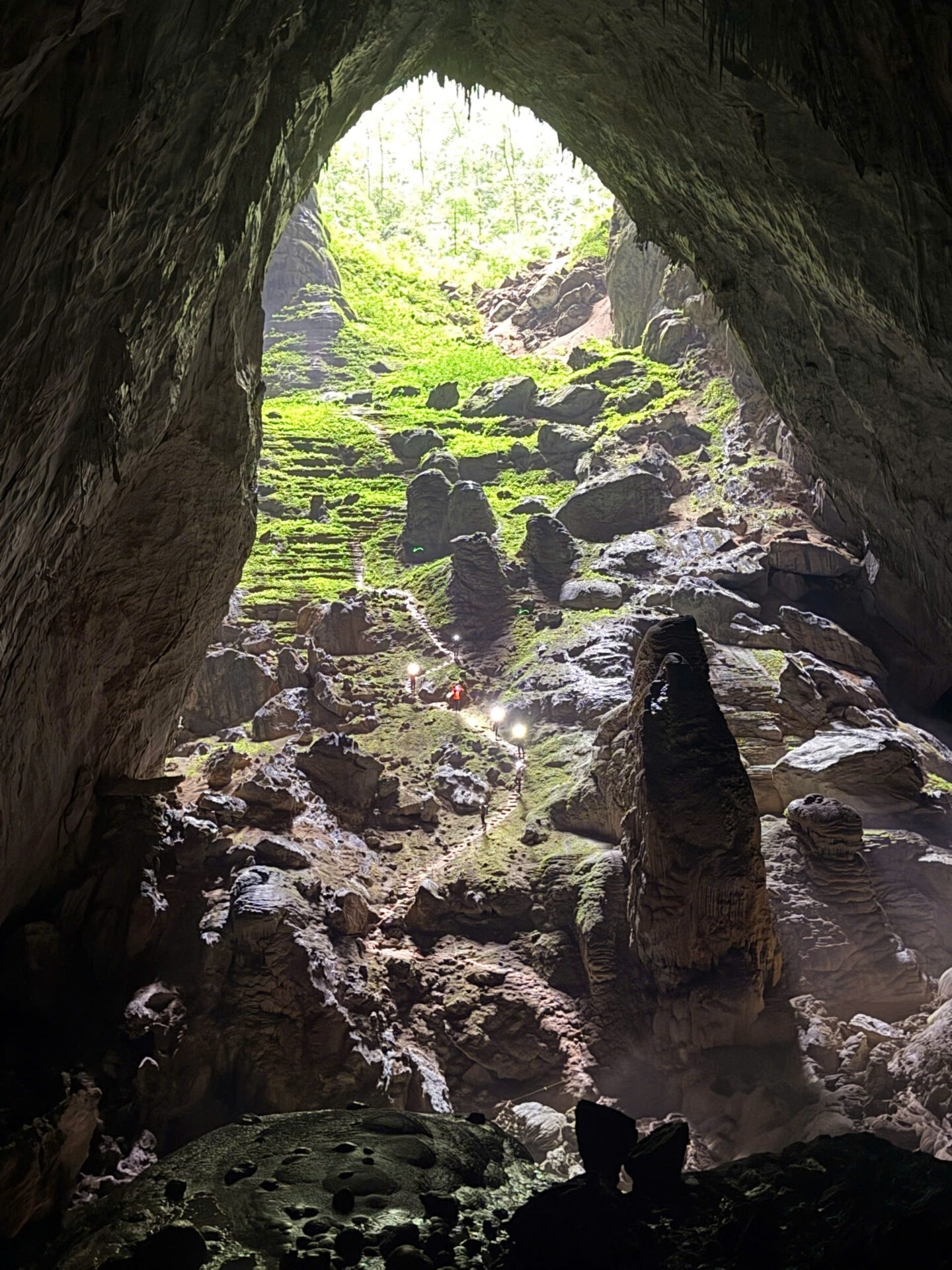
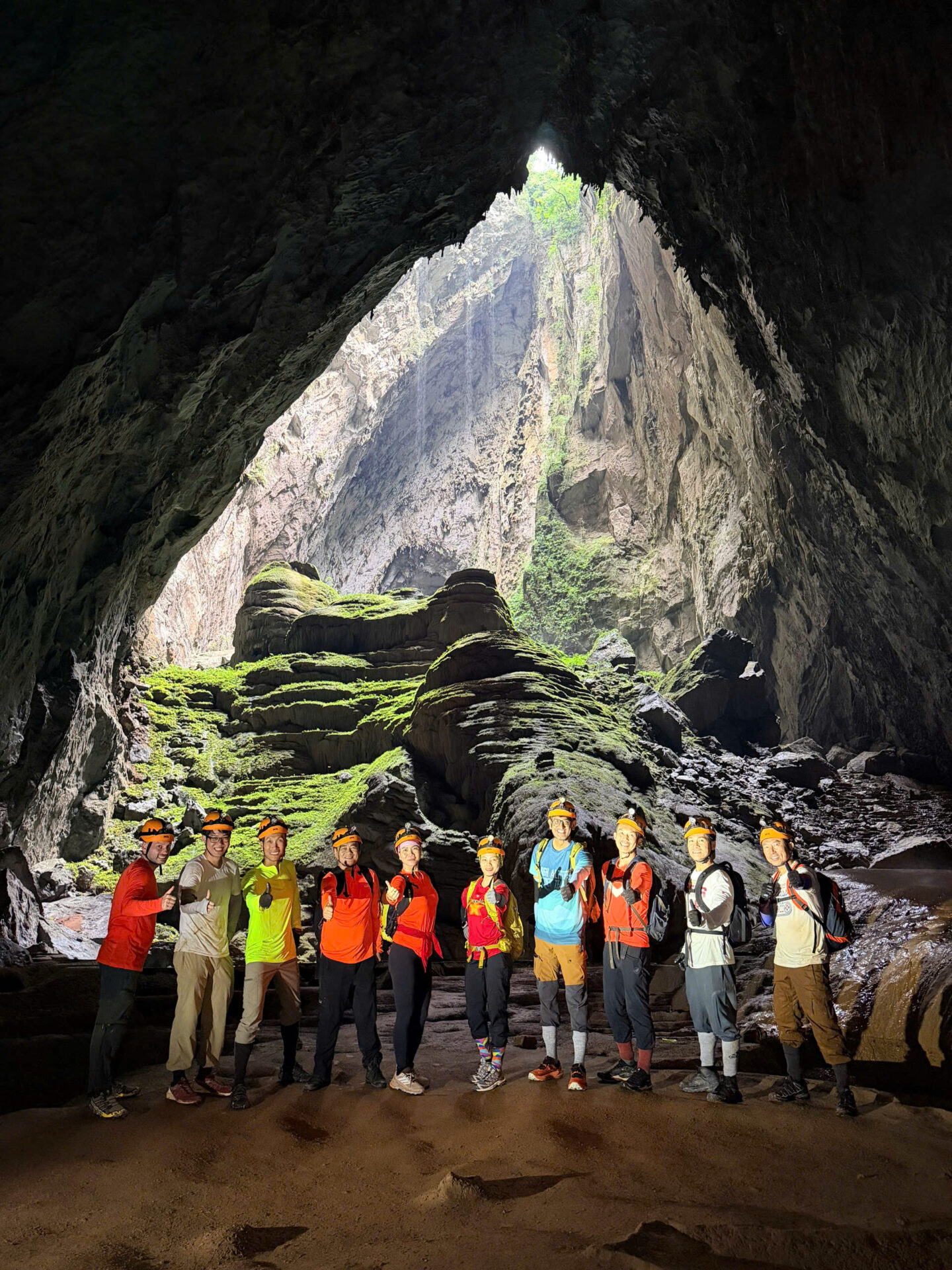
Ten explorers, nearly thirty people behind us
One of my strongest memories of Son Doong is not geological. It is human.
Our small group was supported by nearly 30 people: guides, cave and safety specialists, rangers, chefs and porters. Dat was our guide, while Dai was responsible for technical safety. I cannot remember every name, but I remember Phuc, Luan and Hai because they were often nearby, quietly warning me before difficult sections.
“Careful, it’s slippery.”
“Step here.”
“Slow down—the next section is dangerous.”
Sometimes they saw the danger before I did.
Their professionalism taught me something simple: genuine care is often the ability to recognize what another person needs before they have to ask for it. The explorer may appear in the photograph, but an entire team makes that photograph possible.
Inside Son Doong, humans return to their proper scale
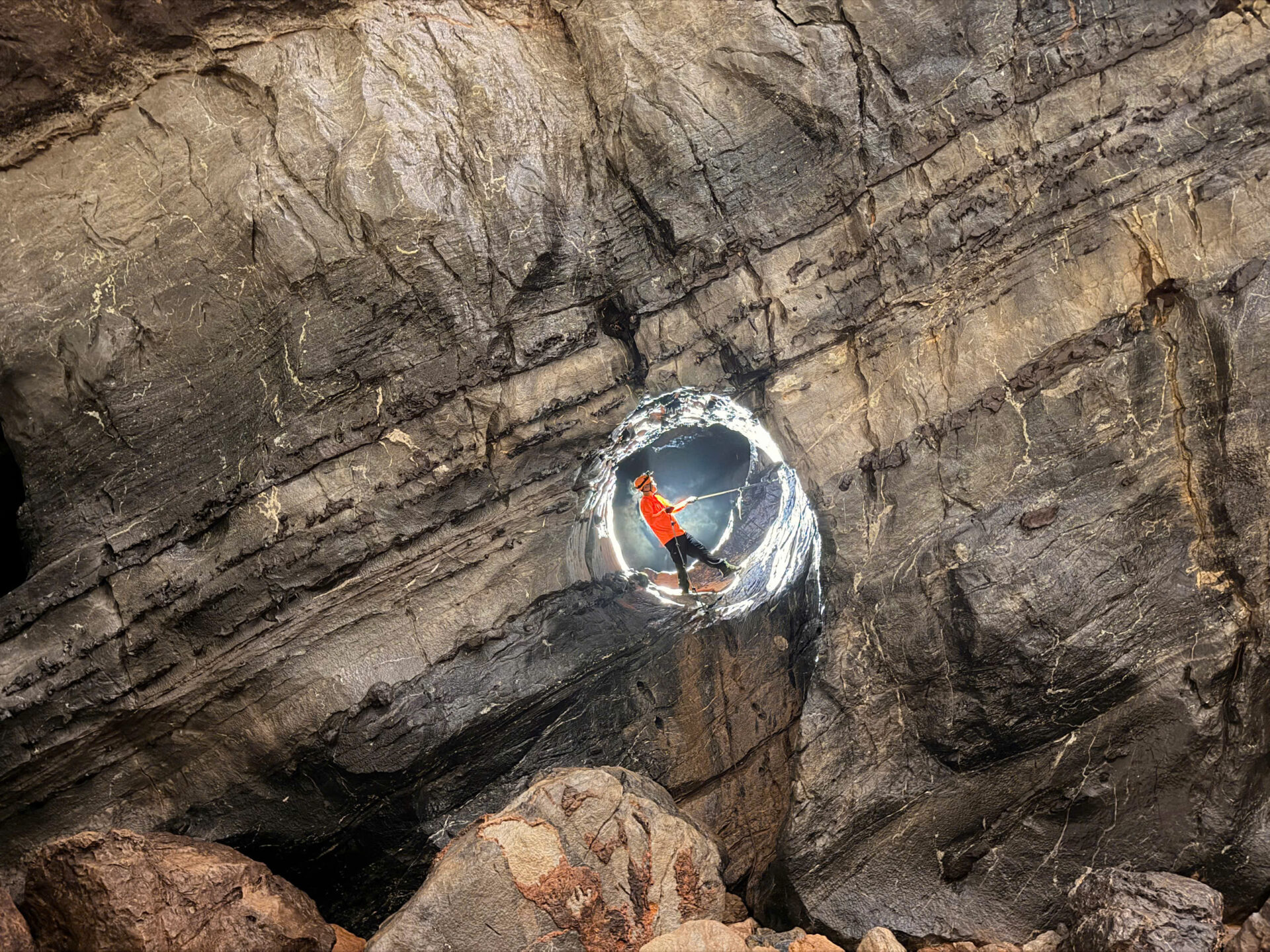
Before descending into Son Doong, every harness and piece of equipment was checked. Then the temperature changed. Cool air and mist emerged from the darkness as natural light gradually surrendered to our headlamps.
Inside, familiar scale disappeared.
Walls became enormous. Explorers ahead shrank into points of light. We crossed underground rivers, scrambled over giant boulders and moved through landscapes that seemed almost too large to belong beneath a mountain.
Sometimes I concentrated entirely on my next foothold. At other moments, I simply stopped.
Not because I was too exhausted to continue.
Because I was astonished.
In daily life, human beings constantly try to make themselves bigger.
Son Doong does the opposite.
It returns us to our proper scale.
A river inside a mountain
Water fascinated me throughout the expedition. There are streams in the forest and rivers beneath the mountain. In places, water disappears from sight without actually disappearing; it simply continues through cracks, limestone and subterranean passages.
I began thinking of Son Doong in one image:
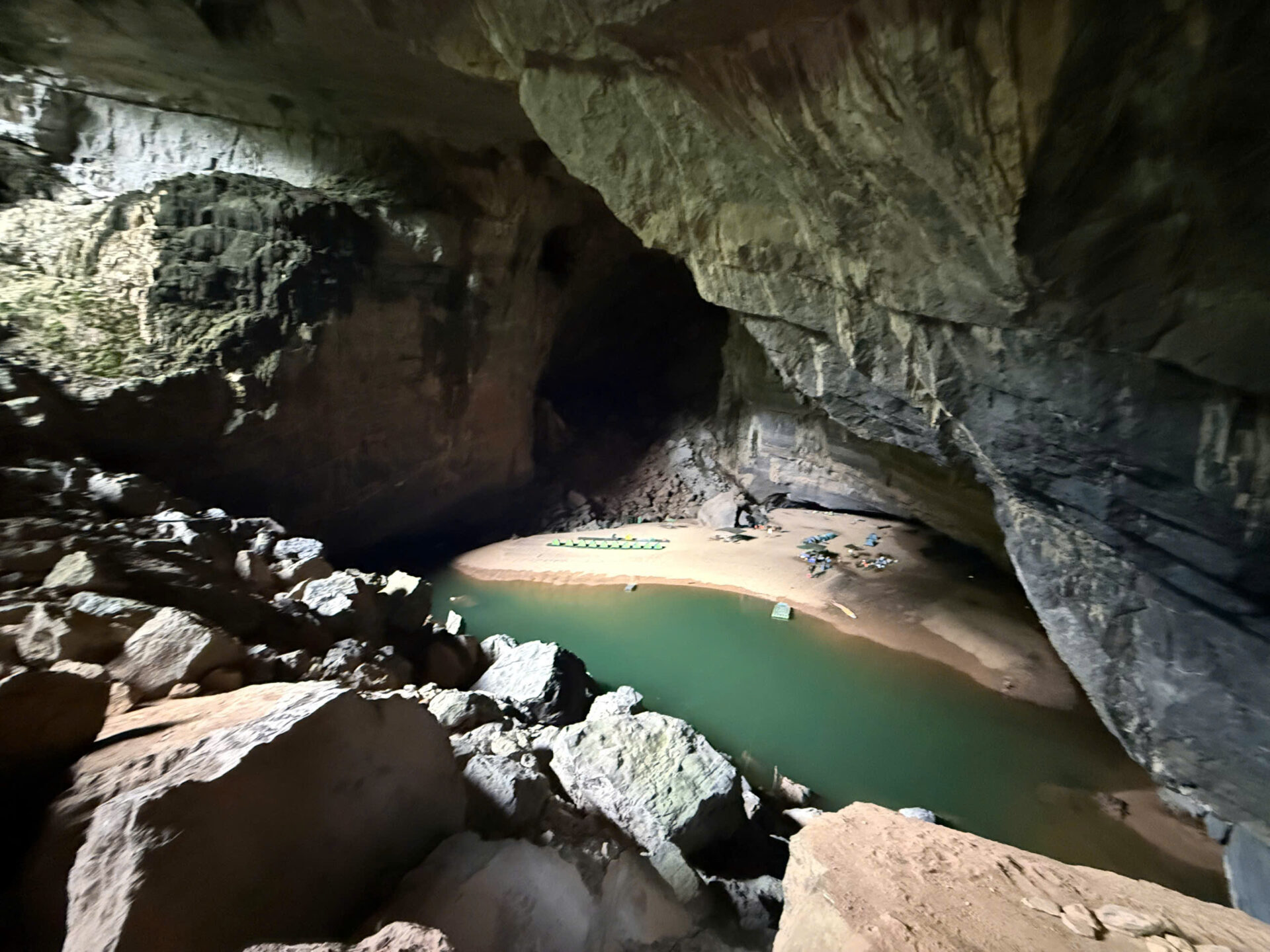
A river inside a mountain.
Limestone. Earth. Sand. Water. Time.
Together they tell a story stretching across geological ages. Fossils, sediments and traces of ancient waterways transform parts of the cave into a history book without words.
In a museum created by humans, objects sit behind glass and labels tell us their age. In Son Doong, the mountain itself is the museum. Stone is the exhibit. Time is the curator.
Humanity appears only in the final pages of Earth’s immense story.
Life does not defeat darkness — it adapts
The cave also reveals another remarkable lesson. Life exists even in environments with little or no light, including highly adapted cave organisms.
That fascinated me because survival here is not necessarily about defeating the environment.
It is about adapting to it.
On one side are immense chambers created through geological time. On the other are tiny organisms quietly finding ways to survive in darkness.
Son Doong therefore reveals two extraordinary powers of nature: the ability to create and the ability to adapt.
Perhaps resilience does not always mean becoming stronger.
Sometimes resilience means knowing how to change.
Doline One — when light becomes a wonder
Reaching Doline One requires concentration. There are narrow passages, wall traverses and steep sections protected by safety ropes. The body keeps working while the mind must remain calm: look, listen, place the foot, balance, then move.
And then comes light.
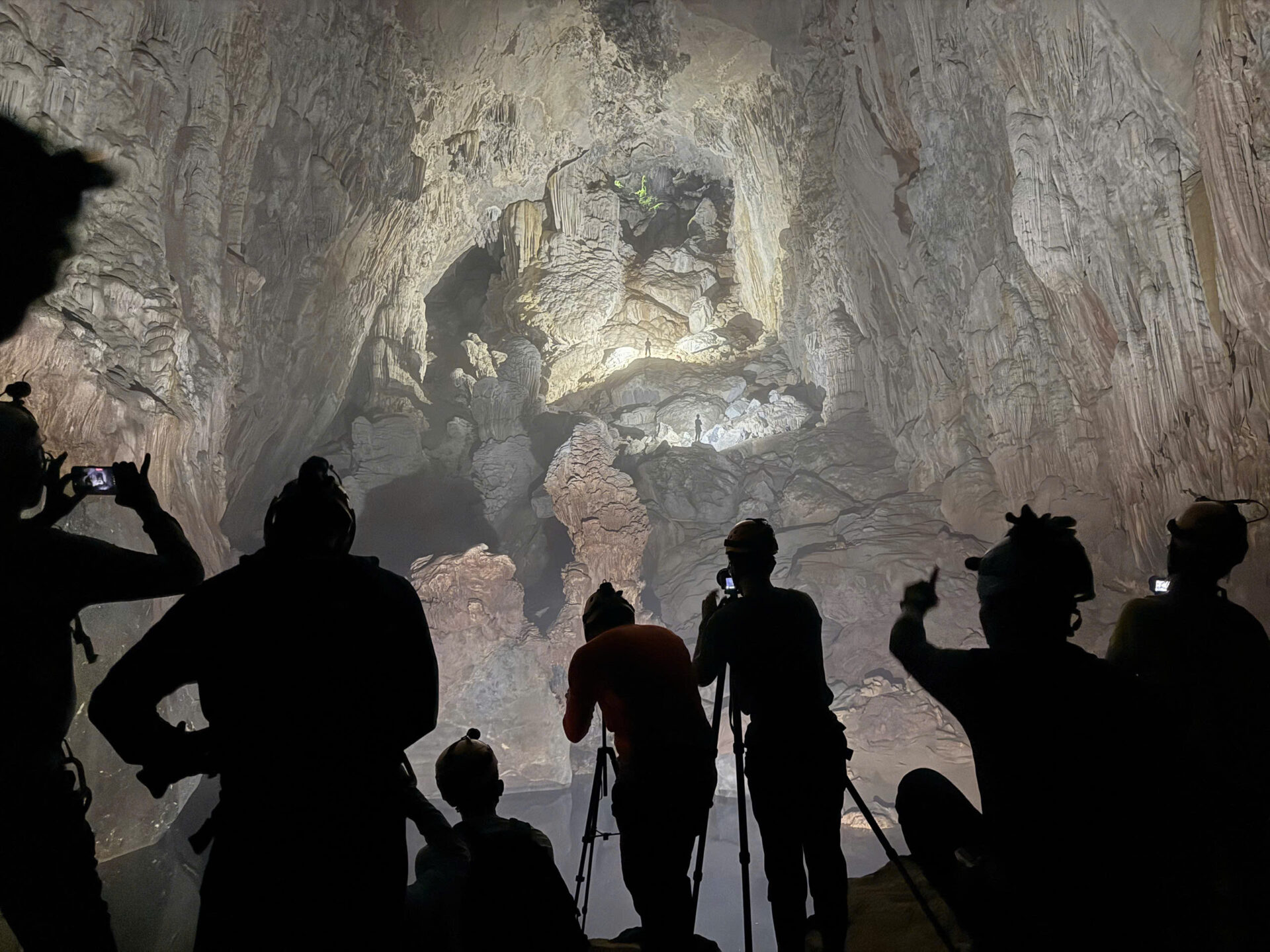
Sunbeams descend through the doline, illuminating mist, limestone and the famous Wedding Cake formation. The immense chamber becomes a natural theatre. Under the right seasonal conditions, the beams create some of Son Doong’s most celebrated photographic moments.
I understood why photographers dream of returning simply to witness another configuration of light.
They are not merely photographing a cave.
They are waiting for nature to paint with light.
Swimming underground in trekking clothes
One of my happiest memories was surprisingly simple: swimming.
After a day of scrambling over rocks, crossing streams and trekking through mud, I entered the cold underground river still wearing my trekking clothes.
The first sensation was shock.
Then complete alertness.
Then exhilaration.
I swam beneath the mountain and felt the day’s sweat and exhaustion disappear. My clothes were soaked, but I felt refreshed and almost new again.
Son Doong is not four days of uninterrupted hardship. Between the difficult sections are laughter, friendships, warm meals and unexpected moments of happiness.
Great adventures require challenge.
The best ones also leave room for joy.
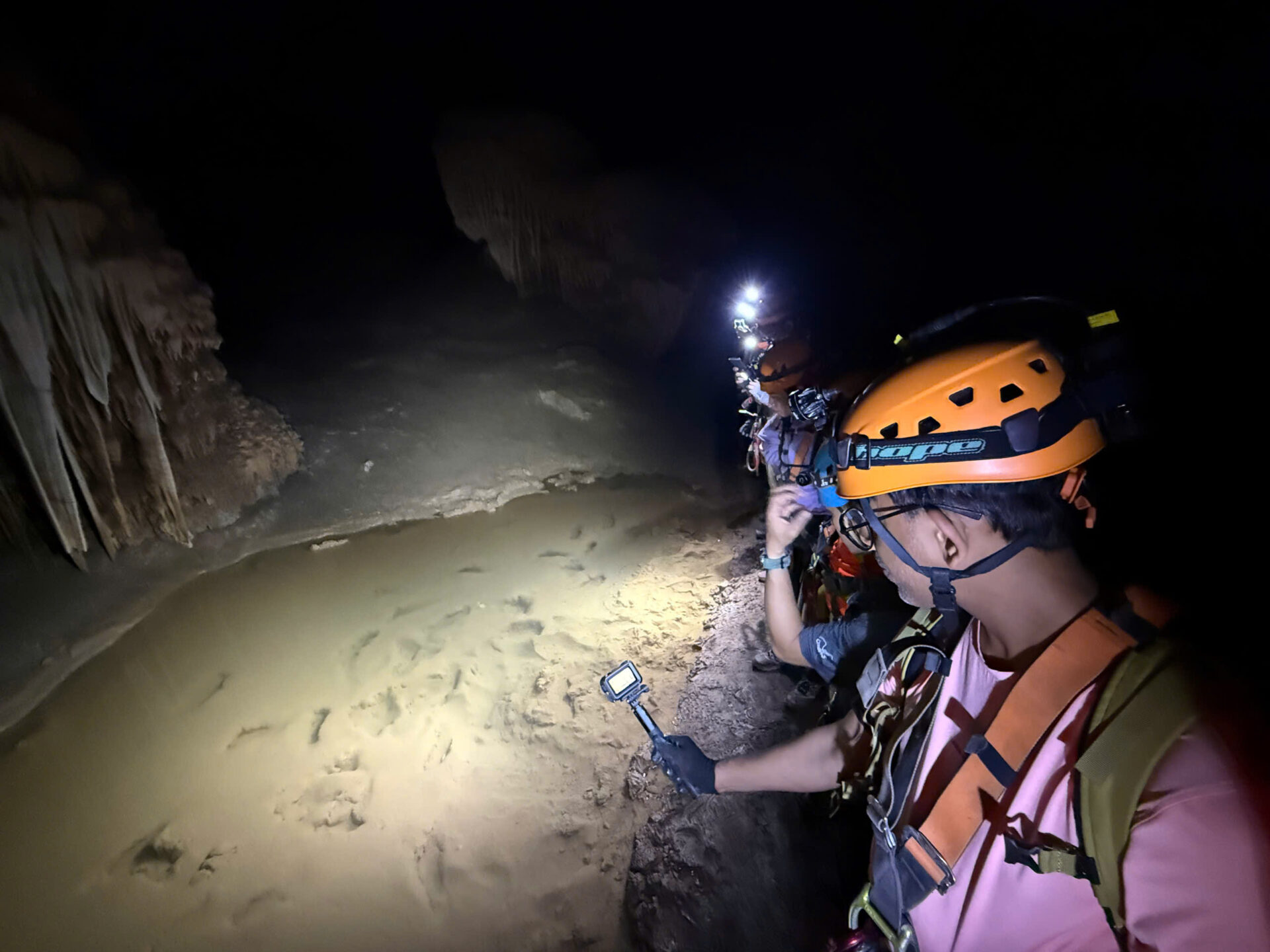
Between two beautiful photographs lies a great deal of sweat
Photographs can make Son Doong appear like an uninterrupted sequence of extraordinary landscapes. Anyone who has walked through it knows differently.
Between two beautiful photographs are hundreds of steps, slippery rocks, narrow passages, steep sections and long periods of concentration.
The route between Doline One and Doline Two was one such section. Eventually we reached viewpoints where sunlight poured into the enormous cave.
Above ground, sunlight is so ordinary that we rarely notice it.
After hours underground, a single beam can stop an entire group.
The light had not changed.
We had.
The Garden of Edam — a forest beneath a mountain
Doline Two brought us to the Garden of Edam.
After darkness, stone and technical terrain, a rainforest emerged underground. Vegetation, humidity, birds, mist and natural light coexist in a place the mind knows is a cave while the eyes insist is a forest.
You know there is a mountain above you, yet you see clouds.
You have walked for hours underground, yet suddenly you hear birds.
That contradiction is part of its magic.
Our campsite provided another, far less glamorous adventure: there was no convenient stream for bathing as at the previous camp.
So we had a dry wash.
And laughed.
Adventure is not always heroic.
Sometimes it simply means adapting to what is available—and enjoying it anyway.
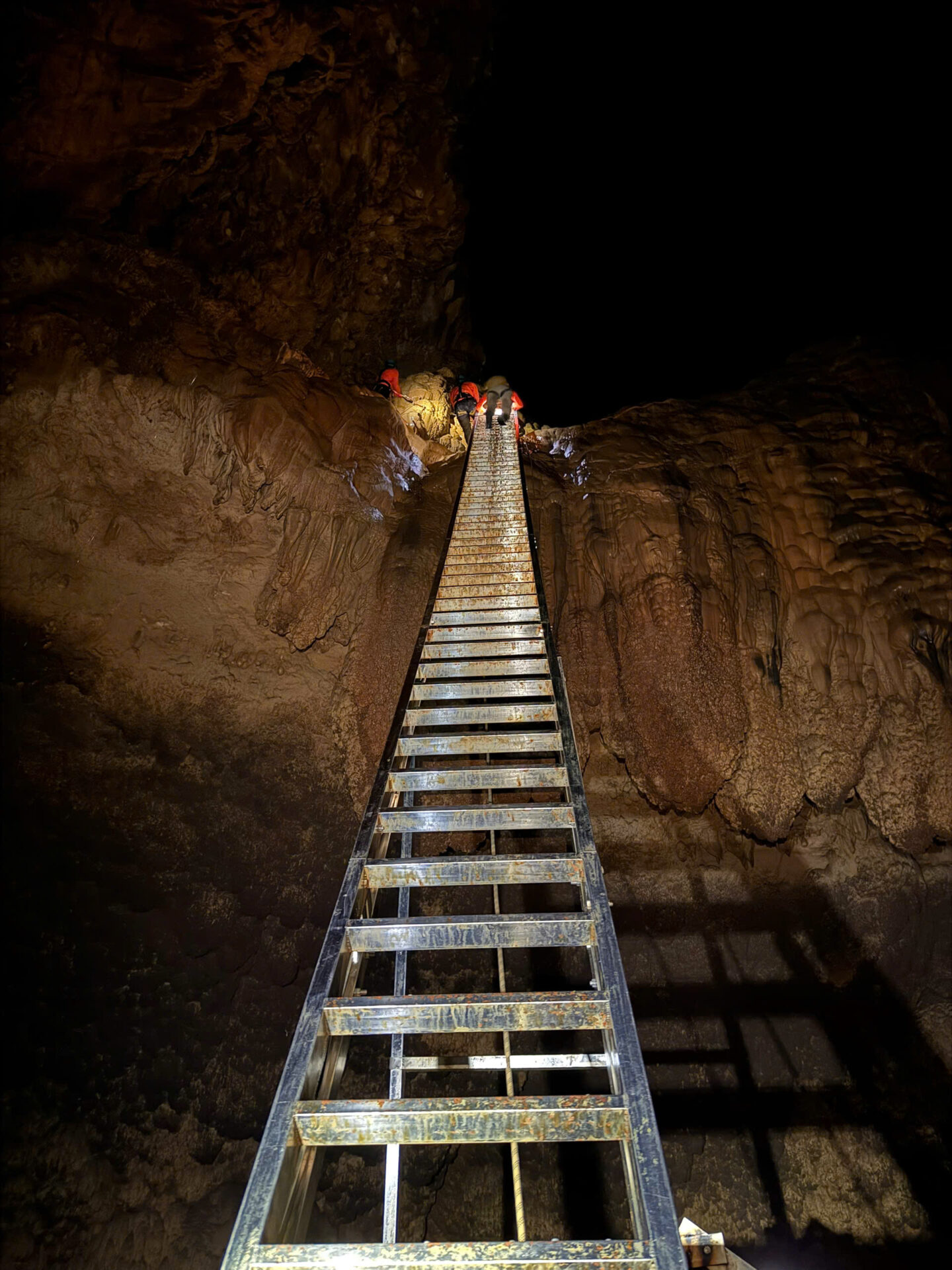
The final 90 metres
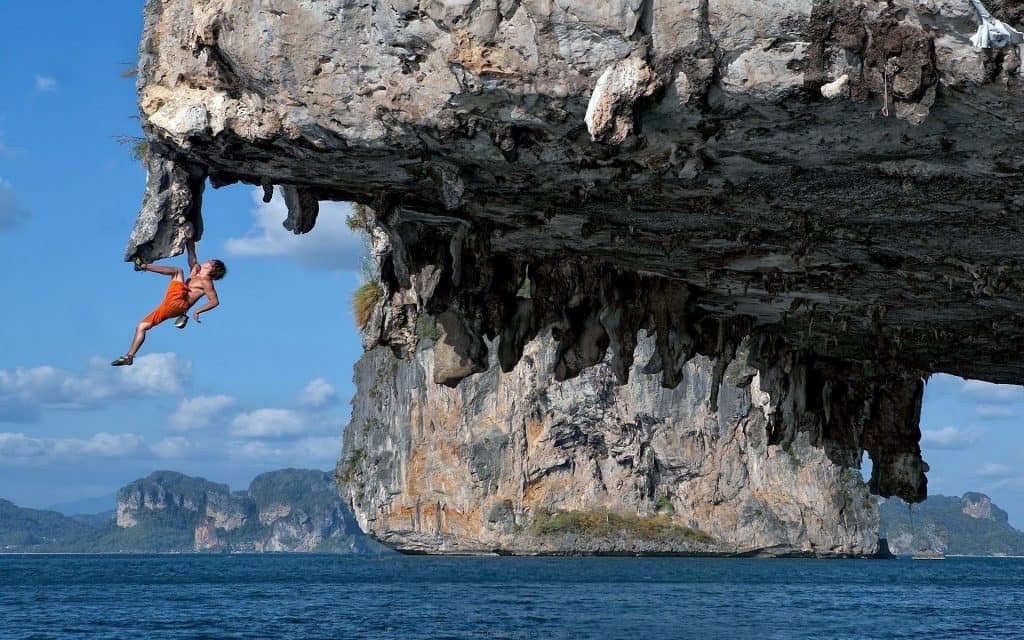
The Great Wall of Vietnam was our final major challenge. The ascent includes an approximately 18-metre steel ladder followed by more than 70 metres of steep limestone using ropes, harnesses and technical safety systems.
tour_tham-hiem-son-doong-4n3d.pdf
Looking at the entire 90 metres from below was one thing.
Putting my foot on the first rung was another.
At that moment, titles and professional achievements meant nothing. They could not lift my leg onto the next step.
There was only one rung.
One breath.
One foothold.
Then another.
I stopped thinking about 90 metres.
I thought only about the next step.
“I can do this.”
Some challenges become frightening because we try to carry their entire scale in our minds.
The Great Wall taught me another approach.
Do not climb 90 metres.
Climb one metre.
Then another.
I told myself:
I can do this.
One more step.
I can do this.
Again.
The can-do spirit is rarely created by grand declarations. It is built through hundreds of small decisions not to quit at this particular moment.
Eventually, enough small steps accumulate.
And the obstacle that once towered above you is behind you.
No victory truly belongs to one person
When daylight gradually returned, my strongest emotion was not pride.
It was gratitude.
Gratitude that my body had carried me through. Gratitude to Dat, Dai and the safety team. Gratitude to Phuc, Luan, Hai, the porters, chefs, rangers and all the people whose names I cannot completely remember but whose actions I will.
I could walk alone.
But I could never have experienced this expedition alone.
Look at a photograph from Son Doong and you may see one explorer standing before a natural wonder.
Outside the frame stands an entire team.
Often, the people missing from the photograph are precisely the reason the photograph exists.
The greatest victory was not at the top
I entered Son Doong hoping to complete one of the great journeys of my life.
I emerged with a different definition of victory.
Victory is not being the fastest.
It is not being the strongest.
It is certainly not being fearless.
Victory is remaining calm enough to place your foot correctly when you are tired. It is accepting a hand when you need one. It is trusting the person beside you. It is knowing when to keep moving and when to wait for someone behind.
And it is looking at a 90-metre challenge without carrying all 90 metres in your mind.
Just the next step.
Then the next.
Son Doong existed for millions of years before I arrived. It did not change because I passed through it.
I did.
I once thought the great expedition was entering the world’s largest cave. After emerging, I understood that the harder expedition happens somewhere within ourselves—through fear, exhaustion, uncertainty and the limits we once believed were fixed.
I was tired.
At times, I was afraid.
There were moments when I had to stop, study the next foothold and ask whether I could continue.
But I did.
And when daylight finally returned, the answer was beautifully simple:
I can do this.
But perhaps the greater truth was this:
Together, we did.