

Inside Son Doong, I Discovered a Definition of Luxury That Five-Star Comfort Could Never Give Me
By Dr. Pham Ha
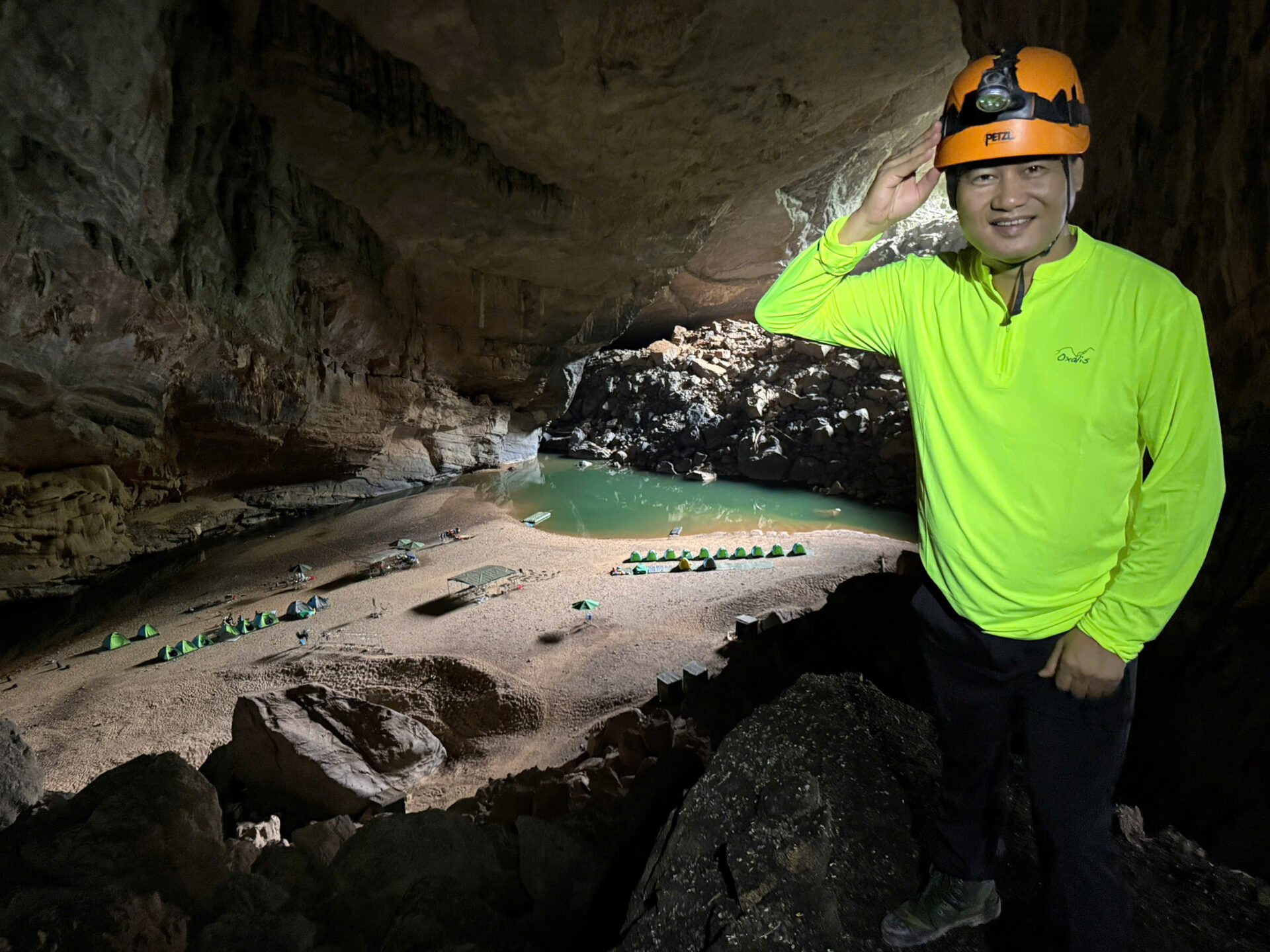
The first thing I felt at the entrance to Son Doong was not awe, but cold air rising from the darkness below. Behind me were days of trekking through rainforest, crossing rivers, and a night beneath the immense ceiling of Hang En. Ahead lay the world’s largest natural cave, a place I had imagined for years but could never truly understand until I stood at its entrance. Harnesses were checked, helmets tightened, and the safety team reviewed the descent one final time. Then I stepped inside. Within minutes, every familiar sense of scale from the outside world began to disappear.
The people ahead became tiny points of light. Colossal limestone formations emerged from the darkness. Underground rivers crossed the cave floor, while the ceiling rose so high that ordinary ideas of size seemed meaningless. I had come to Son Doong expecting one of the greatest adventures of my life. I did not expect it to change the way I thought about something I had spent more than two decades working with: luxury. I had long associated luxury with having more. Son Doong taught me that, at a deeper level, luxury can begin with learning to need less.
Where Comfort Ends, Experience Begins
I know the traditional vocabulary of luxury travel well: suites, spas, fine dining, private transfers, privacy, personalization, and the ability to anticipate a guest’s needs before they are expressed. Son Doong offers almost none of these familiar symbols. There is no marble lobby, minibar, room service or Wi-Fi, and for days there is barely a mobile signal. Instead, there are approximately 25 kilometres of mountainous jungle terrain, dozens of river and stream crossings, long hours over rock, mud and water, three nights underground, and the final challenge of the Great Wall of Vietnam.
In traditional luxury, money is often used to eliminate inconvenience. We pay more to wait less, walk less, worry less and have someone else solve difficult problems for us. Son Doong reverses that logic. Money only brings you to the starting line. The rest must still be walked. No premium category makes your body stronger. No concierge can climb for you. No surcharge shortens the difficult sections. That paradox made me wonder whether experienced travellers no longer want every challenge removed. Perhaps they increasingly seek challenges meaningful enough to be worth overcoming.
Hang En and My First Lesson in “Enough”
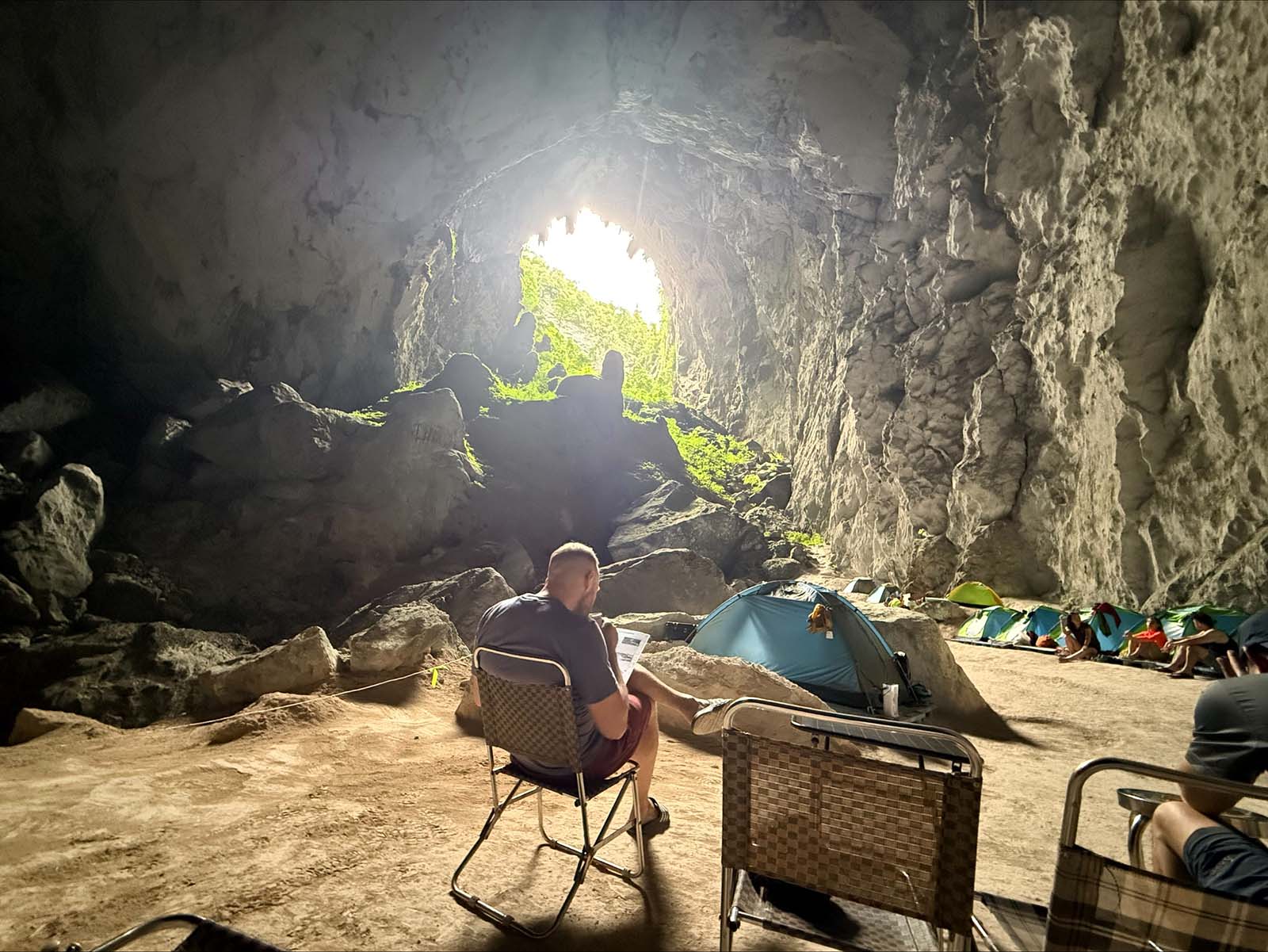
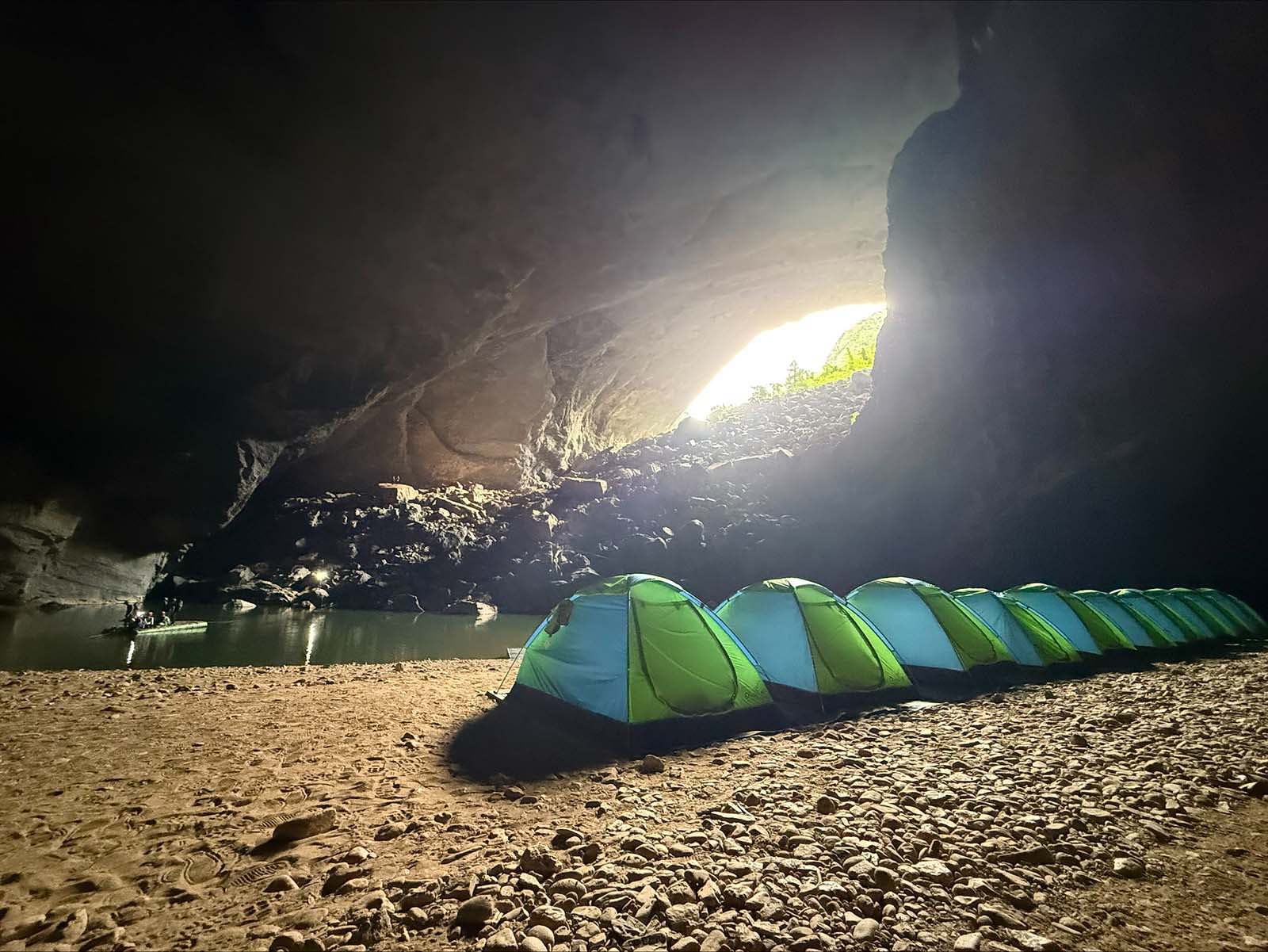
The first trekking day took us away from the road, down rocky slopes, through primary rainforest and repeatedly across streams. By late afternoon, my clothes were soaked with sweat and water, and my legs understood the expedition before my mind had fully adjusted. Then Hang En opened before us: an enormous cave entrance, swifts flying overhead, sunlight falling across the sand, and a broad natural pool beside our campsite. I dropped my backpack and walked straight into the water almost without thinking.
I have swum in infinity pools at beautiful luxury resorts around the world, but immersing myself in that natural pool inside Hang En felt entirely different. There was no attendant waiting with a towel, no background music, no one adjusting the water temperature. Nothing had been designed around my comfort. And precisely because of that, everything felt more real. After hours of physical effort, I discovered how little I actually needed: water, rest, a warm meal and somewhere to sleep. Perhaps luxury sometimes begins at the moment we rediscover what is enough.
The Finest Service Can Be Almost Invisible
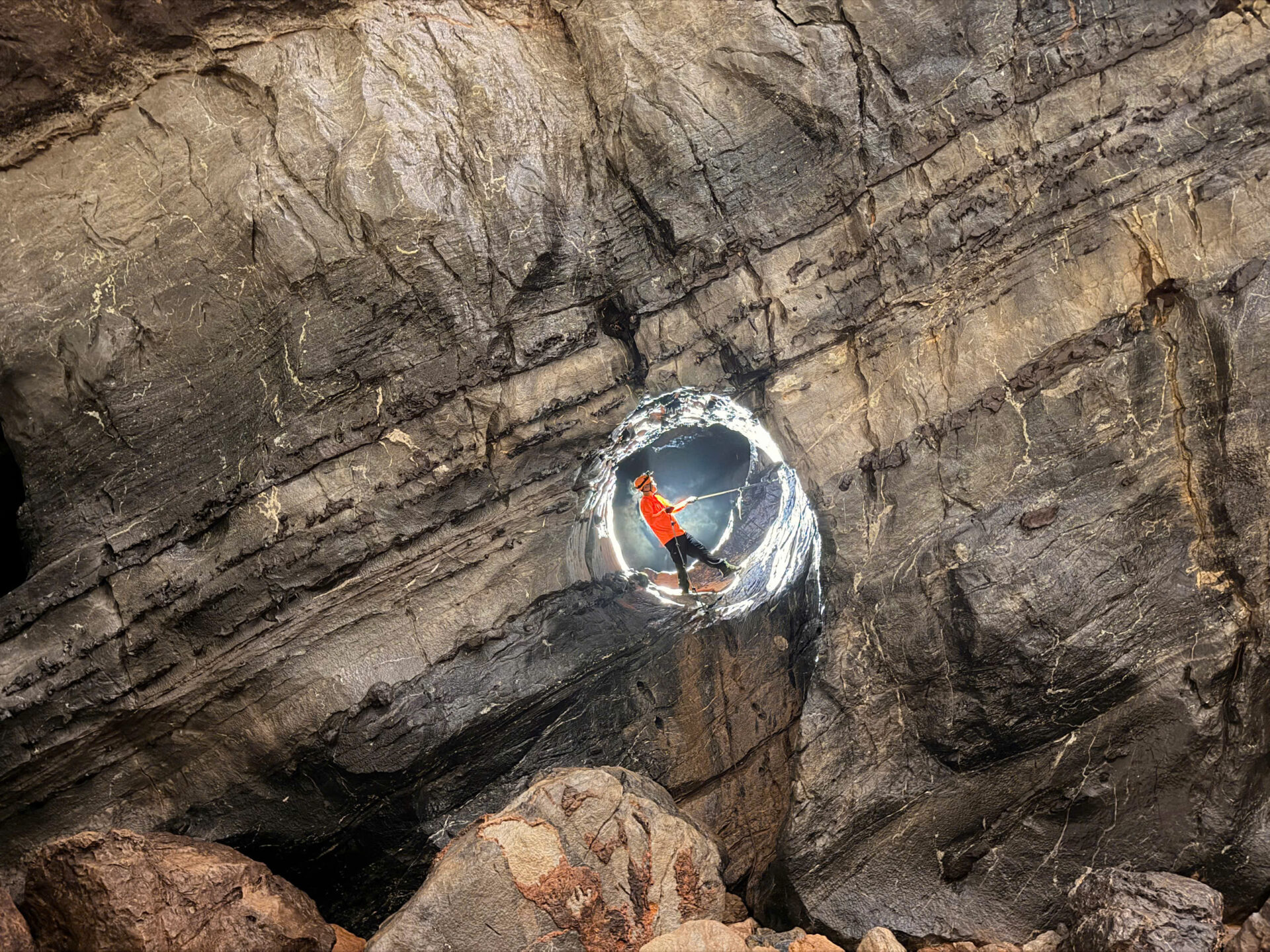
Our guest group was small, but behind us stood nearly 30 people, including guides, cave and safety specialists, rangers, chefs and porters. They changed the way I thought about luxury service. Our guide Dat, Dai from the technical safety team, and team members including Phuc, Luan and Hai never needed to perform professionalism. Their language was simple: “It’s slippery here.” “Step this way.” “Slow down.” More than once, they saw danger before I had even recognized it.
While I was looking at a shaft of sunlight, someone was checking a rope. While the group crossed a stream, someone had already identified the safer foothold. When we arrived at camp after a long day, tents, equipment and dinner were ready. There was no display, only competence, care and anticipation. I realized that one of the highest forms of luxury is not being pampered, but being able to place your trust in people who are exceptionally good at what they do. The finest service may be what has been prepared so seamlessly that the guest barely notices it happening.
Following the Water Into Another World
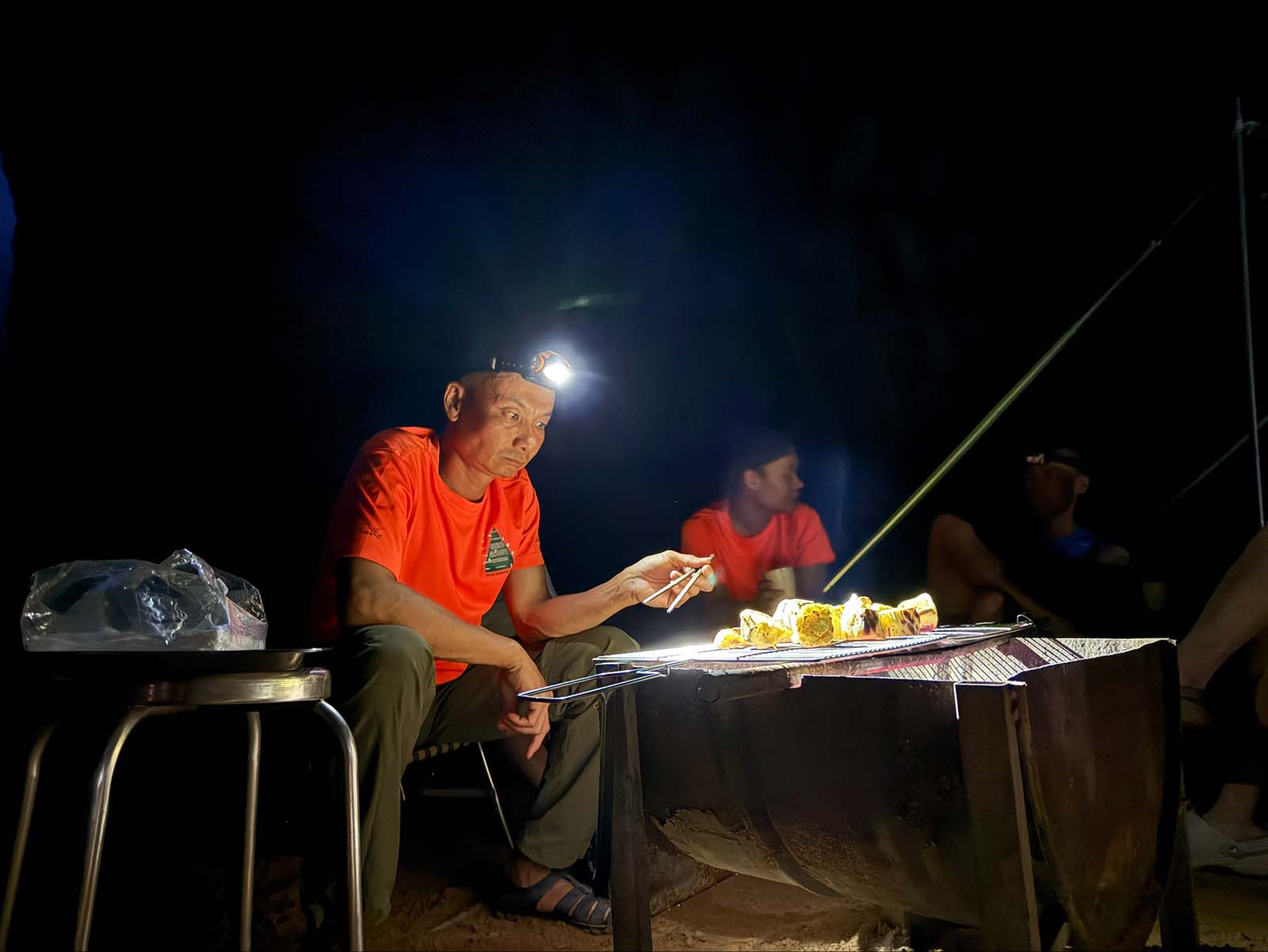
The following day, we left Hang En and followed the water toward Son Doong. I remember most vividly the black rocks polished by the streams. In some places the water was clearly visible; elsewhere it seemed to disappear beneath the limestone, while its sound continued below. Walking through that terrain made me think of Ho Khanh, the local forest man who discovered Son Doong’s entrance and later helped explorers relocate it. Only after crossing this landscape myself could I understand how an enormous cave entrance could remain hidden within the Truong Son wilderness.
Forest concealed forest. Rock followed rock. Water appeared, vanished and returned. Son Doong does not stand above the landscape like a monument visible from a distance; it is hidden by the landscape itself. Having to follow the water, cross the forest and negotiate the rocks makes discovery inseparable from the destination. In a world where almost everything can appear instantly on a screen, the need to walk, search, wait and make an effort has itself become a kind of privilege.
When a Shaft of Light Becomes Luxury
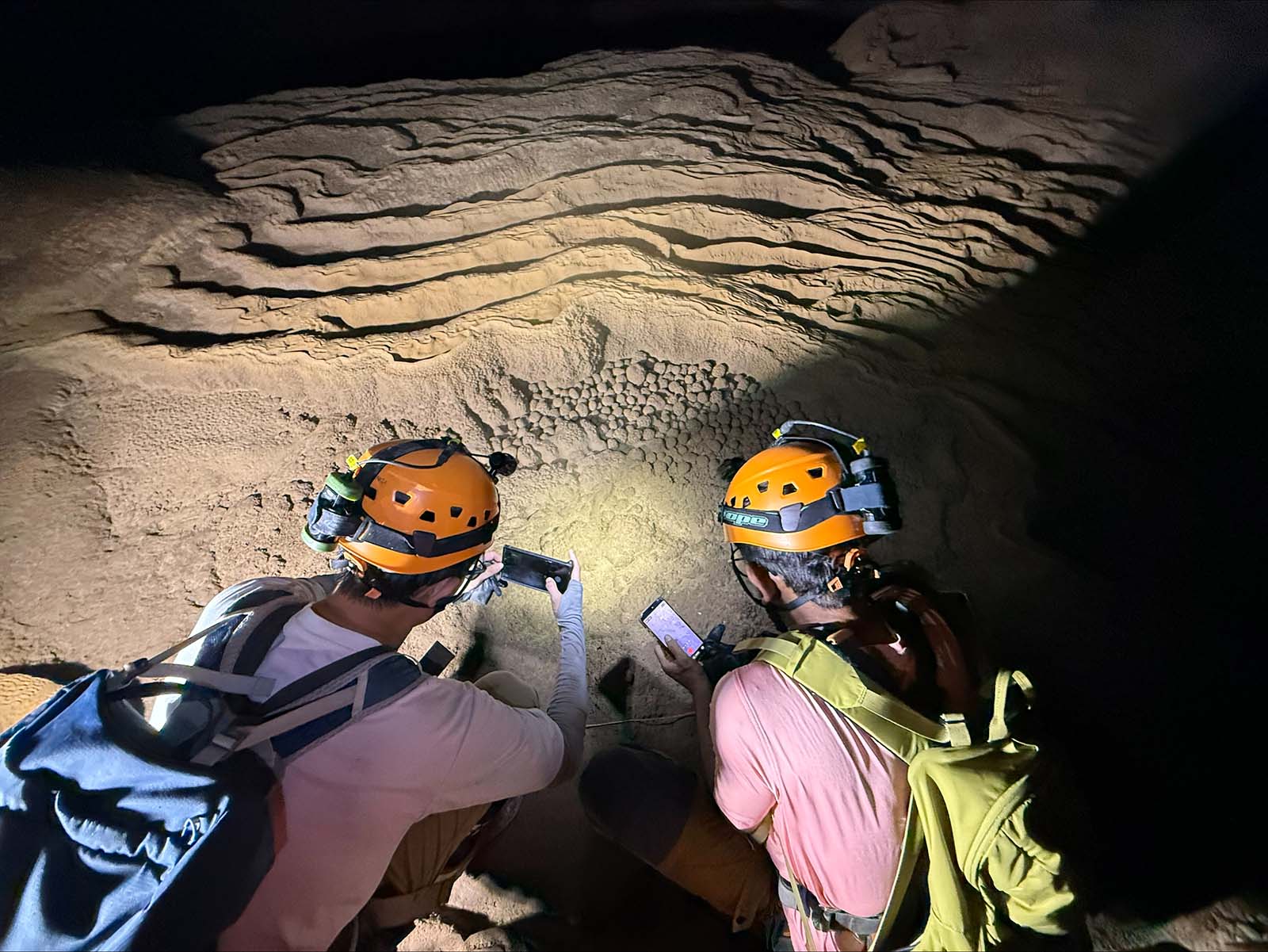
Spending hours underground recalibrates the senses. You hear water before you see it. You notice changes in temperature. You become aware of the small beam from another explorer’s headlamp touching a distant wall. Then come the dolines. At Doline One, sunlight descends from the outside world through moisture and mist, illuminating the immense limestone formations below. Under the right conditions, the beams seem almost solid, turning the cave into a natural theatre no architect could ever design.
Above ground, sunlight is so ordinary that we rarely stop to notice it. Underground, a single beam can bring an entire group to a standstill. Cameras rise. Voices soften. People look longer. I realized that the light itself had not become more beautiful; it had simply become rarer. And rarity changed our perception of value. Luxury, then, may not lie only in what we possess, but in our ability to rediscover the extraordinary value of things that had become too ordinary to notice.
Swimming Underground in My Trekking Clothes
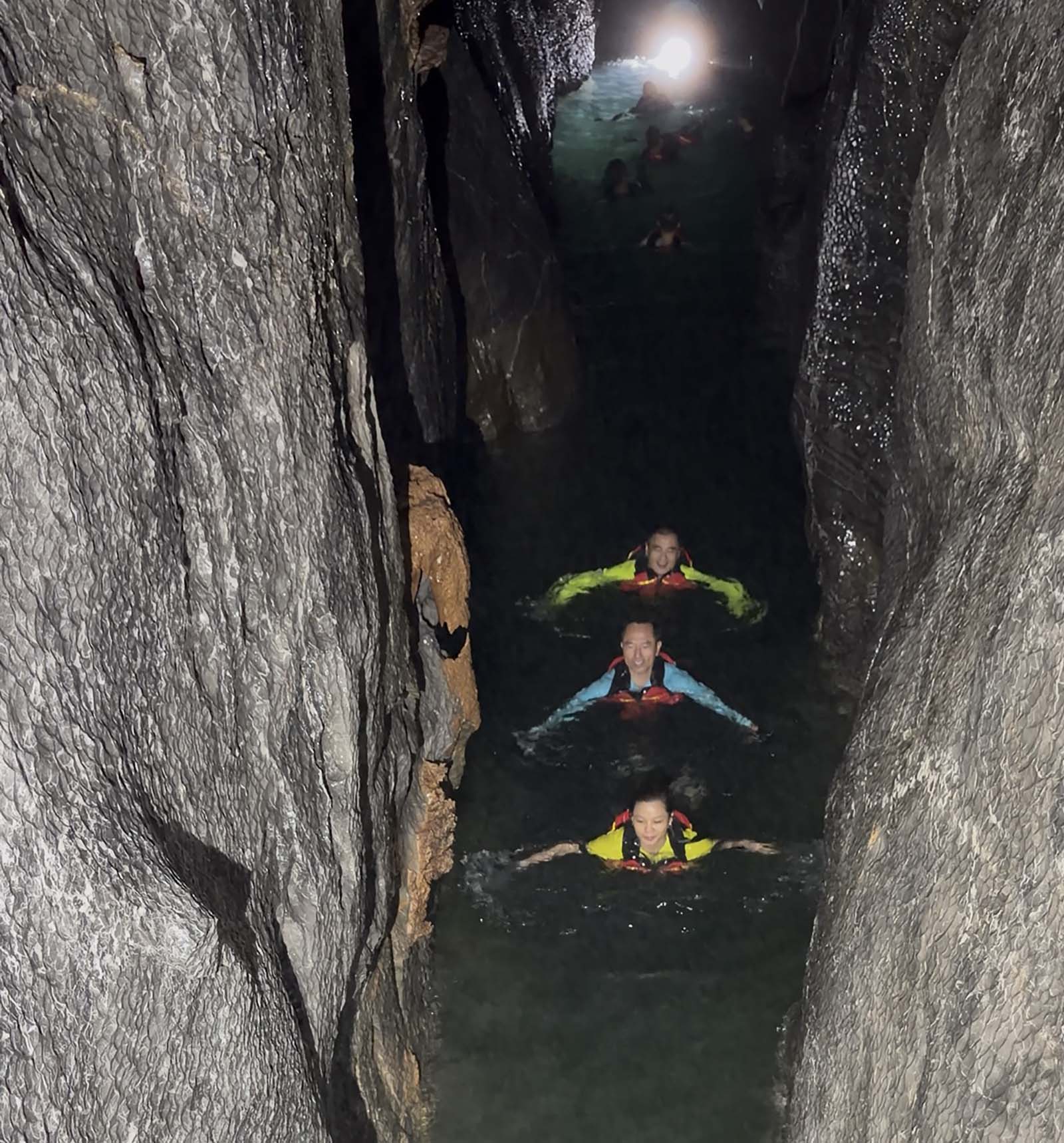
One of my favourite moments was not glamorous at all. After a day of scrambling over rocks, crossing water and walking through mud, I entered an underground river still wearing my trekking clothes. The first seconds were painfully cold. Then my whole body came alive. What followed was pure exhilaration. I swam beneath the mountain, letting the water carry away the sweat and fatigue of the day. My clothes were completely soaked, yet I felt refreshed, clean and full of energy.
At another campsite, there was no convenient water for bathing, so we had a dry wash instead. One day we were swimming in an underground river; the next we were laughing about bathing without water. Luxury travel often seeks consistency: everything at the right standard, temperature, time and expectation. Adventure restores something that an overly controlled life can easily lose: surprise. Sometimes it is precisely the imperfections that create the most perfect memories. A meaningful experience does not always need to be designed. Sometimes it simply needs to be real.
The Garden of Edam and the Privilege of Feeling Small
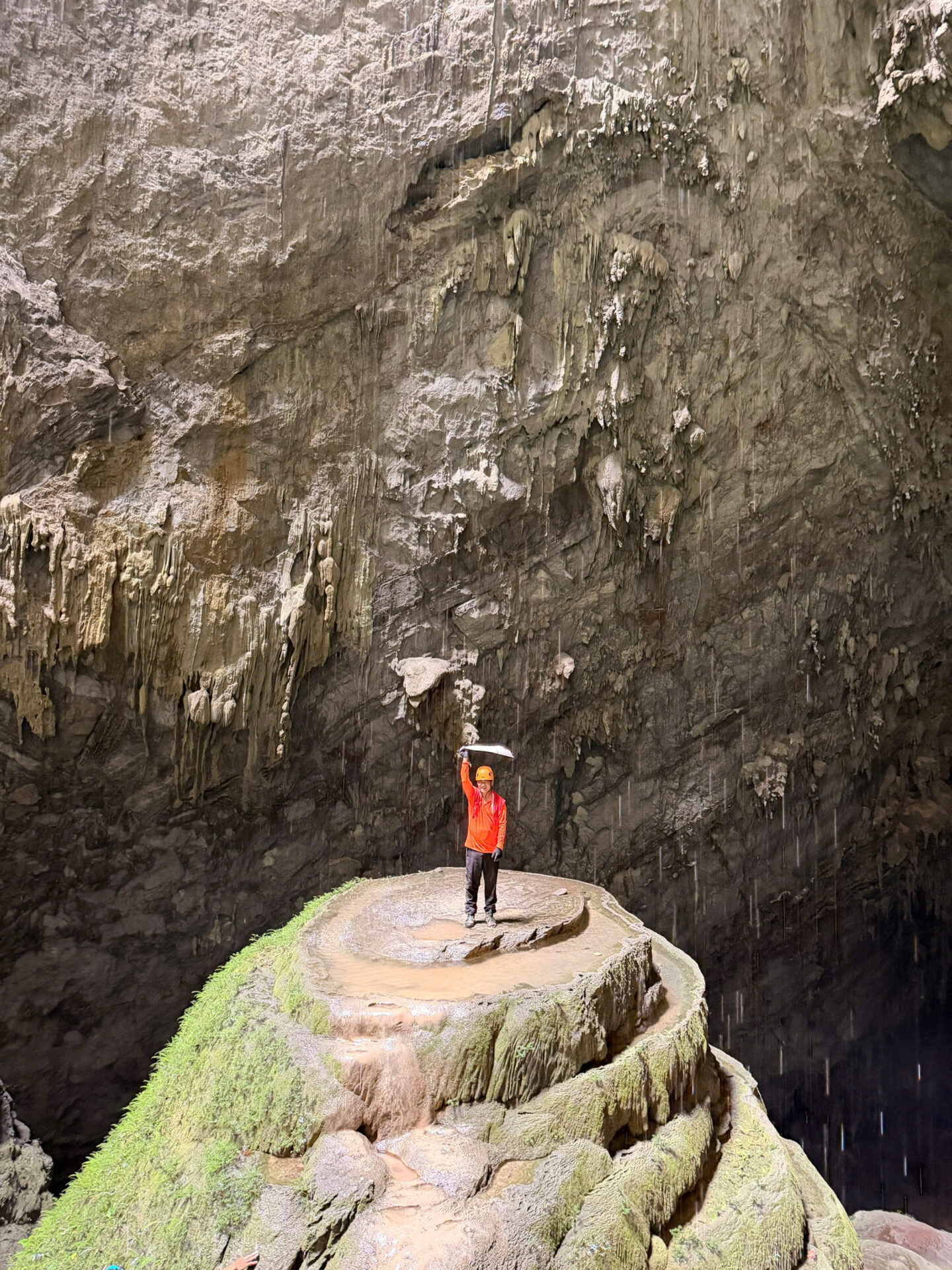
Then came the Garden of Edam. After hours surrounded by stone and darkness, vegetation appeared. Mist. Sunlight. Birds. A rainforest growing beneath the mountain. My mind knew I was still inside a cave, but my senses resisted the fact. This is why Son Doong cannot be reduced to a record of size. Scale is only the beginning. The cave contains rivers, forests, fossils, immense chambers and a world shaped by water, rock, air, light and millions of years.
It did not feel like entering a cave. It felt like entering another geography hidden beneath the geography we know. Forest does not exist only above ground. Rivers do not flow only beneath open skies. Mist and clouds can form inside a mountain. And human beings, so accustomed to placing ourselves at the centre of every experience, suddenly become tiny figures within a system that existed long before us. Perhaps one of the rare privileges of modern luxury travel is being able to reach a place magnificent enough to remind us how small we are.
The Luxury of Disappearing
Another transformation happened gradually. The digital world disappeared. Emails stopped. Meetings stopped. Notifications stopped. My phone became little more than a camera. At first, the lack of connectivity felt slightly inconvenient. Then it became precious. With no messages waiting, I listened to the water longer. With no screen competing for attention, I watched the light longer. When no one could reach me instantly, a day suddenly felt longer and fuller.
There was a time when connectivity everywhere symbolized modernity. Today, perhaps the ability to temporarily disappear is itself a form of luxury. Modern people do not lack connectivity; we lack presence. The new luxury assets may therefore sit not inside a safe, but inside our calendars: a morning without email, a meal without a phone, a night without notifications, a day when nothing demands our attention except the natural world in front of us.
The 90 Metres Money Could Not Climb
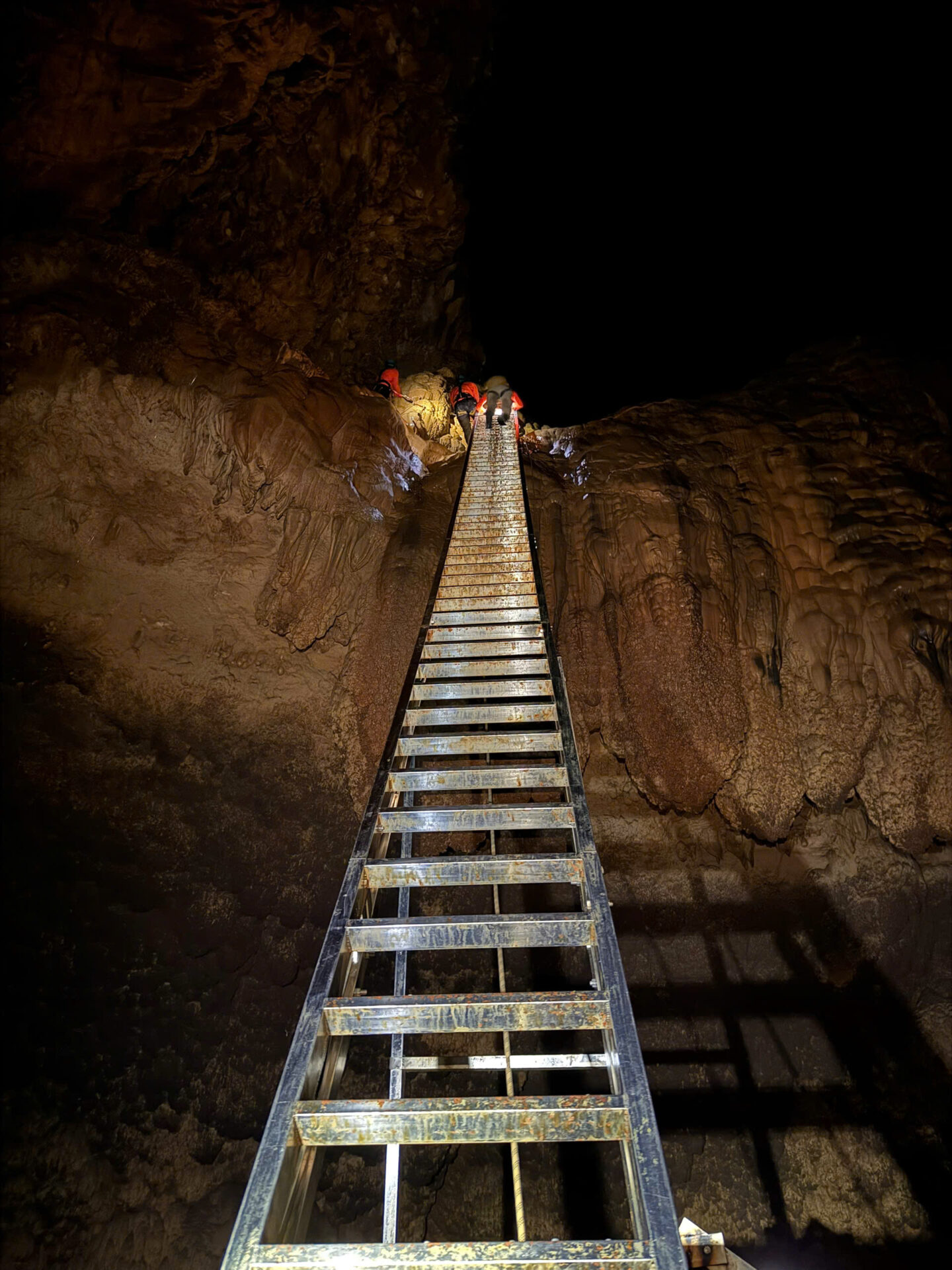
The final major challenge was the Great Wall of Vietnam. Looking up from below, the roughly 90-metre ascent felt intimidating: first a steel ladder, followed by steep limestone protected by ropes and technical safety systems. I made a very natural mistake. I looked at the entire wall at once. Then I stopped looking at the top. One rung. One breath. One foothold. “I can do this.” Then another step.
There is something profoundly satisfying about an experience that cannot be outsourced. Money can buy access, logistics, equipment and the support of highly skilled professionals. But it cannot make your legs climb. That part belongs to the traveller. And because the achievement has to be earned, completing the challenge feels fundamentally different from being delivered somewhere by private transfer. Some forms of value cannot be purchased as finished products; we must contribute our own effort to create them.
When a Cup of Coffee Becomes More Valuable Than a Suite
After days underground, ordinary comforts suddenly changed in value. A hot shower. Clean clothes. A bed. A cup of coffee. None of them had changed. I had. That may be the deepest distinction between traditional luxury travel and transformational travel. Traditional luxury improves the objective quality of what surrounds us. A transformational journey changes the person doing the experiencing.
The coffee does not taste better; we become more grateful for it. The bed does not become softer; we become more appreciative of sleep. Silence does not become more expensive; we simply realize how scarce it has become. In an economy accustomed to defining luxury by the number of comforts added, Son Doong revealed another logic to me: the most luxurious experiences may not give us more to possess, but allow us to feel more deeply what we already have.
From Possession to Experience, From Experience to Transformation
For much of the twentieth century, luxury was closely associated with possession: a watch, a car, a residence, a yacht or a work of art. But for travellers who can already access almost every material comfort, value is increasingly shifting toward experiences that cannot be mass-produced: pristine nature, privacy, rare expertise, meaningful challenge and the freedom to step outside the digital world.
Son Doong gave me almost nothing tangible to take home. No stone, fossil or fragment of the cave could become mine. I entered, experienced it and left with almost exactly what I had brought in. Yet I did not return unchanged. Perhaps this is the most important evolution in luxury travel: from possession to experience, and from experience to transformation. The defining question is no longer simply, “What do I have?” It becomes something far more personal: “Who have I become because of this journey?”
The Greatest Luxury Was Not Son Doong
Before the expedition, I assumed the cave itself would be the ultimate reward: its immense scale, underground rainforest, dramatic shafts of light, subterranean rivers and landscapes that seemed almost unreal. All of them exceeded my expectations. Yet what remained with me most deeply was not the spectacle. It was the experience of trusting others, maintaining discipline through difficult terrain, feeling humility before geological time and discovering that the most memorable moments were often the smallest.
Cold water after a long day. A warm meal at camp. Someone saying “be careful” at exactly the right moment. A shaft of sunlight after hours underground. I entered Son Doong searching for the world’s largest cave. I emerged with a smaller definition of what I truly needed—and perhaps a larger definition of luxury. Luxury is not always about adding more. Sometimes luxury is about removing enough that we can once again feel what truly matters.
Luxury does not necessarily mean more space; it can mean more time. Not more service, but deeper trust. Not more comfort, but a challenge worth accepting. Not ownership, but access. Not permanent connectivity, but the freedom to disappear. And not simply returning home with extraordinary photographs, but returning home different from the person who departed.
That is what Son Doong gave me.
Not the luxury of having more.
The luxury of needing less—and feeling more.