


PHAM HA
Founding President & CEO of LuxGroup® and Vice Chairman of the Vietnam Green Tourism Association
Resolution No. 26-NQ/TW not only redefines tourism’s position in the national economy but also introduces a new approach to tourism infrastructure—from cruise ports, marinas and inland waterways to riverfront and coastal economies. It provides an important foundation for Vietnam to develop coastal and trans-Vietnam journeys, transforming tourism into a high-value form of export at source.
A friend working at one of Vietnam’s Big Four banks recently called me and said enthusiastically: “This new resolution has genuinely opened the way for tourism and introduced meaningful support for the sector.”
I agreed, but added one qualification: opening the road is only the first condition. Whether businesses have the means to travel along it will determine whether the policy truly enters economic life.
Resolution No. 26-NQ/TW, issued by the Politburo on August 22, 2026, on developing Vietnamese tourism into a spearhead economic sector in the new era, establishes eight comprehensive groups of tasks and solutions: renewing mindsets; improving institutions and policies; developing infrastructure; raising product quality; strengthening destination promotion; developing businesses and human resources; advancing science, technology and digital transformation; and modernising destination governance in a green, smart, safe and sustainable direction.
Its most significant contribution lies not only in its ambitious targets, but also in the change of perspective it represents. Tourism is no longer viewed merely as sightseeing and leisure. It is recognised as an integrated economic ecosystem capable of driving trade, transportation, cultural industries, agriculture, retail, the digital economy and the night-time economy.
From counting visitors to measuring value
By 2030, Vietnam aims to welcome 45–50 million international visitors, serve 160 million domestic travellers, generate tourism receipts of USD80–90 billion and contribute directly between 10% and 12% of GDP. By 2045, tourism is expected to contribute 14–15% of GDP and place Vietnam among the world’s 30 most competitive tourism economies.
These are ambitious goals. More importantly, however, the Resolution requires Vietnam to shift its growth model from quantity to quality—taking culture as the foundation and using identity and the quality of experience as competitive advantages.
A crowded destination is not necessarily a successful one. If visitors stay only briefly, spend little, create limited benefits for local residents, overload infrastructure and damage natural resources, such growth cannot be considered sustainable.
In addition to visitor numbers, Vietnamese tourism should therefore be measured by average spending, length of stay, return rates, the value retained in local economies, SME revenue, the number of quality jobs created, community satisfaction and emissions per journey.
We should not ask only how many visitors Vietnam can receive. We must also ask: How much value does each visitor leave behind, and what lasting memory does Vietnam leave with them?
Tourism infrastructure cannot mean only roads and airports
One of the Resolution’s most consequential advances is its placement of tourism infrastructure within an integrated, multimodal system connecting international gateways with growth regions, tourism centres and national tourism zones.
The infrastructure it identifies extends beyond expressways and airports. It includes cruise ports, marinas, inland waterway tourism routes, tourism railways, stations with integrated service ecosystems, convention and exhibition centres, cultural institutions and digital infrastructure.
Particularly important is its prioritisation of maritime tourism infrastructure capable of receiving large cruise vessels, with the aim of establishing Vietnam as a major destination on Asia-Pacific cruise itineraries. This opens an entirely new development space.
Vietnam has more than 3,260 kilometres of coastline, an extensive river network, thousands of islands and many cities established along rivers and the sea. Yet for many years, waterborne transportation and tourism have not been recognised or developed in proportion to their potential. Too many rivers are still treated as administrative boundaries or transport channels rather than economic, cultural and tourism spaces.
If airports are gateways in the sky, passenger ports, marinas and inland waterway terminals are gateways on the water. Vietnam cannot build a competitive cruise, yachting and river tourism economy while passenger vessels continue to share unsuitable infrastructure with cargo operations or while destinations lack international-standard passenger terminals.
Vietnam needs a dedicated network of tourism ports and terminals connecting international cruise ships with coastal vessels, riverboats and land transportation. Every port should become more than a place for embarkation and disembarkation. It should function as an experience hub offering efficient immigration services, cultural spaces, cuisine, shopping, artistic performances and convenient connections to the wider destination.
Opening coastal and trans-Vietnam tourism corridors
Building on the direction established by the Resolution, Vietnam can take another step forward by creating coastal and trans-Vietnam waterborne tourism corridors.
Rather than allowing every locality to develop isolated products, Vietnam could create interregional itineraries along the north-central-south axis: Ha Long–Hai Phong–Hue–Da Nang–Nha Trang–Phu Quoc–Ho Chi Minh City. Such journeys could connect sea and river, linking international ports with heritage sites, cities, craft villages and inland ecological areas.
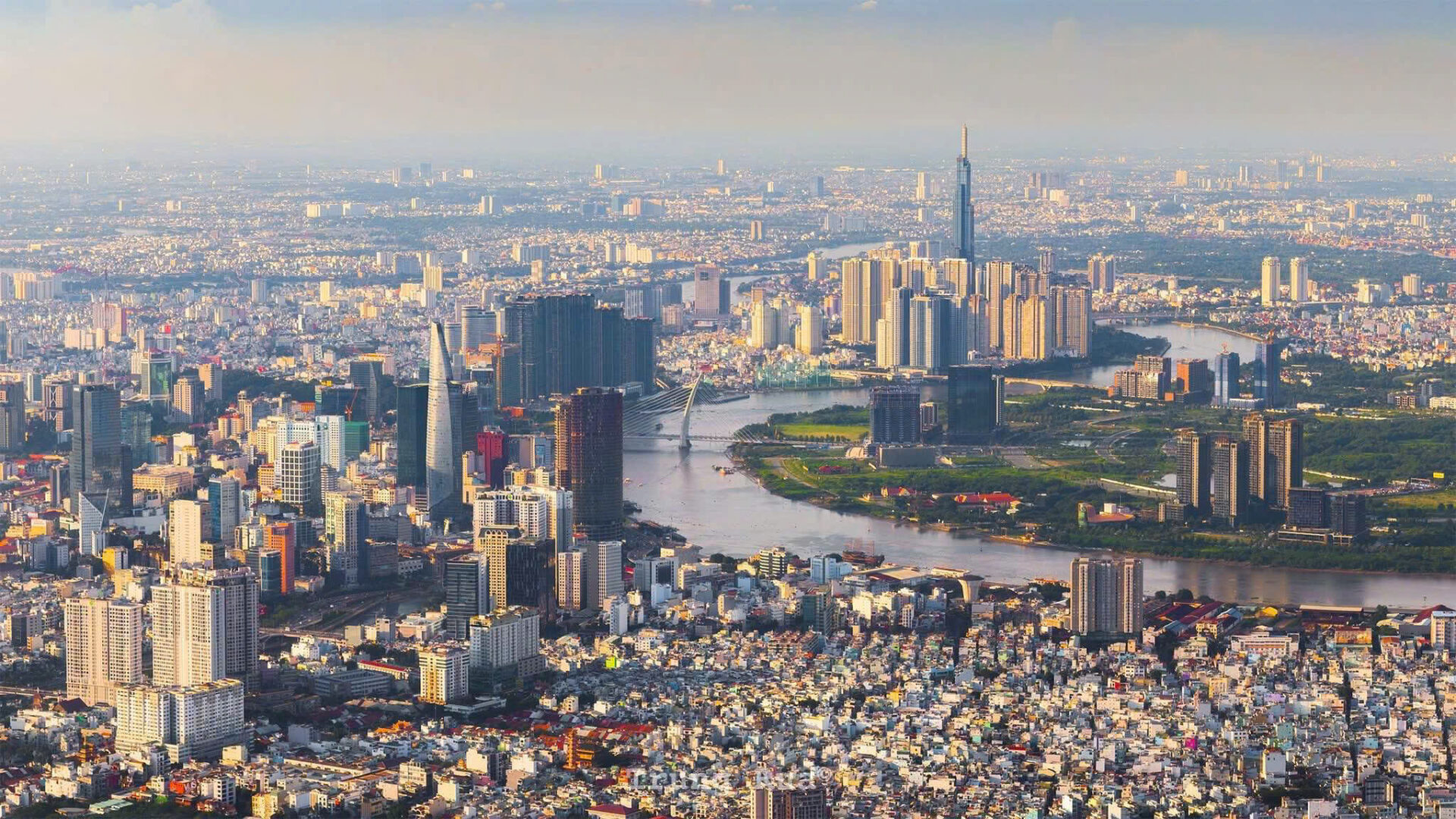
In the south, a route could begin in Ho Chi Minh City, travel along the Saigon River and connect Cu Chi, Tay Ninh, Dong Nai and the Mekong Delta before continuing towards Cambodia.
In central Vietnam, seaports could connect with the Hue–Da Nang–Hoi An–My Son heritage corridor. In the north, ports and waterways could link Hanoi, Hai Phong, Quang Ninh, Ninh Binh and the cultural centres of the Red River Delta.
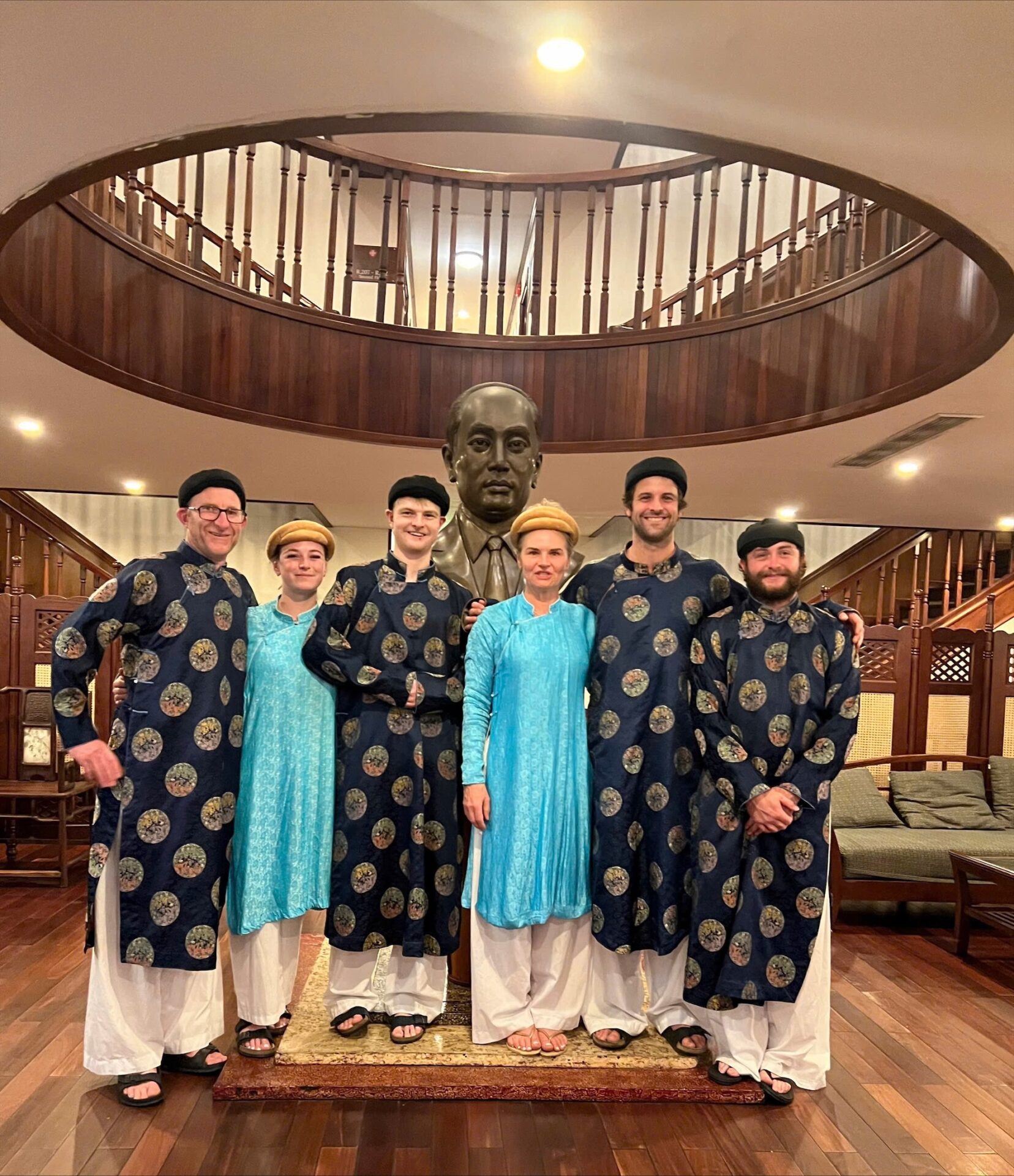
Waterway tourism is not simply about placing visitors on a boat. It requires the reorganisation of riverfront and coastal economic spaces: ports, markets, craft villages, museums, theatres, cuisine, accommodation, green mobility and artistic performances.
The river would no longer be the empty space behind a city; it would become its cultural and economic frontage. The coastline would no longer serve only as a location for resorts; it would become a corridor connecting Vietnamese destinations.
Achieving this ambition requires coordinated reform of regulations governing vessel registration and inspection, permitted routes, ports and terminals, land use, immigration procedures, maritime safety and passenger transport by water. Vietnam also needs unified standards for passenger vessels, yachts, tourism terminals, rescue services and emergency response.
Infrastructure creates value only when vessels are permitted to sail, visitors can arrive conveniently and businesses can invest within a clear, predictable legal environment.
SMEs must stand at the centre of the ecosystem
Large corporations have an important role in developing infrastructure and creating internationally competitive products. Yet the visitor’s actual experience is delivered by thousands of small and medium-sized enterprises: tour operators, hotels, restaurants, transport companies, cruise businesses, event organisers, artisans, guides and community-based enterprises.
Large groups may be the locomotives, but SMEs are the tracks and networks that carry tourism deep into every locality.
Resolution No. 26-NQ/TW calls for the effective use of investment funds, credit guarantee funds and financial instruments supporting tourism SMEs. It also proposes preferential investment credit, direct interest-rate support for green and sustainable tourism projects, and a state-supported tourism risk insurance mechanism.
These are promising directions. Yet a policy creates value only when businesses can actually access it.
Tourism is characterised by seasonal cash flows. A tourism company’s most valuable assets may not be factories or real estate, but its brand, customer data, future contracts, distribution network and ability to design and deliver exceptional experiences.
If banks continue to assess tourism loans primarily through tangible collateral, many SMEs will remain outside the credit system, even when they possess viable markets and sound business models.
The banking sector should develop tourism-specific financial products: lending based on cash flow and contracts; credit guarantees for SMEs; medium- and long-term financing for tourism vessels, hotels and destinations; interest-rate support for green and digital transformation; and insurance mechanisms covering natural disasters, epidemics and major market disruptions.
Banks should not merely provide capital from the roadside. They should become travelling partners on tourism’s development journey.
A sector identified as a national economic spearhead cannot be expected to grow through financial instruments designed as though tourism were simply another peripheral service activity.
Tourism as export at source and cultural diplomacy
A conventional product must cross a border before it generates export revenue. In tourism, international consumers come to Vietnam, experience Vietnamese goods and services, and spend foreign currency within the country.
Every hotel night, cruise journey, Vietnamese meal, artistic performance or handicraft purchased by an international visitor represents a form of export at source—or on-the-spot export.
Its economic value also spreads far beyond the business that directly serves the visitor. A meal generates demand for farmers and fishers. A cruise supports crew members, guides, performers and local suppliers. A craft-village experience helps artisans preserve traditional skills. A cultural performance creates opportunities for an entire creative community.
Tourism is therefore one of the few sectors capable of bringing foreign currency into the country while distributing income to communities that many other industries struggle to reach, including rural, mountainous, border and island areas.
But tourism’s greatest value cannot be measured in foreign currency alone. It also carries Vietnam’s image, culture and way of life into the memory of the world.
When visitors purchase a handicraft, they are not buying only an object; they are buying the story of its maker. When they enjoy a regional dish, they are not paying only a restaurant; they are helping sustain local ingredients and culinary memory. A river journey does not merely create transportation revenue; it can reactivate an entire cultural landscape along the riverbanks.
Culture must therefore be more than decoration added to a tourism product. It must become the substance, soul and defining value of the experience.
Preservation does not mean placing heritage behind glass and allowing it to sleep. Heritage must be researched, interpreted, performed and connected to contemporary life in creative and responsible ways.
Vietnam should establish cultural-tourism product laboratories in heritage regions, bringing together artisans, researchers, artists, architects, businesses and communities to co-create experiences. The state should establish the space, standards and safeguards; businesses should organise the market; and local people should participate as both owners and beneficiaries.
A proportion of revenue from tickets, tours, performances and souvenirs should be reinvested in conservation, training the next generation of practitioners and improving community livelihoods.
Tourism becomes sustainable only when residents do not stand aside and watch visitors pass through, but become the storytellers of their homeland and share fairly in the value created.
From the Resolution to implementation capacity
Resolution No. 26-NQ/TW has opened the right road. Turning its vision into results will require an implementation programme with clear resources, deadlines, accountable institutions and measurable outcomes.
Vietnam should rapidly translate the Resolution into workable policies covering credit, land, taxes, fees, visas, VAT refunds, public-private partnerships, the night-time economy and riverfront and coastal economies.
At the same time, it should build shared data infrastructure and help SMEs connect with booking systems, cross-border payment services and global distribution networks. Tourism data should become a shared economic infrastructure rather than the private advantage of a limited number of large companies or international platforms.
The state should create and coordinate the enabling environment. Businesses should act as the pioneering force. Local people should participate as owners and beneficiaries.
Success should be measured not only through visitor arrivals but also through length of stay, average spending, the share of tourism value retained domestically, SME revenue, quality employment, visitor and resident satisfaction, destination capacity, emissions and the proportion of income reinvested in culture and the environment.
When institutions are cleared of unnecessary barriers, capital is directed to viable businesses, ports and terminals are developed coherently, and rivers and coastlines are connected into seamless journeys, Vietnamese tourism will gain a powerful new growth engine.
Tourism will then cease to be merely a sector of untapped potential. It will become a genuine spearhead economy—earning foreign currency, creating livelihoods, integrating Vietnamese businesses into global value chains and connecting Vietnamese culture with the world.
“We do not export our heritage. We invite the world to experience it in Vietnam—and to carry the Vietnamese story home.”
Resolution No. 26-NQ/TW: Eight Groups of Tasks and Solutions
- Renew thinking and raise awareness and responsibility for tourism development.
- Improve institutions and policies, create strategic breakthroughs, and unlock and mobilise resources for tourism development.
- Develop integrated infrastructure and establish highly competitive tourism centres.
- Develop markets and high-quality tourism products while improving tourism’s economic performance.
- Strengthen the effectiveness of tourism marketing and promotion and elevate the Vietnam tourism brand.
- Develop human resources, businesses and tourism communities capable of meeting new development requirements.
- Accelerate the application of science and technology, innovation, digital transformation and smart tourism.
- Modernise tourism governance and improve the quality of green, smart, safe and sustainable destinations.