

How LuxGroup® can connect Vietnamese culture, responsible growth and disciplined execution to create lasting value.
By Dr. Phạm Hà, Founding President & CEO, LuxGroup®
A guest remembers the crew member who noticed an unspoken need, the meal that revealed something about Vietnam, or the story that made a landscape meaningful. These moments express hospitality at its best. Yet their lasting value depends on decisions guests rarely see: how employees are treated, how suppliers are selected, how resources are used and how growth is financed.
At LuxGroup®, our purpose is Delivering Happiness®. Our belief, Luxury is Culture®, shapes how we approach travel, cruising, hospitality, gastronomy and art. These principles give us direction. The leadership challenge is to translate them into a sustainable business strategy that guides everyday choices and remains credible as the organisation grows.
That requires a practical definition of sustainability. A sustainable business must generate sufficient returns to maintain its assets, develop its people and withstand disruption. It must also understand its environmental and social impacts, reduce harm and contribute to the places on which its success depends. Financial resilience and responsibility need to be managed together.
Purpose provides a starting point, but strategy demands choices. LuxGroup’s ambition to become “A House of Small Giants” suggests a particular path: specialist businesses with distinctive identities, connected through shared standards and complementary capabilities. The strength of this model depends on whether each business contributes something valuable and whether the group makes its members stronger.
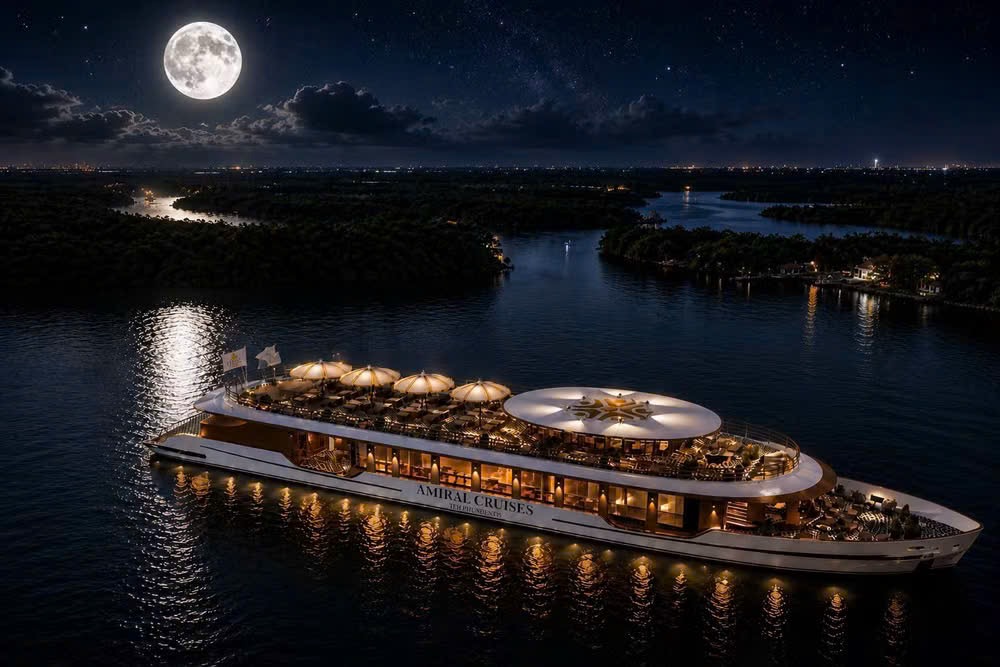
For us, Vietnamese culture offers a foundation for differentiation. Architecture, cuisine, painting, maritime history and local knowledge can give an experience depth. Their commercial value emerges when they influence the product itself: the itinerary, the conversation, the welcome and the pace. Decorative references alone cannot create that depth. It requires research, thoughtful interpretation and people who understand what they are sharing.
This positioning also establishes boundaries. We should pursue opportunities where cultural depth and attentive hospitality can support attractive economics. We should question expansion that stretches service quality, weakens a destination or creates financial pressure that compromises our standards. “Not biggest—best” becomes meaningful when it changes which opportunities receive capital and which are declined.
The connection between sustainability and business performance must then be examined at the level of individual operations. On a cruise vessel, fuel efficiency, maintenance, food purchasing, waste handling and staff capability affect both operating costs and guest experience. Better planning may reduce waste while protecting quality. Preventive maintenance may improve reliability while extending asset life. These relationships deserve measurement rather than assumption.
Some decisions involve genuine trade-offs. Cleaner technology can require substantial investment, infrastructure and new skills. Local sourcing can face constraints in consistency, availability or price. Training requires time away from immediate operations. Responsible leadership assesses these costs openly, identifies workable alternatives and decides which commitments the business can sustain. Credibility grows when ambition is matched by operational understanding.
People First® is central to this approach. In hospitality, employees carry the brand through their judgement and behaviour. A promise of personal service depends on whether they have the knowledge, confidence and authority to act. Training therefore needs to develop cultural understanding, service recovery and decision-making alongside technical competence. Managers must create conditions in which those capabilities can be used.
Delivering happiness to guests also requires attention to employees’ working experience. Workloads, safety, fair treatment, development opportunities and the quality of supervision shape how service feels. HEARTS™ can provide a common language for behaviour, but values become durable through hiring, coaching, recognition and promotion. Leaders should be assessed on how they develop others as well as the results they deliver.
The same logic extends to communities and suppliers. A culturally distinctive journey draws on knowledge and traditions that belong to people beyond the company. A responsible relationship should provide fair commercial terms, respect and opportunities for those people to influence how their culture is presented. Their participation strengthens authenticity and helps preserve the foundations of the experience.
For LuxGroup, purchasing can become an important strategic instrument. Food, transport, guiding, craft and cultural experiences connect our businesses to local enterprises. We should examine where spending goes, how dependable our relationships are and whether suppliers can improve alongside us. Long-term partnerships may create more value than repeatedly choosing the lowest immediate price, particularly where quality and trust matter.
Execution begins by assigning responsibility. Each business needs a leader accountable for financial performance, service quality, people development and relevant environmental impacts. Group leadership should establish common expectations while allowing local teams to respond to their operating conditions. A destination management company and a cruise operator need different operational measures, even when they share the same purpose.
The group’s role should include disciplined capital allocation. Every major proposal should explain its customer value, expected financial contribution, operating requirements and material social or environmental effects. Expansion should be compared with alternatives such as improving utilisation, renewing existing assets or strengthening staff capability. This comparison helps protect the business from growth that looks impressive but produces weak returns or unmanaged obligations.
Measurement must support learning. A focused scorecard can connect profitability and cash generation with repeat bookings, guest feedback, employee retention, resource consumption and local purchasing. Each measure needs a baseline, an owner and a clear interpretation. Leaders should understand both resource use per guest and total resource use, because efficiency gains can coexist with a rising overall footprint.
The quality of discussion around those measures matters. When results fall short, managers need to investigate the cause: a flawed assumption, inadequate training, poor equipment or an unrealistic target. Reporting should make those problems visible early enough to act. A useful operating rhythm connects frontline observations to monthly reviews and investment decisions, allowing the organisation to improve without waiting for a crisis.
This is particularly important for environmental commitments. Targets such as Net Positive require a defined scope, a transparent method and evidence of outcomes. Certification can strengthen accountability within its applicable scope, but broader claims need their own substantiation. Our communication should distinguish what has been achieved, what is being tested and what remains an ambition.
Tourism also depends on conditions that no single company controls. Healthy waterways, functioning infrastructure, cultural continuity and destination stewardship require cooperation. LuxGroup can contribute through practical partnerships with communities, suppliers, industry organisations and public authorities. The strongest starting point is a shared problem with clear responsibilities and observable results, followed by wider adoption where the approach proves useful.
For a founder, perhaps the most demanding task is making purpose transferable. Personal conviction can launch a business, but enduring execution requires capable leaders, clear decision rights and institutions that preserve standards. The House of Small Giants should enable entrepreneurship throughout the group while ensuring that independence carries responsibility for the wider enterprise.
Delivering Happiness® will earn its deepest meaning through this consistency. Guests should experience thoughtful hospitality. Employees should find dignity and opportunity. Partners should benefit from dependable relationships. Destinations should receive care and investment. The business should generate the resources to continue doing these things. Our responsibility is to build the strategy, operating discipline and evidence that make this promise sustainable.