

When Culture Becomes the Foundation of Leadership, Business, and True Luxury
By Dr. Phạm Hà – Founding President & CEO, LuxGroup®
Every Lunar New Year, Vietnamese families light three sticks of incense before their ancestral altar. It is a quiet ritual — simple, unadorned, repeated across generations.
But beneath this gesture lies a profound worldview: Thiên – Địa – Nhân (Heaven – Earth – Human).
The three sticks of incense are not merely spiritual symbolism. They represent a cosmology that has shaped Vietnamese consciousness for centuries — a philosophy of balance that remains strikingly relevant in today’s era of global transformation.
As Vietnam moves toward a more sophisticated stage of development — where growth is measured not only in GDP but in cultural depth, sustainability, and brand identity — understanding this triadic worldview becomes more than cultural literacy. It becomes strategic insight.
Heaven – Earth – Human: A Philosophy of Equilibrium
The Vietnamese cosmology of Tam Tài (the Three Powers) consists of:
- Heaven (Thiên) – the laws of nature, destiny, macro forces, and historical momentum
- Earth (Địa) – land, environment, heritage, and physical context
- Human (Nhân) – agency, creativity, responsibility
Unlike binary systems built on opposition — right versus wrong, win versus lose — Vietnamese philosophy favors equilibrium among three interacting forces.
Humans do not dominate Heaven.
They do not detach from Earth.
They stand in between.
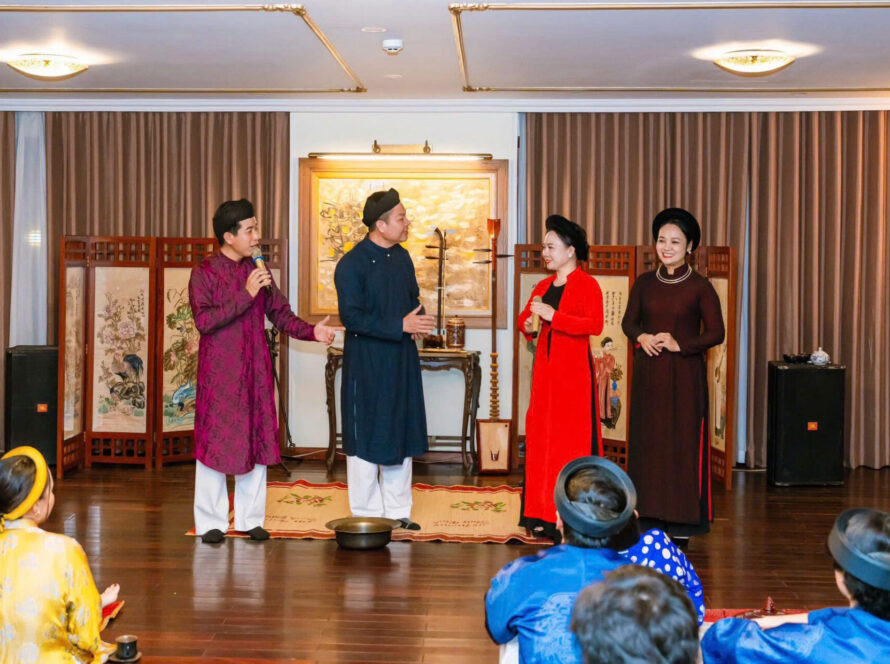
This worldview is physically embedded in Vietnamese architecture. Traditional homes, communal houses, and ancestral temples often feature three entrance steps (tam cấp). These are not accidental design choices. Each step symbolizes Heaven, Earth, and Human — a physical transition from the ordinary to the sacred.
Vietnamese culture is not preserved solely in texts.
It is built into space, ritual, and lived experience.
From Cultural Philosophy to Leadership Strategy
In modern leadership and enterprise management, Tam Tài offers a surprisingly contemporary framework:
- Heaven represents global trends, technological shifts, sustainability standards, and economic cycles.
- Earth represents local identity, natural ecosystems, cultural heritage, and community context.
- Human represents employees, customers, partners — the living core of any organization.
An enterprise that chases only “Heaven” — global trends and short-term gains — while neglecting “Earth” will eventually lose its foundation.
An enterprise that clings only to “Earth” without adapting to “Heaven” risks irrelevance.
And without “Human” at the center, even the most refined strategy becomes hollow.
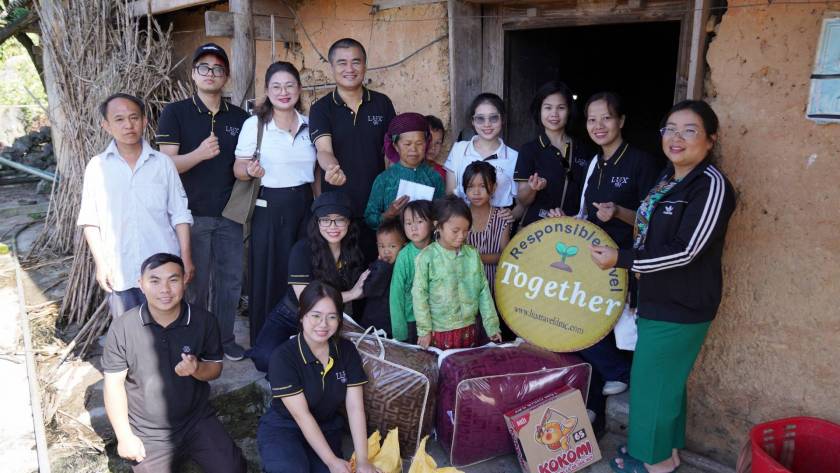
In building LuxGroup®, I have consistently viewed business through this triadic lens. Developing heritage cruises, cultural tourism experiences, and immersive luxury journeys is not about exploiting landscapes. It is about elevating Vietnamese culture responsibly within a global context.
Cultural business is not the commercialization of heritage.
It is the refinement of heritage into meaningful economic value.
Luxury as Cultural Depth
Luxury, particularly in emerging markets, is often misunderstood as material display. Yet through the lens of Tam Tài, true luxury is balance — between time, place, and human experience.
I often say:
“Luxury is all about time, place, experience, and memories.”
Time reflects Heaven.
Place reflects Earth.
Experience and memory reflect Human.
Enduring luxury is not about excess. It is about intentionality.
A cruise becomes meaningful not because of its scale, but because of the narrative it carries. A spa becomes elevated not because of marble surfaces, but because of its philosophy of balance — body, mind, and spirit.
Luxury without cultural grounding decorates.
Luxury rooted in culture resonates.
Culture as Strategic Capital
As Vietnam aspires to high-income nation status by 2045, the conversation must evolve beyond infrastructure and investment. The deeper question is: On what values will growth stand?
A strong nation is built not only on economic metrics, but on identity.
Tam Tài offers a framework for national development:
- Growth must be aligned with Heaven — respecting global sustainability standards and environmental realities.
- Growth must be rooted in Earth — preserving heritage, ecosystems, and cultural memory.
- Growth must empower Human — placing people at the center of prosperity.
If one of these dimensions is neglected, development becomes fragile.
The three sticks of incense at New Year serve as a quiet annual reminder: balance is not optional. It is foundational.
Living Culture in a Time of Acceleration
We live in an era of velocity. Technology reshapes behavior. Markets shift rapidly. Attention spans shrink.
Yet the faster the world moves, the more essential cultural anchors become.
To live culturally is not to live nostalgically.
It is to understand one’s position between Heaven and Earth.
When individuals, enterprises, and nations recognize that position, they become more responsible toward nature, more thoughtful toward community, and more sustainable in growth.
The incense burns slowly.
But its fragrance lingers.
In that subtle smoke lies a message for modern leadership:
To rise higher, we must first stand firmly.
To expand globally, we must understand our roots.
Culture is not a decorative layer on top of development.
It is the structural foundation beneath it.
And in that foundation, the Vietnamese cosmology of three — Heaven, Earth, and Human — continues to offer a blueprint for balanced progress, responsible leadership, and a more meaningful definition of luxury.