

Vietnam’s northern seascape occupies rare territory in Southeast Asia’s hierarchy of iconic landscapes. The limestone karsts of the Gulf of Tonkin — sculpted over 500 million years — rise from jade waters like abstract monoliths. The imagery is everywhere: photographed endlessly, hashtagged constantly, marketed globally.
Yet most travelers experience it in less than 24 hours.
That is the paradox.
For decades, Ha Long Bay became shorthand for northern maritime beauty — a one-night cruise, a sunrise snapshot, a swift return to shore. Efficient. Impressive. Memorable, but fleeting.
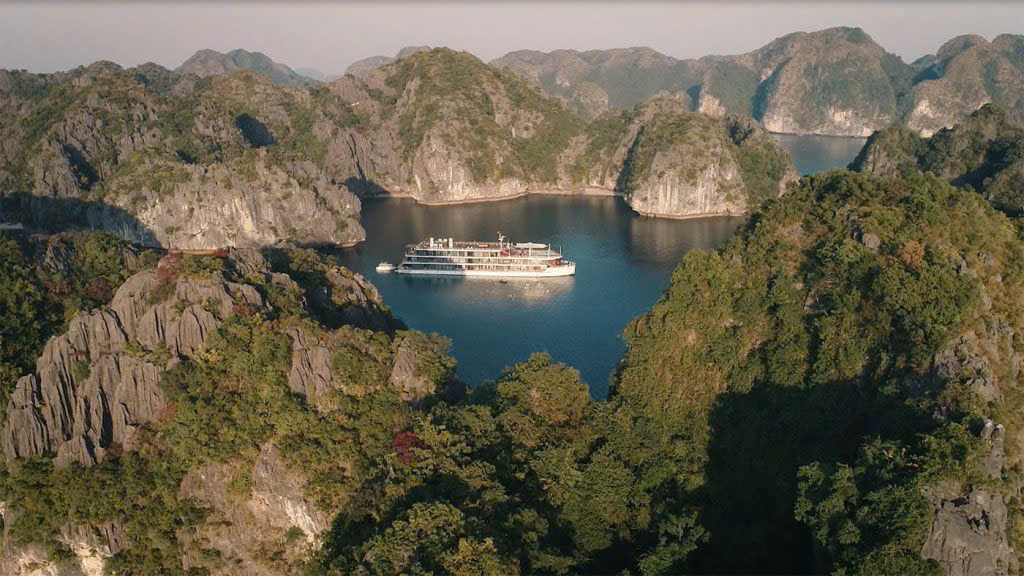
Just south of the UNESCO corridor lies Lan Ha Bay — quieter, more intimate, and increasingly aligned with how modern luxury travelers define value. Here, the 3-day, 2-night Heritage Explorer aboard Heritage Cruises Binh Chuan Cat Ba Archipelago reframes the Gulf not as a scenic highlight, but as a destination worthy of time.
And travelers are responding. Nearly 50% of guests now choose the extended three-day journey, opting for immersion over speed.
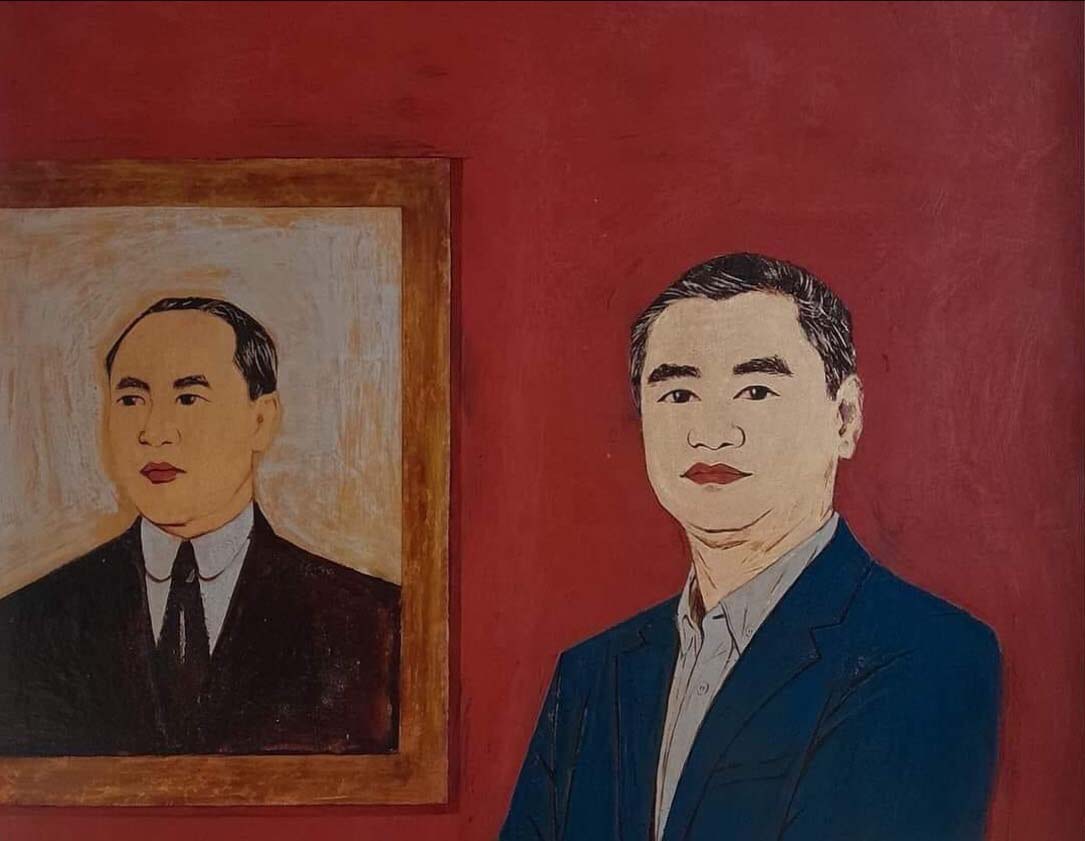
As Dr. Phạm Hà, Founding President & CEO of LuxGroup®, explains:
“Luxury is all about time, place, experience, and memories. Nearly half of our guests choose this longer journey because they want something unique, authentic, and truly immersive.”
In today’s Experience Economy, time is no longer a constraint.
It is the ultimate currency.
A World of Water
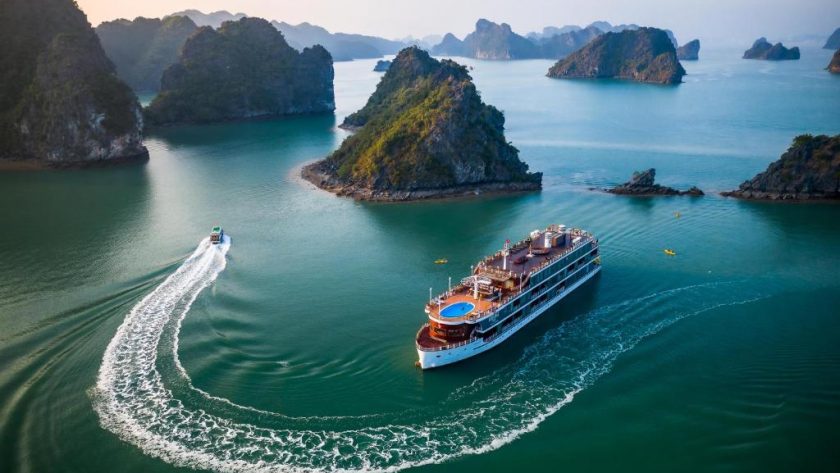
Lan Ha Bay feels composed rather than crowded. Fewer vessels navigate its lagoons. Anchorages are more secluded. The geography narrows into emerald corridors where kayaks glide beneath limestone arches in near silence.
This is not merely a bay.
It is a living maritime ecosystem where tides shape livelihoods and cliffs cradle floating homes.
Fishing villages drift in sheltered inlets, their wooden platforms supporting homes, schools, fish farms, and daily routines. Nets dry in the afternoon sun. Children row between houses. Seafood is harvested directly from the water below.
There is no theatrical staging. No curated performance.
Life unfolds with the tide.
For the contemporary luxury traveler — informed, globally aware, and culturally literate — proximity to authenticity carries more weight than spectacle. The value lies not in volume of activity, but in quality of presence.
From Sea to Forest: The Cat Ba Dimension
At the ecological heart of this maritime world lies Cat Ba Island — rugged, biodiverse, and globally significant.
Recognized as a UNESCO Biosphere Reserve, Cat Ba is more than scenic terrain; it is ecological capital. Dense tropical forests climb limestone ridges. Mangroves stabilize fragile coastlines. Coral reefs shimmer offshore.
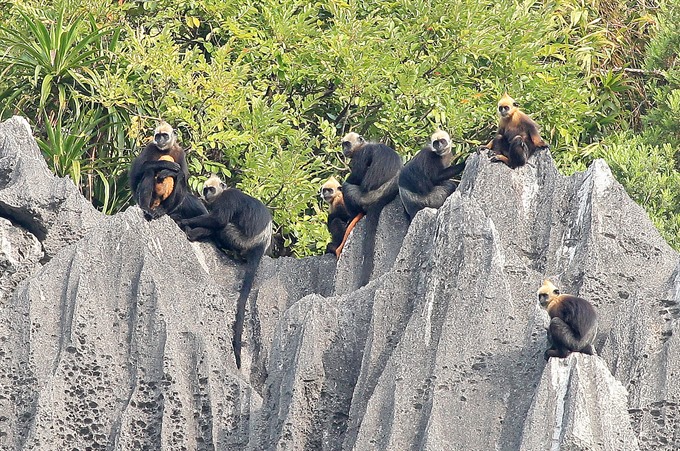
Hidden within these cliffs lives one of the rarest primates on Earth: the golden-headed langur (Voọc Cát Bà). Fewer than 100 remain in the wild.
Even without a sighting, the knowledge of their existence reframes the journey. The Gulf is not merely beautiful — it is fragile.
Cycling through Viet Hai Village, nestled between forest and mountain, adds a human dimension. Farmers cultivate modest plots beneath limestone shadows. Life follows the rhythm of monsoon and tide, not tourism.
Travel here becomes perspective.
Why Three Days Matters
The difference between one night and two is not arithmetic — it is emotional.
With three days and two nights, the Gulf begins to breathe.
You wake to sunrise twice.
You observe tides reversing direction.
You begin to recognize specific karst formations.
Kayaking shifts from activity to meditation.
Morning tai chi becomes ritual rather than novelty.
The landscape ceases to be backdrop. It becomes presence.
For high-performing professionals who measure luxury by intentional time allocation, this duration offers optimal immersion without inefficiency. It allows disengagement from mainland acceleration while maintaining strategic balance.
Luxury today is not about excess.
It is about equilibrium.
Boutique Scale, Human-Centered Design
Scale defines experience.
Unlike high-capacity vessels operating through neighboring waters, Heritage Cruises maintains boutique proportions. Balcony suites open to uninterrupted horizons. A high crew-to-guest ratio ensures service that feels attentive without intrusion.
Guests are known by name.
Meals unfold slowly — refined Vietnamese cuisine presented with elegance but without theatrical excess. Conversations extend naturally. Wine flows unhurriedly.
There are no loud announcements, no forced entertainment.
Luxury here is composure.
It is the confidence to let the landscape lead.
Cultural Context at Sea
Perhaps the most distinctive dimension of the voyage is narrative coherence.
The vessel’s design references Vietnam’s early 20th-century maritime renaissance — when Vietnamese entrepreneurs built shipping lines to assert autonomy in regional trade. Subtle archival motifs embedded throughout the ship connect past and present.
Outside the windows lies geology formed over millennia.
Inside the corridors lies history shaped by human ambition and resilience.
For globally minded travelers, this layered storytelling transforms scenery into meaning. The Gulf of Tonkin becomes more than a natural wonder; it becomes a cultural corridor linking commerce, community, and identity.
Luxury without context decorates.
Luxury with context resonates.
The Emerging Maritime Model
The global cruise industry often competes on scale and spectacle. Yet a countercurrent is gaining strength — one that values intimacy, sustainability, and intellectual depth.
Lan Ha Bay aligns naturally with this evolution. Its geography discourages overdevelopment. Its floating villages preserve living maritime culture. Its forests protect rare biodiversity.
Three days and two nights allow travelers to disengage from constant digital acceleration and enter a slower maritime rhythm — without sacrificing efficiency.
You encounter limestone cathedrals glowing at golden hour.
Floating communities sustained by tide.
Jungle paths leading to agricultural hamlets.
Awareness of one of the world’s rarest primates.
Sunrises that feel entirely your own.
This is not passive cruising.
It is calibrated immersion.
A Smarter Way to Experience the Gulf
For today’s informed luxury traveler, depth outweighs density. The Gulf of Tonkin is not simply a scenic corridor between Hanoi and the sea.
It is:
A geological archive.
A maritime livelihood.
A floating community.
A protected biosphere.
A fragile ecosystem deserving attention.
Three days and two nights do not merely extend a cruise.
They recalibrate perception.
As guests return to shore, what lingers is not the feeling of completion, but of continuity — an understanding that the Gulf is less a landmark and more a living system of water, forest, and resilience.
Not because the journey is longer.
But because it is deeper.
And in modern luxury travel, depth is the ultimate distinction.