

A perspective by Dr. Phạm Hà – Founding President & CEO, LuxGroup®
Throughout history, the world’s great cities have risen along rivers and coastlines. Water has always been the artery of civilization — a channel for commerce, culture, and human connection. London grew along the Thames, Paris flourished beside the Seine, New York emerged from the Hudson, and Singapore transformed itself into one of the world’s most dynamic maritime hubs because of its strategic gateway to the sea.
Ho Chi Minh City is no exception. The city that the world once knew as Saigon was born from the Saigon River, grew through trade and maritime exchange, and evolved into one of Southeast Asia’s most vibrant urban centers. The river shaped the geography, the economy, and even the identity of the city.
Today, as Ho Chi Minh City begins to articulate a new vision toward the sea, it is not simply proposing a new development strategy. It is, in many ways, rediscovering its natural destiny as a river–sea city.
The Saigon River: The Waterway That Built a City
The Saigon River stretches approximately 256 kilometers, rising in the highlands of southeastern Vietnam before flowing through the heart of Ho Chi Minh City and eventually merging with the Đồng Nai River system on its way to the East Sea via Gành Rái Bay.
For centuries, this river functioned as a vital commercial artery. Merchants from Vietnam, China, India, and Europe navigated its waters to reach Saigon’s bustling trading port. Along its banks, docks, markets, and warehouses gradually formed a thriving commercial landscape.
Ports such as Bạch Đằng Wharf, Nhà Rồng, and Khánh Hội once welcomed ships from across Asia and Europe. Through these waterways, goods, ideas, and cultures flowed into the city. This dynamic exchange helped transform Saigon into what many travelers once called “The Pearl of the Far East.”
The city’s early urban structure was designed around the river. Government buildings, commercial districts, and residential neighborhoods all oriented themselves toward the water.
In this sense, the Saigon River was never simply a geographic feature — it was the lifeline of the city.
Today, as Ho Chi Minh City searches for new engines of growth, the river once again holds enormous potential — not only as a transportation corridor but as the foundation for a river and maritime economy.
Cần Giờ: The City’s Gateway to the Ocean
Downstream from the city center lies Cần Giờ, where the Saigon River system meets the sea. This coastal district is home to the Cần Giờ Mangrove Biosphere Reserve, recognized by UNESCO as one of the world’s most important ecosystems.
The landscape here is remarkable — a vast network of mangrove forests, winding waterways, and coastal wetlands. It is one of the rare places in the world where pristine nature exists so close to a major metropolis.
From a strategic planning perspective, Cần Giờ should not be seen as the distant edge of Ho Chi Minh City. Instead, it represents the city’s maritime front door.
Nearby, the Gành Rái – Cái Mép – Thị Vải bay area is already emerging as one of Southeast Asia’s most important deep-water port clusters. This creates an extraordinary opportunity to develop a broader marine economic ecosystem, combining:
- international shipping and logistics
- maritime services
- coastal tourism
- offshore energy
- ecological conservation.
Many of the world’s most prosperous regions are built around major bays — such as Tokyo Bay, San Francisco Bay, and China’s Greater Bay Area.
With its river network and coastal gateway, Ho Chi Minh City has the potential to develop its own version of a “Saigon Bay.”
The Missing Piece: A River Economy
Despite its remarkable river system, Ho Chi Minh City has not yet fully embraced the economic potential of its waterways.
River transport, tourism, and waterfront development remain relatively underdeveloped compared to other global cities. In many international destinations, marinas and cruise ports form an essential part of tourism infrastructure.
Cities such as Monaco, Barcelona, Sydney, and Singapore have transformed their waterfronts into vibrant cultural and economic districts. Marinas serve not only as docking points for vessels but also as hubs for dining, shopping, arts, and entertainment.
For visitors, the waterfront becomes one of the most memorable parts of the city experience.
Ho Chi Minh City, with the Saigon River flowing gracefully through its center, has the opportunity to create a similarly dynamic waterfront culture.
A Boutique Fleet for River and Sea Exploration
Within this context, the private sector can play an important pioneering role. Drawing on more than two decades of experience in luxury travel, LuxGroup® is developing a long-term vision for Vietnam’s waterways.
Our ambition is to build a fleet of approximately ten boutique cruise vessels, designed to connect the river and coastal regions of southern Vietnam.
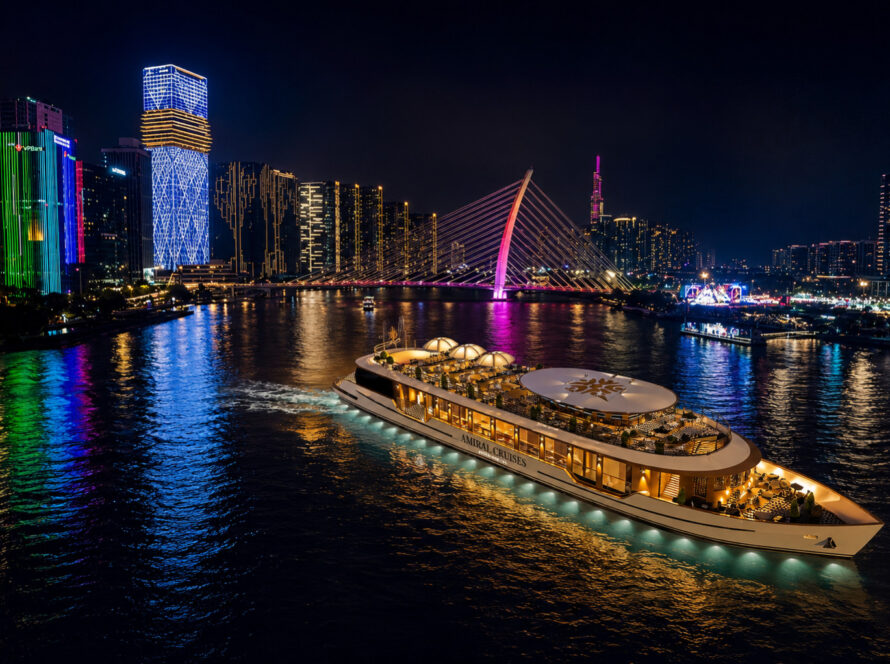
The first step in this vision is Amiral Cruises for Presidents®, a boutique vessel designed for intimate journeys lasting one to three nights.
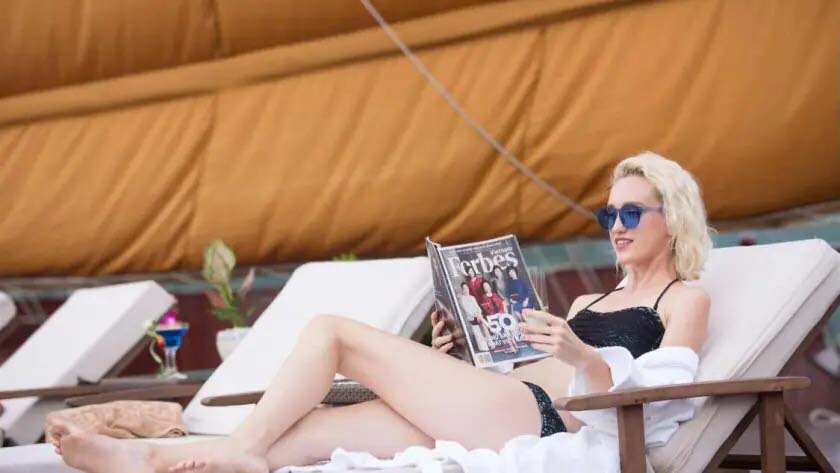
Unlike large mass-market cruise ships, Amiral embraces the philosophy of “quiet luxury.” This concept emphasizes refined elegance, privacy, and meaningful experiences rather than scale.
Each vessel features a limited number of suites, offering guests the atmosphere of a floating boutique hotel.
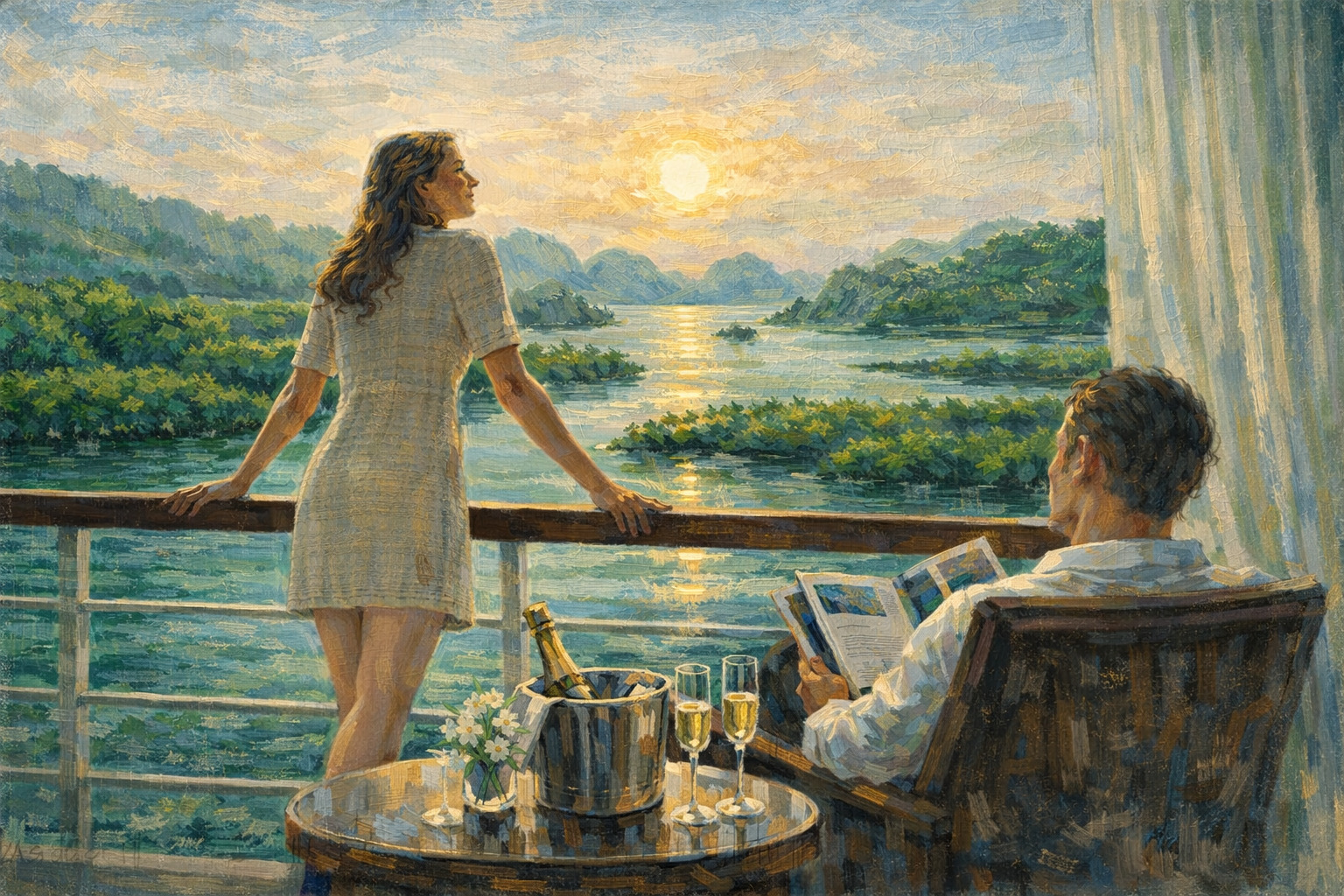
Guests might wake to the gentle movement of the river, enjoy breakfast on a private balcony overlooking the mangroves of Cần Giờ, and watch the skyline of Saigon slowly appear on the horizon.
Journeys That Tell Stories
River travel offers something unique that land travel often cannot: a continuous sense of narrative.
From the heart of Ho Chi Minh City, a variety of cruise journeys can unfold.
One route begins at Bạch Đằng Wharf, where travelers can observe the evolving skyline of the city and the emerging urban landscape of Thủ Thiêm across the river. As the vessel moves downstream, the scenery gradually shifts from modern cityscape to quiet riverside villages and green countryside.
Another journey leads to Củ Chi, where guests travel by river through lush landscapes before arriving at the historic tunnel complex — an experience far more immersive than traveling by road.
Further downstream, the cruise enters the mangrove world of Cần Giờ, where nature dominates the horizon. From there, the voyage may continue toward the Mekong Delta, where the great rivers of southern Vietnam flow toward the sea.
Each voyage becomes more than a trip — it becomes a cultural and historical narrative unfolding along the water.
Marina Infrastructure for a River City
For this vision to flourish, Ho Chi Minh City must invest more strategically in marina infrastructure and cruise ports.
Several locations could serve as key maritime tourism hubs:
- Bạch Đằng Wharf, the central riverfront of the city
- Nhà Rồng – Khánh Hội, a historic port deeply connected to Vietnam’s national story
- Cần Giờ, the ecological maritime gateway
- smaller river ports connecting destinations such as Củ Chi and the Mekong region.
These locations could evolve into vibrant waterfront districts, combining promenades, restaurants, museums, and cultural spaces.
Around the world, waterfront redevelopment projects often become the most iconic areas of modern cities.
Heritage, Culture, and Meaningful Travel
At LuxGroup®, we believe that tourism should go beyond leisure — it should offer cultural discovery and deeper understanding.
Our cruises are not designed simply to transport guests from one destination to another. Instead, they serve as platforms for storytelling.
These stories may include:
- the indigenous cultures that once lived along the river
- the rise of Saigon as a colonial trading port
- the historic 1911 departure of Nguyễn Tất Thành from Nhà Rồng Wharf
- the transformation of Saigon into modern Ho Chi Minh City
- and the future of a city rediscovering its connection to the sea.
Today’s global travelers increasingly seek authentic cultural narratives rather than superficial sightseeing.
The Future: A River–Sea City
Ho Chi Minh City stands at an important moment in its development.
With the future Long Thành International Airport, the expansion of deep-water ports in the region, and new planning visions for Cần Giờ, the city is gradually shaping a new identity — one that reconnects urban life with the river and the sea.
Within this broader transformation, water-based tourism — particularly boutique river cruising — can become a powerful new economic sector.
For LuxGroup®, investing in a fleet of river and coastal vessels is not merely a business strategy.
As I often say:
“This is not expansion for scale. It is the happiness project of my life — delivering quality, culture, and shared prosperity on Vietnam’s waters.”
In 1985, as a ten-year-old boy traveling with my father aboard the Thống Nhất ship from Haiphong to Saigon, I first experienced the magic of life on the water. When I stepped onto Nhà Rồng Wharf for the first time, something quietly took root in my imagination.
Four decades later, that childhood spark has evolved into a vision.
As Ho Chi Minh City turns its gaze toward the sea, the rivers that once built this city may once again guide its future — and the ships that travel these waters may carry not only travelers, but the stories of a nation shaped by rivers and oceans.