

As Vietnam’s tourism sector continues its strong recovery and sets new records in international arrivals, a critical question is emerging: how can the industry grow not just faster, but smarter and more sustainably?
Experts suggest that from 2026 onward, success in tourism should no longer be measured by visitor numbers alone, but by the value created per journey, the quality of experiences, and the positive impact on destinations.
Strong growth, but structural bottlenecks remain
Vietnam welcomed approximately 21.2 million international visitors in 2025, marking a new record. In the first two months of 2026 alone, the country received around 4.7 million visitors, reflecting continued momentum.
However, according to Dr. Pham Ha – Founding President & CEO of LuxGroup®, Vice Chairman of the Vietnam Green Tourism Association, rapid growth does not necessarily equate to efficient or sustainable growth.
“The biggest bottleneck in Vietnam’s tourism today is productivity. The industry still relies heavily on manual processes, fragmented data, and reactive operations, which increase costs and limit scalability and personalization,” he noted.

A dual transformation: digital and green
Dr. Pham Ha emphasized that Vietnam’s tourism sector needs to embrace a “dual transformation” strategy: digital transformation to enhance productivity and green growth to ensure long-term sustainability.
“These are not parallel options, but two sides of the same strategy,” he said.
Artificial intelligence (AI), in particular, is emerging as a powerful lever across the tourism value chain.
From marketing and sales to operations and customer experience, AI enables faster decision-making, better forecasting, and deeper personalization. When applied effectively, workforce productivity can increase by three to five times compared to traditional methods.
From selling tours to designing experiences
One of the most significant shifts in the industry is the transition from “selling tours” to “designing experiences.”
According to Dr. Pham Ha, luxury travelers today are no longer driven by surface-level opulence but by personalization, cultural depth, and meaningful engagement.
“Luxury is no longer about visible extravagance. It is about understanding, privacy, and emotional connection with a destination. AI helps us understand guests better and design journeys that truly resonate,” he said.
Technology as a driver of green growth
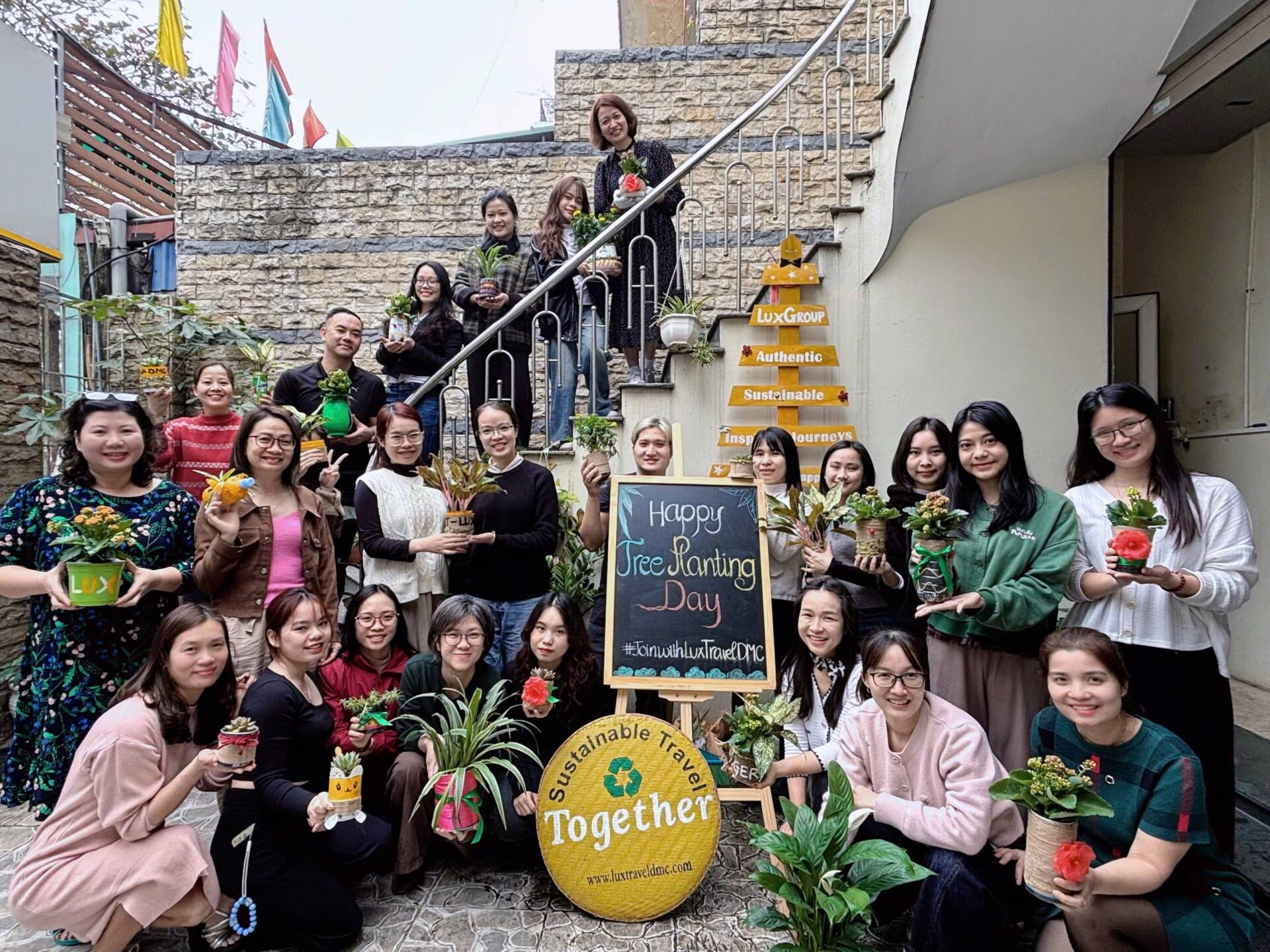
Beyond efficiency, digital transformation is also a key enabler of sustainability.
AI allows tourism operators to measure and optimize fuel consumption, emissions, resource use, and destination capacity in real time, reducing waste and environmental impact.
“When we can measure, we can manage. And when we can manage, we can truly become sustainable. This marks a shift from ‘green marketing’ to ‘green performance’,” Dr. Pham Ha explained.
Toward agile, data-driven business models
In the new landscape, businesses are encouraged to move away from large, rigid structures toward more agile, specialized ecosystems connected through data.
This approach enables flexibility, faster adaptation, and more efficient scaling.
At the same time, digital platforms and AI tools are narrowing the gap between large enterprises and smaller players, allowing local operators, guides, and boutique accommodations to access global markets—supporting more inclusive growth.
Technology enhances, not replaces, the human touch
Despite the rapid advancement of AI, Dr. Pham Ha stressed that technology should not replace the human element in tourism.
“Tourism is an industry of emotions. AI should empower people to serve better, giving them more time for care, empathy, and meaningful interaction,” he said.
A strategic pathway forward
Experts agree that Vietnam’s tourism development in the coming years should be anchored on three key pillars: comprehensive digital transformation, widespread AI adoption across the value chain, and sustainable development aligned with green growth.
In parallel, building a strong national brand rooted in culture, heritage, nature, and people will be essential to enhancing Vietnam’s global positioning.
“Vietnam cannot become a tourism powerhouse without becoming a productivity powerhouse,” Dr. Pham Ha concluded.