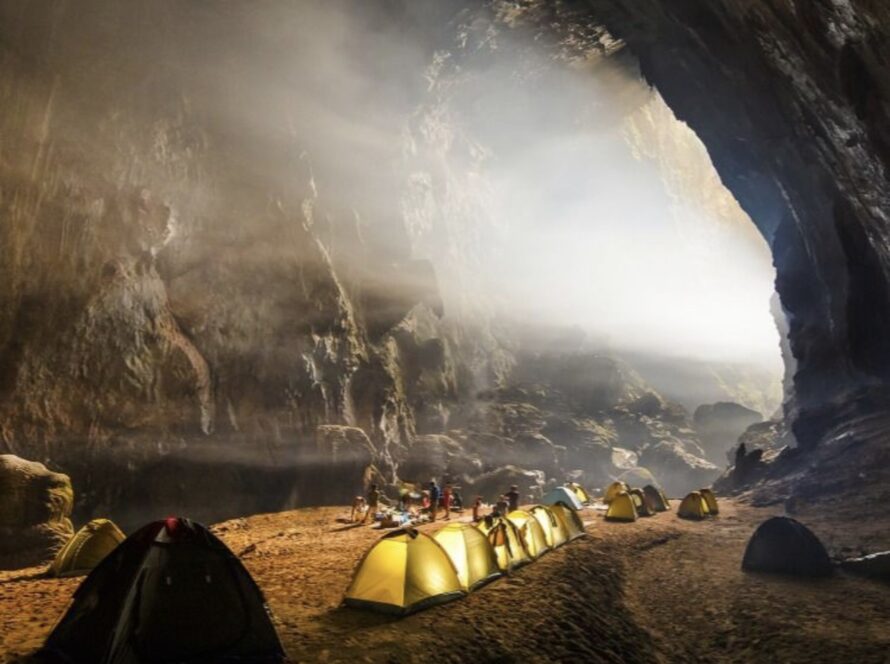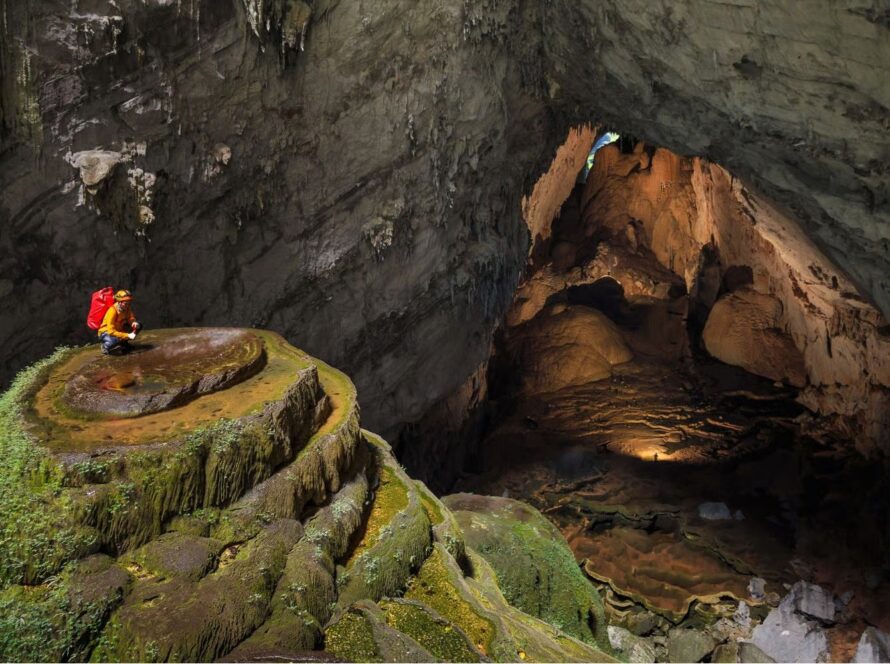


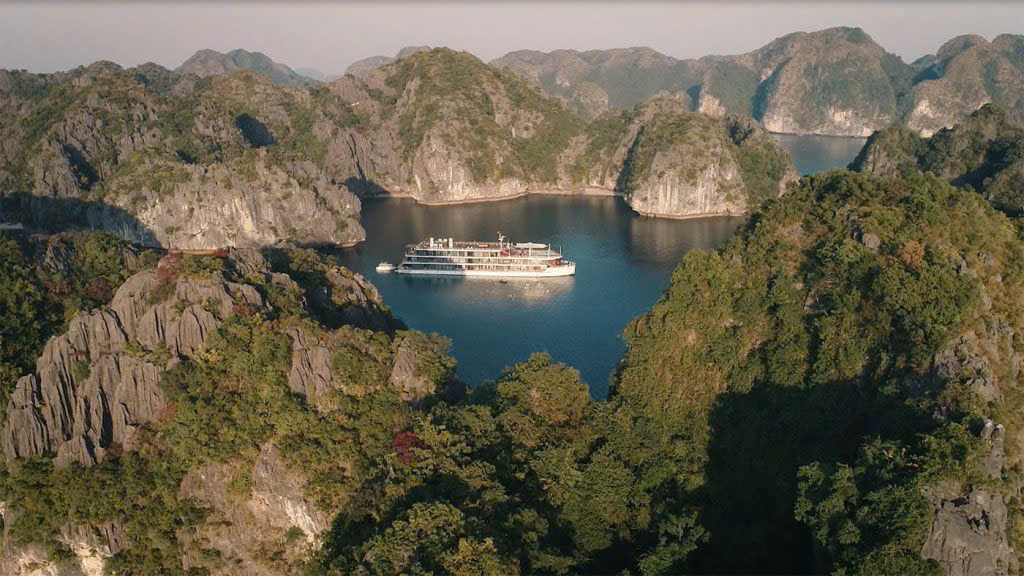
The landscapes of Ha Long Bay have been rinsed to the bone. Seen a thousand times, sold a thousand times, until seasickness sets in. A slurry of images where the eye slides as if on plastic. The Heritage Bình Chuẩn understands this: it doesn’t sail, it enters into dialogue with the bay. Beneath a 1920s veneer, laced with Vietnamese craftsmanship, it restores text where only image remained. The crossing becomes a reading.
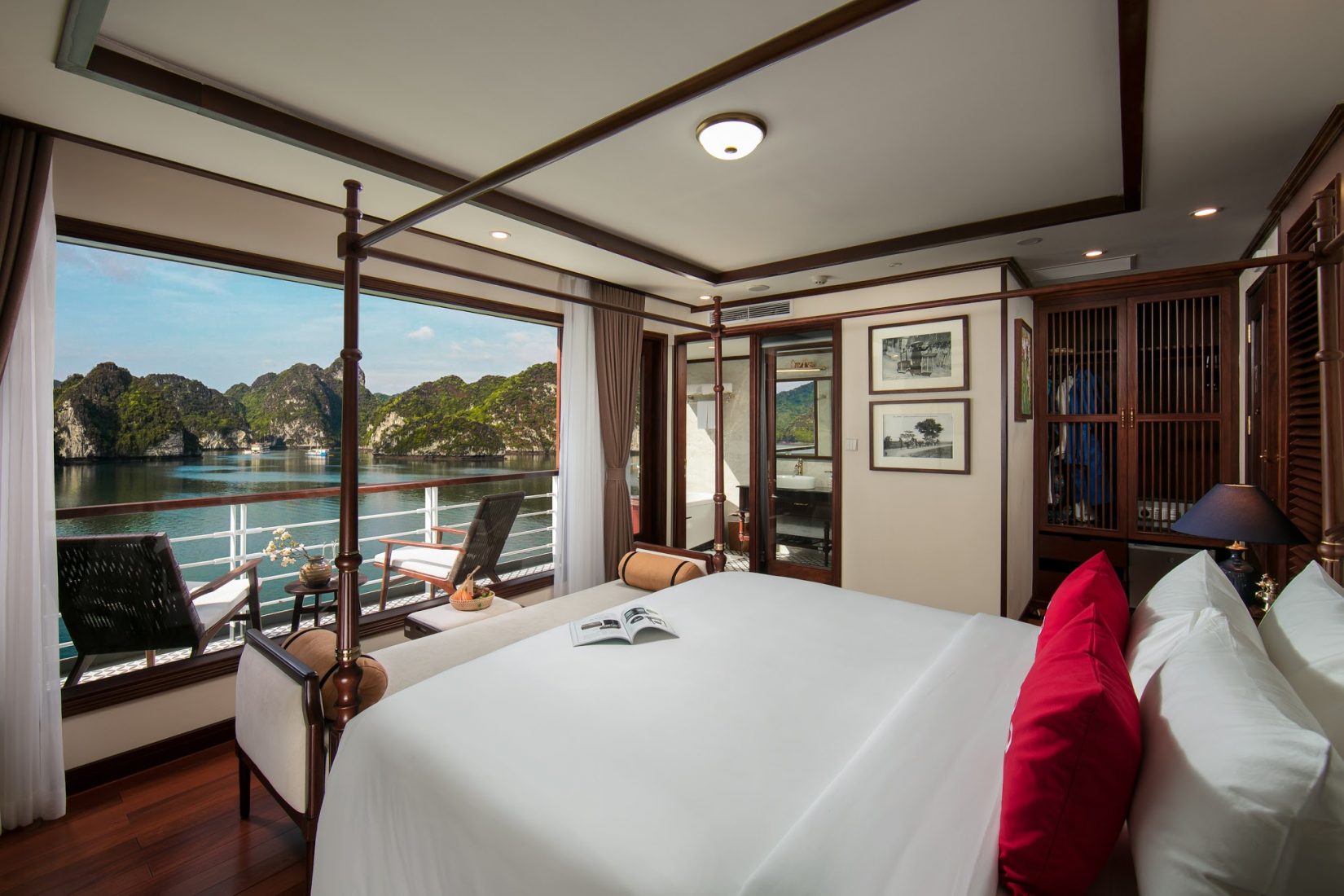
Luxury here is not in comfort, but in access to narratives. The grand one: the geological bay, its millions of years of stone. The small ones: those human-scale stories that fissure the obvious. Onboard, the shadow of Bạch Thái Bưởi surfaces, while the visions of the painter Phạm Lực slip between the rocks, and a collection of black-and-white photographs from French Indochina suspends the gaze, like a past that refuses to fall silent.
The ship skims nothing. It lingers, insists, and eventually makes the bay speak.
The memory-vessel of a tonkinese child
Is the ultimate luxury not to inhabit the childhood dream of Phạm Hà? In resurrecting the Bình Chuẩn, he does not merely pay tribute to Bạch Thái Bưởi, a legendary figure of Ha Long; he closes a loop opened at the age of twelve, on the docks of Haiphong.
To stay onboard is to slip into that fault line where one man’s vision takes form. Luxury leaves marble behind for a more unstable matter, a form of applied poetry. You don’t buy a cruise; you enter the obsession of a designer, an aesthetic entrepreneur, a passionate collector, who has delivered a part of himself to the ship: his personal collections, his aesthetic choices, almost his own living room displaced into the landscape, offered to passengers.
This is where the Heritage Bình Chuẩn separates itself: not by what it shows, but by what it exposes of the man who conceived it. In the middle of a bay saturated with formatted products, this ship acts as a silent act of defiance against tourist chatter. Here, you do not consume a panorama; you inhabit a passion. The rest is only a noisy misunderstanding.
The resonance of surfaces: when the brush becomes geology
The presence of Phạm Lực onboard is not a matter of interior decoration, but of a superposition of materials. His stroke is vigorous, sometimes brutal, laid onto humble supports—burlap, rice sacks—as if painting had to struggle to exist. He smooths nothing: he scores, he splits, he deposits layers.
And, without forcing it, it answers the Ha Long Bay. Notched cliffs, eroded limestone, surfaces worn by water and time: the same logic of scar. Two writings of the world, one slow, the other nervous, but a single underlying matter.
And it is precisely there that the Heritage Bình Chuẩn finds its meaning: the ship becomes a surface of contact between these two writings. That of the bay—slow and geological—and that of the hand—immediate and tense. Onboard, the landscape is no longer simply contemplated: it is put under tension, it answers, it plays itself out again.
When national epic tames the colonial cliché
Onboard, a silent reconciliation takes place between the strata of a troubled history, at the heart of a setting that seems itself drawn from a dream. It is a little like a captain taking out a bottle of rum and inviting everyone into his quarters—not to settle accounts, but to sit with them.
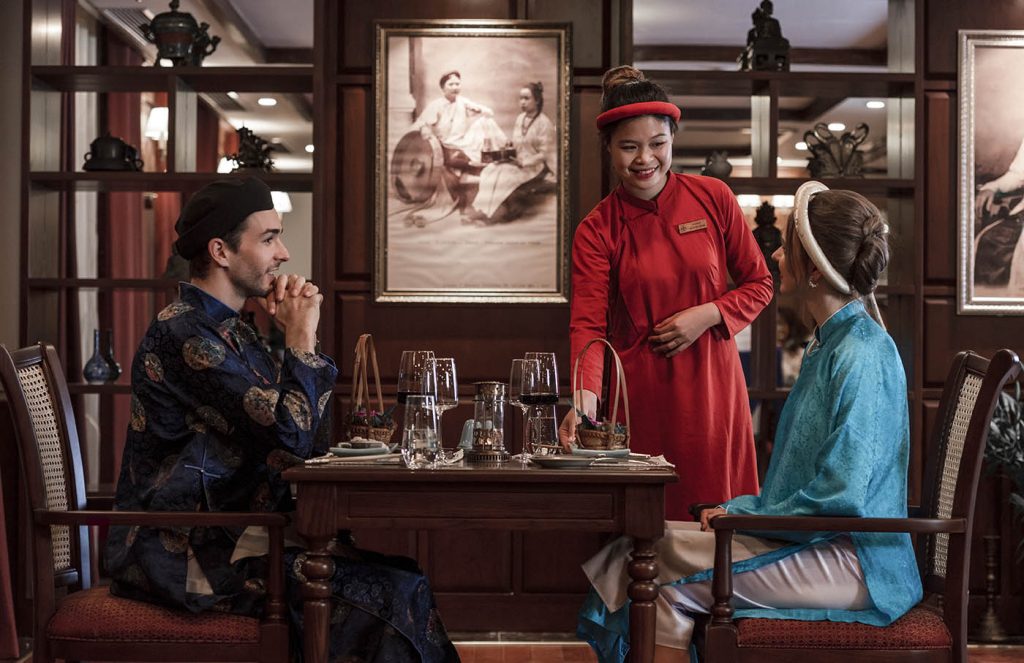
To navigate here, in this land of legends where the dragon descended to spit jade pearls that became islands, lends a sacred density to the crossing. On one side, the ship celebrates the epic of Bạch Thái Bưởi, the figure of emancipation who broke colonial monopolies to return sovereignty of the waters to the Vietnamese. On the other, the corridors display a collection of period photographs where the gaze of French Indochina, at times steeped in condescension, freezing people into the picturesque, appears without disguise.
But here, among these millennial limestone laces, the balance shifts: these images are no longer instruments of domination; they become disarmed archives of a vanished world, observed from a ship that now belongs to the vision of a son of this land. In making national pride and colonial remnants coexist under the immobile gaze of the limestone giants, the ship does not resolve the confrontation, it absorbs it. What remains is no longer conflict, but a superposition of memories, where contemporary Vietnam reclaims its narrative without raising its voice. The bay is no longer a backdrop; it becomes the place where history settles without disappearing.
Those who watch, those who read
While, on the upper deck, the ritual of margaritas and selfies plays out, the Heritage Bình Chuẩn continues its course, imperturbable. It carries, in a polite silence, two worlds that coexist without truly touching: that of light entertainment, and that of a slower memory, inscribed in rock and laid upon canvas.
The Ha Long Bay continues to knit its stone. A patient grand dame, slightly weary, accustomed to being photographed more than she is listened to.
Too bad for those who do not know how to read.