

By Pham Ha – Founding President & CEO, LuxGroup®
Tourism is no longer optional—it is a growth pillar
At the Vietnam Economic Growth Forum 2025, double-digit GDP growth was framed not as an aspiration, but as a strategic necessity amid intensifying regional competition and a rapidly shifting global economy.
Within this context, tourism can no longer be treated as a supporting sector.
It is expected to become a primary engine of growth.
By 2030, Vietnam targets:
* 35 million international arrivals
* 10 million jobs
* 14–15% contribution to GDP
Yet, beyond ambition lies execution. The real challenge is not vision, but capability.
The gap is not about resources. Vietnam has them in abundance—coastlines, rivers, heritage, culture, and people.
The gap lies in productivity, institutions, and how the tourism economy is organized.
“Double-digit growth is not achievable if tourism continues to operate under a low-productivity model. This is the moment to shift from extraction to value creation.”
Productivity: the core constraint on growth
If tourism is an economic sector, productivity is its most critical metric.
Vietnam still lags behind regional peers across three key indicators:
* Spending per visitor
* Length of stay
* Value added per journey
This reflects a fundamental issue:
we are selling resources more than we are creating experiences.
Meanwhile, global demand has clearly evolved:
* Travelers seek value, not just affordability
* They seek personalization, not mass consumption
* They seek emotional depth, not standardized services
This structural shift requires a redefinition of the industry:
* From mass tours → personalized experiences
* From standardized services → culturally rich offerings
* From “selling rooms” → “telling stories”
“Luxury is not about excess. It is the ability to generate higher value per journey—through culture, emotion, and refinement.”
Improving productivity is not only about technology or workforce training.
It requires restructuring the entire tourism value chain.
Policy: from control to enablement
One of the most significant constraints facing Vietnam’s tourism sector is institutional.
While global tourism markets move with speed and flexibility, domestic policies often remain administrative in mindset and slow to adapt.
Three issues stand out:
First, visas are not yet a competitive tool.
Vietnam’s visa policies remain cautious, while regional peers are aggressively liberalizing to attract high-value travelers.
Second, planning lacks integration.
Tourism infrastructure—ports, airports, and urban systems—has not been developed as a unified ecosystem, resulting in fragmented experiences.
Third, insufficient support for market-leading enterprises.
Most domestic tourism businesses are small and under-capitalized, lacking policy tools to scale globally.
“Policy should not only regulate—it must enable. If institutions do not lead, markets cannot follow.”
Redefining products: from destinations to experiences
Vietnam faces a persistent paradox: world-class resources, but underdeveloped products.
Many destinations follow repetitive development models, lacking depth and distinct identity—limiting competitiveness in higher-value segments.
Upgrading requires a new framework built on four pillars:
* Culture – not static heritage, but living narratives
* Nature – not scenery alone, but sustainable ecosystems
* Cuisine – not food, but national identity
* People – the decisive factor shaping emotion and memory
This is not merely product development.
It is value positioning.
“Vietnam cannot compete on the number of destinations—it must compete on the depth of experience.”
Unlocking the “river–sea front”: a strategic growth space
Vietnam is a country defined by rivers and seas.
Yet this advantage remains underutilized economically.
Current constraints include:
* A lack of dedicated international-standard cruise ports
* Weak infrastructure connectivity
* Limited high-value water-based tourism products
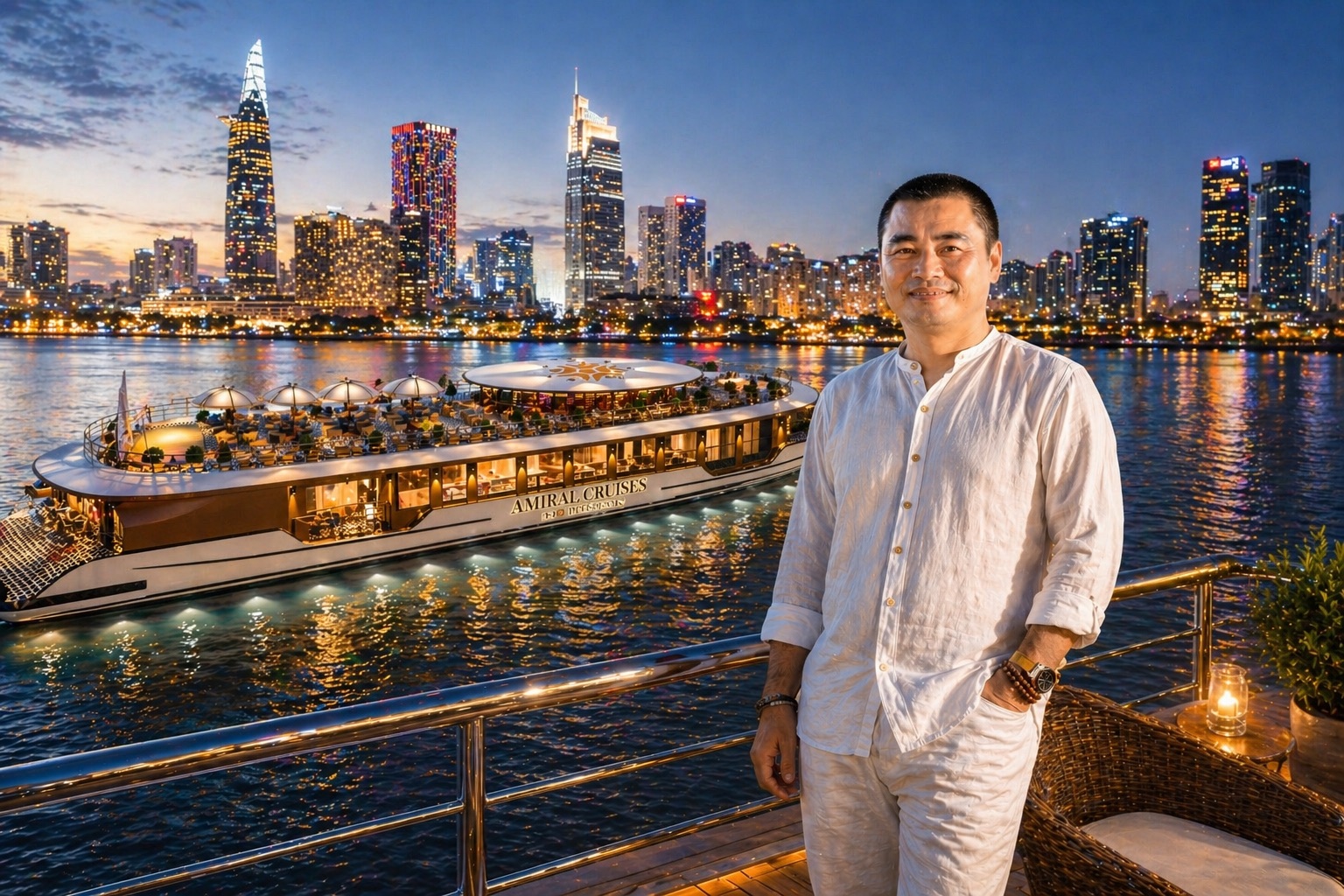
At the same time, cruise and yacht tourism represent one of the highest-value segments globally.
This is a strategic gap.
Unlocking Vietnam’s “river–sea front” requires a systemic approach:
* Developing dedicated tourism ports
* Integrating ports, airports, and urban centers
* Building riverfront and coastal economic zones
* Standardizing international passenger handling and logistics
“River and maritime tourism is not just a product—it is an economic space. If left undeveloped, it represents a missed long-term growth pillar.”
National positioning: culture as the core advantage
In an era of global competition, destinations are increasingly similar.
Only one advantage cannot be replicated: culture.
Vietnam must reposition itself on the global tourism map.
Not as a low-cost destination.
Not as a high-volume destination.
But as a destination defined by:
* Culture
* Nature
* People
A country where:
* Every journey tells a story
* Every experience creates memory
* Every destination reflects identity
“Luxury is Culture – Delivering Happiness. Culture must move from being a resource to becoming the core of national strategy.”
Vision 2045: tourism as a high-value economy
With the right breakthroughs, tourism can become a true pillar of Vietnam’s economic structure.
By 2045:
* 45 million international visitors is achievable
* But more importantly, a qualitative transformation must occur
Tourism should evolve into:
* An export industry delivered domestically
* A tool of soft diplomacy
* A high-value, high-impact economic sector
Vietnam does not lack potential.
What it requires is a decisive shift:
* From control → enablement
* From administration → market orientation
* From volume → value
“Tourism does not need privilege. It needs a strong ecosystem to thrive.”
Conclusion: a moment for decisive choices
A 15% GDP contribution from tourism is within reach.
But it cannot be achieved with outdated approaches.
This is a moment for three critical breakthroughs:
* Productivity
* Policy
* National positioning
If achieved, tourism will not only drive economic growth,
but elevate Vietnam’s position in the global value chain.
If delayed, Vietnam risks remaining outside the high-value segment of global tourism.
The true value of tourism lies not in the number of visitors, but in the depth of experience.