

Long before Đồng Khởi Street became the vibrant heart of modern Ho Chi Minh City, it was known to the world as Rue Catinat — the most elegant boulevard in French Indochina.
In the early twentieth century, Rue Catinat was more than a street. It was the cultural and social spine of old Saigon, lined with grand hotels, refined cafés, bookstores, shipping offices, tailor shops, and shaded terraces where conversations unfolded in French, Vietnamese, Chinese, and English.
Travelers arriving from Marseille, Singapore, Hong Kong, or Shanghai often began their first walk through Saigon along this very avenue. Steamships docked nearby. River winds carried the scent of coffee, tobacco, perfume, spices, and sea salt. The city moved slowly, elegantly, and with a cosmopolitan rhythm unique to the Far East.
Saigon was not isolated from the world.
It was connected to it by water.
And it was within this atmosphere that the spirit of La Rotonde was born.
The Meaning of La Rotonde
In French, La Rotonde refers to a circular salon or gathering space — a place designed for openness, conversation, and exchange.
During the Belle Époque and Art Deco eras, cafés and salons carrying the name La Rotonde became symbols of cosmopolitan life across Europe and Asia. They welcomed artists, writers, intellectuals, diplomats, sailors, merchants, and travelers before continuing their journeys across oceans and continents.
The name evokes a timeless world of warm golden lights, polished wood, handwritten letters, jazz melodies, vintage maps, crystal glasses, and stories carried by ships between East and West.
It recalls an era when travel was not measured by speed, but by elegance, curiosity, and human connection.
La Rotonde was never simply a café.
It was a gateway to the wider world.
Saigon — The Pearl of the Far East
In the early 1900s, Saigon was often called the “Pearl of the Far East.”
Rue Catinat embodied that reputation perfectly.
Along the boulevard stood iconic addresses such as the Hôtel Continental, Grand Hôtel de Saigon, riverside cafés, elegant boutiques, and the offices of maritime companies linking Indochina with Europe and the wider world.
French officers shared sidewalks with Vietnamese intellectuals. Chinese merchants traded beside Indian textile houses. Journalists, artists, diplomats, sailors, and adventurers crossed paths beneath the tropical trees of old Saigon.
The city was alive with movement and cultural exchange.
European wines met Vietnamese coffee. Tailored suits crossed paths with silk áo dài. Jazz drifted through open windows while steamships departed toward distant horizons.
At the center of this world stood the Saigon River — the city’s great maritime gateway.
The Maritime Memory of 1911
Historical references suggest that a café named La Rotonde once stood near the offices of the French shipping company Chargeurs Réunis along the Saigon waterfront, close to Nhà Rồng Wharf.
This was the maritime world of Saigon in June 1911 when a young Nguyễn Tất Thành — later known to the world as Hồ Chí Minh — boarded the steamship Amiral Latouche-Tréville to begin his extraordinary journey across the oceans.
At the time, he was simply known as Văn Ba.
No one could have imagined that the young kitchen helper departing from the harbor would one day become one of the defining figures of modern Vietnamese history.
Yet his journey began here — among cafés, steamships, river winds, and the cosmopolitan energy of old Saigon.
La Rotonde became symbolic of that spirit:
a place of departure,
of discovery,
of courage,
and of dreams reaching far beyond the horizon.
La Rotonde Reimagined
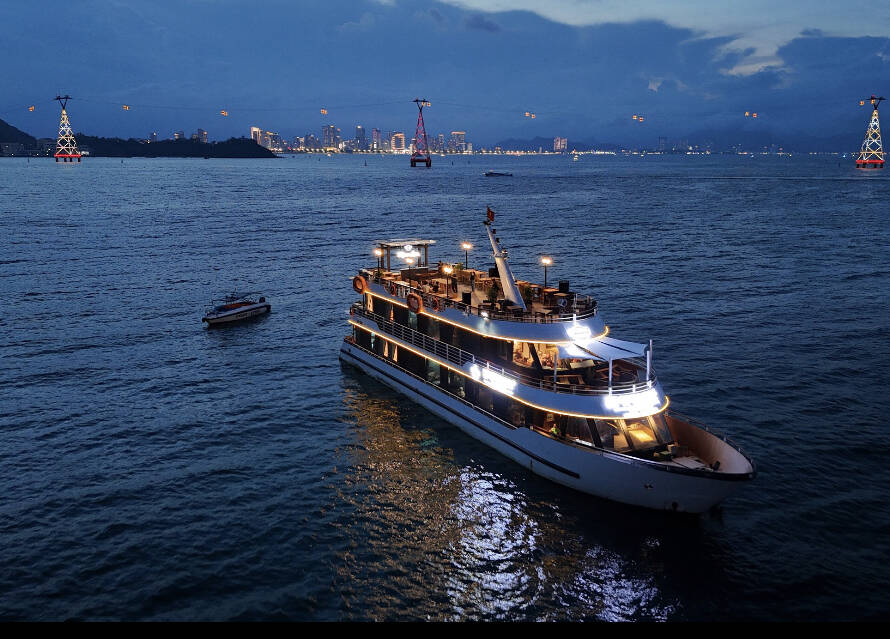
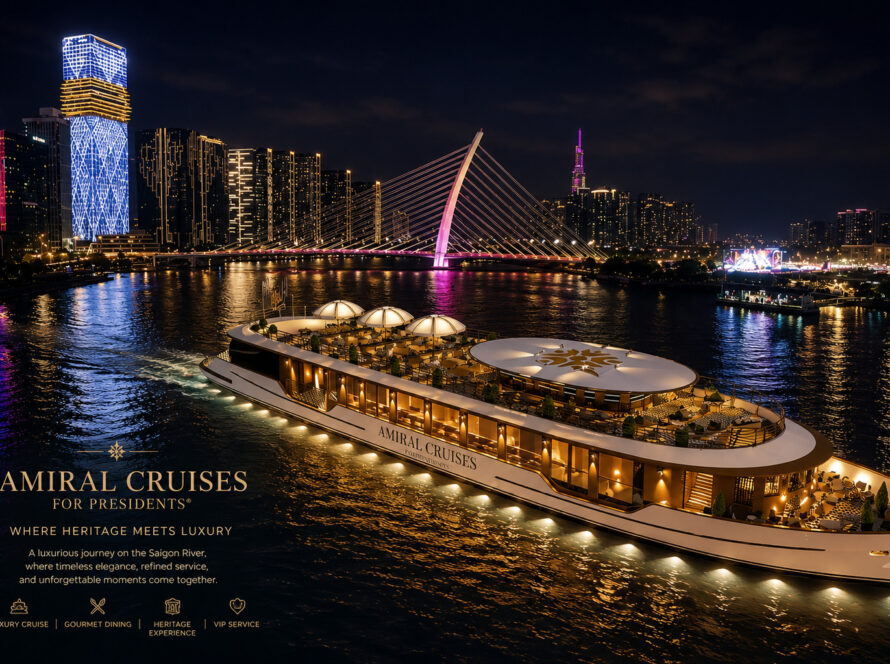
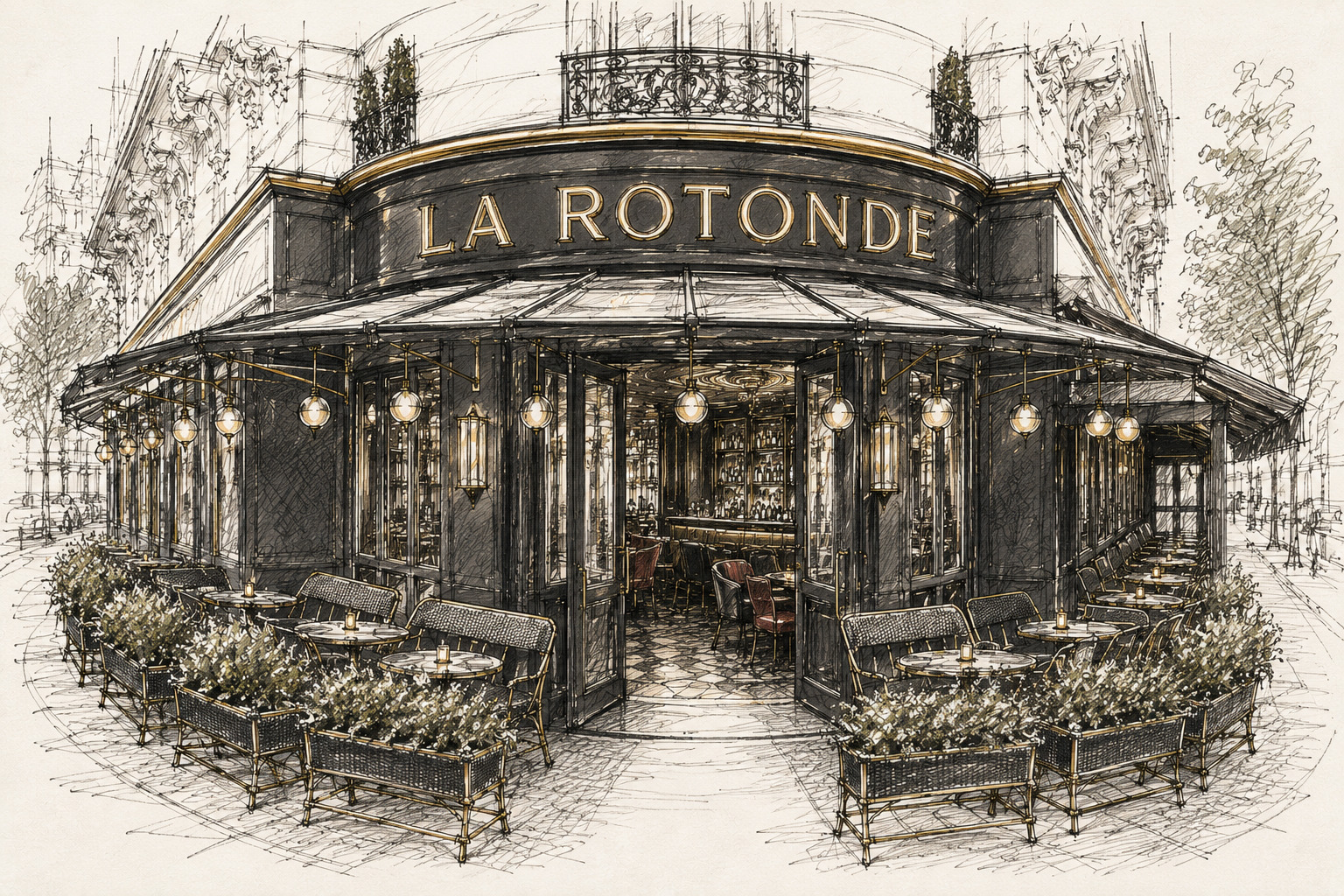
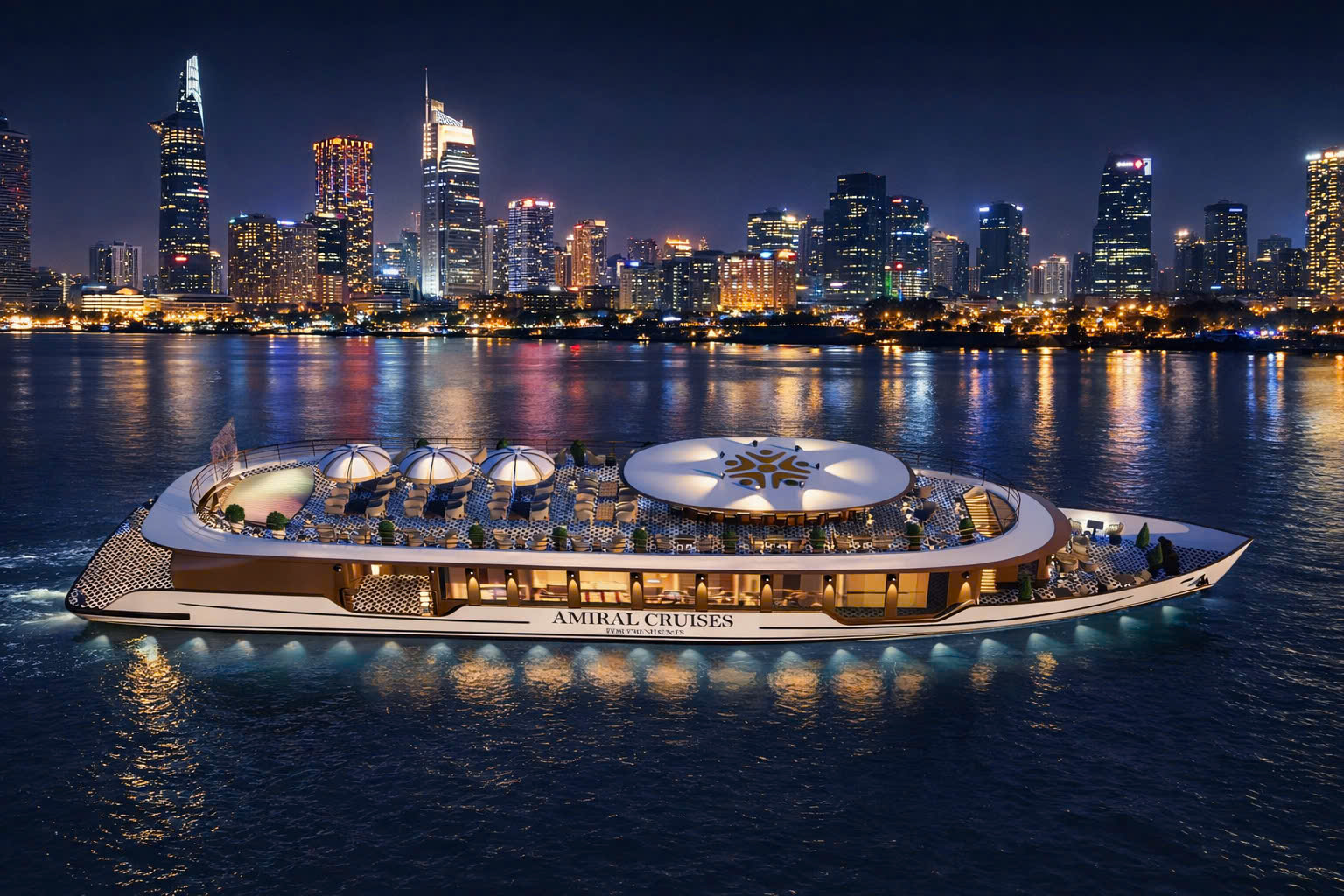
More than a century later, La Rotonde is reimagined aboard Amiral Cruises for Presidents® as a refined Art Deco lounge and cultural salon inspired by old Saigon’s riverfront elegance and the romance of Far Eastern voyages.
Located aboard La Maison 1911, La Rotonde is conceived not simply as a bar or lounge, but as a storytelling destination where heritage, gastronomy, music, and hospitality converge.
Every detail reflects this philosophy:
warm brass lighting,
dark lacquered wood,
vintage travel aesthetics,
Indochine textures,
jazz and piano melodies,
old maritime books and maps,
and panoramic views of the Saigon River itself.
The atmosphere is intentionally intimate, emotional, and timeless — what Amiral Cruises calls quiet luxury.
Nothing is created for spectacle alone.
Everything is designed to evoke memory, emotion, and meaningful connection.
Because true luxury today is no longer about excess.
It is about meaning.
The Meaning Behind the Logo
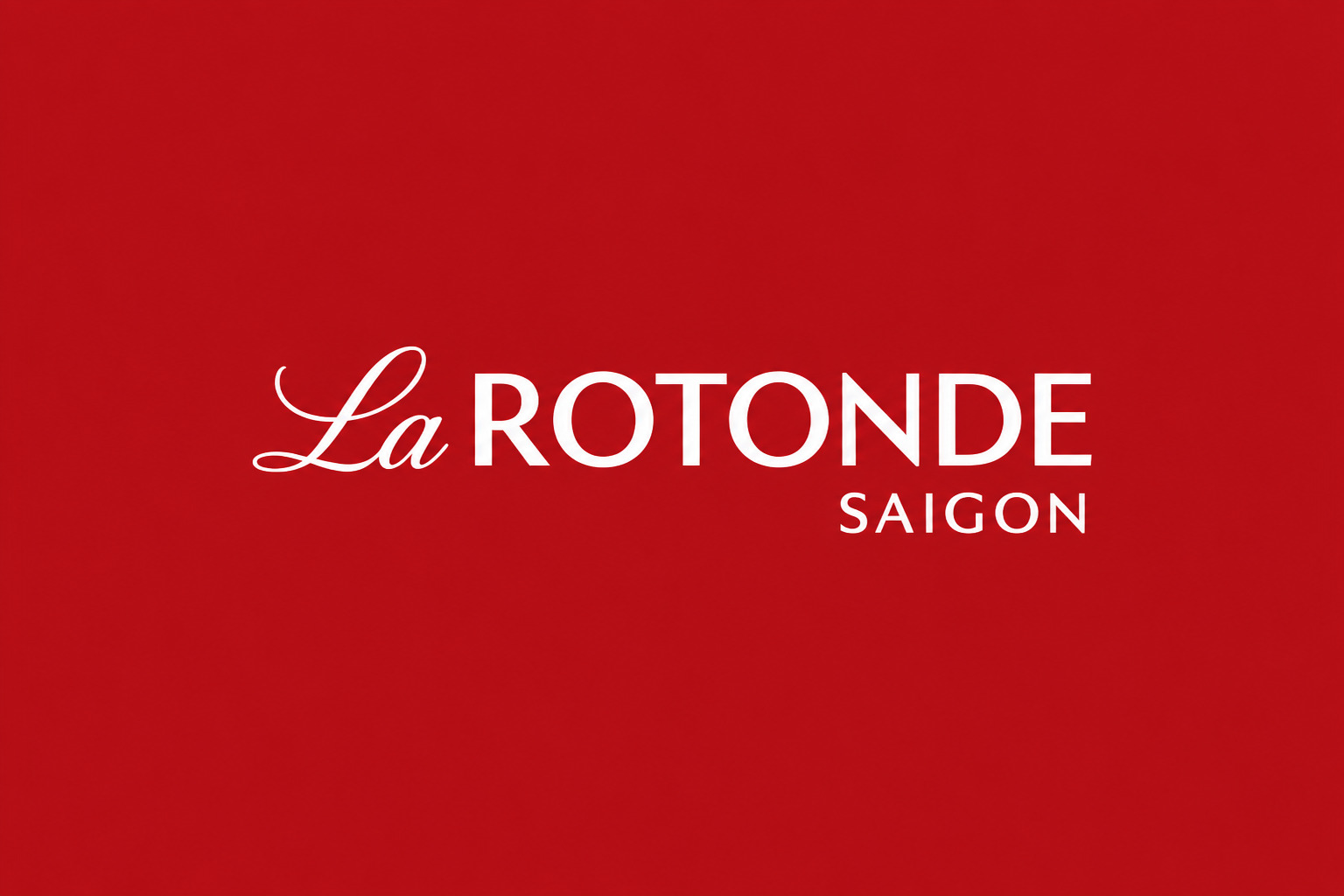
The identity of La Rotonde Saigon reflects the meeting of French heritage and contemporary sophistication.
The handwritten “La” draws inspiration from classic French calligraphy, expressing softness, refinement, romance, and artistic spirit. It recalls the elegance of Parisian salons and the emotional charm of old-world hospitality.
In contrast, “ROTONDE” appears in a modern and confident typography, balancing timeless elegance with contemporary luxury. “SAIGON,” placed subtly beneath, acts like a discreet signature — grounding the brand in the soul of the city itself.
Together, the logo represents the union of:
French Indochine heritage,
boutique luxury hospitality,
and the timeless spirit of river journeys.
Rouge Indochine
The signature color palette, known as Rouge Indochine, is inspired by lacquer art, velvet lounges, vintage travel trunks, Art Deco interiors, and the crimson reflections of sunset over the Saigon River.
The deep red evokes warmth, intimacy, sophistication, and passion.
Combined with elegant ivory-white typography, it creates a visual identity that feels timeless, cinematic, and unmistakably luxurious.
It is both nostalgic and contemporary — a tribute to the enduring beauty of old Saigon reimagined for a new generation of global travelers.
Storytelling Through Hospitality
At La Rotonde, hospitality becomes narrative.
Cocktails are inspired by historic maritime connections between Saigon and Marseille. Vietnamese herbs, spices, coffee, cacao, and tropical botanicals are reinterpreted through refined contemporary mixology.
Small plates celebrate the flavors of river and coastal Vietnam, elevated through elegant presentation and cultural storytelling.
Music is carefully curated to accompany the rhythm of slow river travel — jazz, acoustic performances, French classics, piano evenings, and contemporary Vietnamese lounge melodies that soften the pace of the night.
Every detail is designed not only to impress, but to create emotional resonance.
Because luxury is not simply about seeing a destination.
It is about feeling connected to it.
From Rue Catinat to Đồng Khởi
Today, Rue Catinat is known as Đồng Khởi Street — one of the most dynamic boulevards in modern Vietnam.
The steamships have disappeared.
The skyline has changed.
The city has grown into a vibrant global metropolis.
Yet the spirit of the river remains.
Through La Rotonde, Amiral Cruises reconnects travelers with the forgotten maritime soul of Saigon — when journeys began slowly, elegantly, and with a profound sense of wonder about the world ahead.
More than a lounge,
more than a destination,
La Rotonde is a tribute to old Saigon, to the romance of the Far East, and to Vietnam’s enduring aspiration to connect with the world through culture, elegance, and humanity.
It is where great journeys begin.