

President Ho Chi Minh’s Path from Nha Rong Wharf to a Nation’s Aspiration
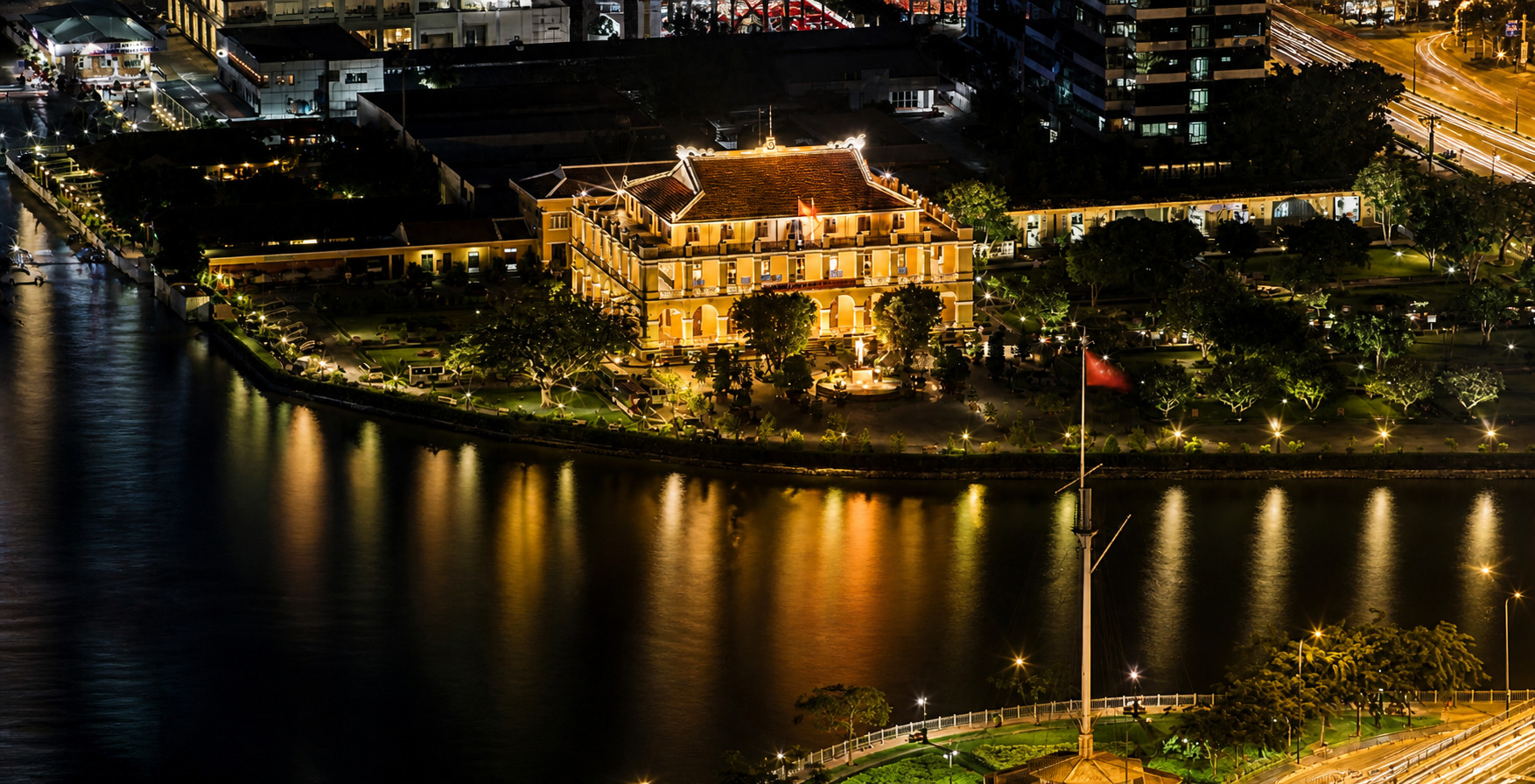
On June 5, 1911, at Nha Rong Wharf along the Saigon River, a 21-year-old young man named Nguyễn Tất Thành boarded the ship Amiral Latouche-Tréville as a kitchen assistant.
It was not a leisure voyage.
Not a journey in search of personal fame.
And certainly not a path filled with certainty or comfort.
It was the moment a young Vietnamese left behind safety and familiarity to search for a future for his nation.
More than a century later, that journey still resonates — not only in Vietnamese history, but also in the hearts of those who carry ambition, resilience, curiosity, and the courage to engage with the world.
It became the making of a leader shaped not by privilege, but by real life: through labor, travel, diplomacy, culture, communication, hardship, and a profound understanding of humanity.
1911 – LEAVING THE COMFORT ZONE TO WORK AS A GALLEY ASSISTANT
On June 5, 1911, Nguyễn Tất Thành departed Saigon aboard the Latouche-Tréville under the name Văn Ba.
Rather than pursuing the conventional elite path of overseas academic study, he chose to begin at the lowest rung of maritime labor — working in the ship’s kitchen, cleaning, carrying supplies, and accepting every difficult task.
That decision opened the world to him.
From international ports and colonial trading routes to the daily realities of workers and sailors, he witnessed firsthand the inequalities of colonialism and the machinery of global powers.
He chose to understand life from the ground up.
LESSON
To accomplish great things, one must first dare to leave the comfort zone.
No great vision is born from convenience alone.
1911–1917 – LEARNING FROM THE “BOTTOM” OF SOCIETY
For years, Nguyễn Tất Thành traveled across Africa, the Americas, and Europe, constantly observing, recording, and learning from real life.
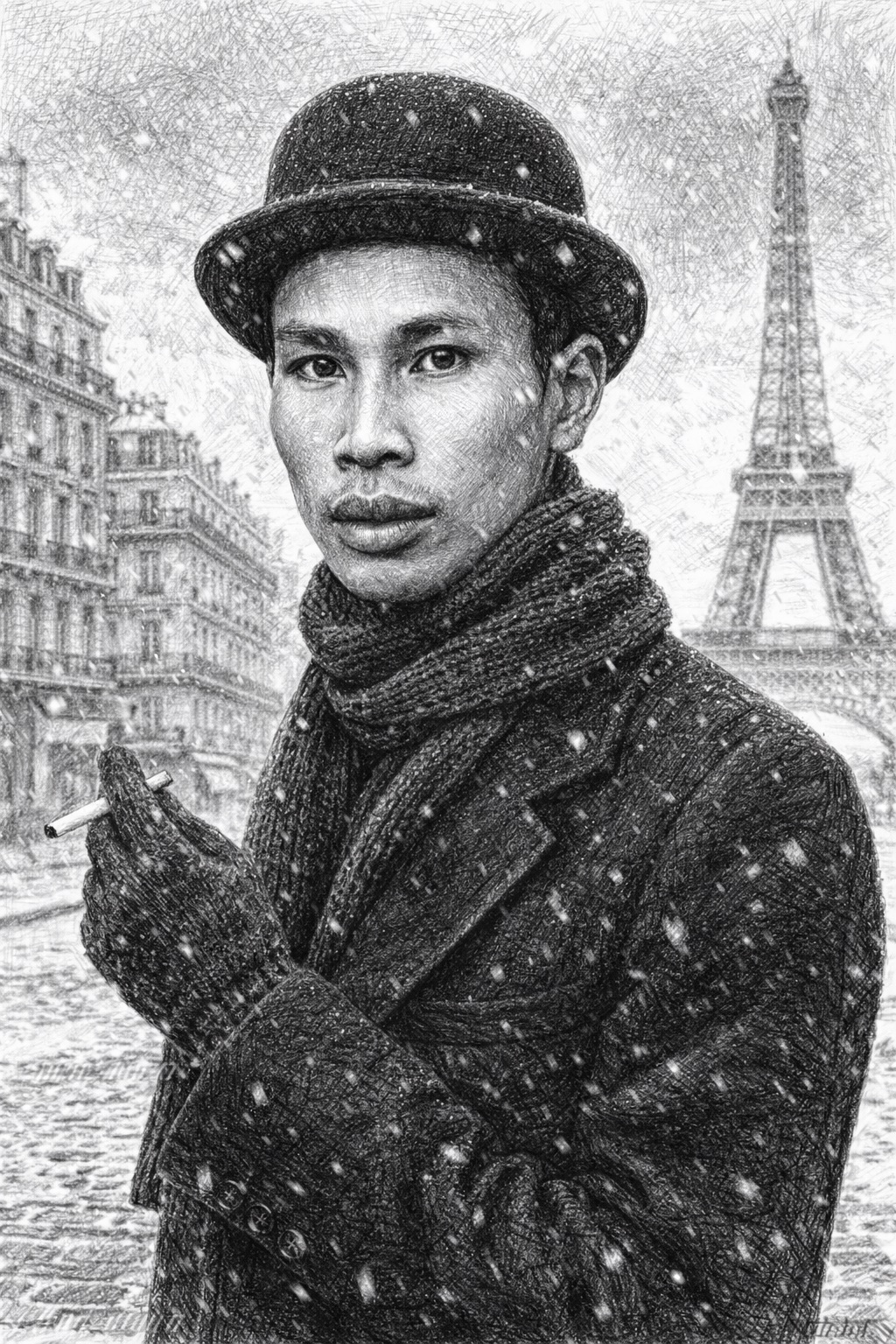
To survive abroad, he worked many humble jobs: kitchen assistant, snow shoveler, furnace stoker in freezing London basements, photo retoucher, baker, and candle maker in Paris.
He did not learn about the world only through books.
He learned through labor, hardship, and direct human experience.
Those difficult years gave him deep insight into the dignity of work, the struggles of ordinary people, and the inner workings of modern Western society.
LESSON
True wisdom is rarely born inside ivory towers.
It is forged through struggle, resilience, and lived experience.
YEARS ABROAD: USING CULTURAL IDENTITY TO BUILD CONNECTIONS
While working in Sainte-Adresse, a French seaside resort town, the young Nguyễn Tất Thành never abandoned his Vietnamese identity.
He introduced Vietnamese culture to the Western world through folk songs, The Tale of Kiều, stories from his homeland, and the refinement of Vietnamese cuisine.
In an era dominated by colonial arrogance, he carried himself with dignity rather than inferiority.
He brought Vietnamese culture into global conversations with quiet confidence and self-respect.
LESSON
Cultural identity is not a burden.
It is soft power.
Nations earn respect when they know how to tell their own stories with pride and authenticity.
1919–1920 – SEIZING THE MOMENT TO MAKE HIS VOICE HEARD
After nearly a decade of silent observation and preparation, Nguyễn Ái Quốc emerged onto the international stage by sending the “Petition of the Annamite People” to the Versailles Peace Conference in 1919.
It was more than a political petition.
It was a remarkably modern act of international communication — bringing Vietnam’s cause before global public opinion.
Later, at the Tours Congress in France in 1920, he spoke passionately about national self-determination and the liberation of colonized peoples.
LESSON
Great leaders know how to remain patient during periods of preparation.
But when history opens a window of opportunity, decisive action becomes essential.
1923–1924 – SPEAKING AT THE CENTER OF THE WORLD
In the Soviet Union, Nguyễn Ái Quốc did not remain on the sidelines.
He spoke directly at major international forums of the Communist International and the Peasant International, raising the issue of colonialism and the rights of oppressed nations.
A man from a small colonized country compelled global powers to listen through intellect, courage, and moral clarity.
LESSON
Never underestimate yourself because of where you come from.
In a global world, influence is shaped not by size, but by the strength of ideas and the legitimacy of one’s cause.
1924–1929 – NURTURING A NEW GENERATION IN GUANGZHOU
In Guangzhou, Nguyễn Ái Quốc understood that sustainable revolutions begin not with haste, but with education, communication, and organization.
He wrote The Revolutionary Path, founded Thanh Niên newspaper, and established training programs for young Vietnamese patriots.
He was not only thinking about immediate action.
He was building the foundation for future generations.
LESSON
Every lasting vision begins with people.
No great mission can endure without education, values, and capable successors.
1930–1932 UNITING FORCES AND THE “HONG KONG ESCAPE”
In 1930, in Hong Kong, Nguyễn Ái Quốc helped reconcile competing revolutionary factions to establish the Communist Party of Vietnam.
It was an act of leadership that placed unity above personal ego.
Soon after, he was arrested by British authorities. Through intelligence, language skills, legal understanding, and cooperation with lawyer Frank Loseby, he secured his release in one of the most remarkable legal episodes of his life.
LESSON
In the modern world, legal knowledge, global awareness, and communication skills are strategic forms of power.
1941–1945 – RETURNING HOME AND SEIZING A HISTORIC OPPORTUNITY
Returning to Pác Bó in 1941, Nguyễn Ái Quốc founded the Việt Minh and began preparing for the General Uprising.
He skillfully leveraged support from the American OSS through efforts to rescue Allied pilots, while simultaneously building revolutionary forces within Vietnam.
When Japan surrendered in August 1945, Hồ Chí Minh and the Việt Minh seized power from the Trần Trọng Kim government. Former Emperor Bảo Đại, after his abdication, was invited to serve as Supreme Advisor in order to unite patriotic forces, strengthen the ideals of independence, freedom, and happiness, and provide legitimacy for the new government before proclaiming Vietnam’s independence on September 2, 1945.
LESSON
Great leaders do not merely create power.
They also know how to create “strategic advantage.”
Understanding how to seize the right international context at the right historical moment can change the destiny of an entire nation.
1946 – “REMAINING UNCHANGED WHILE ADAPTING TO CHANGE”
In 1946, surrounded by internal and external threats, President Hồ Chí Minh pursued diplomacy with extraordinary flexibility.
He signed preliminary agreements, traveled to France for negotiations, and engaged with international intellectuals and journalists in order to gain time and strengthen Vietnam’s position.
But when compromise reached its limit, he called for nationwide resistance.
LESSON
Strong leadership is not rigidity.
It is knowing what principles must remain unchanged while adapting wisely to changing realities.
1950–1960 – USING CULTURE TO TOUCH THE HEARTS OF OTHERS
During the height of war, President Hồ Chí Minh maintained a remarkably simple lifestyle and a deeply human approach.
He welcomed foreign journalists and scholars with sincerity, calmness, and messages of peace.
That authenticity helped shape global public opinion and inspired anti-war movements around the world.
LESSON
The highest form of communication is not propaganda.
It is authenticity.
To move the hearts of the world, one must first preserve humanity and dignity.
1969 – THE VISION OF “STANDING SHOULDER TO SHOULDER WITH WORLD POWERS”
President Hồ Chí Minh passed away on September 2, 1969.
In his Testament, he spoke not only of victory, but of the future — of education, culture, ethics, and the aspiration for Vietnam to “stand shoulder to shoulder with the great powers of the world.”
It was more than political guidance.
It was a national vision.
LESSON
A truly great legacy is not measured by temporary power.
It is measured by the foundations, hope, and inspiration left behind for future generations to continue the journey.