

In an increasingly fragmented world, the nations that leave the deepest impression are not always the loudest, richest, or most technologically dominant. They are the countries that know how to tell their stories with confidence, authenticity, emotional intelligence, and cultural depth. Vietnam is becoming one of those nations. As global tourism shifts away from mass consumption toward meaningful and transformative experiences, Vietnam is quietly emerging as one of Asia’s most emotionally compelling destinations — a country where heritage, humanity, resilience, gastronomy, rivers, spirituality, and modern ambition coexist in rare harmony.
This is no longer simply the story of a fast-growing tourism economy. It is the story of a nation rediscovering the value of its own cultural identity and learning how to share that identity with the world through experiences that feel intimate, alive, and deeply human. Increasingly, Vietnam is no longer remembered only through the lens of war, affordability, or scenic beauty. Instead, it is becoming recognized for something far more powerful in the modern luxury era: authenticity.
“Luxury today is about authenticity, emotional connection, personalization, and meaningful experiences. Rivers make that connection natural because they carry the memory of the land.”
— Phạm Hà
From the ancient civilizations of the Red River Delta and the Mekong to the vibrant rhythm of Saigon and the timeless elegance of Huế and Hội An, Vietnam offers travelers something increasingly rare in today’s hyper-digital world — a living culture that still feels emotionally real. In an era defined by speed, algorithms, artificial intelligence, and hyper-curated lifestyles, humanity itself has become a new form of luxury. Vietnam’s greatest strength may lie not in what it builds, but in what it preserves emotionally, spiritually, and culturally.

Vietnam’s story begins with water.
For more than 4,000 years, rivers and seas have shaped the nation’s identity, economy, cuisine, spirituality, architecture, literature, trade, and collective memory. The Red River nurtured the civilization of Thăng Long and Northern Vietnam. The Mekong created floating cultures, fertile agricultural systems, and one of the world’s richest riverine civilizations. The Saigon River connected Vietnam to global commerce, migration, and modern urban transformation. Long before aviation connected continents, rivers connected civilizations.
In many ways, Vietnam has always been a river nation.
Today, that river identity is returning to the center of Vietnam’s tourism future. Around the world, travelers increasingly seek slower, deeper, and more meaningful journeys — experiences centered on emotion, storytelling, gastronomy, wellness, heritage, and cultural immersion rather than scale alone. Vietnam is uniquely positioned for this transformation because culture remains deeply embedded in everyday life instead of being artificially staged for visitors. The beauty of Vietnam is not manufactured. It exists naturally in morning wet markets, riverside villages, hidden cafés, ancestral homes, floating communities, incense-filled temples, street kitchens, and family meals shared across generations.
This is where Vietnam’s emotional advantage becomes visible.
Luxury itself is undergoing a profound transformation globally. Affluent travelers are increasingly moving away from excessive consumption toward experiences defined by privacy, authenticity, emotional resonance, personalization, sustainability, and cultural depth. Increasingly, people seek journeys that create memories rather than simply display status. Vietnam’s tourism evolution reflects this global shift perfectly. Rather than competing solely through infrastructure, extravagance, or spectacle, Vietnam is beginning to position itself around emotional authenticity and immersive storytelling rooted in local identity.
This transformation is particularly visible through a new generation of Vietnamese hospitality brands redefining what luxury can mean in Southeast Asia. Among them is LuxGroup® — one of Vietnam’s pioneering luxury tourism companies and an emerging symbol of the country’s cultural hospitality movement. Founded in 2005 by Phạm Hà, the company has evolved from a boutique travel operator into an integrated ecosystem of luxury travel, boutique cruises, hospitality, gastronomy, arts, sustainability, and storytelling-led experiences.
Its collection of “small giant” brands reflects a distinctly Vietnamese interpretation of luxury — intimate rather than massive, emotional rather than transactional, culturally rooted rather than globally generic. The ecosystem includes Lux Travel DMC®, Heritage Cruises®, Emperor Cruises®, and Amiral Cruises for Presidents®. Together, these brands represent more than tourism products. They reflect Vietnam’s transition from “value for money” toward the “value of experience.”
Unlike many global hospitality groups built around scale and standardization, LuxGroup® embraces the philosophy of boutique integration, where every brand carries a story, an emotional identity, and a cultural soul. Heritage Cruises® reimagines the golden age of Indochine river journeys inspired by the entrepreneurial spirit of Bạch Thái Bưởi and Vietnam’s maritime heritage. Emperor Cruises® revives the glamour, refinement, and royal elegance associated with Emperor Bảo Đại through intimate luxury cruising experiences in Hạ Long Bay and Nha Trang.
Meanwhile, Amiral Cruises for Presidents® — Vietnam’s first luxury boutique river-maritime cruise line — seeks to transform the Saigon River into a new cultural luxury axis for modern Vietnam. More than a cruise concept, Amiral Cruises represents a broader national vision where rivers become cultural stages, heritage becomes immersive storytelling, and travel becomes an emotional journey through memory, gastronomy, art, music, architecture, and human connection. It reflects a larger strategic ambition known as Vietnam Waterways® — a vision positioning Vietnam’s rivers and coastlines not merely as infrastructure, but as living cultural corridors capable of shaping the country’s future soft power.
For Phạm Hà, tourism is not simply an economic industry. It is cultural diplomacy.
“The future of luxury is not excess. It is emotion, culture, sustainability, and humanity,” says Phạm Hà. “Vietnam does not need to imitate global luxury models. Our greatest strengths already exist in our rivers, our cuisine, our heritage, our arts, our people, and our stories. That is the true Story of Vietnam.”
Vietnam’s rise today extends far beyond tourism alone. The country is increasingly recognized as one of Asia’s most dynamic emerging economies — attracting global investment, entrepreneurial innovation, manufacturing expansion, digital transformation, and international attention. Yet Vietnam’s greatest soft power may lie elsewhere. It lies in emotional credibility. Vietnam feels real.
In a world increasingly shaped by artificial intelligence, social media perfection, digital overload, and algorithm-driven lifestyles, authenticity itself has become aspirational. Travelers are no longer searching only for destinations. They are searching for emotion, atmosphere, memory, and meaning.
This explains why more travelers are now drawn toward places that feel personal, imperfect, local, and emotionally grounded. Vietnam delivers this naturally. The country’s appeal is no longer limited to beaches, affordability, or landscapes. Increasingly, visitors come searching for atmosphere and emotional resonance: street-side coffee culture in Hanoi, imperial nostalgia in Huế, lantern-lit evenings in Hội An, floating life in the Mekong Delta, cinematic sunsets on the Saigon River, mountain markets in the North, or simply the quiet poetry of everyday Vietnamese life.
There is also another dimension to Vietnam’s rise: resilience.
Few nations in modern history have transformed as profoundly and as quickly as Vietnam. From decades of war and hardship, the country has emerged as one of Asia’s most optimistic and forward-looking societies. Yet despite modernization, Vietnam has retained a remarkable sense of social warmth, family culture, and collective identity. This coexistence between modern ambition and cultural continuity is increasingly rare in the contemporary world.
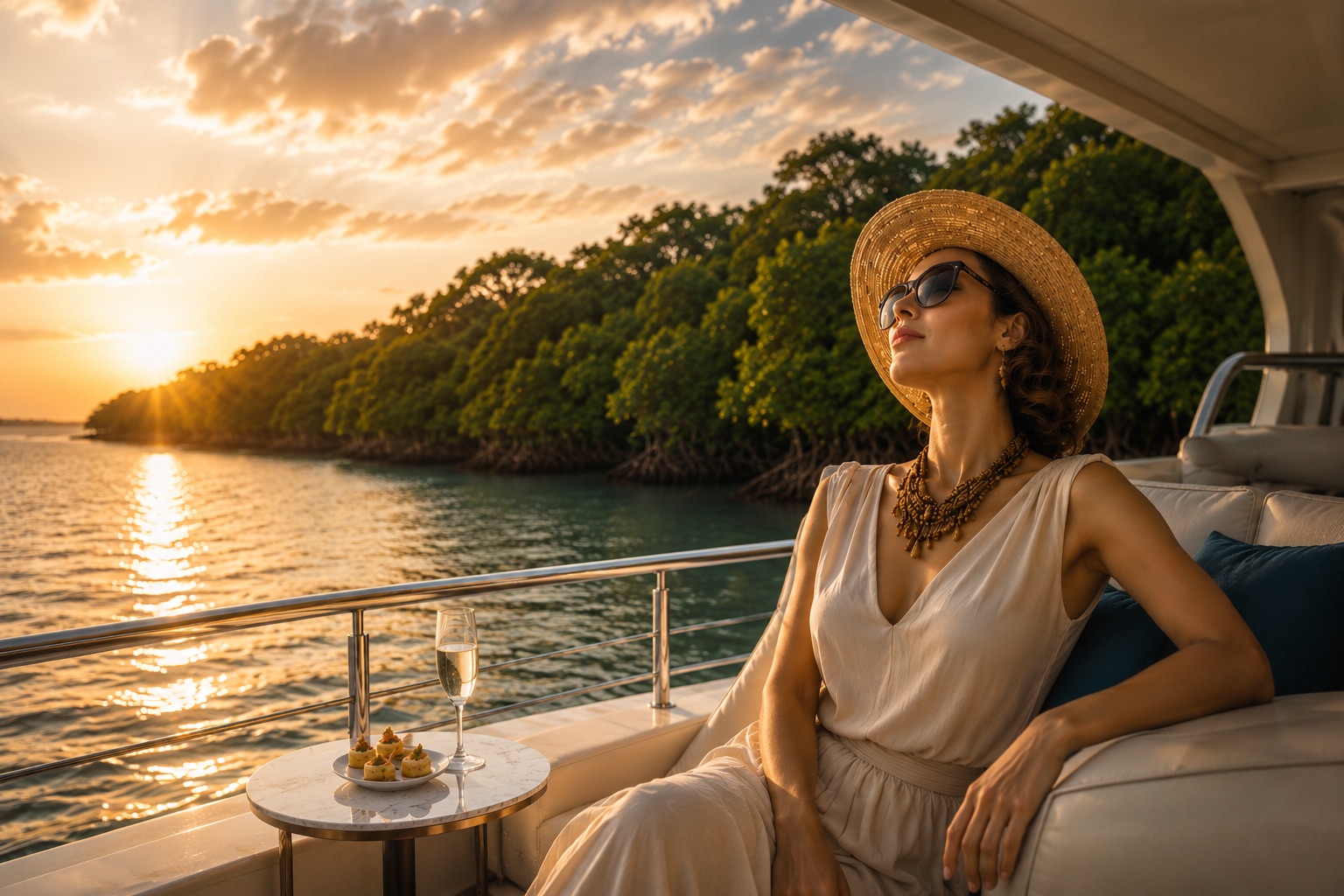
Every great nation eventually realizes that branding is not advertising. It is identity.
France tells stories of romance, gastronomy, and art. Italy celebrates beauty, craftsmanship, and lifestyle. Japan exports precision, philosophy, and aesthetics. Vietnam’s greatest opportunity may lie in telling the story of a resilient, human-centered civilization shaped by rivers, memory, culture, hospitality, and renewal. Not a perfect country, but a deeply alive one.
As Vietnam moves toward its aspirations for 2045, the challenge will not simply be attracting more visitors or building more infrastructure. The greater challenge will be preserving the emotional soul that makes the country unforgettable in the first place.
Because the true luxury Vietnam offers the world may not be found only in hotels, yachts, resorts, or fine dining. It is found in human warmth, cultural depth, emotional authenticity, meaningful storytelling, and the feeling of genuine connection.
And perhaps that is the most powerful Story of Vietnam the world needs today.