

A Milestone in Modern Vietnamese Sculpture and the Spirit of Vietnamese Entrepreneurship
By Phạm Hà
In the history of the École des Beaux-Arts de l’Indochine (Indochina College of Fine Arts), artists such as Lê Phổ, Mai Trung Thứ, Nguyễn Phan Chánh and Vũ Cao Đàm have long been the subjects of scholarly research, museum exhibitions and international recognition. By contrast, Nguyễn Gia Khánh, who signed his works in French as Georges Khánh, remains comparatively little known, despite belonging to the pioneering generation that laid the foundations of modern Vietnamese sculpture.
Existing historical records indicate that Georges Khánh was born around 1905 or 1906, although his exact birth year has yet to be conclusively established. He belonged to the inaugural class of the École des Beaux-Arts de l’Indochine, which opened in Hanoi in 1925. This historic cohort also included Lê Phổ, Mai Trung Thứ, Nguyễn Phan Chánh, Lê Văn Đệ and Công Văn Trung—artists who would later define the course of twentieth-century Vietnamese art.
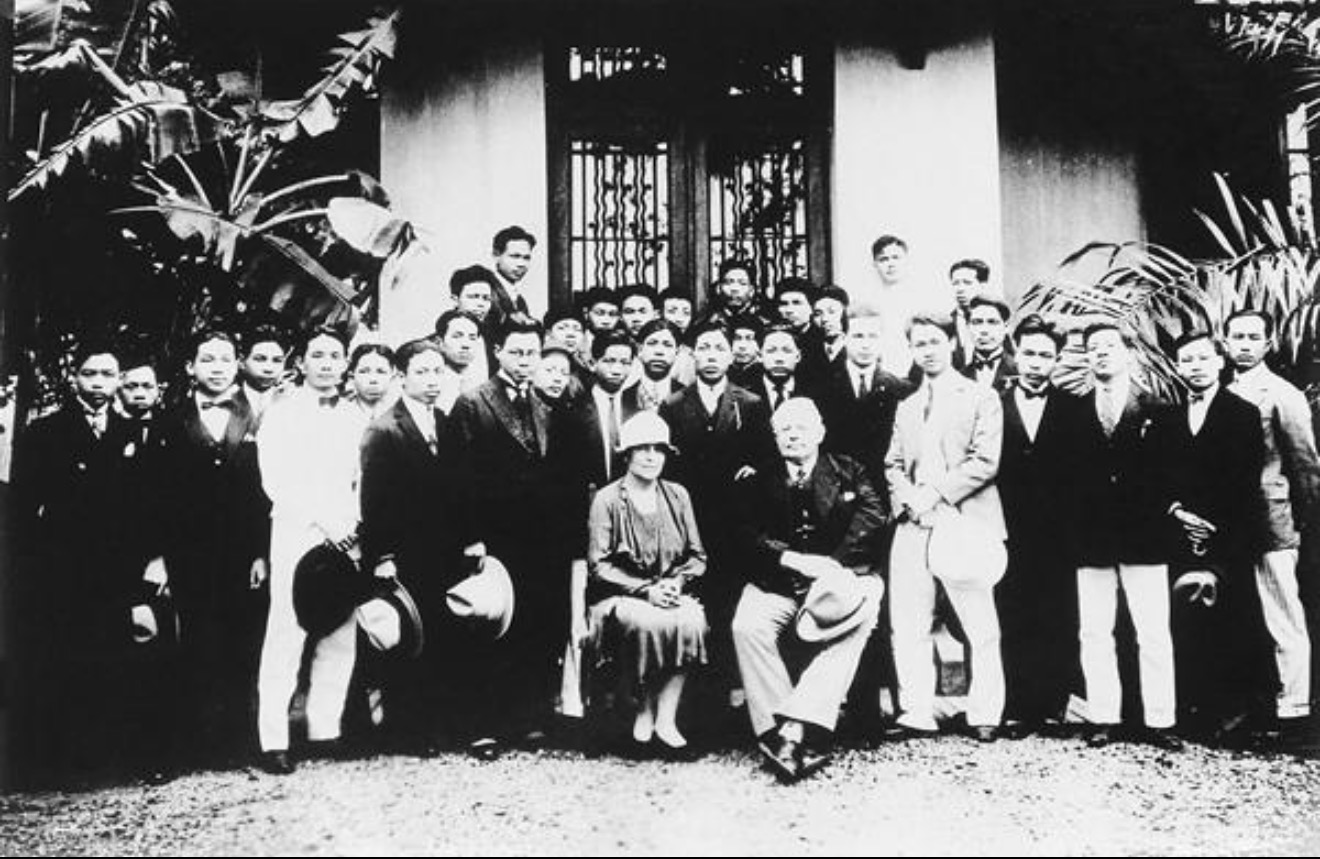
Founded in 1924 and officially opened in 1925 under the leadership of Victor Tardieu and Nam Sơn, the school introduced a rigorous five-year curriculum that combined drawing, perspective, anatomy, composition, art history and Western sculptural techniques with the study of indigenous artistic traditions such as lacquer painting, silk painting, temple sculpture and traditional crafts. This educational model produced a new generation of Vietnamese artists who embraced European academic methods while preserving their own cultural identity.
Among the ten students admitted to the first class, Georges Khánh was the first Vietnamese student to specialize in sculpture. Of the original intake, only six eventually graduated, and all six became major figures in the history of Vietnamese art: Lê Phổ, Lê Văn Đệ, Georges Khánh, Mai Trung Thứ, Công Văn Trung and Nguyễn Phan Chánh.
Immediately after graduation, Georges Khánh was invited to remain at the school as a lecturer in sculpture, teaching from approximately 1931 until the institution was dissolved in March 1945. During these formative years he helped establish academic sculpture education in Vietnam, training what would become the country’s first generation of professionally educated sculptors.
Historical records further identify him as one of the founding members of FARTA (Foyer de l’Art Annamite), established in 1937 alongside Tô Ngọc Vân, Trần Văn Cẩn, Lương Xuân Nhị, Nguyễn Khang and Lê Văn Đệ. FARTA provided Vietnamese artists with an independent platform for exhibiting their work, exchanging ideas and debating artistic direction, reflecting the intellectual openness that characterized Vietnam’s cultural renaissance during the late colonial period.
His reputation was already well established during his lifetime. Reviewing the 1935 exhibition of the Society for the Promotion of Fine Arts and Crafts, the newspaper Ngày Nay observed that “Vietnamese sculpture has truly advanced a great step thanks to Trần Ngọc Quyên and Georges Khánh—and to these two alone.” Such contemporary criticism confirms his standing as one of the leading sculptors of his generation.
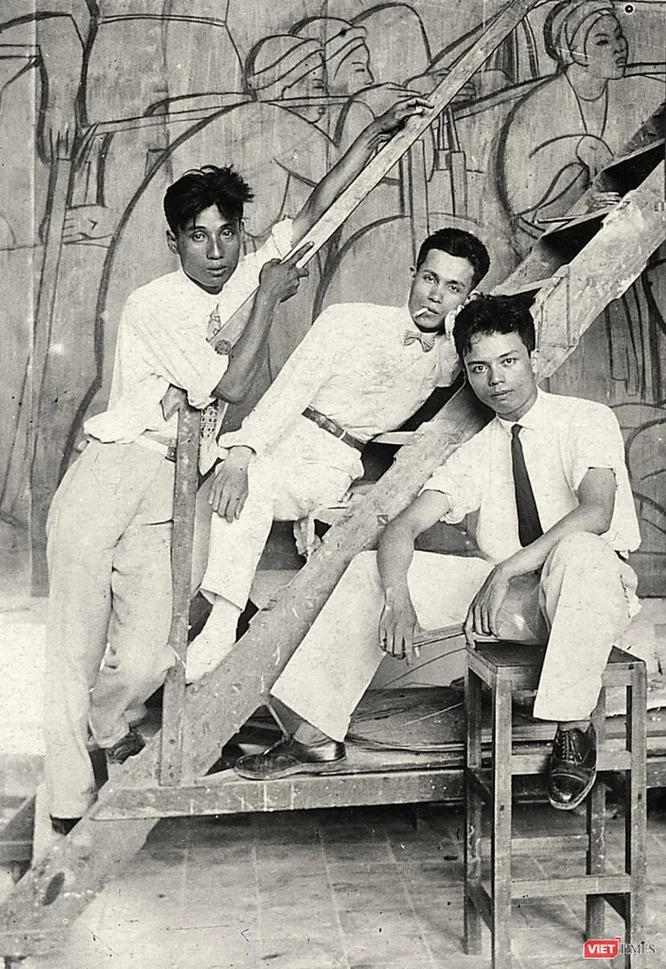
Georges Khánh also collaborated with Vũ Cao Đàm and Lê Tiến Phúc on three monumental bas-reliefs exhibited at the 1931 Paris Colonial Exposition, two versions of which are still preserved today at the Vietnam University of Fine Arts. These reliefs remain among the earliest surviving examples of modern Vietnamese sculpture created for an international audience.
Portrait Sculpture and the Modern Individual
The surviving body of Georges Khánh’s work consists primarily of portrait sculpture. Portraiture represented one of the most demanding artistic disciplines, requiring not only anatomical accuracy but also the ability to reveal the psychological character, social identity and intellectual presence of the sitter.
Among his most significant works is the bronze bust of Victor Tardieu, completed in 1935. Measuring 47 × 27 × 9 cm, the sculpture formerly belonged to Alix Turolla-Tardieu, granddaughter of the school’s founder, before appearing at a Christie’s Hong Kong auction. Its distinguished provenance reflects the confidence that Tardieu’s own family placed in the young Vietnamese sculptor.
Other documented portraits by Georges Khánh depict leading intellectuals, scholars and public figures of colonial Indochina, including Amédée François Thalamas, George Coedès, and, most notably, Bạch Thái Bưởi.
These sculptures reveal a distinctly realistic approach that emphasizes structure, volume and psychological expression rather than theatrical gestures or excessive idealization. Georges Khánh demonstrated remarkable restraint, allowing the personality of each sitter to emerge through subtle modelling rather than overt symbolism.
The Bronze Portrait of Bạch Thái Bưởi
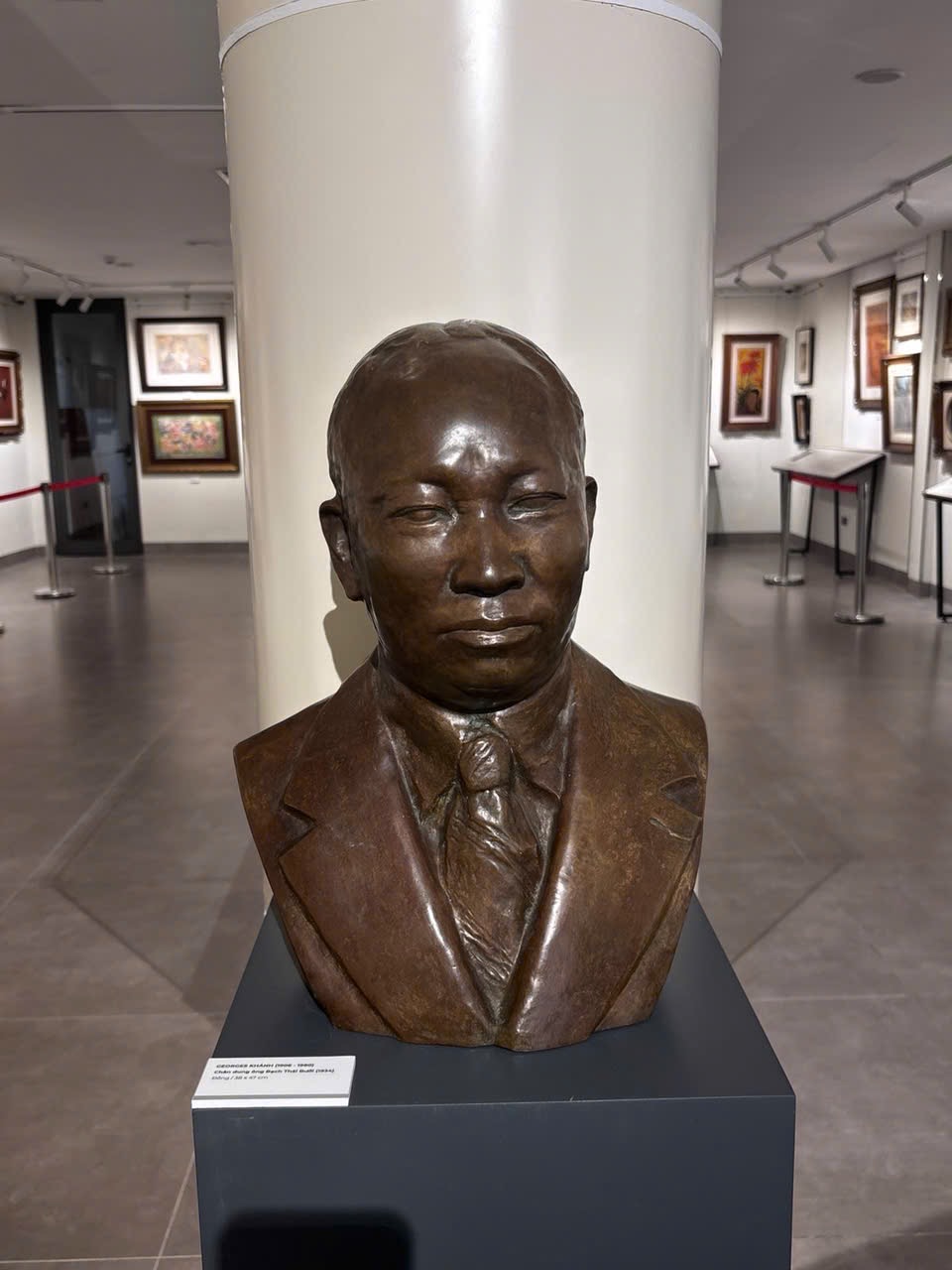
Among Georges Khánh’s surviving works, the bronze portrait of Bạch Thái Bưởi, completed in 1934, occupies a unique position in both Vietnamese art history and the history of Vietnamese entrepreneurship.
According to documentation published by the French auction house Millon, the bronze, with its rich brown patina, measures 45.5 × 31 × 26 cm. The reverse bears both the sculptor’s signature and the name of the bronze founder, Nguyễn Huy Hạt, demonstrating the close collaboration between an academically trained artist and one of Hanoi’s traditional master founders.
This partnership perfectly illustrates the philosophy of the École des Beaux-Arts de l’Indochine: combining European artistic principles with Vietnamese craftsmanship rather than replacing one with the other.
Since Bạch Thái Bưởi passed away in 1932, the sculpture, completed two years later, was almost certainly conceived as a commemorative portrait, although further archival research is still needed to identify its original commissioner.
Known as the “King of Vietnamese Shipping,” Bạch Thái Bưởi built one of Vietnam’s first successful indigenous shipping companies, challenging French and Chinese commercial monopolies on the rivers of northern Vietnam. His entrepreneurial achievements transformed him into a lasting symbol of Vietnamese economic independence and national self-confidence during the colonial era.
Georges Khánh’s portrait therefore transcends individual likeness. It celebrates the emergence of an entirely new social class—the Vietnamese entrepreneur—whose economic success carried profound cultural and national significance.
Sculptural Language
The bust presents Bạch Thái Bưởi with remarkable composure. Broad forehead, forward-looking gaze, firmly defined cheekbones and a restrained mouth convey calm determination rather than heroic exaggeration.
There are no dramatic gestures, elaborate allegories or monumental accessories. Authority is communicated solely through proportion, modelling and psychological concentration.
The bronze surface deliberately retains traces of the sculptor’s modelling process. These subtle textures interact with the brown patina to create constantly changing reflections across the forehead, eyes and cheeks, giving the sculpture both architectural solidity and remarkable vitality.
While clearly influenced by French academic portrait sculpture—particularly in anatomical observation and volumetric construction—Georges Khánh avoided direct imitation. Instead, he tempered European realism with an East Asian aesthetic of dignity, restraint and inner strength.
A Rediscovered Masterpiece
Vietnamese newspapers reported in 2008 the rediscovery of a bronze portrait of Bạch Thái Bưởi, standing approximately fifty centimetres high and weighing nearly eighteen kilograms. The sculpture had reportedly remained for decades in a private household in Lâm Đồng Province and narrowly escaped being sold as scrap bronze before its artistic significance was recognized.
Although certain discrepancies remain between the 2008 newspaper account and the more recent Millon catalogue, further provenance research comparing dimensions, inscriptions, photographs and casting details may determine whether both references concern the same sculpture.
Regardless of its precise provenance, the story illustrates the fragile survival of Vietnam’s modern artistic heritage. Numerous sculptures from the Indochina period disappeared through war, neglect or the simple recycling of bronze, leaving significant gaps in the nation’s artistic memory.
Restoring Georges Khánh’s Place in Vietnamese Art History
Compared with his celebrated contemporaries, Georges Khánh has received remarkably little scholarly attention. The scarcity of surviving works, fragmented biographical documentation and the traditionally limited market for sculpture have all contributed to his relative obscurity.
Yet every surviving work by Georges Khánh represents far more than an individual artwork. It is a historical document that helps reconstruct the origins of modern Vietnamese sculpture.
The 1934 Portrait of Bạch Thái Bưởi is especially significant because it unites three histories within a single object: the history of the École des Beaux-Arts de l’Indochine, the birth of modern Vietnamese sculpture, and the emergence of Vietnam’s entrepreneurial class.
It reminds us that the pioneers of Vietnamese modern art were not concerned solely with landscapes or traditional beauty. They also portrayed the builders of a modern nation—teachers, scholars, intellectuals, businessmen and visionaries.
Today, Georges Khánh deserves recognition not simply as an accomplished sculptor, but as one of the founding figures of modern Vietnamese sculpture. Continued research into his life, teaching career and surviving works will undoubtedly deepen our understanding of Vietnam’s artistic heritage.
The bronze portrait of Bạch Thái Bưởi preserves more than the likeness of the legendary shipping magnate. Within its quiet dignity survives the aspiration of an entire generation of Vietnamese determined to shape their own future through art, enterprise and national confidence.
Caption for opening photograph: Georges Khánh (Nguyễn Gia Khánh) stands at the center of the historic group photograph of the first generation of artists from the École des Beaux-Arts de l’Indochine, c. 1930.