


Reflections on Harvard University’s Remote Work Revolution for Everyone and Its Application at LuxGroup®
By Dr. Pham Ha
Founder & CEO, LuxGroup®
The Revolution Was Never About Working from Home
Many people believe that remote work was born during the COVID-19 pandemic. Harvard presents a different perspective. The pandemic did not create the remote work revolution; it merely accelerated a transformation that had already begun through cloud computing, digital collaboration, artificial intelligence, mobile technology, and global connectivity.
The real revolution is not about where people work.
It is about how organizations are designed.
For more than a century, companies were built around physical offices. Productivity was measured by attendance, supervision, and visible activity. Today, knowledge, creativity, and decision-making have become the primary drivers of value creation. As a result, organizations must evolve from managing presence to enabling performance.
Harvard’s Remote Work Revolution for Everyone is therefore not simply a course about flexible working. It is a course about redesigning organizations for the twenty-first century.
Remote Work Is a Leadership Strategy
One of the course’s most important lessons is the distinction between working from home and remote work.
Working from home is a location.
Remote work is an organizational philosophy.
Successful organizations do not simply move employees from offices to homes. They redesign communication, workflows, decision-making, accountability, and culture so that collaboration remains seamless regardless of physical distance.
The future of work is no longer defined by geography.
It is defined by connectivity.
Organizations that master this transition will not only become more flexible but also more resilient, innovative, and globally competitive.
Technology Enables Performance—People Create It
Harvard wisely reminds us that technology itself never transforms organizations.
People do.
Digital platforms such as Microsoft Teams, Zoom, Google Workspace, cloud computing, collaborative software, and artificial intelligence are merely enablers. Their effectiveness depends entirely on how leaders design communication and how teams collaborate.
The course introduces two concepts that every modern organization should embrace.
The first is Mutual Knowledge—ensuring that everyone understands who is responsible for what, what progress has been made, what priorities exist, and how individual work contributes to collective objectives.
The second is Social Presence—the human feeling of being connected even when people are physically apart. Organizations thrive not simply because information is shared, but because trust, relationships, and belonging continue to flourish through digital interaction.
Technology connects computers.
Leadership connects people.
Redefining Productivity for the Knowledge Economy
Perhaps the course’s most transformative insight concerns productivity itself.
For decades, organizations measured productivity by hours worked, meetings attended, and visible activity.
Harvard proposes a fundamentally different definition.
Productivity is not activity.
Productivity is value creation.
A professional who spends two focused hours solving a strategic problem may contribute more value than someone working twelve uninterrupted hours without clear priorities.
This shift encourages leaders to evaluate outcomes rather than attendance, impact rather than busyness, and innovation rather than routine.
In today’s knowledge economy, effectiveness has become more valuable than efficiency alone.
Trust Is the Most Important Infrastructure
If technology forms the digital infrastructure of remote work, trust forms its human infrastructure.
Harvard argues that remote organizations rarely fail because employees are geographically separated.
They fail because trust is absent.
Without trust, leaders resort to excessive supervision.
Employees become hesitant.
Communication slows.
Innovation declines.
High-performing organizations replace control with clarity, transparency, and shared accountability.
Trust grows when people demonstrate competence, integrity, and genuine commitment to one another.
It cannot be installed through software.
It must be cultivated through leadership.
The LuxGroup® Experience: Flexibility with Purpose
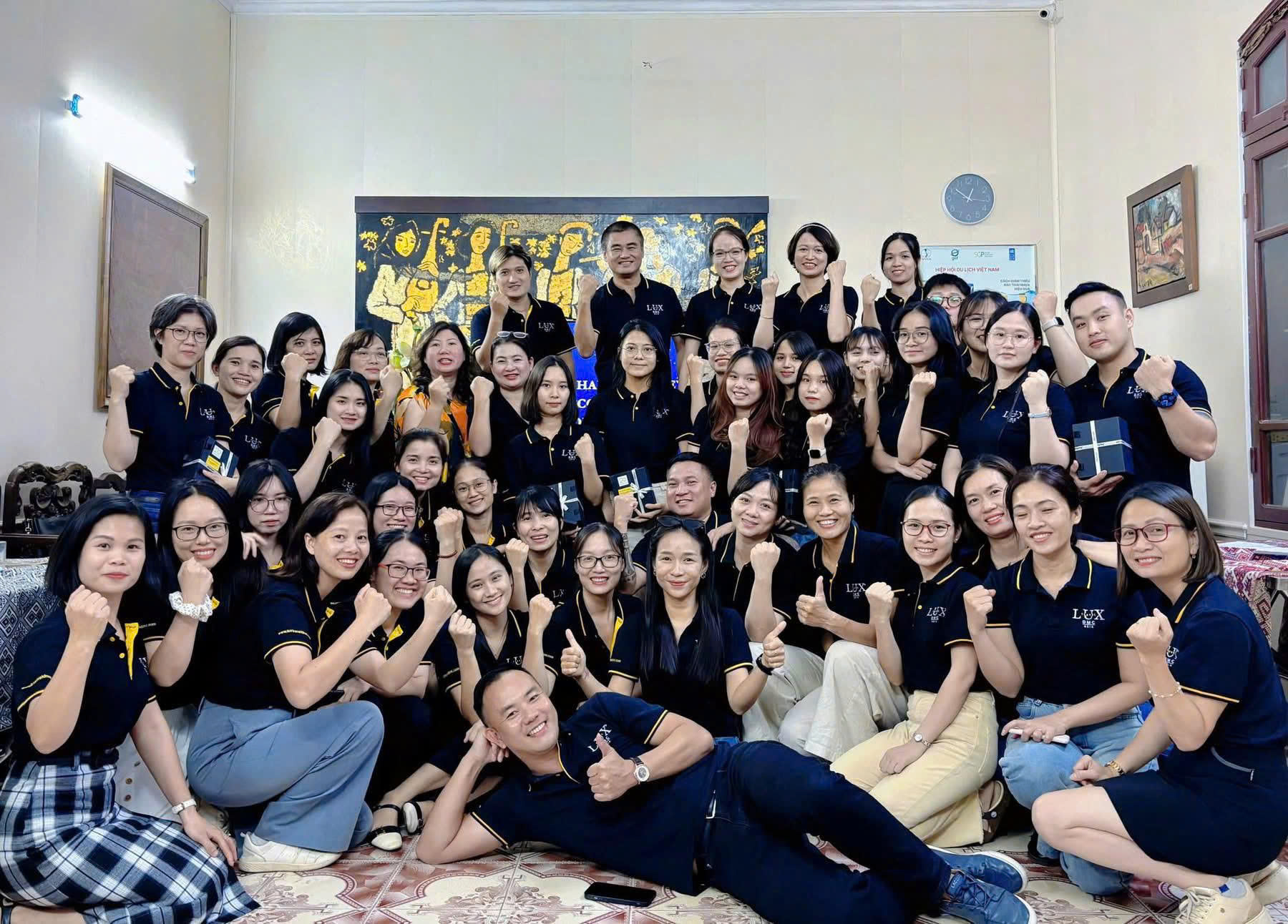
While completing this course, I realized that many of Harvard’s principles have already become part of LuxGroup’s organizational culture.
As an international tourism and hospitality group operating across Vietnam and serving travelers from around the world, our teams rarely work from a single location. Our people collaborate from Hanoi, Ho Chi Minh City, Ha Long Bay, Lan Ha Bay, Nha Trang, onboard luxury cruises, airports, hotels, client offices, and destinations across Asia.
For years, we have embraced a flexible operating model supported by digital collaboration.
Google Workspace, Microsoft Teams, Zoom, cloud-based CRM systems, project management platforms, and digital communication tools have enabled our teams to remain connected regardless of location.
However, our greatest investment has never been technology.
It has always been people.
We evaluate performance through customer satisfaction, innovation, accountability, teamwork, and measurable outcomes—not by the number of hours employees spend sitting at a desk.
Remote flexibility, when supported by clear expectations and shared values, has strengthened rather than weakened organizational performance.
People First® in the Digital Era
One of the strongest confirmations I received from this Harvard course is that digital transformation is fundamentally a human transformation.
Technology may change how people communicate.
It should never change why they communicate.
At LuxGroup®, our People First® philosophy remains unchanged regardless of where our employees work. We continue investing in learning, leadership development, coaching, knowledge sharing, and organizational culture because sustainable success depends on people before processes.
Flexibility has increased employee ownership.
Digital collaboration has accelerated learning.
Trust has strengthened teamwork.
Most importantly, our culture has become more adaptive without losing its identity.
That balance is perhaps the greatest achievement of all.
Leading Beyond Physical Boundaries
The future of leadership will no longer be measured by the size of headquarters or the number of offices a company owns.
It will be measured by the organization’s ability to connect people, share knowledge, make decisions, and create value regardless of physical distance.
Looking ahead, LuxGroup’s vision as a House of Small Giants® aligns naturally with this philosophy. Independent brands, specialized teams, and entrepreneurial leaders can operate with agility while remaining united by shared values, digital collaboration, and a common purpose.
Harvard calls this transformation the Remote Work Revolution.
I believe it represents something even greater.
It is a revolution in leadership.
Because truly great organizations are not defined by where their people work.
They are defined by how effectively their people think together, learn together, trust one another, and create meaningful value together—wherever they may be.