


Bạch Thái Bưởi through the eyes of his contemporaries—and the lessons his life offers Vietnamese leaders today
Dr. Phạm Hà – Founding President & CEO, LuxGroup®
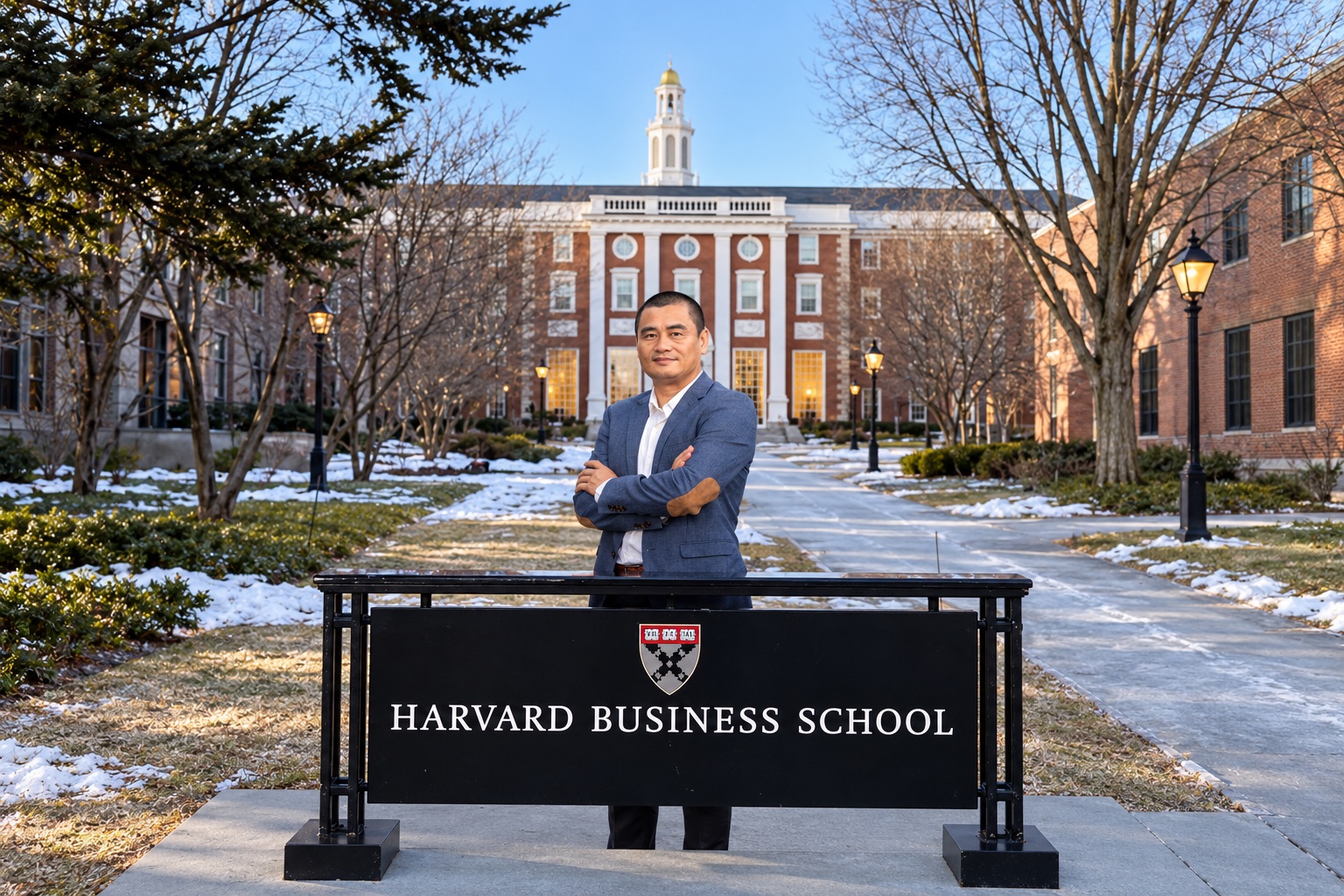
In 1908, Harvard Business School was founded in Boston to educate managers for the large organizations of the industrial age. A year later, in colonial Annam, Bạch Thái Bưởi leased three vessels and entered the fiercely competitive river transport business. While one part of the world was building a school for the study of management, a Vietnamese entrepreneur was learning it through practice: investing capital, bringing people together, serving customers, and bearing the consequences of his decisions.
I have called Bạch Thái Bưởi an “economic hero,” but the description is not mine. After his death, the scholar Nguyễn Văn Tố described him in Đông Thanh as “the foremost economic hero in our country’s business world.” The judgment of a contemporary reminds us that his significance extended beyond his personal fortune.
Earlier, writing in Nam Phong in 1919, Thượng Chi—the pen name of Phạm Quỳnh—recalled American tycoons who had risen from humble beginnings and were known as the “oil king” and the “steel king.” He observed a resemblance in Bạch Thái Bưởi’s beginnings and suggested that the Vietnamese entrepreneur could rightly be called the “Lord of the Rivers” of northern Vietnam. This was an analogy about ambition and achievement, not a claim that his company matched the scale of America’s industrial empires. Read in its proper context, the comparison is more revealing.
As I study strategy, execution, power, and ethical leadership through Harvard Business School courses, I return to one question: If Bạch Thái Bưởi’s career were discussed as a business case today, what would we ask? For me, the central question is this: With fewer resources than his competitors, how did he turn a desire for national self-reliance into a business capable of competing?
Patriotism had to deliver a service worth choosing
Bạch Thái Bưởi entered river transport with an appeal to fellow Vietnamese to support Vietnamese vessels. It spoke to a shared sense of identity. Yet passengers still needed a reliable way to travel. Public sympathy could not run a service on its own. His company had to organize routes, operate ships, solve problems, and earn customers’ trust on every journey.
Here, his practical experience meets a lasting lesson of management. Purpose helps people understand why their work matters; execution determines whether that purpose improves anyone’s life. Patriotism might persuade a passenger to board once. The quality of the journey would determine whether that passenger returned.
Bạch Thái Bưởi did not stop at leasing vessels. In 1915, he acquired a shipbuilding and repair yard in Hải Phòng, giving his business greater control over a capability it depended on. Nam Phong described the difficulty he had previously faced: when a ship needed repairs, relying on other yards was costly and left the company vulnerable. Buying the yard addressed a weakness at the heart of his operation.
A leader’s vision becomes credible through choices like this. What capability must we build now to reach a more distant goal? Where should scarce capital go? Which risks are we prepared to bear? HBS’s Strategy Execution course frames such questions around priorities, resources, measurement, and accountability. Bạch Thái Bưởi did not use the vocabulary of twenty-first-century management, but he faced decisions that modern managers would recognize.
One ship, two names
On 7 September 1919, Bình Chuẩn, a ship designed and built by Vietnamese workers, was launched in Hải Phòng. To me, the vessel marks a shift from participating in the transport market to developing the capacity to build ships. But the most important part of the story is lost if we speak only of the man who financed it.
Alongside Bạch Thái Bưởi stood the skilled craftsman Nguyễn Văn Phúc. Historical accounts recognize both men’s roles in bringing Bình Chuẩn into being. One was willing to invest and create the opportunity; the other had the technical skill to realize it. Their collaboration shows what becomes possible when talent has the means to prove itself.
This is the leadership lesson that stays with me most. A founder cannot design, build, repair, and operate every ship while personally managing every route. Leaders must recognize where others have greater expertise, give them meaningful responsibility, and trust them with work that matters. An organization becomes stronger when knowledge and judgment spread beyond its founder.
The Nam Phong account also described the company’s branches, representatives, and shipyard operations. Behind the celebrated entrepreneur was a network of people coordinating their work each day. When we honor a leader, we should also see the team that made the achievement possible.
Learning from the world to build Vietnamese capability
Self-reliance did not mean closing the door to outside knowledge. Archival records show that in 1914 Bạch Thái Bưởi sought to travel to Hong Kong, Macau, and Guangzhou to learn from other markets and explore opportunities for expansion. He looked outward for knowledge while building capability at home. Confidence gave him the courage to compete; curiosity helped him understand what he still needed to learn.
His ambitions also reached beyond shipping. In 1921, he launched Khai hóa nhật báo, a newspaper intended in part to encourage learning and practical enterprise. A stronger business, he understood, belonged within a society where more people could gain knowledge, develop skills, and believe that Vietnamese enterprise could succeed.
History, however, is not a ready-made management formula. The surviving record tells us about major milestones, but it does not establish that every one of his decisions was right, or that his methods can be transplanted unchanged into the present. His value as a case lies in the questions he prompts us to ask: What does the customer need? Where are competitors stronger? Which capabilities should we build ourselves? Who on the team is ready to take on greater responsibility?
The question for leaders in the age of AI
Bạch Thái Bưởi’s challenge was to develop vessels, shipyards, and routes under colonial rule. Today, businesses work with data, digital platforms, and AI. HBS now includes the leadership of teams combining people and AI agents in its curriculum. The tools have changed radically, but responsibility still rests with people. Who verifies the output? Who can challenge a decision? Who answers to customers and society when something goes wrong?
At LuxGroup®, these questions are personal. We aspire to build A House of Small Giants: a shared home for businesses with distinct identities and leaders capable of making decisions. The partnership between Bạch Thái Bưởi and Nguyễn Văn Phúc reminds me to trust talent. My study of management pushes me further: to define decision rights, provide resources, make accountability clear, and create room for colleagues to tell the founder what he may have missed.
More than a century ago, a contemporary writer called Bạch Thái Bưởi the “Lord of the Rivers”; another called him an “economic hero.” Those names endure because they were attached to tangible work: journeys made possible, a shipyard developed, Bình Chuẩn launched, and opportunities for Vietnamese people to demonstrate their abilities.
Vietnamese entrepreneurs today can learn management from Boston and practical enterprise from our own history. The deepest lesson I take from Bạch Thái Bưởi is this: turn ambition into capability, and turn a founder’s success into opportunities for others to grow. That is how a business can travel farther than the person who began it.