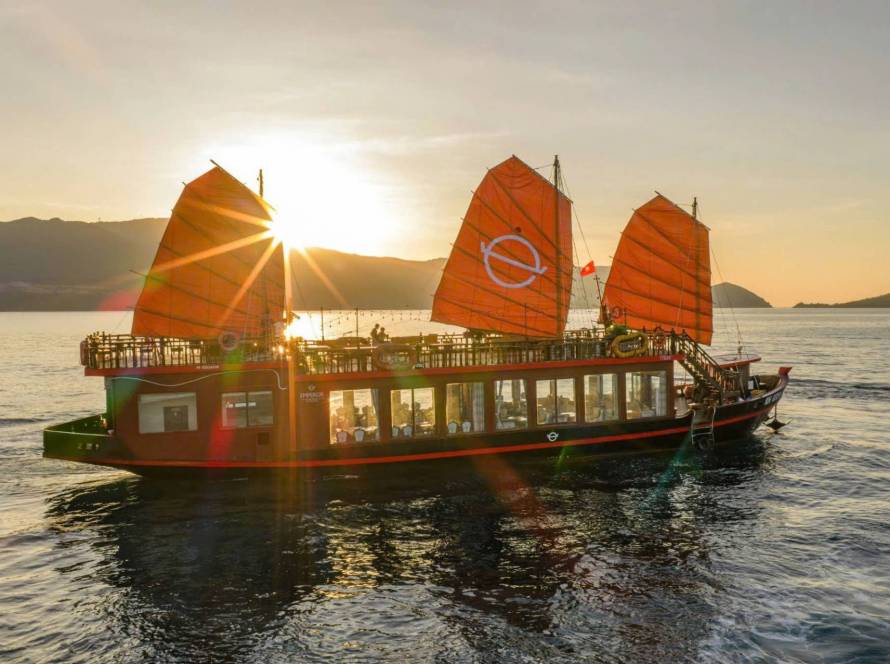


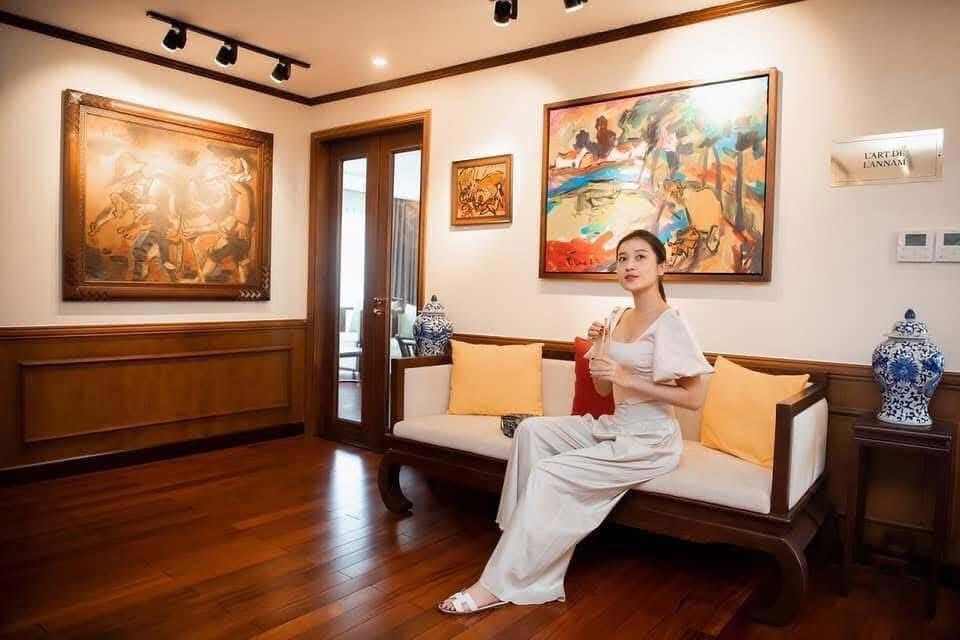
Two American guests were moved to tears by a painting on burlap aboard Heritage Bình Chuẩn. The work, by Vietnamese artist Phạm Lực, stirred memories of war in the middle of a cruise through one of Vietnam’s most beautiful bays. In an interview with Dân trí, Dr. Phạm Hà, Founding President & CEO of LuxGroup® and Vice President of the Vietnam Green Tourism Association, reflects on that encounter and on how history, art and hospitality can give Vietnamese travel experiences a character of their own.
1. What stories does LuxGroup tell aboard its cruises in Hạ Long, Lan Hạ, Nha Trang and on the Saigon River? How have international guests responded?
I remember two American guests who stood for a long time in front of a painting Phạm Lực had made on burlap about the war in Vietnam. Both broke into tears. They were so moved that they were determined to buy the painting before leaving the ship. What has stayed with me is the silence as they stood before it. In the middle of a cruise through the bay, a painting brought them closer to Vietnamese memories of the war.
I often ask my team a question. If our guests have already seen thousands of photographs of Vietnam’s bays before they come aboard, what more can we give them? I think we can offer them a deeper understanding of the place they are travelling through. That is why we bring original works aboard, where guests can pause in front of a painting whenever they like. Preserving art in heat, humidity and salt air takes care. The paintings also give guests a way into the story of modern Vietnamese art, in which the founding of the École des Beaux-Arts de l’Indochine in 1924 was a milestone.
In the waters around Hạ Long, Cát Bà and Lan Hạ Bay, Heritage Bình Chuẩn takes its name from a ship built by Bạch Thái Bưởi (1874–1932), the Vietnamese entrepreneur known as the “King of Ships.” At a time when French and Chinese shipping companies were already established, he built a Vietnamese fleet and launched the original Bình Chuẩn in Hải Phòng in 1919. A century later, Heritage Bình Chuẩn entered service. Today, guests can read about Bạch Thái Bưởi in the ship’s library, spend time with Phạm Lực’s paintings and get a sense of the era through interiors inspired by Indochinese design, through the food and through the bay beyond the windows.
Emperor Cruises takes its inspiration from Bảo Đại, the last emperor of the Nguyễn dynasty. In Nha Trang, that story comes together through the sea, the visual arts and the cuisine of central Vietnam. Our menus take cues from bát trân, the eight delicacies associated with imperial dining. In Bái Tử Long Bay, Emperor Cruises Legacy Fai Tsi Long has just 10 suites. That scale lets us give guests more individual attention, more privacy and time to experience the bay at their own pace.
On the Saigon River, we return to the story of a port that connected the city to the world. On 5 June 1911, a young Nguyễn Tất Thành, later known as President Hồ Chí Minh, left Nhà Rồng Wharf aboard the Amiral Latouche Tréville. He worked as a kitchen assistant under the name Văn Ba. That voyage is one of the inspirations behind Amiral. Today, Amiral Explorers® takes guests along the Saigon River to the Củ Chi Tunnels by speedboat. We continue to develop evening dining cruises, the Sông Show® performing arts programme and overnight journeys under Amiral Cruises for Presidents®.
After a voyage aboard Heritage Bình Chuẩn, some guests told us they wished they could stay a few more nights. You can hear their curiosity growing in the questions they ask. They may start by asking when the bay is at its most beautiful. Later, they want to know why the ship is called Bình Chuẩn, who the people in a painting are or where a flavour at dinner comes from. For me, that is when a journey starts to take on a deeper meaning.
2. How does culture add value to a premium travel experience and influence what guests are willing to pay?
When we describe a cruise mainly in terms of suite size, amenities and price, those are the criteria on which guests will compare us. When a voyage lets them spend time inside a story that can only be fully told in Vietnam, they have another reason to choose it, stay longer or book a private experience.
On Heritage Bình Chuẩn, the value comes from how the details fit together. Bạch Thái Bưởi’s story explains the ship’s name. Phạm Lực’s paintings offer another way to see war and everyday life. The food, clothing and interiors evoke a period in Vietnamese history. When a member of the crew can point to the cut of a garment, a gesture or an everyday object in a painting and explain what it tells us about life at the time, the work becomes part of the voyage.
Heritage Bình Chuẩn has 20 suites, and Emperor Cruises Legacy Fai Tsi Long has 10. In 2019, the exhibition Về miền ký ức (Into the Realm of Memory) brought together 100 works by Phạm Lực aboard Heritage Bình Chuẩn. Many remained on display after the exhibition for guests to enjoy. LuxGroup is now pursuing Vietnamese record recognition for its display of Phạm Lực’s paintings aboard a cruise ship.
Those investments give us room to design longer voyages, programmes for art lovers, themed dinners and private charters. Guests may be willing to pay more when they understand what the experience offers and we deliver it well. To measure the contribution culture makes, we need to track the price guests actually pay, the number of nights they stay, spending on additional activities and return rates by itinerary. A guest saying they wish they could stay another night tells us something. How many nights guests actually book helps us put a figure on it.
3. What is it about Vietnamese culture that can give the country a lasting advantage in international tourism?
I see four strengths in Vietnamese tourism that belong together: our people, landscapes, cuisine and culture. Vietnam’s 54 ethnic groups, its distinct regions and the heritage built up across generations give us a wealth of stories to tell. Along the Red River, the Saigon River or the Mekong, you find the history of trade, craft villages, growing cities and families who have lived on the banks for generations.
I often say “Luxury is Culture.” Luxury can be a conversation with an artist, a dish whose origins the chef explains in person, or a moment when a guide knows to fall quiet so guests can take in the river for themselves. That takes someone who knows the story, pays attention to the guest and has the judgement to know how much to say.
An itinerary can be copied. A relationship with a family of artisans, the trust of an artist and the knowledge that comes from years of working together take time to build. That is an advantage Vietnamese businesses can develop. For the stories we tell to stay true to the places they come from, artists, artisans and communities need a say in how their culture is presented and a fair share of the value they help create.
4. Resolution 80-NQ/TW identifies culture as a source of strength for Vietnam’s development. What would you like to see happen as it is implemented?
Resolution 80-NQ/TW sets a target for the cultural industries to contribute 7% of GDP by 2030 and for Vietnam to develop five to ten national brands across these industries, including cultural tourism. It also calls for at least 2% of annual state budget expenditure to be allocated to culture. From a business perspective, I am most interested in how those commitments translate into projects that people can actually take part in.
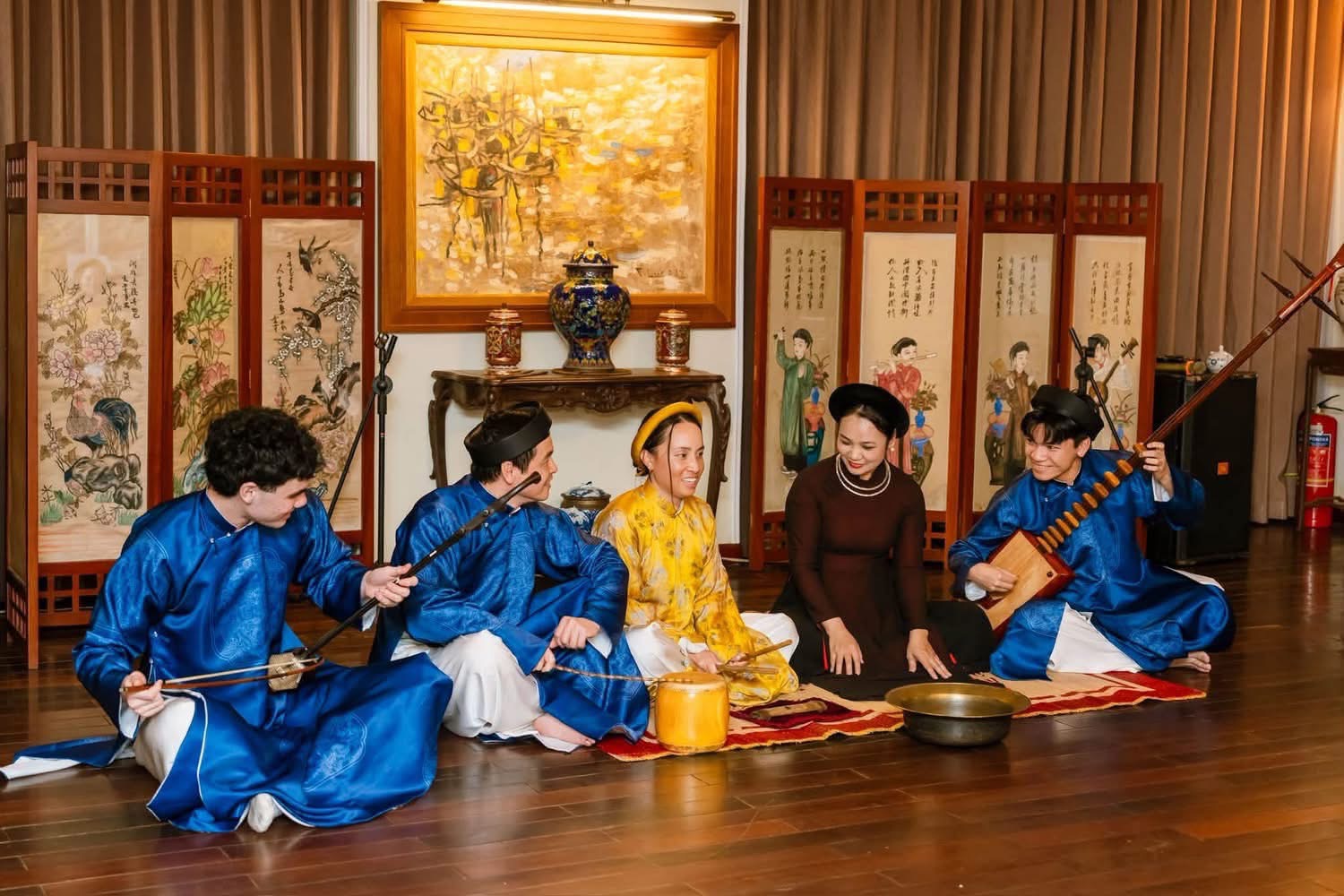
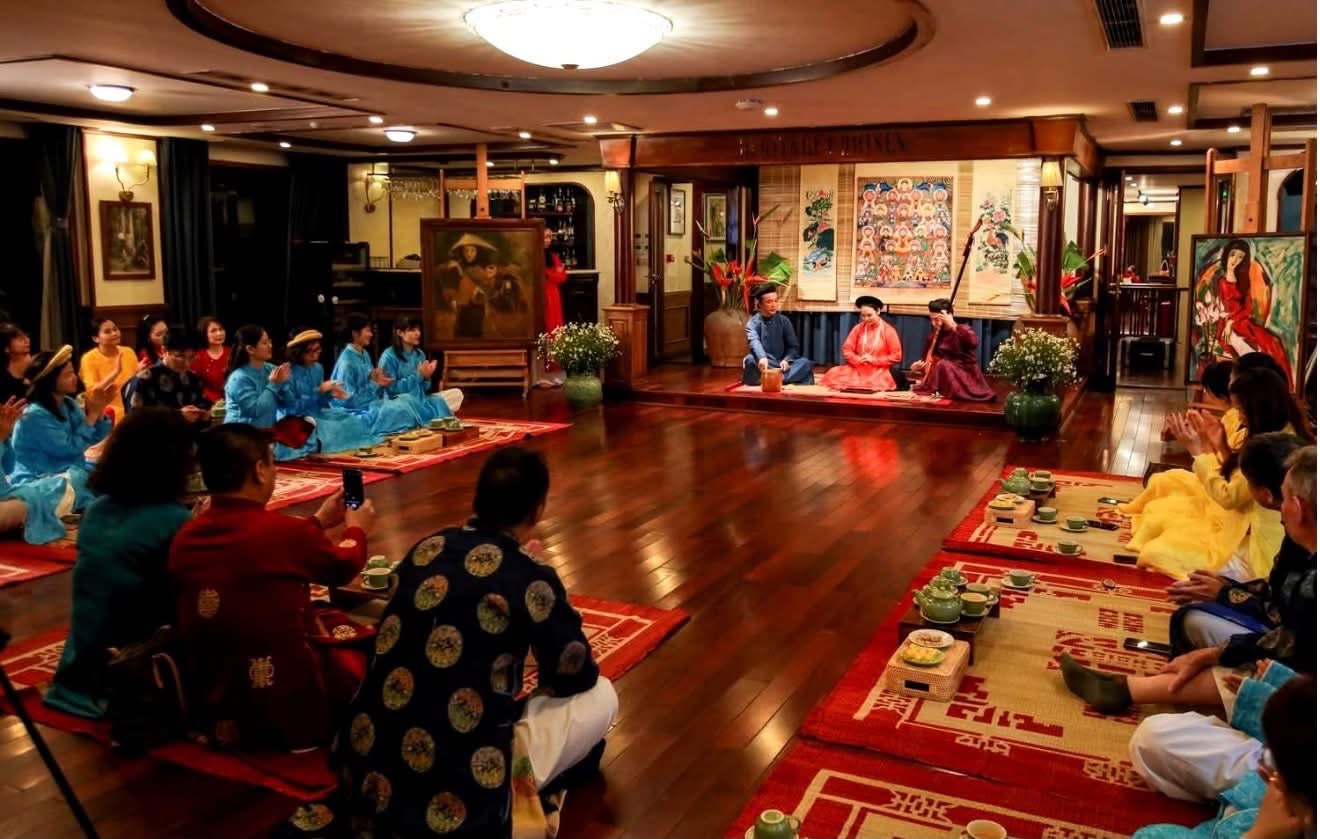
When a company wants to exhibit paintings aboard a ship, commission a performance or work with a community on an evening of hát Xoan, ca trù or hát văn, everyone needs clear terms on rights, remuneration and responsibility for preservation. I would like to see more opportunities for public–private collaboration so museums, arts organisations and travel companies can develop programmes together. Businesses can bring audiences to heritage sites and organise the experience. Cultural institutions bring the expertise and stewardship that give those experiences depth.
Through Vietnam Waterways 2045, LuxGroup wants to open up more ways to explore Vietnam from river to sea. That requires passenger piers, easy onward connections to places of interest and reliable conditions for safe operations. It also takes people who can tell Vietnam’s stories in other languages with knowledge and sensitivity. A well-designed pier makes it easy to get aboard. A good storyteller helps you understand why the river is worth travelling in the first place.
5. What should Vietnam prioritise to build an international reputation for exceptional cultural experiences?
Choose the story before designing the itinerary. A destination may have dozens of heritage sites and traditions. Choose a story that says something distinctive about the place, find the people who know it well and have the right to tell it, and give guests enough time and space to take it in. Vietnam’s reputation for cultural tourism will grow through stories that each place tells in its own voice.
Invest in the people who meet guests. A chef explains why a dish tastes the way it does. A crew member tells a guest why the ship bears the name of a Vietnamese entrepreneur. A guide knows how to listen when someone asks about a difficult episode in history. These are the people who make good on a brand’s promise.
Work with artists, artisans and communities as partners. Pay them fairly, respect their creative rights and give them a say in how their work and traditions are presented. Cultural tourism has a future when the people who create and sustain the culture can see a future for themselves in it.
Measure what stays with guests after the journey. Alongside arrivals and revenue, ask what visitors learned about Vietnam. Who do they remember? What experience would they recommend to a friend? Would they come back to explore another part of the country?
Vietnam’s scenery brings visitors here. Its culture gives them a reason to return. And when they do return, what I most hope to hear is the name of someone they met, a dish they tasted, a painting they saw or a river they still remember from their first trip.