


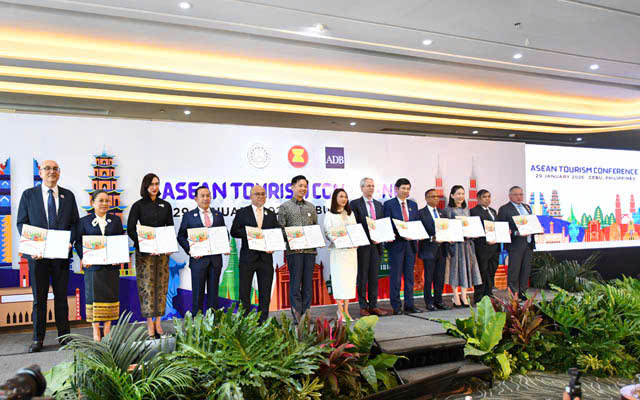
The unveiling of the Declaration on the Implementation of the ASEAN Tourism Sectoral Plan 2026–2030 at the ASEAN Tourism Conference in Cebu on January 29 marks a pivotal shift in Southeast Asia’s tourism narrative—from post-pandemic recovery to long-term structural transformation.
Anchored firmly in ASEAN Vision 2045, the declaration positions tourism not merely as a recovery engine, but as a strategic pillar for inclusive growth, resilience, and regional competitiveness over the next two decades. The move reflects a broader recalibration underway across ASEAN economies: away from volume-driven tourism models, and towards higher-value, more diversified, and more sustainable forms of travel.
Tourism’s Economic Weight—and Its Growing Vulnerabilities
Tourism already plays an outsized role in the ASEAN economy. According to ASEAN Deputy Secretary-General Satvinder Singh, the sector generated close to US$400 billion in 2024, accounting for nearly 10 per cent of Southeast Asia’s GDP and supporting approximately 42.5 million jobs.
The momentum continued into 2025, with 144 million international visitors, representing a 13.4 per cent year-on-year increase. Notably, almost one-third of these travellers—around 48 million—came from within ASEAN, underscoring the growing importance of intra-regional travel as a stabilising force.
Yet, Singh cautioned that this growth is unfolding amid intensifying pressures: climate change impacts, rapid digital disruption, geopolitical uncertainty, and fierce global competition for high-spending travellers. Against this backdrop, the new sectoral plan and accompanying ASEAN Tourism Marketing Strategy for 2026–2030 are framed as tools to move “decisively from recovery to transformation.”
Five Priorities for a New Tourism Era
At the heart of the plan are five interlinked priorities, designed to reinforce one another rather than operate in isolation:
1. Resilient tourism, with stronger preparedness for climate shocks and external disruptions
2. Empowerment of the tourism workforce, focusing on skills, livelihoods, and social protection
3. Accessible and seamless travel, through visa facilitation, connectivity, and regional integration
4. Digital tourism and product diversification, leveraging technology while broadening experiences
5. Sustainable tourism, embedding environmental and cultural stewardship into growth models
Together, these pillars reflect ASEAN’s ambition to future-proof tourism while ensuring that its benefits are more evenly distributed across communities, destinations, and value chains.
The Philippines as a Living Test Case
As host country and lead coordinator for the sectoral plan, the Philippines offered a practical illustration of how national policies can align with regional priorities.
Tourism Secretary Christina Garcia Frasco highlighted how the country’s recent experiences—particularly with floods, earthquakes, and extreme weather events affecting Cebu and other destinations—have shaped the plan’s strong emphasis on resilience.
She pointed to ongoing initiatives such as large-scale workforce training, emergency cash assistance for displaced tourism workers, visa liberalisation measures, and expanded air connectivity. Cebu alone added 12 new international routes in 2025, reinforcing its role as a regional gateway.
The Philippines has also moved aggressively on digital and market access fronts, rolling out a digital nomad visa, expanding visa-free entry for key markets, partnering with global payment platforms, and launching the Philippine Experience Program. The latter aims to spotlight culture, heritage, gastronomy, and emerging destinations—both to ease pressure on overcrowded hotspots and to increase visitor spending through richer, place-based experiences.
Investment, Value, and the Shift Beyond Volume
From a financing and development perspective, the Asian Development Bank sees ASEAN tourism entering a more mature phase. Asian Development Bank Vice-President Scott Morris noted that the region’s rebound has been fuelled by a combination of strong intra-regional travel and renewed long-haul demand.
Crucially, Morris observed that many countries are now transitioning away from volume-led tourism towards higher-value and more diversified models. ADB has committed over US$4 billion to tourism-related projects to date and maintains a US$3 billion investment pipeline through 2030, signalling sustained confidence in the sector’s transformation agenda.
Expanding Partnerships Beyond ASEAN
ASEAN’s ambitions are also drawing support from dialogue partners. Representing the Russian Federation, Igor Maksimov, deputy director general at the Ministry of Economic Development, said Russia is ready to assist ASEAN member states through technical cooperation and capacity-building initiatives. These include smart city management systems, large-scale tourism investments, and workforce training programmes—areas that dovetail closely with ASEAN’s digital and resilience priorities.
From Recovery to Redesign
Taken together, the ASEAN Tourism Sectoral Plan 2026–2030 signals more than a policy refresh. It reflects a collective recognition that the region’s future competitiveness will depend not on how many visitors it attracts, but on how tourism is designed, governed, and integrated into broader social and environmental systems.
If successfully implemented, the next five years could see Southeast Asia emerge not just as one of the world’s most visited regions—but as one of the most thoughtful in how it balances growth, resilience, and meaning in tourism.