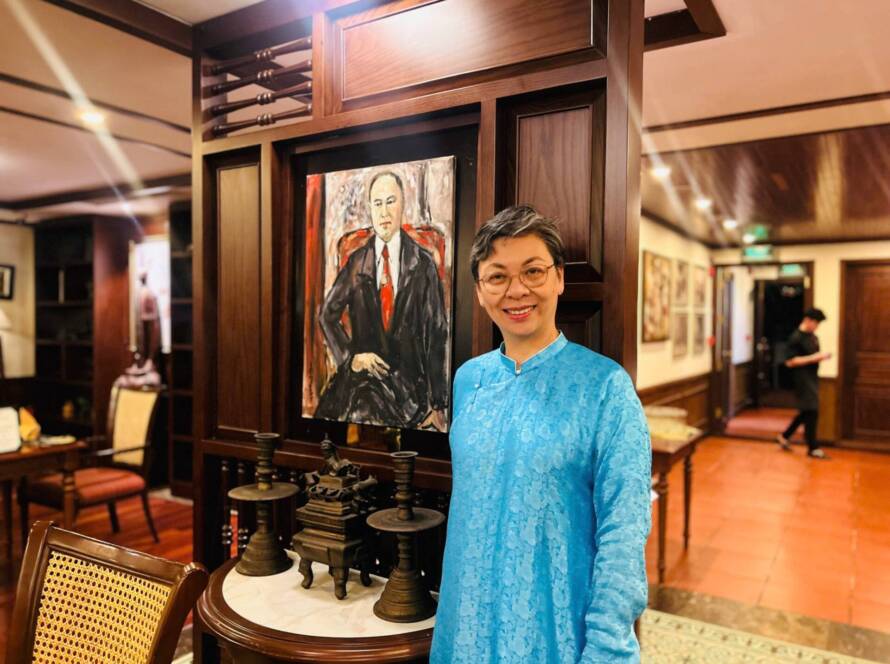


Four years after Michelin Guide arrived in Vietnam, an increasing number of restaurants have been recognized, reinforcing the country’s position as one of the world’s most exciting culinary destinations. While Vietnam has yet to earn a two- or three-star Michelin restaurant, this should be viewed not as a limitation but as a natural stage in the evolution of a rich and distinctive food culture. With exceptional ingredients, remarkable culinary diversity, and a new generation of innovative chefs, Vietnam possesses all the ingredients needed to transform great cuisine into a world-class gastronomic destination.
“Vietnamese cuisine is already among the world’s most flavorful and diverse. The next chapter is not simply about earning Michelin stars, but about elevating our culinary heritage into a globally respected cultural and gastronomic identity.”
— Dr. Pham Ha, Founding President & CEO, LuxGroup®
1. Vietnam now has 11 one-star Michelin restaurants in 2026, but none with two or three stars. Why do you think Vietnam has not yet achieved a two- or three-star Michelin restaurant after four years of Michelin Guide’s presence?
First, I see this as a positive sign rather than a disappointment.
The fact that Vietnam now has 11 Michelin one-star restaurants demonstrates that Vietnamese cuisine is gaining increasing international recognition. It confirms what many travelers have known for years: Vietnam is one of the world’s great food destinations.
However, the gap between one Michelin star and two or three stars is enormous.
A one-star restaurant is considered very good within its destination. A two-star restaurant is worth making a special journey for. A three-star restaurant is worth planning an entire trip around. At that level, Michelin is evaluating not only taste, but also consistency, technical mastery, creativity, originality, cultural identity, and the ability to deliver an extraordinary experience year after year.
Vietnam possesses outstanding ingredients, remarkable culinary diversity, and deep gastronomic traditions. What we are still developing is a mature ecosystem of Vietnamese haute cuisine.
France has spent centuries refining haute cuisine. Japan has elevated Kaiseki into a highly sophisticated culinary art form. Vietnam’s greatest culinary treasures, by contrast, remain deeply rooted in family kitchens, local communities, street food culture, and regional traditions.
That is not a weakness. In fact, it is our strength.
The challenge is transforming these authentic culinary traditions into globally recognized fine-dining experiences while preserving their soul and cultural integrity.
This process takes time, investment, talent development, research, creativity, and international exposure.
I firmly believe Vietnam will eventually produce Michelin two-star and three-star restaurants. It is not a question of whether, but when.
2. What is the potential of Vietnamese cuisine? Is Michelin the only path to bringing Vietnamese gastronomy to the world?
Absolutely not.
Michelin is an important benchmark, but it is only one pathway among many.
I often describe cuisine as one of Vietnam’s most valuable strategic resources.
Alongside culture, nature, and people, food represents one of the country’s most powerful forms of soft power.
Vietnam is blessed with more than 3,000 kilometers of coastline, diverse ecosystems, fertile agricultural regions, and 54 ethnic groups, each contributing unique culinary traditions. This creates one of the richest and most diverse food cultures in Asia.
Long before Michelin arrived in Vietnam, pho had already become a global dish. Banh mi had conquered international cities. Vietnamese coffee had built a worldwide reputation. Fish sauce had become an essential ingredient in kitchens across the globe.
These successes prove that Michelin is not the only measure of culinary influence.
Vietnamese cuisine can reach the world through tourism, food exports, culinary diplomacy, international media, social platforms, Vietnamese chefs abroad, and the global Vietnamese diaspora.
Most importantly, it can travel through memorable experiences.
Travelers may forget where they stayed, but they rarely forget a meal that moved them emotionally.
That emotional connection is where the true power of cuisine lies.
3. What path should Vietnam choose to bring its cuisine to the global stage?
Vietnam should follow its own path.
We do not need to become France, Japan, or Italy. We need to become the best version of ourselves.
The future of Vietnamese cuisine should be built upon three pillars.
First, preserve authenticity.
The foundation of global recognition is cultural confidence. We must protect traditional recipes, local ingredients, culinary heritage, and regional identities.
Second, elevate Vietnamese cuisine into a refined cultural experience.
The next generation of Vietnamese chefs should be encouraged to innovate while remaining deeply connected to tradition. Fine dining should not imitate foreign models; it should reinterpret Vietnamese heritage through contemporary culinary language.
Third, integrate cuisine with tourism, culture, and storytelling.
Food is never just food. Every dish tells a story about geography, history, climate, craftsmanship, and people.
When visitors enjoy pho in Hanoi, seafood in Nha Trang, or river cuisine along the Mekong, they are experiencing more than a meal—they are experiencing Vietnam itself.
This is why I believe cuisine, culture, nature, and people are Vietnam’s four greatest tourism assets.
The ultimate goal should not simply be to earn Michelin stars.
The ultimate goal should be to position Vietnam among the world’s leading culinary destinations.
When we successfully tell the story of Vietnam through food, Michelin recognition will naturally follow.
Key Quote
“Vietnamese cuisine does not lack excellence, diversity, or authenticity. What we need is time, investment, talent development, and a long-term vision to transform extraordinary traditional dishes into world-class cultural experiences. I am confident Vietnam will eventually achieve Michelin three-star status.”
Dr. Pham Ha
Founding President & CEO, LuxGroup®
Closing Thought
“Michelin is not the destination. It is a milestone on Vietnam’s journey to becoming one of the world’s great culinary nations.”
“Cuisine, culture, nature, and people are Vietnam’s four greatest assets. If we learn to tell the story of our nation through food, Michelin stars will come naturally—and Vietnam will become a global culinary destination.”
— Dr. Pham Ha, Founding President & CEO, LuxGroup®