

When Experience Value, Freedom of Choice, and Sustainability Become the True Measures of Growth
Pham Ha – Chairman & CEO, LuxGroup
From Volume to Value
Quang Ninh tourism is entering a pivotal phase of strategic transformation, where experience value and sustainability are increasingly becoming the true benchmarks of growth. This shift is reflected not only in revenue figures or visitor numbers, but more profoundly in how the destination redefines the role of visitors, businesses, and heritage within its tourism ecosystem.
For many years, Quang Ninh’s tourism growth was closely tied to volume. Ha Long Bay became a “must-visit” destination in Northern Vietnam itineraries, yet average length of stay remained short, spending was limited to basic services, and experiences were largely standardized through fixed routes. The economic value generated per visitor fell short of the potential of a UNESCO World Natural Heritage site.
In recent years, however, the market structure has begun to change fundamentally. In 2024, Quang Ninh welcomed approximately 19 million visitors, including more than 3.5 million international arrivals, generating over VND 46 trillion in tourism revenue. In 2025, total tourism revenue is projected to reach VND 57–58 trillion.
More important than absolute numbers is the improving quality of demand. International visitors are returning in a more selective manner, with noticeable growth in the mid- to high-end segments. European, North American, and Australian travelers are staying longer, spending more, and prioritizing privacy, personalized services, quiet environments, and sustainability commitments. Northeast Asian markets are growing strongly in high-quality resort tourism, wellness, premium packages, and heritage-based experiences.
Average visitor spending has reached approximately VND 2.75 million per trip, while the average length of stay has increased to around 2.7 days. This growth is not driven merely by price increases, but by the expansion and enrichment of experience offerings—from gastronomy and culture to transportation, onshore and offshore activities.
These trends signal a strategic reorientation: Quang Ninh is shifting from maximizing visitor numbers to optimizing value per visitor.

Putting the Visitor at the Center: Redesigning the Destination Experience
To truly realize a value-driven tourism model, Quang Ninh must take a further step: placing the visitor at the center of experience design, rather than prioritizing administrative convenience over experiential quality.
Currently, most visitors are still required to follow rigid, pre-defined sightseeing routes. Even premium travelers who pay high prices are not free to choose caves, beaches, or areas that match their personal preferences. This approach concentrates visitors in a few “mandatory” sites, causing congestion while diminishing the sense of discovery and exclusivity—key attributes of high-end tourism.
A more progressive approach would be to open caves and beaches flexibly, allowing visitors to choose their preferred sites within controlled quotas and real-time capacity management. When visitors are empowered to choose, congestion is naturally dispersed, experiences become more personalized, and heritage protection improves.
Inter-regional connectivity also remains constrained by procedural thinking. For example, travelers moving from Ha Long Bay to Gia Luan (Cat Ba) are currently required to disembark, transfer onshore, and board another vessel to continue overnight cruising. This disrupts the seamless journey expected by high-value travelers. Maritime itineraries should be interconnected, ensuring safety without fragmenting the guest experience through unnecessary administrative steps.
When the Bay Becomes a “Floating City”: An Experiential Paradox
Another critical issue lies in overnight anchoring regulations. Concentrating vessels in a single overnight anchorage has effectively turned parts of the bay into a “floating city”, with excessive artificial lighting and noise. This directly contradicts the expectations of high-end travelers seeking tranquility, intimacy, and immersion in nature.
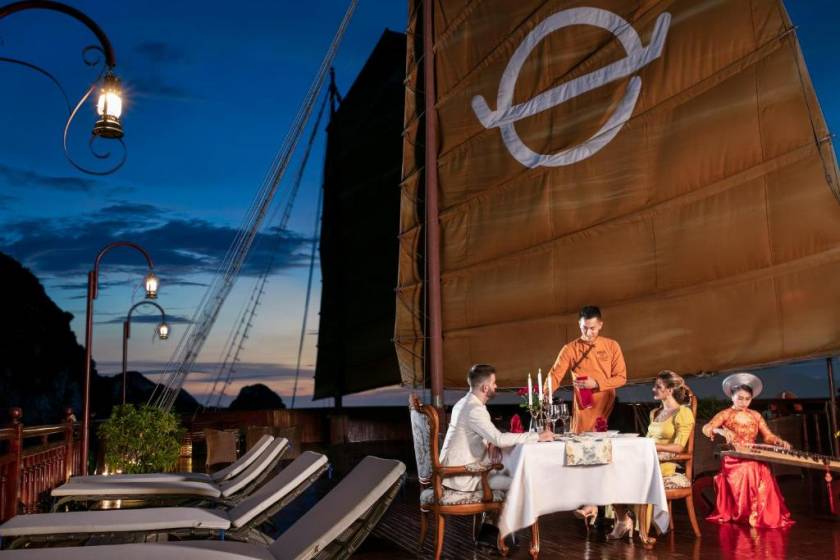
Anchorage management should move from concentration to controlled dispersion, guided by environmental carrying capacity and visitor demand. Silence, darkness, and spatial privacy are not inconveniences to be managed—they are core experiential assets for which premium guests are willing to pay.
Digital infrastructure must also be recognized as part of the premium experience. Bay-wide Wi-Fi connectivity would enhance guest satisfaction, improve safety and operations, and enable smarter destination management through real-time data and communication.
Respecting Diversity: Vessel Design, Safety Standards, and Risk Management
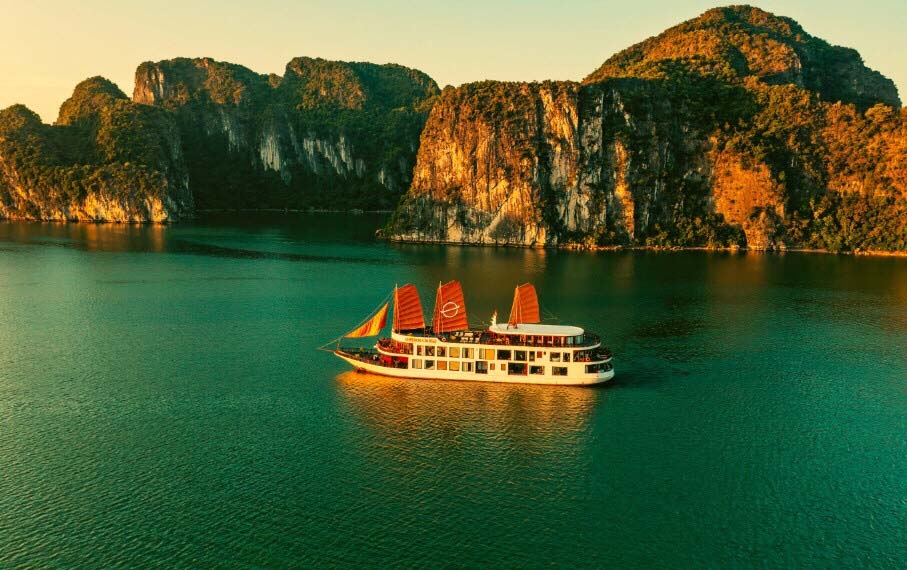
Uniformity in vessel design and appearance is another constraint limiting experiential richness. Imposing a single color scheme or vessel type undermines the diversity, identity, and storytelling potential of Ha Long Bay. As long as vessels meet stringent safety, environmental, and technical standards, diversity in design and aesthetics should be encouraged, enriching the destination’s visual and cultural landscape.
Safety management also requires a more differentiated approach. Currently, high-standard vessels capable of operating in Beaufort scale 6 conditions are often restricted under the same rules as lower-grade vessels during mild northeast monsoon winds. This blanket approach leads to severe disappointment among international travelers who invest thousands of dollars to visit Ha Long, only to have their journeys canceled under conditions that remain operationally safe.
Risk management should be standards-based and data-driven, not administratively uniform. Advanced weather forecasting should provide accurate, transparent information at least 24 hours in advance, allowing both operators and guests to make informed decisions.
Data, Local Enterprises, and Experience Standards
Quang Ninh possesses a vast amount of tourism data—from ticketing systems, vessels, accommodation, aviation, and international cruise ports. However, this data remains largely descriptive rather than strategic. In an era of personalization, data must be treated as a strategic asset, enabling the analysis of visitor behavior, spending patterns, and emerging preferences.
Equally important is the role of local enterprises. Quang Ninh is home to long-established, locally rooted tourism companies with deep understanding of Ha Long Bay and the premium market. Yet these enterprises are often positioned merely as service operators rather than co-creators of destination standards and narratives.
When local businesses are excluded from destination co-creation, there is a risk of copying external models that dilute local identity. Empowering local enterprises as strategic partners ensures innovation while preserving the unique character of the heritage site.
Conclusion: A Strategic Turning Point
Quang Ninh tourism stands at a structural crossroads. Transitioning from volume-driven growth to value-driven development is no longer optional—it is essential to safeguard heritage, elevate visitor experience, and strengthen international competitiveness.
When visitors are placed at the center, heritage defines the strategic axis, businesses become true partners, and management relies on standards, data, and experiential quality, Quang Ninh has the opportunity to become Vietnam’s leading model for high-quality, sustainable heritage tourism—and a benchmark for destinations worldwide.