


As LuxGroup® expands across travel, cruises, hospitality, mobility, gastronomy and culture, its greatest management challenge is not choosing between innovation and control. It is designing the right controls so that responsible innovation can flourish.
By Dr Phạm Hà, Founder and CEO, LuxGroup®
Growth changes the nature of risk.
When a company is small, its founder can see most important decisions, speak directly with employees and intervene quickly when something goes wrong. Information travels informally. Trust substitutes for process. Problems remain close enough to be noticed.
As the business grows, that proximity disappears. More people make decisions, more transactions move through the organisation and more partners become part of the customer experience. A minor service failure in one unit can travel rapidly through social media and affect confidence in every brand associated with the group.
This is the central challenge facing LuxGroup® as it develops its House of Small Giants: how can we preserve the speed, creativity and personal care of specialist entrepreneurial businesses while providing the governance required of an integrated hospitality group?
The answer is not to choose control over entrepreneurship. It is to create freedom within a framework.
Small Giants Create Value—and Complexity
LuxGroup® brings together businesses operating across luxury travel, boutique cruises, hospitality, mobility, gastronomy, arts and cultural experiences. Each has its own expertise, identity and accountable leadership. Together, they can create seamless journeys that no single business could deliver alone.
This structure generates value through specialisation. A destination expert can design the journey, a transportation company can manage movement, a cruise brand can bring Vietnamese maritime heritage to life, and our cultural and culinary businesses can deepen the guest’s connection with place.
But integration also creates dependencies. A delayed vehicle can affect a cruise departure. A technology failure can interrupt reservations. A supplier’s misconduct can damage the guest experience. An environmental incident at one destination can undermine claims made by the whole group.
The more connected our businesses become, the more carefully we must manage the points where people, information and responsibilities meet.
Risk management must therefore become part of strategy execution—not a separate compliance exercise performed after decisions have already been made.
Understand the Four Levels of Strategic Risk
The first discipline is to distinguish among different sources of risk.
Operations risk arises when errors interrupt the delivery of high-quality products or services. In tourism and hospitality, this could include a safety failure, an incorrect reservation, poor food hygiene, inadequate emergency procedures or inconsistent service between operating units.
Asset impairment risk occurs when an asset loses a significant part of its value or capacity to generate future cash flow. The asset may be a vessel, hotel, vehicle, receivable, technology platform, intellectual property portfolio or customer database. Brand reputation is also an asset, even if conventional accounting does not fully capture its value.
Competitive risk comes from changes in the external environment. Customers may shift to lower-cost alternatives. New entrants may use digital platforms or artificial intelligence to personalise journeys more quickly. Suppliers may increase prices or restrict access to critical inputs. Competitors may imitate products without bearing the cost of their original development.
Any of these can eventually become franchise risk: the loss of confidence by guests, employees, partners, regulators, investors or communities in the enterprise itself.
Franchise risk is especially important for a group architecture. Guests may not distinguish between the company that designed their itinerary and the company that operated one component of it. To them, the experience is one journey. Trust gained collectively can also be lost collectively.
Look for Pressure Before Looking for Blame
When misconduct or failure occurs, organisations often search first for the person responsible. Accountability matters, but blame alone rarely explains why a problem was able to grow.
Internal risk frequently develops through three categories of pressure.
The first is growth pressure. Ambitious targets, rapid expansion and inexperienced employees can stretch systems beyond their capacity. LuxGroup® aspires to maintain strong annual growth while developing new products, vessels, destinations and brands. The danger is that revenue and speed begin to outpace leadership capability, training, technology and operating discipline.
The second is cultural pressure. Entrepreneurial organisations rightly reward initiative, but employees may begin to believe that achieving the result matters more than respecting the process. Leaders may resist bad news. Internal competition may encourage people to hide weaknesses or protect their own results at the expense of the wider group.
The third is information pressure. As transaction volume and decision speed increase, leaders may receive more data but less useful insight. Decentralised teams may possess important knowledge without sharing it. Performance reports may show revenue and profit while failing to reveal emerging problems in safety, guest satisfaction, employee wellbeing or sustainability.
A company can appear successful while risk accumulates beneath its headline results.

Break the Dangerous Triad
Misconduct becomes more likely when three conditions—pressure, opportunity and rationalisation—exist together.
Pressure may come from a demanding target. Opportunity may come from weak supervision, unclear approval authority or the ability of one employee to initiate and approve the same transaction. Rationalisation then allows the individual to explain away the behaviour: “The guest needed it,” “Everyone does it,” or “I was protecting the company.”
No organisation can eliminate every temptation. It can, however, make misconduct more difficult to commit and harder to justify.
Internal controls reduce opportunity. Clear conduct boundaries reduce rationalisation. Thoughtful performance management reduces excessive pressure.
This distinction matters. A code of conduct cannot substitute for segregation of duties, and an audit cannot substitute for an ethical culture. Effective risk management requires the elements to work together.
Build Controls That Support Performance
Internal controls are sometimes treated as the enemy of agility. Poor controls can certainly create bureaucracy. Good controls create clarity.
LuxGroup® already uses monthly profit-and-loss reporting to reinforce accountability across business units. This discipline should sit within a wider control architecture that includes clear approval limits, supporting documentation, separation of sensitive duties, reconciliation of financial information and independent review of significant exceptions.
Controls should be proportional to risk. A frontline Luxer should have the authority to resolve a modest guest problem immediately. A large refund, unusual discount, supplier commitment or capital investment requires another level of review.
The purpose is not to centralise every decision. It is to ensure that no individual can expose the wider group to disproportionate risk without visibility and accountability.
We should also expand the definition of performance information. Revenue, margin and cash flow remain essential, but they are not sufficient. Management needs early-warning indicators covering guest safety, complaints, employee turnover, supplier compliance, environmental performance and data protection.
A profitable activity can still be destroying future value.
State the Non-Negotiable Boundaries
Values describe what an organisation aspires to become. Boundaries clarify what it will never tolerate.
Effective business-conduct boundaries must be concise, written in the negative, supported by a clear rationale and linked to meaningful sanctions. Employees should not have to interpret a long policy document during a difficult operational moment.
One boundary is particularly important for LuxGroup®:
You shall not conceal, delay, alter or misrepresent information concerning guest safety, service failures, financial transactions, environmental impacts or legal compliance to achieve revenue, cost or performance targets.
This boundary protects the flow of bad news. It makes clear that commercial performance does not excuse silence or manipulation. It should apply equally to every employee, regardless of seniority, relationships or financial contribution.
A rule that is not enforced consistently is not a boundary. It is merely a suggestion.
Make HEARTS™ an Operating Discipline
LuxGroup® leads with HEARTS™: Humanity First, Excellence Always, Authenticity, Responsibility, Togetherness and Sustainability.
These values become credible only when they influence recruitment, promotion, rewards and difficult decisions. Employees must be evaluated through two questions: What did they achieve, and how did they achieve it?
A manager who reaches a revenue target by exhausting employees, compromising safety or obscuring environmental impacts has not delivered excellence. A salesperson who wins business through an undisclosed commission has not acted responsibly. A unit that protects its own performance by withholding information has violated togetherness.
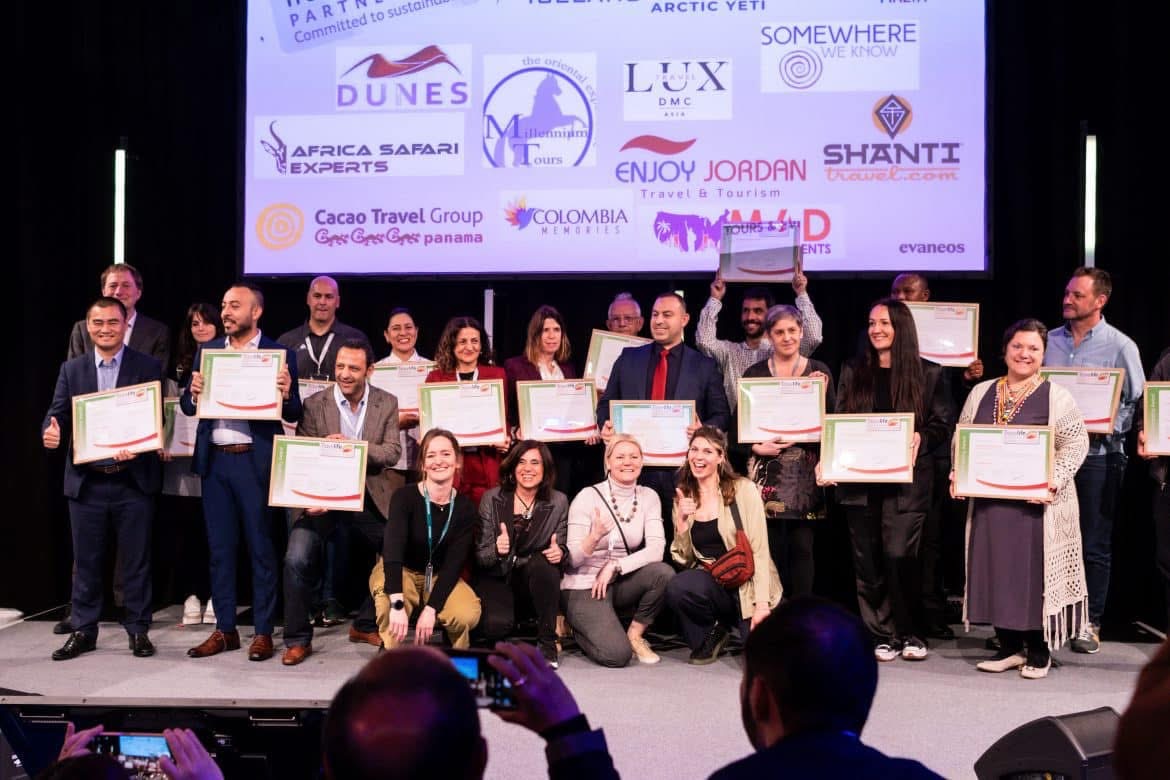
Travelife sustainability standards must likewise move from certification into daily behaviour: supplier selection, waste reduction, energy use, cultural interpretation, community participation and product design.
Culture is not what the company publishes. Culture is what leaders repeatedly reward, tolerate and correct.
Create Freedom Within a Framework
The purpose of risk management is not to eliminate risk. Innovation always involves uncertainty. A company that refuses every risk eventually refuses every opportunity.
The goal is to distinguish responsible experimentation from unacceptable exposure.
LuxGroup® should continue giving its small giants the freedom to imagine new products, personalise experiences and act close to the guest. The group, in turn, must provide the framework: purpose, strategic priorities, financial discipline, shared systems, safety requirements, ethical boundaries and sustainability commitments.
This is how control strengthens rather than suppresses entrepreneurship.
Our ambition is not to become the biggest group. It is to build one of the best: proudly Vietnamese, globally minded and trusted because it combines imagination with discipline.
A House of Small Giants succeeds when each business retains its entrepreneurial heart while recognising that its actions affect the whole house. In such an organisation, bad news travels quickly, responsibility is clear, values shape behaviour and controls protect the freedom to innovate.
That is not bureaucracy. It is the architecture of enduring trust.