

How LuxGroup Is Turning Vietnamese Culture into a Scalable Competitive Advantage
Lessons from service design, customer variability, trust, disciplined growth, artificial intelligence, and principles-based empowerment.
By Dr. Pham Ha, Founding President and CEO, LuxGroup®
In luxury service, customers do not simply buy a product. They buy the feeling of being understood, valued, and connected to a story that matters.
A beautiful suite, an elegant ship, or a sophisticated meal can make a strong first impression. But what customers remember is often something more personal: an employee who recalls their preferences, a guide who tells the right story at the right moment, or a small gesture that demonstrates genuine care.
This creates a fundamental challenge for every service organization: How can a company scale without turning meaningful human experiences into a sequence of impersonal processes?
Harvard Business School Online’s Transforming Customer Experiences course offers a series of frameworks for addressing this question—from the Service Profit Chain, customer variability, and trust to growth bottlenecks, responsible AI adoption, and the transition from rules-based management to principles-led empowerment.
Viewed through these frameworks, LuxGroup’s transformation reveals an important lesson:
Customer experience cannot be transformed through a marketing campaign. It must become an operating system—beginning with people, supported by technology, and guided by culture.
Customer Experience Begins with Employee Experience
The Service Profit Chain connects internal service quality, employee satisfaction, customer value, loyalty, and profitability.
When employees are recruited thoughtfully, trained properly, equipped with the right tools, and given meaningful work, they are better able to create excellent customer experiences. Satisfied customers are more likely to return, recommend the company, and contribute to sustainable growth.
This is particularly important at LuxGroup, where the guest experience spans numerous touchpoints: trip consultation, airport arrival, destination guiding, cruising, dining, accommodation, art, transportation, and post-journey care.
An outstanding moment cannot fully compensate for a fragmented journey. A service experience feels truly luxurious only when every employee understands that they are delivering one shared promise.
For this reason, People First® is more than a human resources statement. It is the foundation of the business model.
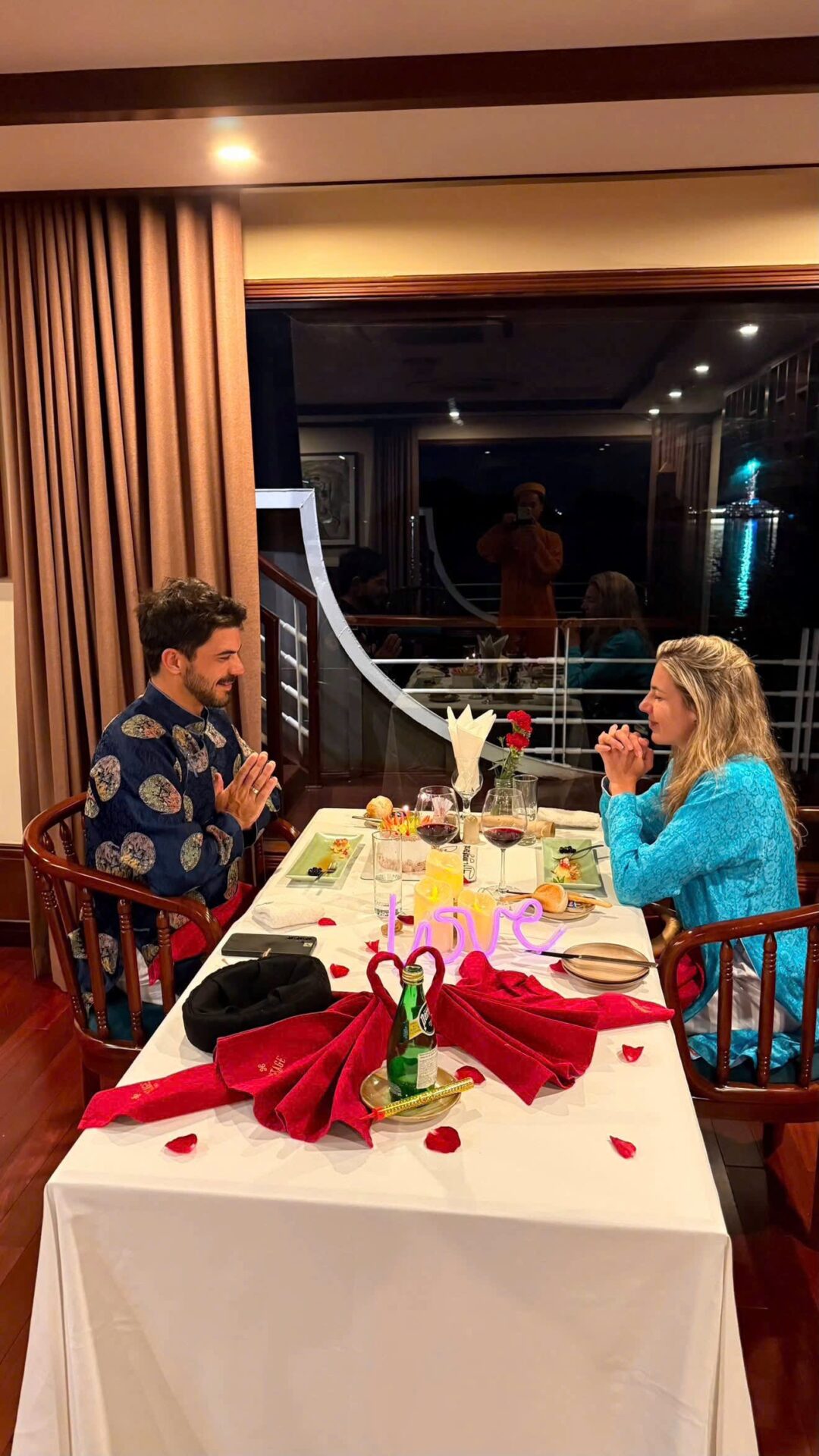
A Luxer does not merely “operate a tour,” “serve a meal,” “clean a room,” or “manage a ship.” Each employee helps tell the story of Vietnam, create a guest’s memories, and fulfill the promise of Delivering Happiness®.
In the famous story of President John F. Kennedy’s visit to NASA, a janitor reportedly described his job as “helping put a man on the moon.” In the same way, every Luxer should understand how their daily work contributes to the organization’s larger mission.
When employees see meaning in their work, they do more than complete tasks. They become experience creators.
Differentiation Does Not Come from Offering More
Many companies respond to competition by continually adding features, services, menu items, and promotions.
The course describes this as an augmentation strategy. Although augmentation may generate short-term attention, it also increases cost, complexity, and pressure on employees. When an organization tries to offer everything to everyone, its core value proposition can become diluted.
An alternative is curation—making deliberate choices about what to include and what to remove.
Curation does not mean delivering less value. It means identifying the attributes that matter most to the target customer, investing disproportionately in them, and removing elements that do not reinforce the brand’s positioning.
This approach aligns with LuxGroup’s philosophy: Not the biggest, but the best.
LuxGroup does not compete primarily through the number of rooms, seats, facilities, or listed amenities. Its competitive advantage lies in transforming Vietnamese culture into experiences that are personal, emotional, and meaningful.
On a Heritage Cruises journey, for example, value does not come only from the suite or the meal. It also comes from the story of Vietnamese entrepreneur Bach Thai Buoi, Vietnamese art, music, cuisine, and the cultural landscape of the Gulf of Tonkin.
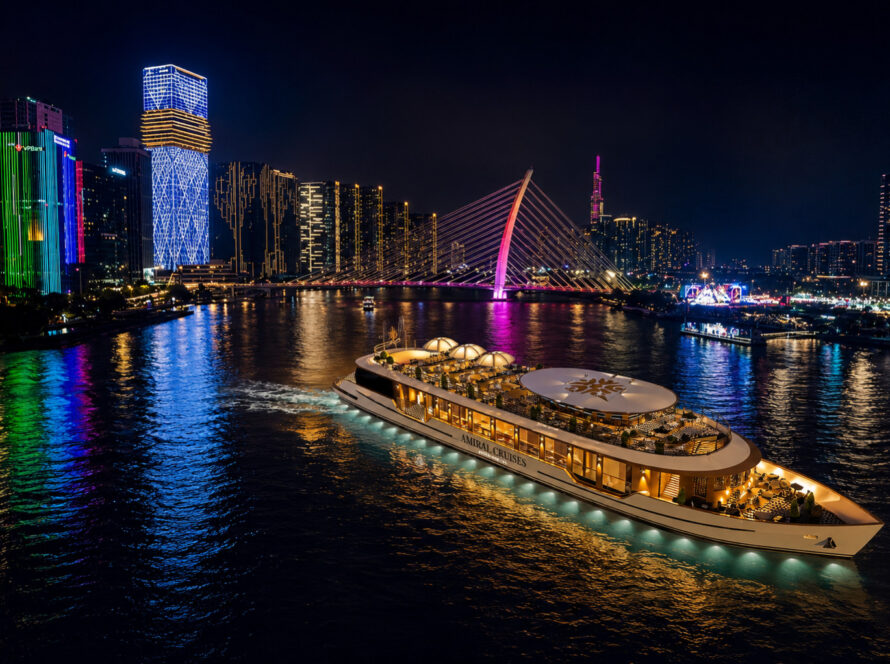
On the Saigon River, guests are not simply purchasing a cruise. They are entering a narrative about urban history, trading ports, river memories, and the vitality of Ho Chi Minh City.
In this model, culture is not decoration added to the product; culture is the product.
Managing Customer Variability
Services differ from manufactured products because customers participate directly in the process of creating value. They arrive at different times, possess different capabilities, invest different levels of effort, make different requests, and hold different subjective preferences.

Five common forms of customer variability are:
* Arrival variability: Customers seek service at times that suit them but may be inconvenient for the organization.
* Request variability: Customers request something outside the original service design.
* Capability variability: Customers possess different levels of knowledge or ability.
* Effort variability: Customers contribute different levels of effort to the service process.
* Subjective preference variability: Customers evaluate the same experience according to different personal standards.
A company can respond by requiring customers to follow a standardized process or by accommodating their individual needs. Both approaches, however, can fail.
Rigidly reducing variability may make customers feel controlled. Attempting to satisfy every request may increase costs, overwhelm employees, and reduce service quality.
LuxGroup must therefore choose deliberately:
* Standardize safety, minimum quality requirements, financial controls, and core brand promises.
* Simplify processes that create unnecessary difficulty for guests.
* Be transparent about the benefits and trade-offs of each product.
* Empower employees to personalize experiences within defined boundaries.
* Design distinct brands or products for customer groups with genuinely different needs.
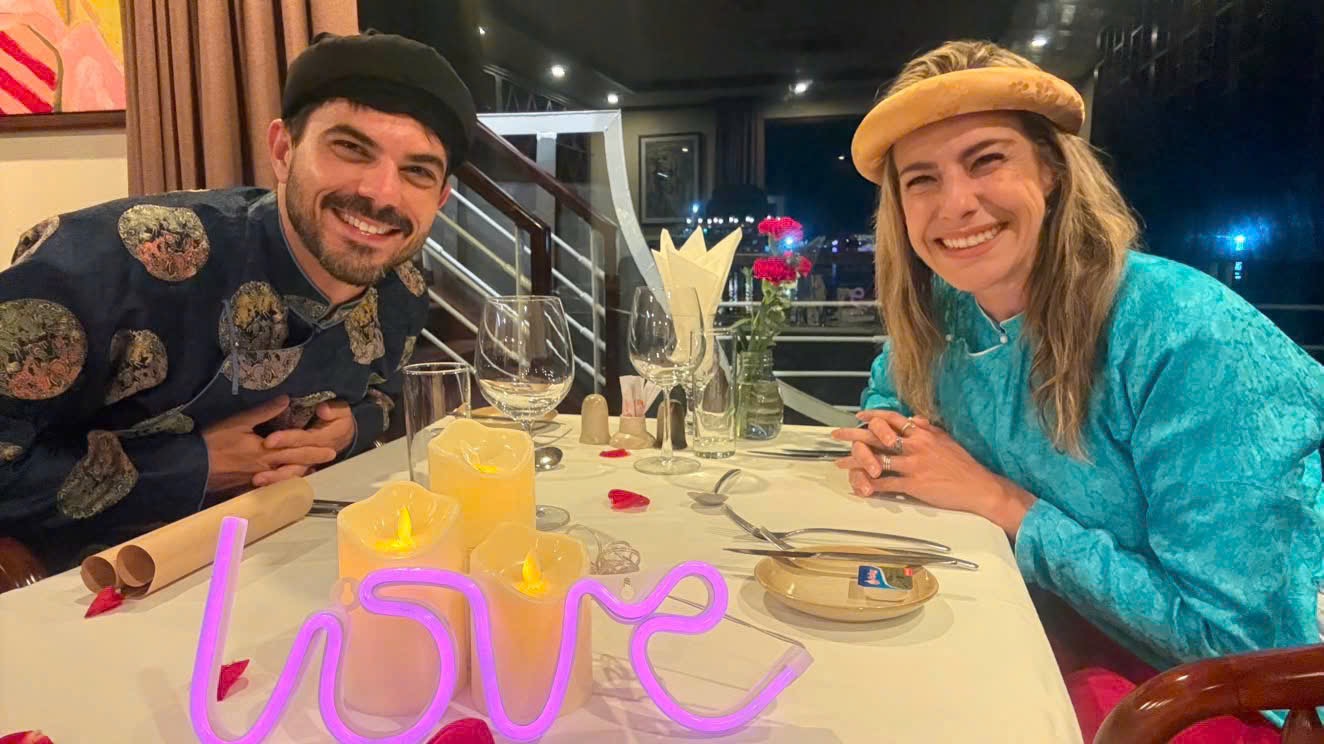
A honeymoon couple, a multigenerational family, an art collector, and a first-time visitor to Vietnam should not receive the same script.
The appropriate operating principle is:
Standardize the promise; personalize the moment.
Trust Is Built Through Authenticity, Logic, and Empathy
Frances Frei’s Trust Triangle identifies three foundations of trust: authenticity, logic, and empathy.
Authenticity means behaving consistently with who the organization claims to be. Logic demonstrates competence and the ability to deliver. Empathy shows customers that the organization understands and cares about their needs.
For LuxGroup, authenticity comes from telling Vietnam’s story through a Vietnamese perspective rather than reproducing an imported definition of luxury.
Logic comes from safety standards, operational expertise, itinerary reliability, knowledgeable guides, and seamless coordination throughout the journey.
Empathy appears when employees listen carefully, recognize unspoken needs, and act in the guest’s best interest.
Technology can strengthen logic. Processes can improve consistency. But empathy still requires human judgment and presence.
Trust can also be strengthened through operational transparency—making the invisible work behind a service visible to customers.
Tessei’s celebrated “Seven-Minute Miracle” in Japan demonstrates this principle. When passengers see train-cleaning teams working with discipline, pride, and hospitality, cleaning is no longer merely a backstage activity. It becomes part of the customer experience.
LuxGroup can apply the same thinking by helping guests understand the work involved in preparing journeys, ensuring safety, selecting ingredients, preserving heritage, supporting communities, and training cultural storytellers.
When customers see the care behind the product, they appreciate the experience more deeply and place greater trust in the brand.

Moving from Transactions to Relationships
A transactional business concentrates on completing the current sale. A relational business focuses on the customer’s lifetime value.
Returning customers are more familiar with the service, often cost less to serve, and are more likely to recommend the company. Relational businesses can therefore reduce customer acquisition costs while building loyalty and long-term profitability.
For LuxGroup, the relationship with a guest does not have to end when a journey finishes.
A guest who experiences Lan Ha Bay may later explore Nha Trang, the Saigon River, the Mekong Delta, or future river–sea journeys. An art lover may enter the Lux Arts Collection® ecosystem. A corporate customer may return for a private cruise, an incentive program, or a partner-appreciation event.
This requires unified customer data, effective handoffs across brands, and the ability to remember guest preferences. More importantly, it requires the organization to continue giving customers meaningful reasons to return.
Loyalty is not created through reward points alone. It emerges when customers feel that they belong to the brand’s continuing story.
Scaling Without Losing the Soul
Scaling a service organization requires balancing supply and demand.
When demand exceeds delivery capacity, service quality declines, employees burn out, and reputation suffers. This is a supply-side bottleneck.
When capacity exceeds demand, ships, rooms, employees, and other resources remain underused. Costs rise while morale may deteriorate. This is a demand-side bottleneck.

Leaders must manage three dimensions of growth:
* Rate of growth: How quickly should the organization expand?
* Direction of growth: Which products, destinations, or customer segments should it pursue?
* Method of growth: What capital, partnerships, and organizational structures will support the strategy?
For LuxGroup, adding a new ship is not merely an asset-investment decision. Recruitment, training, distribution, safety, storytelling, and customer-service capabilities must grow alongside it.
As a company moves from an informal entrepreneurial structure to a more formal operating system, it enters what can be called the “Bermuda Triangle” of scaling.
Formalize too late and complexity becomes chaos. Formalize too early and bureaucracy emerges before the business model has been fully tested.
LuxGroup therefore needs a shared culture book and cross-brand service playbook without turning them into rigid scripts. The system should enable employees to exercise better judgment—not replace their judgment.
Put AI Backstage and Keep Humanity on Stage
Technology adoption should be evaluated according to two variables: technical capability and human comfort and readiness.
When both are high, organizations can accelerate automation. When technical capability is high but users are not ready, human support can build trust. When employees are ready but the technology remains unreliable, human review and feedback can improve the system. When both are low, the service should remain primarily human.
At LuxGroup, AI can be valuable for:
* Drafting itineraries and routine content.
* Translating standard materials.
* Analyzing customer feedback.
* Forecasting demand.
* Generating initial personalized recommendations.
* Summarizing reports and identifying operational patterns.
These applications can release employees from repetitive work and allow them to focus on relationship-building, storytelling, cultural interpretation, and complex problem solving.
However, AI still faces the capability gaps summarized by the HABIT Model: hallucinations, adversarial prompts, bias, illusion of transparency, and toxicity.
AI therefore remains a tool—not an accountable decision-maker.
Humans must retain authority over safety, complex complaints, cultural interpretation, VIP interactions, and emotionally significant moments. Every important AI-supported decision should have a named human owner, verifiable sources, and clear escalation thresholds.
The objective is not to eliminate employees. It is to elevate them into roles that generate greater customer value.
From Rules-Based Management to Principles-Led Empowerment
As organizations grow, rules accumulate. Many are necessary, particularly in transportation, hospitality, food safety, labor, and finance.
But rules cannot anticipate every situation.
A rules-based organization prioritizes compliance even when a rule conflicts with the purpose of serving the customer. Over time, employees may develop learned helplessness: they see the problem but no longer believe they have the authority to change the outcome.
A principles-based organization treats rules as guardrails and values as a compass.
At LuxGroup, principles such as People First®, Delivering Happiness®, cultural authenticity, responsible stewardship, and being “present, personal, and unrushed” should guide action when the standard script no longer fits the situation.
For empowerment to be real, employees need three things:
* Capability: Knowledge, skills, tools, and coaching.
* Motivation: Meaning, recognition, and fair incentives.
* License: Explicit authority to act within clear boundaries.
When a rule conflicts with a principle, the organization should not simply search for someone to blame. The incident should become a learning opportunity: protect the customer, understand the root cause, improve the process, and share the lesson.
Over time, this approach reduces learned helplessness and turns employee judgment into an organizational capability.
Measure Trust, Not Just Revenue
Transformation fails when companies announce inspiring values but reward only revenue, volume, and speed.

LuxGroup should measure:
* Financial and operational performance.
* Customer trust.
* Whether guests received what they needed.
* The ease of the experience.
* Whether guests felt genuinely valued.
* Repeat business and referrals.
* Service-recovery effectiveness.
* Luxer engagement.
* Safety and environmental impact.
* The quality of cross-brand handoffs.
These measures should be used for learning rather than gaming. A single aggressive target can produce unintended behavior when employees believe the number matters more than the customer.
Quantitative indicators should therefore be balanced with direct feedback and qualitative guest stories.
Operating Culture Is the Real Product
The Vietnam Waterways® 2045 vision—to build a national fleet connecting Vietnam’s rivers, deltas, lagoons, and seas—requires more than ships, ports, and investment capital.
It requires a cultural operating system capable of delivering a coherent promise across multiple businesses while allowing each experience to retain its own identity.
This is the meaning of LuxGroup’s House of Small Giants model: each member company remains focused enough to excel in its field, yet connected enough to create greater value for customers, employees, partners, communities, and society.
LuxGroup’s ambition is not to become the biggest. It is to become the best at transforming Vietnamese culture into meaningful, sustainable, and personal journeys.
Systems make the promise dependable.
Technology makes the organization more intelligent.
Principles give employees the courage to act.
Human presence transforms a transaction into a memory.
The broadest lesson from transforming customer experiences is that transformation is not a technology project, a marketing campaign, or an isolated process-improvement program.
It is the deliberate design of the relationship among strategy, people, systems, culture, and purpose.
Growth becomes sustainable when an organization can repeat its standards—without repeating the same experience.
About the Author
Dr. Pham Ha is the Founding President and CEO of LuxGroup®, a Vietnamese luxury travel, cruise, hospitality, and lifestyle group. He champions the philosophy of Luxury is Culture®, the House of Small Giants model, and the Vietnam Waterways® 2045 vision to transform Vietnam’s rivers, seas, and cultural heritage into living experiences for global travelers.