

Vietnam is often defined by contrasts—mountains and deltas, jungles and coastlines, ancient villages and restless cities. But beneath every postcard image lies a quieter, more enduring truth: Vietnam is not merely bordered by water. It is shaped by it.
For more than 4,000 years, the country’s political power, economic life, spiritual beliefs, and cultural identity have flowed along rivers, estuaries, bays, and coastlines. Long before highways or airports, waterways were Vietnam’s original infrastructure—an invisible network that carried people, ideas, faiths, and trade.
Today, as Vietnam looks to evolve from a volume-driven destination into one defined by depth, meaning, and value, its future may rest on a deceptively simple question: What happens when a nation remembers how it once moved?
Rivers Before Roads
Vietnam’s earliest civilizations did not rise behind walls or along borders. They emerged beside rivers.
The Red River Delta was the cradle of wet-rice agriculture, enabling surplus, settlement, and early governance. Here, rivers were not scenery—they were sovereignty, nourishing land while connecting villages and power centers.
Further south, the imperial capital of Huế was deliberately positioned between mountains and the Perfume River. Facing water and backed by stone, the citadel expressed a worldview rooted in balance and flow. Authority was never static; it had to move, adapt, and renew—much like the river itself.
Vietnam did not conquer water. It learned to live with it.
When Vietnam Met the World by Sea
Vietnam’s relationship with the outside world also followed the currents.
In the north, the ancient port of Vân Đồn connected inland capitals to East Asian trade routes. Rivers carried goods inland; ships returned to sea laden with rice, ceramics, and culture.
In central Vietnam, Hội An—known globally as Faifo—became one of Asia’s most cosmopolitan ports between the 16th and 18th centuries. Japanese traders, Chinese merchants, and European ships sailed from open sea into the Thu Bồn River, arriving directly into the rhythms of Vietnamese daily life.
Here, trade was never purely transactional. It was civilizational exchange, conducted on water.
Faith That Traveled by Boat
Waterways carried more than goods and people. They carried belief.
Buddhism entered Vietnam through maritime routes linking India, Southeast Asia, and southern China. Monks and scriptures arrived by sea, then moved upriver into villages and capitals. Pagodas naturally rose near rivers, where spiritual life intertwined with the cycles of nature.
Centuries later, Christianity followed the same watery paths. European missionaries arrived by ship, entered through river mouths, and established early Catholic communities along waterways.
One of the most striking expressions of this convergence is Phát Diệm Cathedral. Built in the late 19th century amid canals and lagoons, it fuses Catholic theology with Vietnamese temple architecture and geomantic principles. Stone churches emerge from water features and courtyards, reflecting a profound local truth: in Vietnam, faith adapts to place rather than imposing upon it.
The country’s great cathedrals tell a similar story.
St. Joseph’s Cathedral Hanoi anchors the heart of the Red River capital.
Notre-Dame Cathedral Basilica of Saigon rises in a city born of the Saigon River and nourished by the Mekong’s fertile reach.
Across belief systems, water functioned as spiritual infrastructure—a medium through which ideas arrived, settled, and became Vietnamese.
The South: Where Water Became a Way of Life
If the north forged power and the center refined culture, the south transformed water into identity.
The Mekong River and the Saigon River shaped one of Asia’s richest agricultural regions. From this abundance emerged Saigon, Chợ Lớn, Gia Định, and the historic Cochinchina provinces.
Here, canals became streets. Boats became marketplaces. Rivers became neighborhoods.
Even today, traveling by water from Saigon into the Mekong Delta—or onward to Cambodia—remains one of Southeast Asia’s most evocative journeys. It is slow, immersive, and human. In an age of acceleration, slowness itself has become a luxury.
Tourism on Water: Strength Without Strategy
Some of Vietnam’s most celebrated tourism experiences are already water-based.
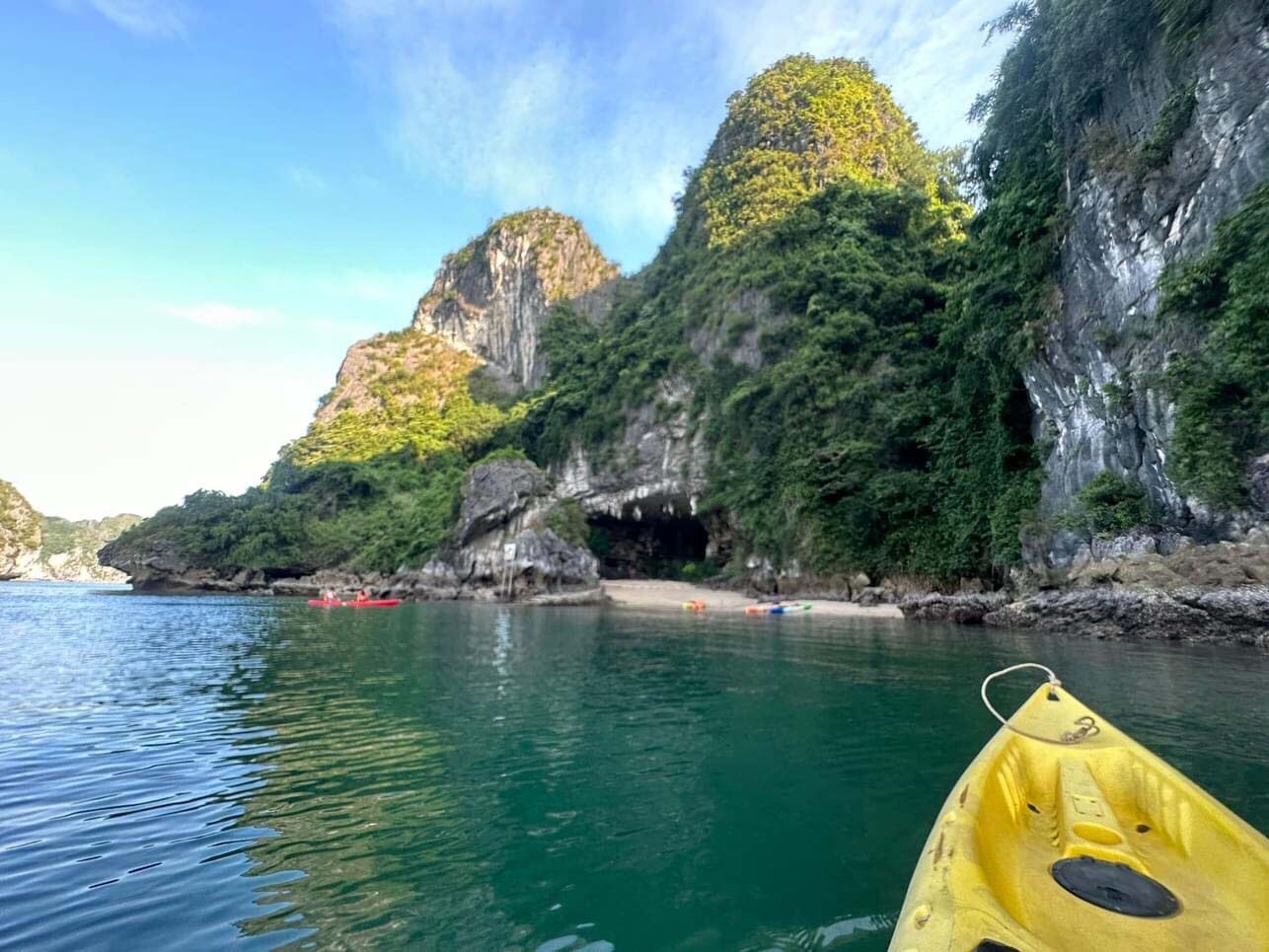
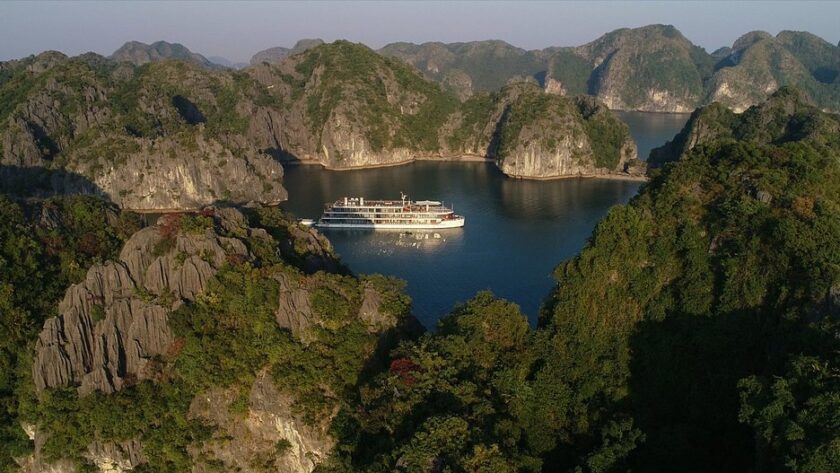
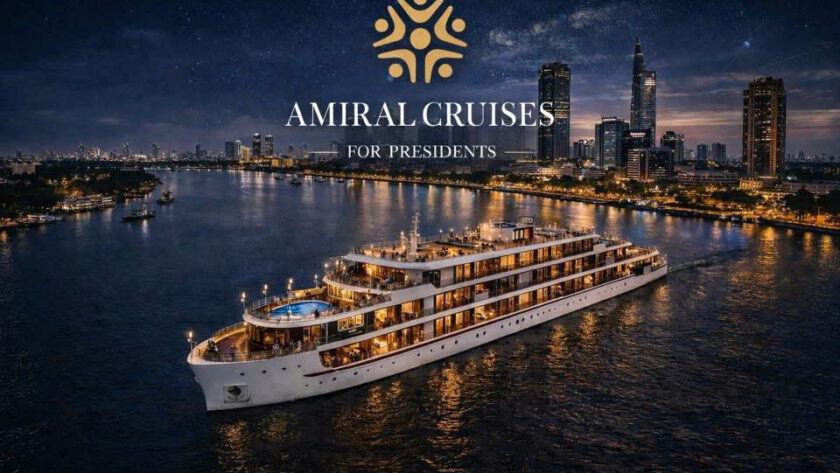
Overnight cruises in Hạ Long Bay, Bái Tử Long Bay, and Lan Hạ Bay enjoy global recognition. Mekong River cruises linking Saigon to Cambodia remain among the country’s highest-value travel experiences.
Yet a paradox persists.
Central Vietnam lacks refined river cruises on the Thu Bồn and Perfume rivers. Nearly 4,000 offshore islands remain largely untapped. And despite 3,620 kilometers of coastline, Vietnam still has no integrated north–south cruise network capable of connecting rivers, islands, and coastal heritage into a single narrative.
For a nation shaped by water, this fragmentation represents one of its greatest missed opportunities.
Vietnam Waterways®: Turning Geography into Identity
This strategic gap has inspired Vietnam Waterways®—a long-term vision to reconnect Vietnam’s rivers, seas, islands, culture, and beliefs into one coherent journey.
Led by LuxGroup, the idea is not simply to launch ships, but to reimagine how Vietnam is experienced:
• From destination to journey
• From sightseeing to storytelling
• From tourism to cultural diplomacy on water
Under this vision, cruises become floating heritage corridors—where art, cuisine, faith, and history move together, carried by the same waterways that once bore kings, monks, merchants, and missionaries.
Why Water Is Vietnam’s Quiet Luxury Advantage
Globally, luxury travel is changing. Travelers are no longer satisfied with scale or spectacle. They seek meaning, authenticity, and emotional connection.
Vietnam already possesses these qualities. They are embedded in its rivers, deltas, and coastlines.
To travel Vietnam by water is not merely to move through space. It is to move through layers of memory—where belief, commerce, and culture have flowed together for millennia.
Vietnam’s waterways are not just infrastructure.
They are identity in motion.
And as the country looks toward 2045, the question is no longer whether Vietnam should invest in its rivers and seas—but whether it can afford not to.