

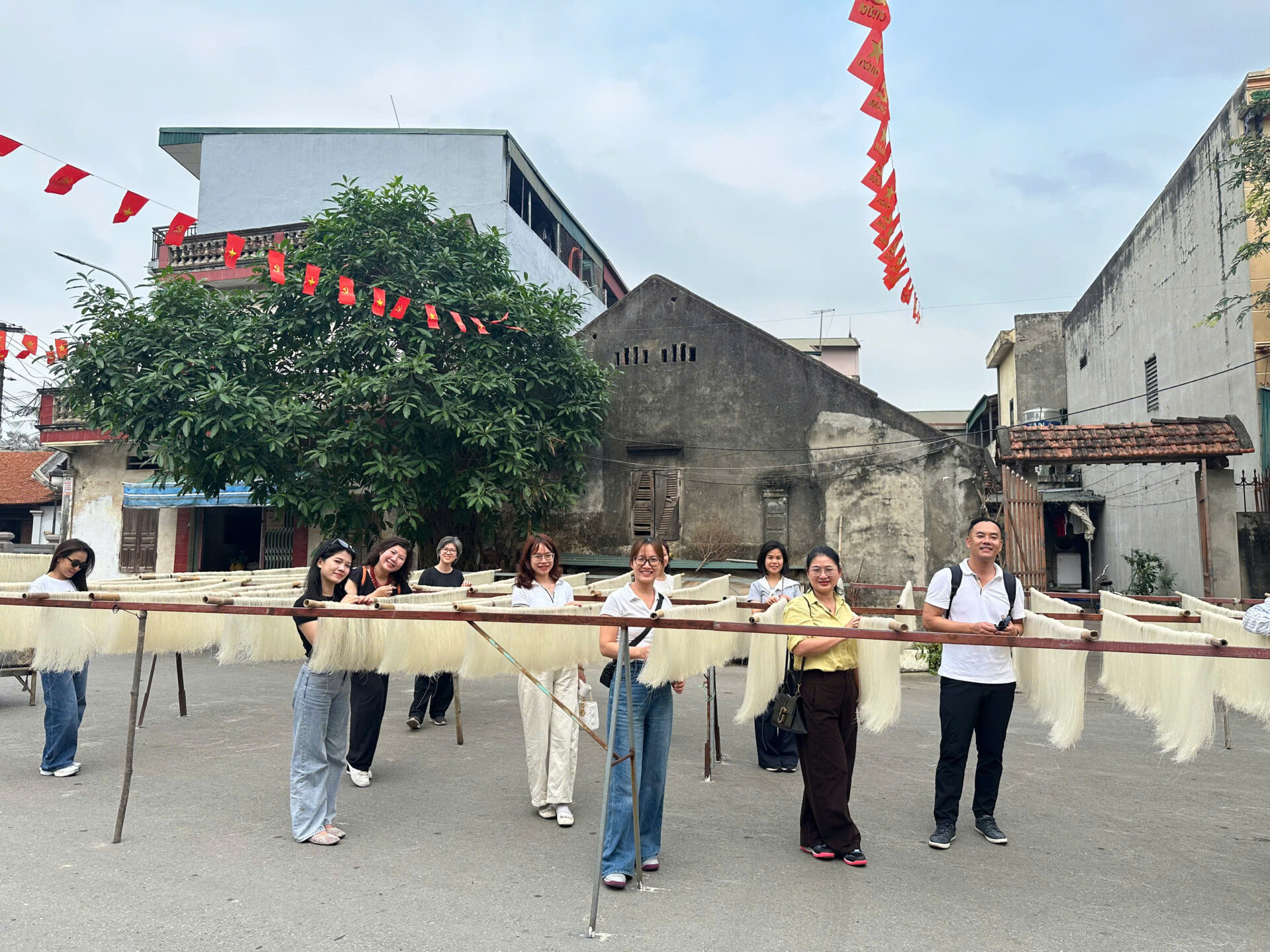
I recently had the opportunity, together with my colleagues, to visit Hung Lo Village, an ancient village along the Red River known for its temples dedicated to the Hung Kings and its well-preserved traditional houses and communal spaces.
One of the most memorable moments was experiencing Xoan Singing of Phu Tho, an intangible cultural heritage recognized by UNESCO.
There was no stage, no staging. Villagers simply performed as they have for generations, naturally and authentically as part of everyday life. They shared stories about their village, their crafts, and their traditions—from making traditional rice cakes to using farming tools, from songs to rituals.
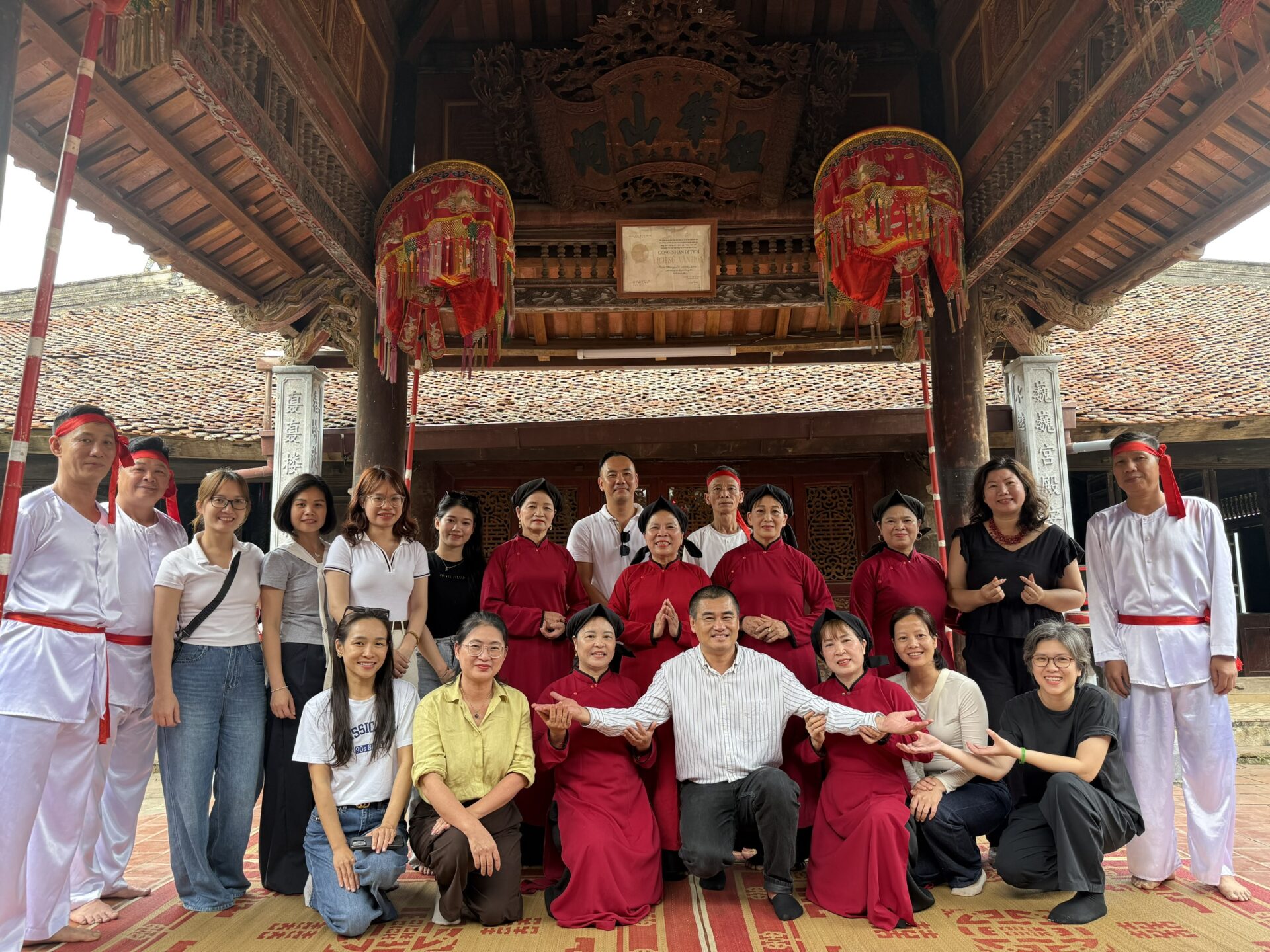
Pham Ha & LuxGroup Team experienced Xoan Singing at Hung Lo Village
This was not just a visit. It was an experience of living culture.
As lobal tourism shifts toward slow travel and authentic local experiences, village tourism in Vietnam is emerging as a strategic direction that combines economic development with cultural preservation.
According to Pham Ha, Founding President & CEO of LuxGroup®, the true appeal of Vietnamese villages lies not in scenery alone, but in the depth of living culture.
Three core elements define this value:
- Authenticity: not staged, not performed for tourists
- Living culture: daily life as heritage
- Local people: genuine hospitality and cultural pride
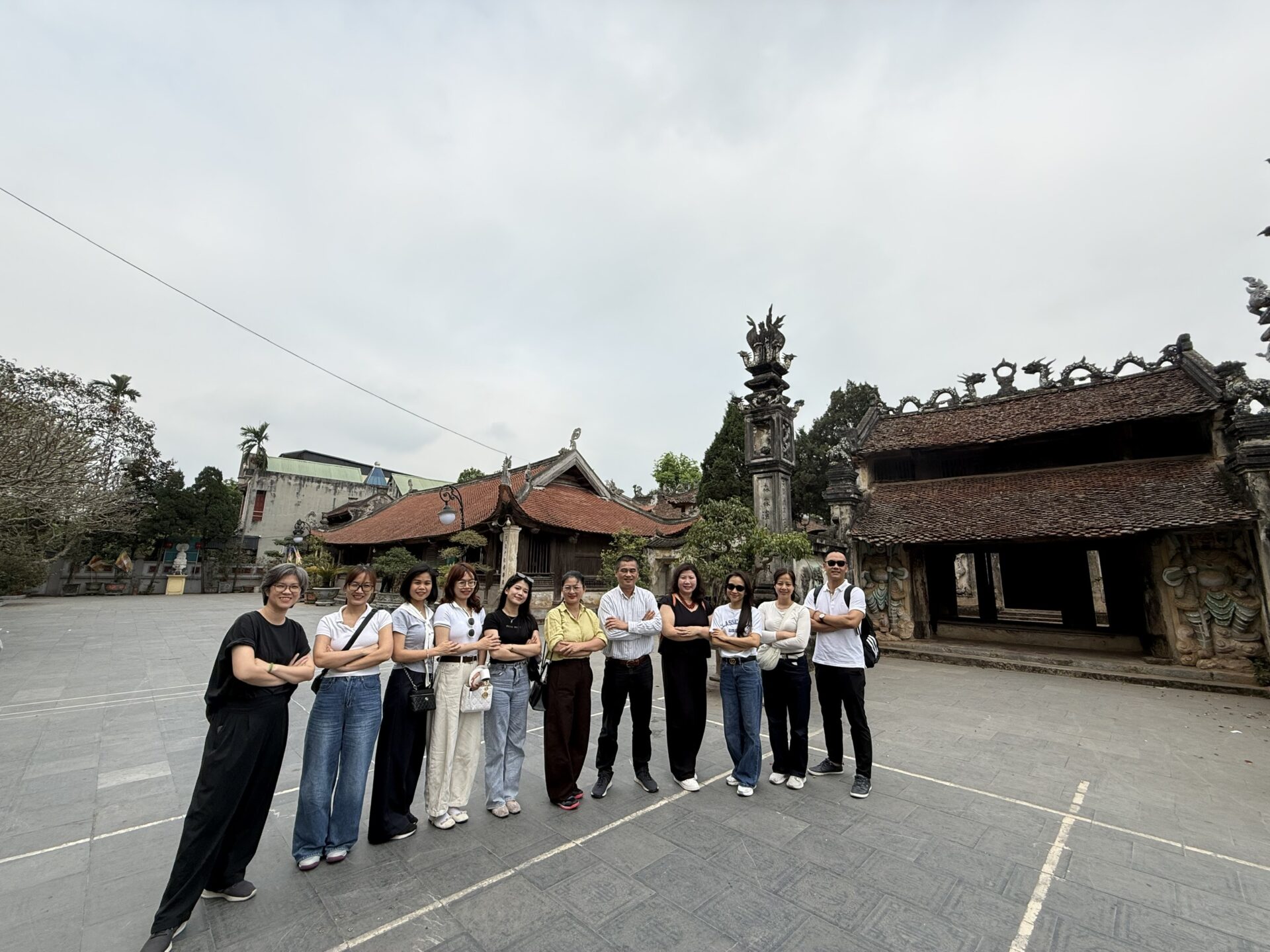
Pham Ha & LuxGroup visited the ancient communal house at Hung Lo Village.
According to Pham Ha, Vietnam needs a clear strategy: select a number of representative villages for focused investment, build strong storytelling, develop high-value experiences, and integrate village tourism into a broader ecosystem, especially river-based tourism. Village tourism is not merely an economic product. It is a long-term development strategy. If done right, people can thrive in their hometowns, culture remains alive in everyday life, and Vietnam can establish a distinct identity on the global tourism map. As Pham Ha emphasizes:
“We do not sell landscapes. We share a way of life—and that is the most sustainable value of all.”