

By Dr. Phạm Hà – Founding President & CEO, LuxGroup®
In a recent speech, Prime Minister Lê Minh Hưng raised a thought-provoking question about the quality of growth in Vietnam’s tourism industry: if international visitors arrive on foreign airlines, stay in foreign-owned hotels, dine in foreign restaurant chains, shop in foreign retail systems, travel on foreign-operated tours, and are guided by foreign tour leaders, then how much real value does Vietnam actually retain?
This is not merely a question for tourism. It is a question for the entire Vietnamese economy as the country aims for tourism to contribute 14–15% of GDP by 2030.
Because tourism growth cannot be measured only by the number of arrivals. It must also be measured by how much added value remains within the domestic economy. If most tourism revenue continues to flow outward through international ownership chains, Vietnam will remain positioned at the lowest end of the value ladder. In that scenario, even rapid growth in visitor numbers will generate limited impact on GDP quality, high-value employment, and national competitiveness.
This is the moment to rethink tourism not simply as a service industry for receiving visitors, but as a high-value economic sector and a long-term national development strategy.
For many years, Vietnam’s tourism industry expanded primarily through volume. We became accustomed to celebrating international arrivals, flight frequencies, and hotel occupancy rates. But that growth model is gradually reaching its productivity ceiling.
Average visitor spending in Vietnam remains significantly lower than in many neighboring countries. Length of stay is still relatively short. The value created per journey remains modest. In other words, Vietnam has been selling resources more than experiences.
Meanwhile, the world has changed dramatically after the pandemic. Today’s travelers are no longer searching for crowded and inexpensive trips. They seek personalized experiences, cultural depth, privacy, authenticity, and emotional connection.
This global shift is transforming tourism from mass tourism into high-value tourism.
Luxury, too, must be redefined. Luxury is no longer merely material extravagance. Luxury today is the ability to create higher value per journey through culture, emotion, identity, and refinement.
That is why more countries are investing heavily in experiential travel, wellness tourism, cruise tourism, cultural tourism, and immersive forms of travel with greater experiential depth. Vietnam cannot stand outside this transformation.
Vietnam possesses advantages that few countries can replicate: more than 4,000 years of history, a rich heritage system, one of the world’s most attractive cuisines, over 3,260 kilometers of coastline, and a river-based culture stretching from north to south.
Yet the greatest gap today lies in our ability to transform these assets into deep economic value.
Many destinations in Vietnam continue to develop through repetitive models: similar hotels, identical tours, interchangeable products, and limited differentiation. As a result, competition is still driven largely by price rather than value.
The world’s most successful destinations compete differently. Japan sells refinement. Italy sells art and lifestyle. Thailand sells hospitality and wellness. Dubai sells symbolism and spectacle. Singapore sells efficiency and urban experience.
Vietnam also needs a clear positioning: a nation of culture, nature, people, cuisine, and meaningful experiences. A place where every journey tells a story, every experience becomes a memory, and every destination carries a distinct identity.
One of Vietnam’s largest bottlenecks today is not business capability, but institutional thinking. While global markets are changing rapidly under the impact of AI, digital transformation, and the experience economy, many domestic policies remain heavily administrative and disconnected from market realities.
Visa policies have yet to become a true instrument of national competitiveness. Tourism infrastructure lacks integration. Connections between airports, seaports, railways, urban systems, and destinations remain fragmented. Most Vietnamese tourism businesses are still relatively small, lacking the resources necessary to build global brands and retain value chains domestically.
Yet sustainable tourism development requires strong leading enterprises capable of driving ecosystems, building national brands, and competing in higher-value segments.
Policy should not merely regulate. Policy must open the way forward. Without institutional leadership, markets cannot move far.
Another strategic advantage Vietnam has yet to fully unlock is its river and maritime tourism economy. With dense river systems and more than 3,260 kilometers of coastline, Vietnam holds enormous potential for cruise tourism, waterway tourism, and riverfront–coastal urban development.
However, the country still lacks dedicated cruise ports, integrated connectivity infrastructure, and iconic premium waterway tourism products.
Globally, cruise tourism generates exceptionally high added value while stimulating aviation, logistics, food and beverage, retail, and cultural industries.
River and maritime tourism therefore should not be viewed merely as tourism products. They represent a strategic economic frontage for the nation. If left underdeveloped, Vietnam risks missing a major long-term growth engine.
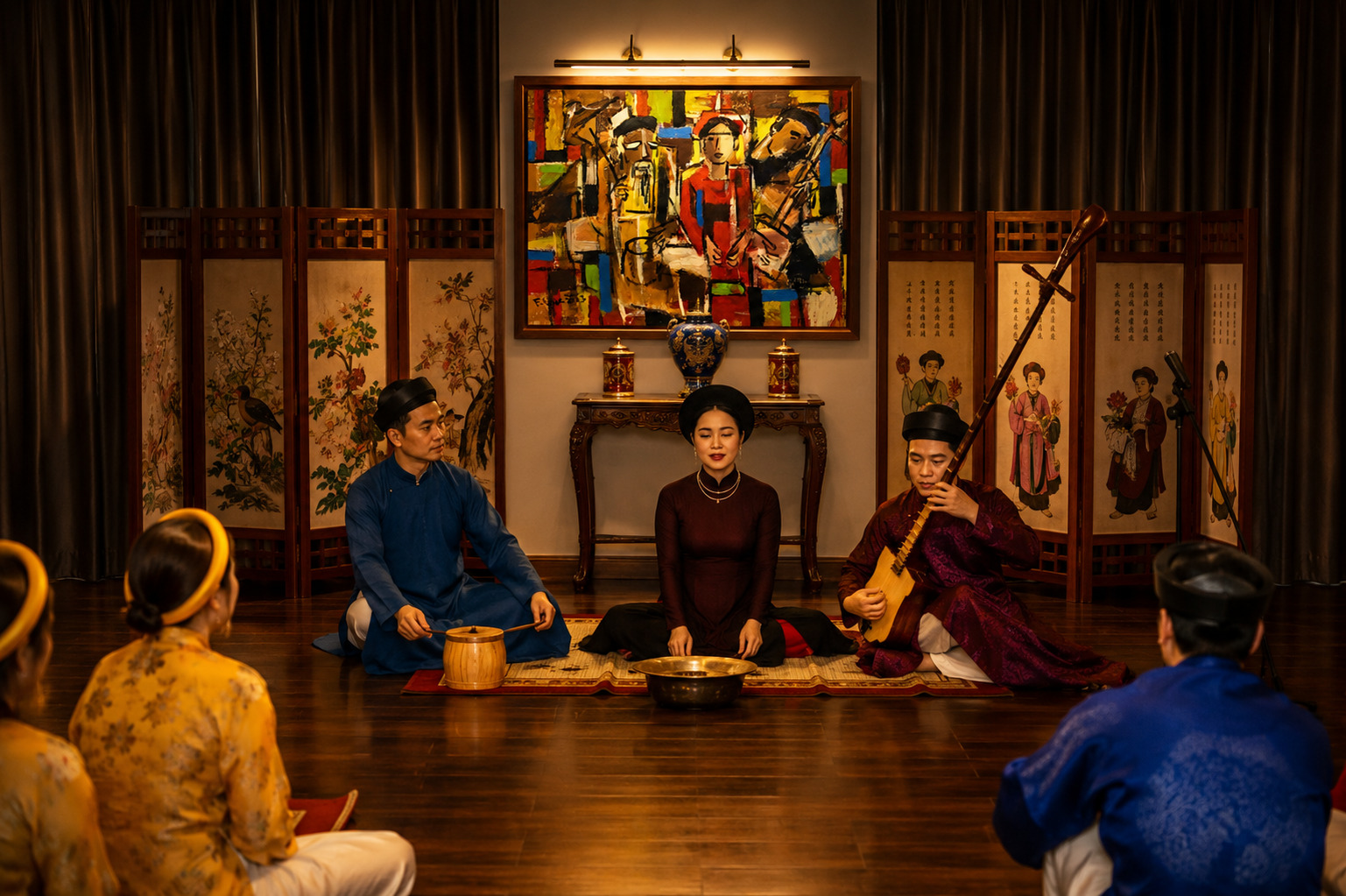
In an era of globalization, destinations increasingly resemble one another. There is only one thing that cannot be replicated: culture.
Vietnam should no longer position itself as a low-cost destination or simply a destination of high visitor volume. It should position itself as a country of culture, nature, cuisine, humanity, and meaningful experiences.
“Luxury is Culture – Delivering Happiness.”
Culture is not merely a tourism resource. Culture must become a strategic national core within the global experience economy. In the future, competition among nations will not depend solely on GDP or infrastructure, but also on the ability to create emotion, inspiration, and spiritual value for the world.
The target of tourism contributing 15% of GDP is achievable. But it cannot be reached through yesterday’s growth model.
Vietnam now needs a new tourism resolution for a new era — one bold enough in vision, long enough in strategy, and strong enough in institutional reform.
Tourism should no longer be viewed solely as a service sector. It must be recognized as a cultural industry, an on-site export industry, an instrument of soft diplomacy, and a high-value economy.
By 2045, Vietnam can absolutely become Asia’s leading experiential tourism powerhouse. But to achieve that ambition, the country must embrace a profound transition: from management to enablement; from administration to market orientation; from quantity to value; and from short-term thinking to long-term national vision.
The true value of tourism does not lie in visitor numbers alone. Its true value lies in the ability to generate high added value, strengthen national branding, and ensure that the world remembers Vietnam as a country of identity, cultural depth, and a story powerful enough to inspire humanity.