

For decades, the corporate world has operated on a familiar logic: employees perform tasks defined by job descriptions, managers supervise productivity, and leadership carries ultimate responsibility for results. But in an era shaped by AI, digital transformation, ESG, and a growing crisis of workplace trust, that traditional model is showing its limitations.
What organizations need today are not merely “good employees,” but people who think and act like owners.
That is the central thesis of Ownership Culture – We Don’t Work Here. We Own This., the new book by Phạm Hà, which offers a compelling perspective on the future of organizational culture in the experience economy.
Ownership Is Not Equity — It Is a Mindset
One of the book’s most powerful contributions is its redefinition of ownership itself.
Traditionally, the word “owner” refers to someone with shares, authority, or executive power. But Ownership Culture argues that ownership is fundamentally a state of mind.
A person may hold no equity in a company and still behave like an owner:
- proactively solving problems,
- paying attention to details,
- protecting the brand’s reputation,
- caring deeply about customer experience,
- and treating organizational success as a personal responsibility.
Conversely, someone in a senior role can still operate with an employee mentality if they merely follow procedures and avoid accountability.
In today’s highly competitive environment, this distinction matters profoundly. Many companies are investing aggressively in technology, AI, and sustainability. Yet the ultimate competitive advantage may not come from systems alone, but from a culture where every individual feels emotionally invested in a shared mission.
Culture Is Not a Slogan on the Wall
One of the book’s defining statements is simple yet profound:
“Culture is what we do.”
Culture does not live in posters, HR presentations, or corporate slogans. It lives in daily behavior:
- how employees respond to customers,
- how colleagues support each other under pressure,
- how organizations react during crises,
- and how people behave when no one is watching.
This is the difference between performative culture and lived culture.
At LuxGroup®, the corporate culture is distilled into three core values:
- Efficiency
- Integrity
- Happiness
Three simple words that reveal a much deeper philosophy.
Efficiency is not merely about speed or productivity. It is about creating meaningful value with discipline and effectiveness.
Integrity goes beyond compliance. It reflects honesty in communication, transparency in action, and consistency between words and behavior.
Happiness is not treated as a soft slogan, but as a strategic goal — where employees, customers, and communities all benefit from the organization’s growth.
When these values are consistently practiced, culture stops being theory and becomes an invisible operating system shaping every interaction and decision.
The New Luxury: Emotion Over Price
Another important idea explored in Ownership Culture is the redefinition of luxury itself.
For years, luxury was associated with:
- exclusivity,
- high prices,
- and visible extravagance.
But modern consumers increasingly seek something far more meaningful:
- personalization,
- emotional connection,
- authenticity,
- and purpose.
Luxury, in this philosophy, is not about whether a hotel is covered in gold. It is about whether the staff remembers your name. It is not about the price of a bottle of wine, but about how respected and genuinely cared for you feel.
A handwritten note. A thoughtful gesture. A moment of empathy.
These seemingly small acts often create a stronger sense of luxury than material opulence ever could.
This is why boutique brands around the world are gaining influence. They are not competing through scale, but through emotional depth.
In the AI era, this human dimension becomes even more valuable. Technology may automate systems, but empathy remains irreplaceable.
Leadership Is No Longer About Control
Ownership Culture also reflects a broader global shift in leadership thinking: from command-and-control leadership toward servant leadership.
Leaders in ownership cultures no longer ask:
- “How do I control people?”
Instead, they ask:
- “How do I help them succeed?”
- “What do they need to grow?”
- “What obstacles are preventing them from performing at their best?”
This approach is not simply compassionate — it is strategic.
A company cannot build ownership through fear or micromanagement. Ownership emerges only when people feel:
- trusted,
- empowered,
- and heard.
As younger generations increasingly search for meaning rather than merely income, organizations that fail to create emotional engagement risk losing not only talent, but long-term resilience.
The Future Belongs to Organizations with Ownership Culture
Ultimately, Ownership Culture is not just a book about corporate performance. It is a reflection on the dignity of work in the modern age.
When people stop seeing work as merely a place to earn a salary, and start seeing it as a place where they can:
- create value,
- leave a legacy,
- and contribute to something larger than themselves,
work itself becomes more meaningful.
That is when companies evolve from KPI-driven systems into trust-driven communities.
In a world where technology can replicate almost everything, ownership culture may become the most difficult competitive advantage to imitate.
Because in the end, brands are not built by logos or advertising campaigns.
They are built by people proud enough to say:
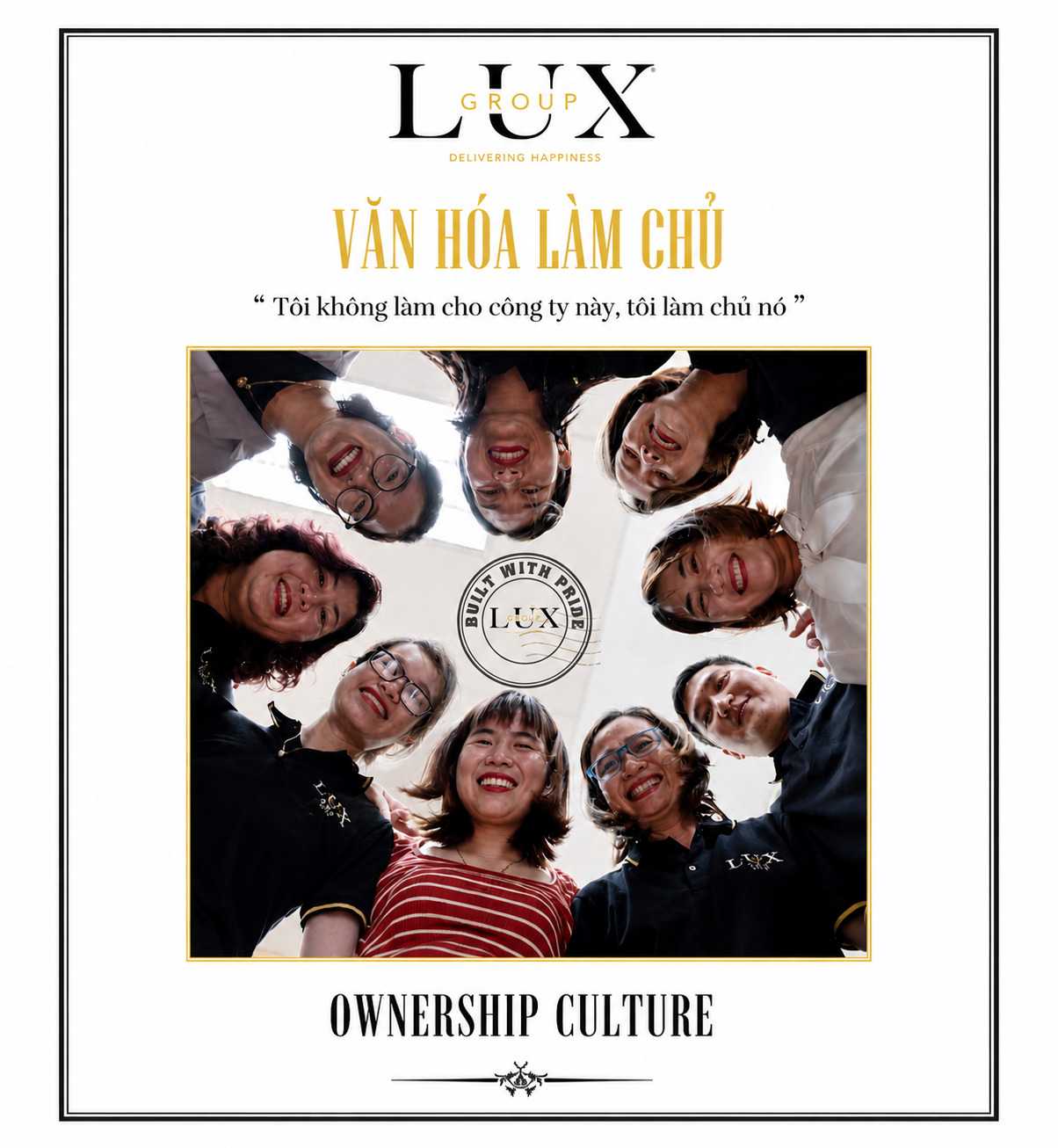
“We don’t just work here. We own this.”