

From a Harvard Certificate to Intentional Leadership
Reflections After Completing Harvard University’s HarvardX Course
A Certificate Marks a Beginning, Not an Ending
Completing Harvard University’s EPPR: Purpose, Perspective, and Persuasion course with a 96% final grade and earning a HarvardX Verified Certificate is a milestone I am proud to celebrate. Yet, after finishing the final lesson, I realized that the certificate is not the greatest achievement. Its true value lies in the way the course reshaped my thinking about leadership, decision-making, and lifelong learning. A certificate acknowledges what we have completed; wisdom begins when we apply what we have learned.
Purpose: Every Journey Needs a Meaning
The first and most profound lesson was Purpose. Harvard challenged a simple yet transformative question: Why do you do what you do? In business, we often speak about growth, revenue, and profitability. Yet without purpose, even success can become hollow. This course reaffirmed my belief that LuxGroup’s philosophy, Luxury Is Meaning®, is more than a brand promise—it is a leadership principle. Purpose gives direction to strategy, meaning to work, and inspiration to people.
Perspective: The Power of Seeing More
Leadership is not measured by how many answers we have, but by the quality of the questions we ask. One of Harvard’s most valuable lessons was learning to pause and ask: Am I seeing the complete picture? What assumptions am I making? What perspectives am I missing? Great leaders recognize that perspective creates possibility. It allows us to transform conflict into dialogue, uncertainty into opportunity, and complexity into clarity. In today’s rapidly changing world, perspective is one of the greatest competitive advantages.
Persuasion: Building Bridges, Not Winning Arguments
Perhaps the most practical insight from the course was the true meaning of persuasion. Too often, persuasion is misunderstood as convincing others to accept our ideas. Harvard teaches the opposite. Effective persuasion begins with listening, understanding the interests of others, and presenting ideas through logic, evidence, and empathy. It is about building consensus rather than claiming victory. Sustainable leadership is founded on trust, and trust is built through respectful influence rather than authority alone.
Leadership Begins with Self-Leadership
This course reminded me that the most important organization any leader will ever manage is themselves. We invest significant time in developing products, brands, and businesses, but our greatest responsibility is to continue developing our own character and judgment. Organizations grow only as far as their leaders grow. Lifelong learning, therefore, is not an optional activity—it is an essential responsibility for anyone who aspires to lead.
Emotions Are Signals, Not Commands
One lesson that deeply resonated with me was the distinction between emotion and reaction. Harvard emphasizes that emotions should never be ignored because they provide valuable information. However, emotions should inform our decisions, not control them. This aligns closely with my own mindfulness practice. Whenever frustration arises, I pause, breathe, and create space between emotion and action. In that brief moment of awareness, better judgment emerges. Leadership is often determined by what happens in those few seconds before we respond.
Failure Is the Tuition Fee of Innovation
Entrepreneurs naturally celebrate success, but Harvard reminded me that failure is often our greatest teacher. Every project that fell short, every decision that proved imperfect, and every unexpected setback became an opportunity to learn. Failure is not evidence of inability; it is feedback for improvement. What matters is not avoiding failure altogether but developing the humility and discipline to learn from it, adapt, and move forward with greater wisdom.
Think Small Before You Scale Big
One of the most practical concepts in the course was the importance of testing ideas before fully committing to them. Rather than launching large initiatives based solely on confidence, Harvard encourages leaders to conduct pilot projects, gather evidence, and refine their approach before scaling. In business, thoughtful experimentation often produces better long-term results than bold assumptions. Sustainable growth is built on learning, iteration, and disciplined execution.
Success Is Built Through Daily Habits
Another enduring lesson is that extraordinary achievements are the result of ordinary disciplines practiced consistently. This inspired me to refine my own daily leadership rhythm. Every morning begins with reflection and prioritization. Midday is dedicated to focused execution, delegation, and monitoring progress. Every afternoon concludes with reflection, learning, and planning for tomorrow. Success is rarely created by dramatic moments; it is shaped by intentional routines repeated over time.
Learning Is a Lifelong Responsibility
Perhaps the greatest gift of this Harvard experience is the reminder that education never truly ends. Every book, every conversation, every challenge, and every course offers another opportunity to expand our thinking. In an era shaped by artificial intelligence, rapid innovation, and constant disruption, the ability to learn continuously may be the most valuable leadership skill of all. Curiosity is no longer an advantage—it is a necessity.
Success Is a Process
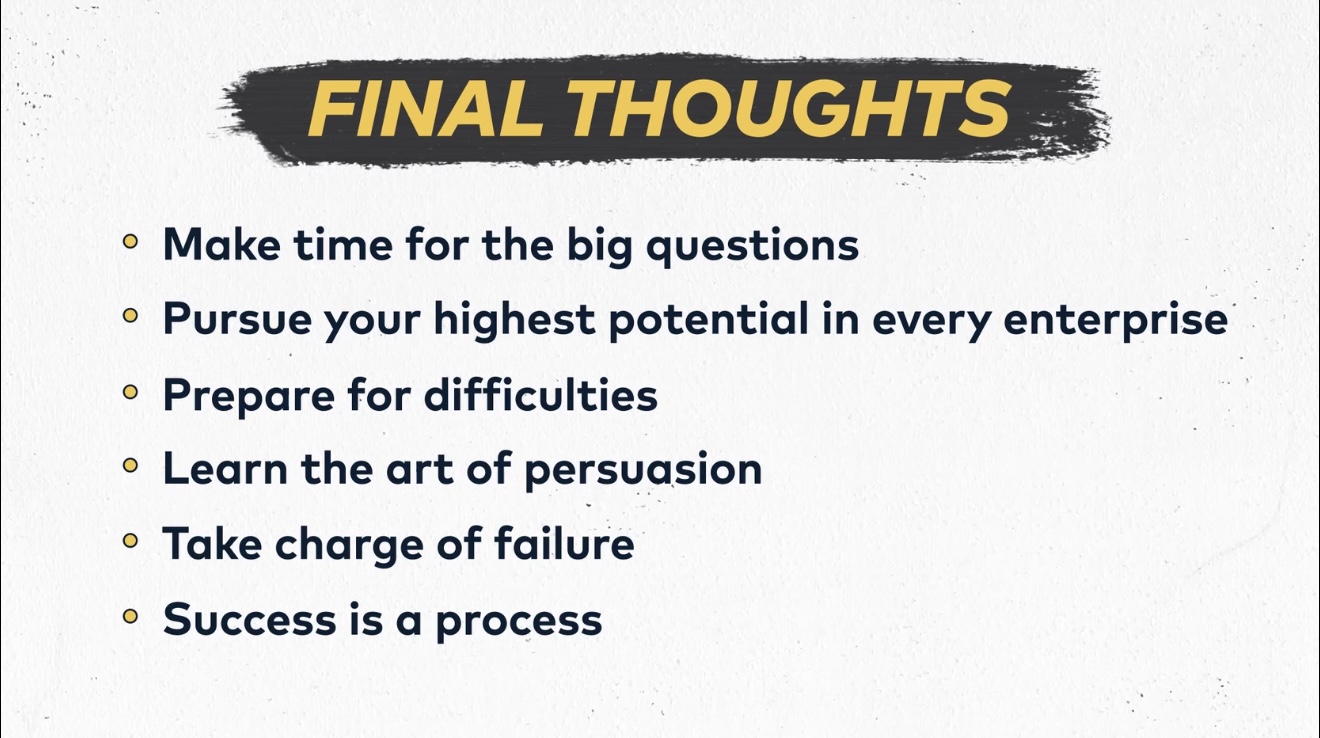
The final message of the course remains with me: “Success is a process.” Success is not a title, a promotion, a financial milestone, or even a Harvard certificate. It is the ongoing discipline of learning, improving, serving, and growing every single day. It is measured not only by what we accomplish, but by who we become throughout the journey. Ultimately, each of us must define success for ourselves.
A Renewed Commitment to Purposeful Leadership
As this course concludes, a new chapter begins. I leave Harvard carrying three guiding principles that will continue shaping my leadership at LuxGroup: Purpose to keep our mission clear, Perspective to broaden our thinking, and Persuasion to build meaningful relationships through trust and understanding. These are more than academic concepts; they are practical disciplines for leadership in an increasingly complex world.
In the end, the greatest value of education is not the certificate displayed on the wall, but the character it shapes, the wisdom it cultivates, and the purpose it strengthens. This HarvardX certificate is not the conclusion of a learning journey—it is another reminder that the finest leaders remain lifelong students.