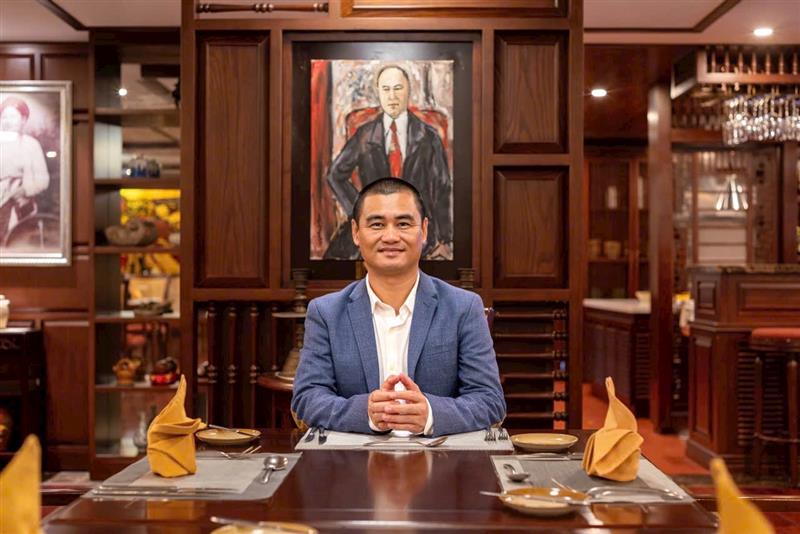



A forthcoming leadership book uses the LuxGroup® and LuxGroup Foundation case to explore how strategic finance can transform commercial success into cultural preservation, social impact, institutional resilience, and enduring legacy.
The Question Beyond Profit
For generations, business leaders have been trained to ask familiar questions: How do we increase revenue? How do we reduce costs? How do we improve margins? How do we grow faster?
These questions remain important. No enterprise can survive without financial discipline. Yet they are no longer sufficient for leaders facing climate uncertainty, cultural loss, widening inequality, declining public trust, and a generation of employees and consumers seeking greater meaning from the organizations they support.
A more consequential question now demands attention:
What is money for?
That question is the foundation of Money for Purpose®: How Strategic Finance Turns Profit into Purpose, Impact, and Legacy, a proposed leadership book grounded in the experience of LuxGroup® and LuxGroup Foundation. The book is designed to move finance beyond technical reporting and reposition it as one of leadership’s most powerful instruments for shaping institutions, communities, and the future.
Its central argument is simple: money is not the final destination of enterprise. It is a resource that allows leaders to decide what should be built, protected, restored, shared, and carried forward.
Finance as Leadership
Accounting records what has happened. Strategic finance helps leaders decide what should happen next.
That distinction matters. A balance sheet can show what an organization owns, but not automatically what deserves to be preserved. A cash-flow statement can reveal liquidity, but not whether financial resources are being used to strengthen cultural identity, support local livelihoods, develop human capability, or protect nature. A budget can control expenditure, yet it can also expose the true priorities of an organization.
Every allocation is a declaration of values.
When an organization funds employee development, it declares that people matter. When it restores a heritage property, it declares that memory matters. When it builds reserves, it declares that the future matters. When it directs resources toward communities and ecosystems, it declares that prosperity must extend beyond shareholders.
The proposed book therefore treats finance not as a back-office function, but as a discipline of stewardship. Its goal is to help leaders connect financial decisions with mission, resilience, and long-term impact. The original plan describes this ambition as transforming financial resources into meaningful legacies through a balance of purpose, people, planet, and prosperity.
An Asian Case with Global Relevance
The LuxGroup case offers a distinctive perspective because it emerges from Asia’s fast-changing tourism, hospitality, cultural, and entrepreneurial landscape.
LuxGroup® has grown through a portfolio of small, specialized brands in travel, cruising, hospitality, gastronomy, transportation, and the arts. Alongside commercial growth, LuxGroup Foundation is envisioned as a platform for sustainable tourism, cultural and natural heritage preservation, education, community empowerment, and purpose-driven leadership.
This relationship between company and foundation is central to the book.
The company creates commercial resources, operational capability, talent, partnerships, and market access. The foundation can channel those assets toward social, cultural, and environmental outcomes. One side generates prosperity; the other helps convert prosperity into impact. Together, they demonstrate that profit and purpose do not need to compete. Properly governed, they can reinforce one another.
This is not corporate philanthropy added after the business model has succeeded. It is an attempt to build purpose into the architecture of growth itself.
The Living Laboratory
The book does not intend to rely on abstract theory alone. LuxGroup becomes its “living laboratory,” where strategic finance can be tested through real decisions.
A cruise vessel, for example, can be evaluated purely as a commercial asset: acquisition cost, passenger capacity, yield, operating margin, and payback period. But it can also be viewed as a platform for cultural interpretation, regional employment, culinary heritage, environmental education, and the recovery of waterway narratives.
A private art collection can be recorded as property, but it may also carry cultural memory, scholarship, public education, and artistic dignity.
A craft village may appear financially marginal, yet targeted investment can preserve skills, create income, strengthen community identity, and develop meaningful tourism experiences.
The original book proposal identifies river cruises, heritage museums, village preservation, education, craft revival, women’s entrepreneurship, youth leadership, and community tourism as practical evidence of the philosophy.
This approach gives the book its potential global relevance. While the setting is Vietnamese and Asian, the leadership questions apply everywhere: How should a family enterprise preserve its founder’s values? How can tourism create more than consumption? How should cultural organizations measure value? How can companies build institutions that outlive their creators?
The Purpose Equation™
At the heart of the book is a proposed framework:
Purpose × People × Planet × Prosperity = Legacy
The use of multiplication is deliberate.
If purpose is unclear, growth can become directionless. If people are neglected, the organization loses the capacity to deliver. If the planet is degraded, prosperity becomes extractive and temporary. If prosperity is absent, even the noblest mission eventually becomes financially fragile.
Legacy emerges when all four elements reinforce one another.
This framework challenges the assumption that leaders must choose between financial success and social impact. It instead asks whether prosperity is being designed to support people, place, and purpose over time.
The proposal positions this Purpose Equation™ as one of the book’s primary original contributions.
Measuring the Return on Mission
The second core tool is Mission Return on Investment™, or MROI™.
Traditional return on investment asks how much financial value was generated relative to the resources committed. That remains essential in commercial decision-making. But purpose-driven organizations require an additional question:
What mission value was created?
A heritage initiative may generate modest direct revenue but preserve an endangered craft, create local employment, and strengthen destination identity. A leadership program may not produce immediate cash, yet it may build the talent required to sustain the institution for decades. An environmental investment may raise costs today while reducing risk and protecting natural capital in the future.
MROI™ is intended to help leaders examine those broader returns without abandoning financial discipline. The proposal frames it as a way to evaluate mission-centered spending and redefine necessary organizational expenditure as investment rather than waste.
For this concept to become credible, the book will need to move beyond inspirational language. It should show readers how to define outcomes, select indicators, establish baselines, assign time horizons, and distinguish evidence from aspiration. That practical rigor will determine whether MROI™ becomes a useful management tool rather than merely a memorable phrase.
A New Balance Sheet
The third major framework is the Purpose Balance Sheet™.
Traditional accounting recognizes cash, property, investments, receivables, liabilities, and net assets. Yet some of an organization’s most important resources remain largely invisible:
- Trust accumulated across generations
- Cultural knowledge held by artisans and communities
- Institutional memory
- Employee capability
- Environmental assets
- Social legitimacy
- Heritage collections and narratives
- Partnerships that enable collective action
The Purpose Balance Sheet™ would not replace statutory financial reporting. Instead, it would complement it by helping boards and leadership teams identify, protect, and invest in mission-critical assets that conventional accounting does not fully capture.
The proposal suggests categories including mission, trust, community, heritage, knowledge, environmental, and financial assets.
This could be particularly valuable in Asia, where family businesses, cultural enterprises, hospitality brands, museums, foundations, and community organizations often hold significant intangible value that cannot be understood through financial capital alone.
From Founder to Institution
Many successful organizations begin with a charismatic founder. That energy can create momentum, attract talent, and establish culture. But founder dependence also creates risk.
The ultimate test of leadership is not whether an organization can grow around its founder. It is whether it can eventually function beyond the founder.
Money for Purpose® therefore addresses governance, succession, reserves, systems, leadership development, and institutional culture. It asks how organizations move from personal vision to shared principles, from intuition to repeatable systems, and from founder-led success to institutional permanence.
The proposal’s recurring ambition is to help build organizations that outlast their creators and convert short-term performance into lasting institutional value.
The Real Meaning of Luxury
The LuxGroup case also creates an opportunity to redefine luxury.
In this philosophy, luxury is not excess. It is time, culture, craftsmanship, privacy, presence, and emotional depth. It is the privilege of understanding a place rather than merely consuming it.
“Luxury with Purpose®” suggests that premium tourism can become a source of preservation and regeneration. Higher-value experiences can help finance better employment, smaller-scale operations, local sourcing, cultural interpretation, environmental stewardship, and heritage conservation.
This does not happen automatically. Luxury can be wasteful, extractive, and disconnected from local life. The book must confront that contradiction honestly. Its argument will be strongest when it shows the financial and operational choices required to make premium travel genuinely responsible.
A Book for Leaders, Not Only Financiers
The intended audience extends far beyond nonprofit finance professionals.
This is a book for founders deciding what their success should ultimately serve. It is for chief executives attempting to align growth with values. It is for boards balancing ambition with solvency. It is for philanthropists seeking durable impact. It is for tourism and hospitality leaders rethinking consumption. It is for museum directors, social entrepreneurs, family businesses, and young leaders asking what kind of institution they want to build.
Most importantly, it is for people who have achieved—or are pursuing—success and have begun to ask a deeper question:
What should success make possible?
From Success to Significance
The book’s final message is not that profit is unimportant. Without financial strength, organizations lose independence, resilience, and the power to invest.
The message is that profit becomes more powerful when connected to a purpose beyond itself.
Money can build a ship, but purpose determines what story it carries. Money can acquire art, but stewardship determines whether that art becomes public memory. Money can expand a company, but leadership determines whether the company becomes an institution. Money can create success, but only its thoughtful use can create significance.
The proposed book closes with a line that captures its entire philosophy:
Balance sheets close every year. Legacies never do.
That may be the central leadership challenge of our time: not simply to accumulate more, but to decide—wisely, strategically, and courageously—what our resources should enable the world to remember.