


How a Vietnamese tourism group turns human capability, service quality, and stakeholder happiness into measurable strategic value
By Dr. Phạm Hà, Founding President and CEO, LuxGroup®
Most organizations say that people are their greatest asset. Far fewer can explain how that asset creates value.
Training hours are counted. Workshops are celebrated. Certificates are displayed. Yet when managers ask whether learning has improved service quality, strengthened customer loyalty, increased productivity, or produced profitable growth, the answers often become less precise.
That gap matters. Learning does not create value merely because it occurs. It creates value when knowledge changes behavior, behavior improves processes, better processes elevate the customer experience, and customer loyalty generates sustainable financial returns.
LuxGroup® has spent more than two decades developing what we call a “House of Small Giants”: a group of specialized travel, cruise, hospitality, culinary, transportation, art, and cultural brands united by a common philosophy. We do not seek to become the biggest. We seek to become the best in every carefully selected niche.
Our experience suggests that a learning organization becomes strategically valuable only when it connects four outcomes: happy Luxers, happy customers, happy shareholders, and a happy LuxGroup®. These are not four separate ambitions. They form a single value-creation system.
Learning Must Move Beyond the Classroom
Every Friday, LuxGroup® dedicates one hour to employee learning. The subjects range from products, sales, technology, artificial intelligence, culture, and art to first aid, fire prevention, crisis management, and the handling of difficult service situations.
We also follow the 70–20–10 principle: approximately 10 percent of development comes from formal courses, 20 percent from colleagues, managers, mentoring, and feedback, and 70 percent from actual work, projects, experimentation, and daily challenges.
This distinction is essential. In tourism, an employee cannot become a master of hospitality from a presentation alone. People learn by welcoming a demanding guest, resolving an unexpected disruption, interpreting a work of art, handling a storm, designing a new itinerary, and recovering elegantly when something goes wrong.
The purpose of learning is therefore not attendance. It is not to distribute certificates or complete an annual training calendar. Its purpose is to build the judgment, confidence, and sensitivity required to deliver what we call heartware: hospitality that is present, personal, sincere, and unrushed.
From Learning Culture to Strategy Map
The balanced scorecard offers a useful way to translate this philosophy into a management system. Its four perspectives—learning and growth, internal processes, customers, and financial performance—should not be treated as four unrelated collections of indicators. They form a chain of cause and effect.
At LuxGroup®, that chain can be expressed simply:
Capable and engaged Luxers improve processes. Better processes create exceptional experiences. Exceptional experiences build loyalty and advocacy. Loyalty creates revenue growth, cash flow, and long-term returns.
The sequence matters. Financial results are usually lagging indicators: they tell managers what has already happened. Employee capability, process quality, guest sentiment, and repeat bookings are leading indicators: they reveal what may happen next.
A company waiting for revenue to fall before addressing deteriorating service is already late. A guest complaint, a drop in recommendation scores, or repeated operational errors can provide an earlier—and therefore more valuable—warning.
Evidence of the Flywheel
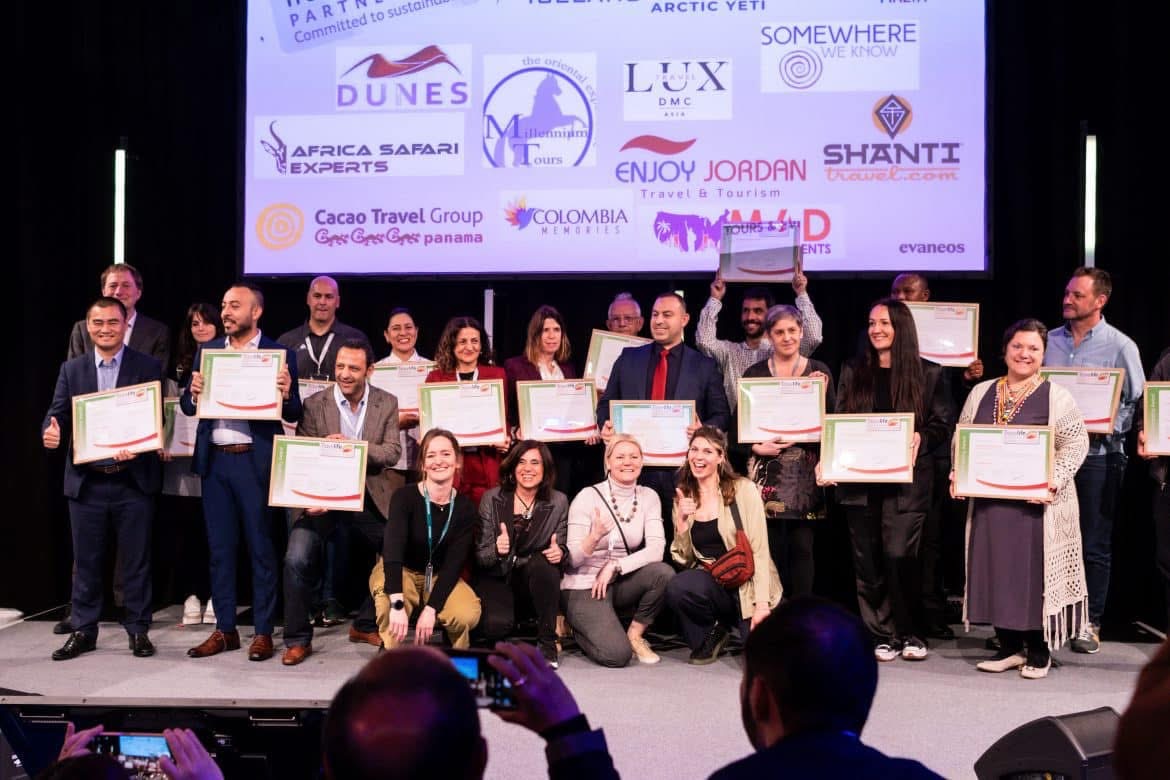
LuxGroup® reports customer satisfaction and recommendation levels of 99 percent. Its brands consistently rank among the top ten in their respective TripAdvisor categories. The group has also been recognized as one of the Best Companies to Work for in Asia by HR Asia.
Industry recognition provides further external validation. LuxGroup® has been included among the world’s Top 100 luxury travel agencies and tour operators by the Luxury Lifestyle Awards and recognized by the World Travel Awards for excellence as a tour operator and destination management company in Asia.
Internally, Luxer satisfaction has reached 99 percent. Financially, our ambition is to sustain approximately 30 percent annual revenue growth.
These results should not be presented as isolated trophies. Awards do not create strategy, and satisfaction percentages alone do not prove causality. Their strategic value emerges when management can show the relationships among them.
If Luxers are engaged but guests are dissatisfied, learning may not be translating into service. If customers are delighted but cash flow is weak, the business model may not be capturing the value it creates. If revenue grows while employees burn out, the organization may be borrowing performance from its future.
The relevant question is not, “Did we win an award?” It is, “What organizational capabilities produced this recognition, and can we reproduce them consistently across every brand?”
Measure Less, but Measure What Matters
As organizations expand, they often accumulate indicators. Every department adds dashboards, reports, and targets until managers have more data but less clarity.
Harvard Business School’s concept of critical performance variables offers a useful discipline. A variable is critical when failure to manage it could cause the strategy itself to fail.
For LuxGroup®, a concise scorecard should focus on a limited number of variables:
- Luxer capability and engagement;
- service delivered correctly the first time;
- safety and incident resolution;
- guest satisfaction and recommendation;
- repeat and referral business;
- capacity utilization;
- operating cash flow;
- profitable revenue growth and return on invested capital.
The discipline lies in exclusion. A measure may be interesting without being critical. When everything becomes a priority, nothing remains a priority.
Each critical goal must then have a measure, a target, a timeframe, and a clearly accountable owner. “Improve customer satisfaction” is an aspiration. “Maintain a rolling 30-day guest satisfaction score of at least 95 percent, with any decline below 92 percent triggering corrective action within 48 hours” is a diagnostic control.
Do Not Confuse Inputs with Outcomes
LuxGroup® invests 5 percent of annual profit in human development, including training, mentoring, physical well-being, and mental well-being. That commitment is substantial, but expenditure is an input rather than proof of impact.
Similarly, the number of training hours measures activity, not capability.
A stronger system would monitor several stages:
Input: investment and learning hours.
Capability: post-training competence and certification.
Application: new behavior or knowledge used on the job.
Process: fewer errors, faster recovery, and more consistent service.
Customer: greater satisfaction, advocacy, and repeat purchasing.
Financial: stronger revenue, margins, cash flow, and return on capital.
This prevents what might be called “training theater”—the appearance of development without demonstrable strategic progress.
Incentives Require Careful Design
LuxGroup® links learning and performance to recognition, rewards, and discipline. That is necessary: goals without consequences rarely command sustained attention.
But incentives can also generate unintended behavior. Penalizing employees simply for the number of complaints received could encourage them to hide problems, avoid difficult guests, or shift blame. A high-volume business unit might appear worse than a smaller one even if its complaint rate is lower.
The solution is not to abandon accountability but to improve measurement. Managers should examine complaints per thousand guests, severity, root cause, response time, recovery quality, and recurrence. Employees should be held accountable primarily for outcomes they can influence.
A well-designed measure does not merely judge performance. It teaches employees what good performance means.
Manage by Exception, Lead by Purpose
An effective diagnostic control system allows senior managers to step away from routine operations without losing visibility. Green indicators can remain with operating teams. Amber indicators require local corrective plans. Red indicators demand leadership intervention.
This is management by exception: leaders focus their scarce attention where deviations threaten strategy.
Yet numbers alone cannot create hospitality. Diagnostic controls must be balanced by purpose, judgment, conversation, and culture. Luxers must understand not only what the target is, but why it matters.
Our philosophy, Luxury is Culture®, expresses that purpose. Luxury is not simply hardware, decoration, or price. It is knowledge, anticipation, emotional intelligence, cultural depth, and human connection. These qualities cannot always be captured perfectly, but they can be made visible through thoughtfully connected evidence.
Happiness Is a Discipline
Happiness in business is sometimes dismissed as soft. It becomes rigorous when defined as a system of mutual value creation.
Happy Luxers possess the competence, trust, and motivation to serve with pride. Happy customers receive meaningful experiences and become loyal advocates. Happy shareholders receive responsible growth and sustainable returns. A happy LuxGroup® earns the resilience and legitimacy to invest again in its people, products, communities, and cultural heritage.
The flywheel then turns:
Learning creates capability. Capability improves experience. Experience produces loyalty. Loyalty generates profitable growth. Growth funds further learning.
That is how culture becomes strategy—and how strategy becomes measurable value.
The ultimate test of a learning organization is not how much it knows. It is how effectively it converts knowledge into better decisions, better experiences, and a better future for everyone it serves.