


The value of a parent company is measured by what its businesses can achieve because they belong to it.
By Doctorate in Business Administration, Phạm Hà, Founding President & CEO, LuxGroup®
A guest may book a journey through Lux Travel DMC, travel to the coast with LuxTransCo, board Heritage Bình Chuẩn, and encounter paintings by Phạm Lực during a voyage through Lan Hạ Bay. To the guest, these are parts of one experience. Within LuxGroup®, they involve different teams, skills, budgets, and operating decisions.
That is the promise of a group of specialist businesses. It is also a demanding test for the company that brings them together. A parent company can offer access to customers, capital, talent, and expertise. It can also consume time through approvals and coordination. The question for LuxGroup® is therefore specific: What can the parent help each business accomplish that it could not accomplish as effectively on its own?
Our ambition is to build A House of Small Giants. Each business should be strong in its field and close to its customers. The group should help those businesses grow, work together, and make sound investments. Ownership alone delivers none of these outcomes. The parent has to earn its place through the decisions it improves and the capabilities it provides.
Improve the Business in Front of You
The first opportunity is to help an individual business perform better. The contribution might be better market intelligence, stronger leadership, access to distribution, or support with an investment decision.
Consider Emperor Cruises Legacy Fai Tsi Long and its Bái Tử Long itineraries. Lux Travel DMC’s understanding of international demand could inform the cruise team’s product design and sales forecasts. Group leaders could contribute to the positioning of a route that carries both a commercial promise and a heritage story. That support becomes valuable when it helps the cruise team make a better decision and execute it well.
Authority must match responsibility. If a business leader is accountable for occupancy, service quality, and contribution margin, that leader needs room to decide departure schedules, service details, and pricing within agreed limits. A change with wider brand implications or a capital commitment above an approved threshold may warrant group involvement. The boundary should be clear before a decision reaches the desk.
The proposed move to Bái Tử Long is a useful subject for LuxGroup®’s ongoing research into decision authority. The available founder account identifies a proposal from the ship director, referral through the business director, and a final decision by the founder. That sequence shows who participated. Records and participant accounts are still needed to establish what each person contributed, why the decision was referred, and whether any waiting time affected implementation.
Make the Connections Worthwhile
The second opportunity is to create value between businesses. LuxGroup® has capabilities that can meet at the same point in a guest journey: travel design, transport, cruising, dining, and cultural interpretation.
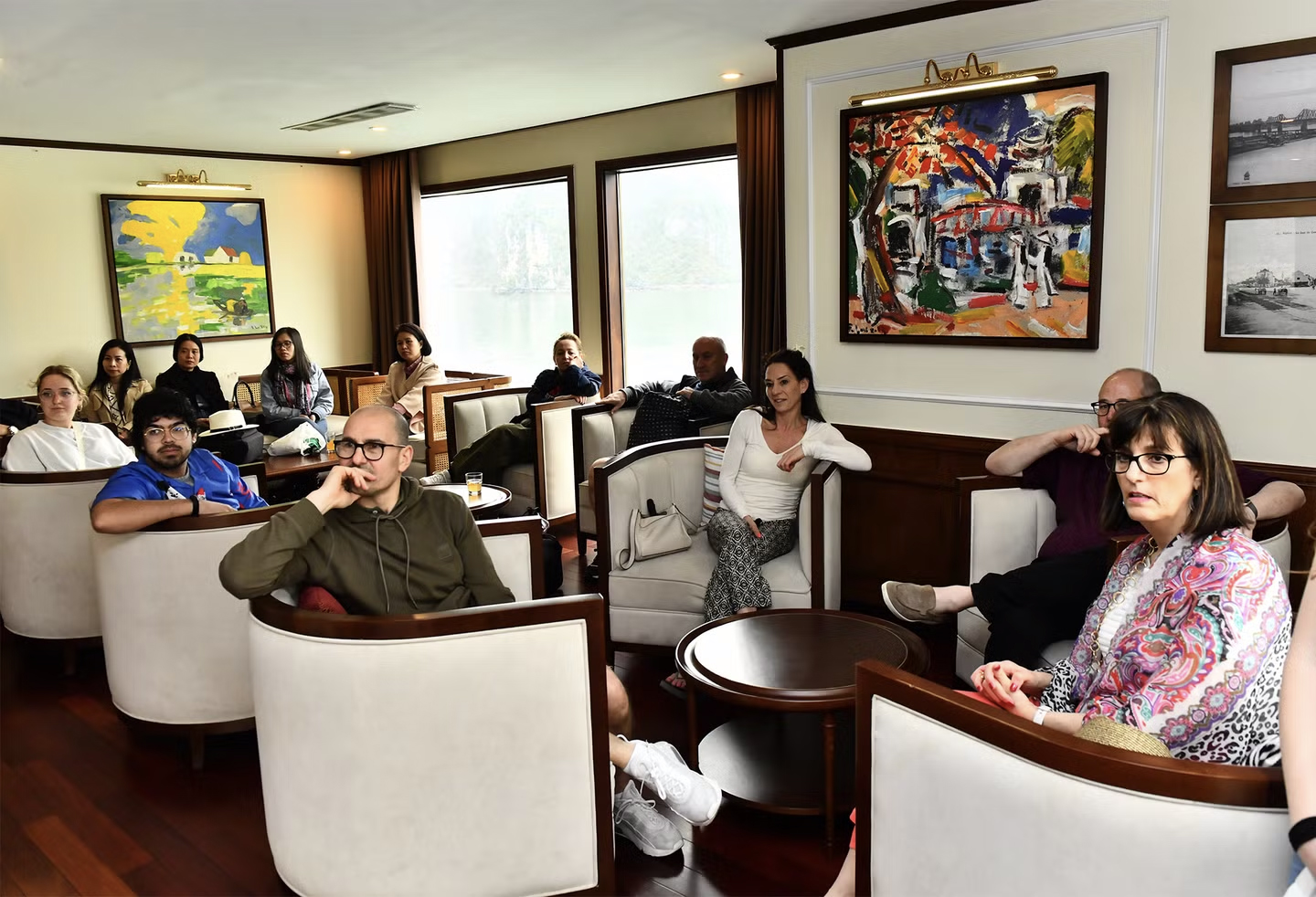
A journey featuring Heritage Bình Chuẩn and the Phạm Lực works on board illustrates the possibilities. Lux Travel DMC may identify the audience and sell the trip. LuxTransCo may manage the transfer. The cruise team delivers the voyage. Lux Arts Collection helps guests understand the artworks and the stories behind them. Together, these teams may create an experience that none would offer in quite the same way alone.
The commercial work lies beneath the itinerary. Someone must own the promise made to the guest. Each team needs to know what it will deliver, how it will be paid, and who will resolve a missed transfer or a service failure. The combined offer succeeds when guests value it and the additional revenue exceeds the cost of making it work.
This calls for selective coordination. A promising collaboration deserves a named leader, a price, and a way to assess the result. Once the teams have an effective arrangement, they should have the authority to operate it. The parent’s role is to remove barriers between businesses and establish accountability where responsibilities cross.
Share Capabilities That Help People Act
The third opportunity is to provide services that several businesses need. Financial reporting, customer data, leadership development, and training are candidates for group support. LuxUni® could help managers build the skills required to take on greater decision authority.
A shared service creates value when it improves quality, reduces cost, or gives a business access to expertise it could not reasonably build alone. Its usefulness should be visible to the people who rely on it. Business leaders need to know what support is available, how quickly it will arrive, and what it costs.
This matters especially as LuxGroup® develops leaders beyond the founder. Delegation cannot be completed by changing an approval rule. A manager also needs relevant information, capable colleagues, and access to an agreed budget. With those conditions in place, the parent can support judgment throughout the business instead of making every consequential choice itself.
Invest One Decision at a Time
The fourth opportunity is to shape the portfolio: strengthen an existing business, develop a new product, enter an adjacent field, or stop committing resources where the group adds too little.
Our closest fields include luxury travel and boutique cruising. LuxGroup® understands important parts of their customer journey and has businesses that can contribute to one another’s success. Hospitality, dining, and the commercial activities of Lux Arts Collection may also benefit from group customers and cultural knowledge. Their operating requirements and economics deserve assessment on their own terms.
Amiral shows why investment stages matter. Experience with its day-cruise products can inform judgments about demand, distribution, and operations. An overnight product would require a further decision, supported by its own evidence and capital plan. The long-term Vietnam Waterways® 2045 ambition calls for the same discipline on a larger scale. Each route, vessel, and capability commitment has to stand up to scrutiny.
Some opportunities may look attractive because they sit next to an ambition we care about. Owning a large shipyard, for example, could appear to support a future Vietnamese fleet. Shipbuilding requires specialist design, manufacturing, project delivery, and sustained orders. LuxGroup® should establish where its own capabilities add value before deciding how far into that activity to invest. Working with experienced partners may reveal which responsibilities the group is equipped to carry.
Build a Parent That Earns Trust
For each proposed intervention, LuxGroup® can ask three questions. What specific problem will the parent solve? Who is best placed to make the decision? How will we know whether the intervention helped?
Those questions can guide a route change at Emperor Cruises, a shared guest journey across several brands, a training programme for business leaders, or an investment under Vietnam Waterways® 2045. They also make disagreement productive. A business director can explain what authority and resources are needed. The parent can explain the risks it is responsible for managing. Both can return to the outcome and learn from it.
“A House of Small Giants” depends on strong businesses and a parent that understands when its involvement makes them stronger. If LuxGroup® can give its leaders clear authority, useful support, and fair accountability, each business will have more capacity to grow. The group will have created something greater than a collection of brands: an organisation able to keep building beyond the founder.