

As artificial intelligence rapidly democratizes access to technology, data, and expertise, competitive advantage is becoming increasingly difficult to sustain through scale or innovation alone. The defining capability of future-ready organizations will not be what they own, but how quickly they learn, adapt, and reinvent themselves.
The End of Predictable Advantage
One of the defining paradoxes of today’s economy is that businesses have never had greater access to technology, data, and management tools, yet sustainable competitive advantage has never been more fragile. Products can be replicated within months, business models can be copied across industries, and technological breakthroughs quickly become industry standards. As artificial intelligence lowers the barriers to knowledge and execution, ownership of technology no longer guarantees leadership. What increasingly separates organizations is their ability to generate new insight faster than others can imitate it.
Strategy as a Living System
For decades, strategy was treated as a carefully constructed blueprint designed to guide organizations through relatively stable markets. That assumption no longer holds. Artificial intelligence, geopolitical uncertainty, climate challenges, and rapidly evolving customer expectations have fundamentally altered the pace of change. Strategy can no longer exist as a static document reviewed once a year. It must become a living system—continuously sensing change, challenging assumptions, learning from experience, and evolving as circumstances evolve.
Learning Faster Than Competitors
Peter Drucker argued that the greatest competitive advantage lies in transforming knowledge into action more effectively than competitors. That insight has become even more relevant in today’s environment. High-performing organizations are not those that are consistently right; they are those that recognize when they are wrong sooner than everyone else. Organizational learning is no longer confined to training programs or executive education. It is the institutional ability to question assumptions, absorb new information, and convert learning into better decisions before the market demands it.
Culture Outlasts Technology
Artificial intelligence can automate workflows, analyze enormous datasets, and support increasingly sophisticated decisions. What it cannot replicate is trust, shared purpose, or organizational culture. Technology can be purchased, licensed, or reverse-engineered. Culture cannot. It determines how people respond to uncertainty, collaborate across functions, challenge conventional thinking, and recover from failure. In an era where technological advantages become temporary, culture increasingly represents one of the few strategic assets that competitors cannot easily reproduce.
Leadership as System Design
This transformation is redefining the role of leadership itself. The modern CEO is no longer measured by the number of decisions personally made but by the quality of decisions the organization can make without direct intervention. Leadership increasingly means designing systems rather than controlling outcomes. It means building organizations where knowledge flows freely, responsibility is distributed, and learning becomes everyone’s responsibility. The strongest organizations are those that become progressively less dependent on individual leaders and increasingly capable of collective intelligence.
Innovation Begins With Perspective
Innovation is still too often equated with new products or breakthrough technologies. Yet history suggests that the most transformative innovations begin with new perspectives rather than new inventions. Amazon did not simply sell books online. Airbnb did not merely offer accommodation. Both fundamentally redefined how customers experienced familiar needs. Innovation, at its core, is the ability to see opportunities that others overlook and to reshape markets by changing how value itself is defined.
When Culture Creates Markets
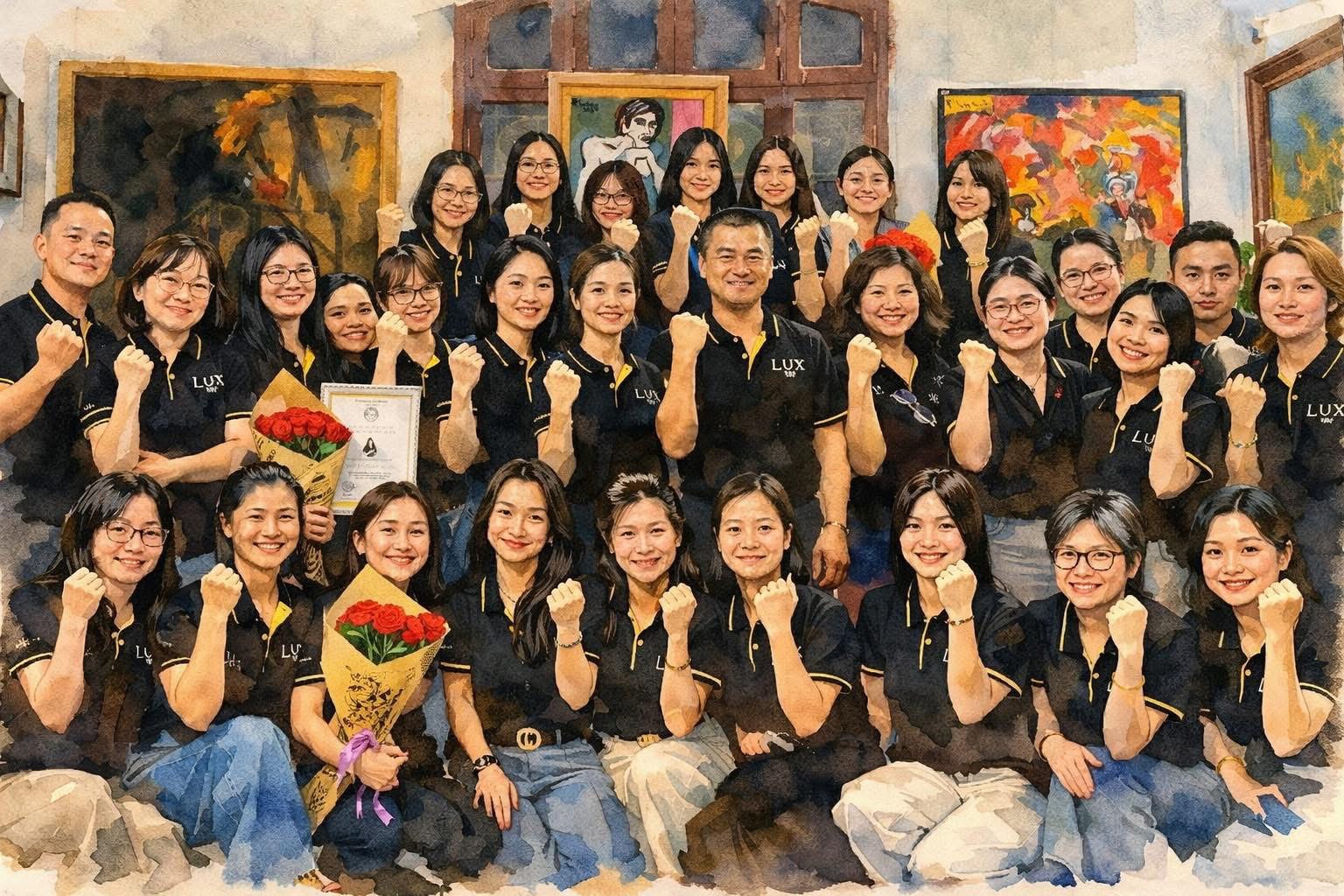
The tourism industry offers an interesting illustration of this principle. Rather than defining luxury primarily through physical assets, LuxGroup has consistently positioned cultural authenticity as the heart of premium travel through its philosophy of Luxury is Culture®. Across brands including Heritage Cruises, Emperor Cruises, and Amiral Cruises, the focus extends beyond transportation or hospitality to creating immersive narratives rooted in Vietnamese history, heritage, and identity. Competitive differentiation emerges not simply from superior service, but from redefining what luxury means within a cultural context.
People Before Artificial Intelligence
Ironically, artificial intelligence is making uniquely human capabilities even more valuable. Empathy, judgment, curiosity, storytelling, and emotional intelligence are becoming stronger differentiators precisely because machines cannot authentically reproduce them. Technology amplifies human capability; it does not replace human meaning. Particularly in experience-driven industries, customers rarely remember algorithms or automation. They remember how an organization made them feel, how well it understood their aspirations, and how genuinely it connected with their values.
Investing in Learning Capacity
This reality suggests that perhaps the most important investment organizations can make is not simply in AI infrastructure but in organizational learning capability. Companies that observe more carefully recognize opportunities earlier. Companies that question assumptions adapt more intelligently. Companies that learn continuously innovate more sustainably. Learning is no longer a support function—it has become a strategic capability that shapes resilience, agility, and long-term competitiveness across every aspect of the enterprise.
The Advantage That Cannot Be Copied
Ultimately, the most enduring competitive advantage is neither technology nor capital. It is an organization’s accumulated capacity to learn, its culture of curiosity, and its shared commitment to continuous renewal. The companies that endure are rarely those with the greatest resources at any given moment. They are the ones that remain intellectually humble enough to question yesterday’s success, courageous enough to reinvent themselves, and disciplined enough to keep learning while others become comfortable. In the age of artificial intelligence, that may be the only competitive advantage capable of standing the test of time.