

There is a Ho Chi Minh City most travelers know well: the one of motorbikes and rooftop bars, colonial facades and contemporary towers, steaming bowls of phở and late-night energy. Then there is another city, quieter but no less compelling, unfolding from the water. From the Saigon River, the skyline softens, the pace changes, and the city begins to reveal itself in layers: trading port, colonial outpost, wartime artery, modern metropolis.
This is the Ho Chi Minh City that Amiral Cruises wants travelers to see.
Launched in 2025 under the LuxGroup umbrella, Amiral Cruises for Presidents has entered the city’s growing luxury travel scene with a proposition that feels both timely and rooted in history. It is not simply selling a dinner cruise or a sunset sail. It is attempting something more ambitious: to reposition the Saigon River as one of the city’s defining cultural experiences, a place where heritage, design, cuisine, performance, and urban discovery meet.
For decades, the Saigon River has been present but under-celebrated in the visitor imagination. It appears in photographs, borders some of the city’s most recognizable districts, and carries the commercial rhythm of southern Vietnam, yet it has rarely been treated with the same symbolic importance as the Seine in Paris, the Thames in London, or the Chao Phraya in Bangkok. Amiral Cruises steps into that gap with a distinctly Vietnamese answer to urban river travel: intimate, story-driven, and carefully staged.
At its core, Amiral is a boutique cruise experience. The brand’s vessels are designed for smaller passenger numbers, personalized service, and a sense of occasion rather than volume. The target audience is clear: discerning leisure travelers, private groups, corporate guests, MICE clients, state visitors, and dignitaries looking for an experience that feels both polished and specific to place. In a city where luxury is increasingly expressed through rooftop dining, design hotels, and curated cultural access, Amiral adds a different perspective: the prestige of arriving, dining, and discovering by water.
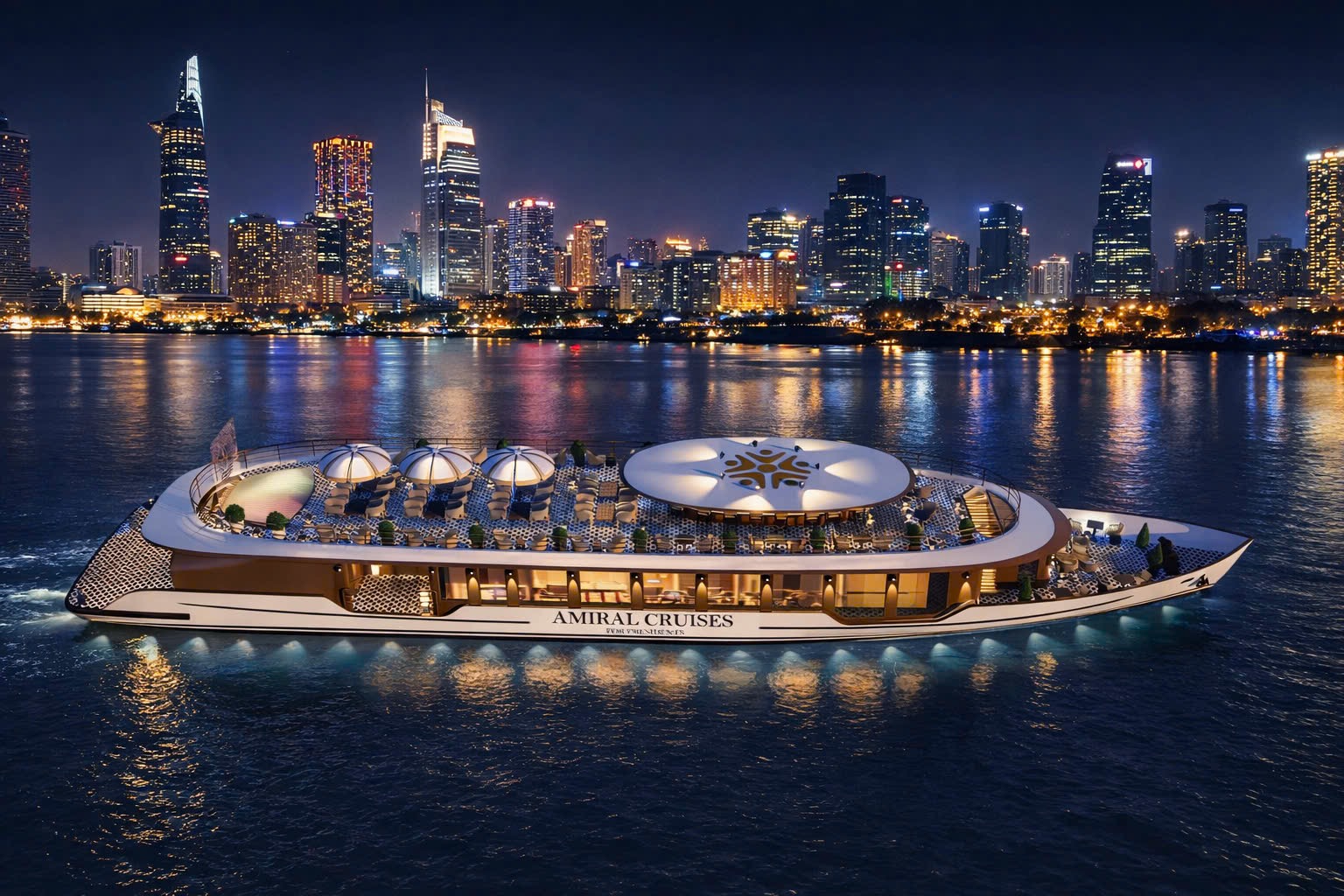
The vessels themselves are a key part of the story. Built for urban river navigation, they are engineered with low air drafts to pass beneath bridges, reduced wake and noise levels to minimize disturbance, and open decks that frame the passing city as a living panorama. The visual language draws from early twentieth-century Art Deco, a period that also informs much of the brand’s historical imagination, while modern maritime standards allow the ships to operate with comfort and reliability. The result is not nostalgia for nostalgia’s sake, but a contemporary vessel dressed with a sense of memory.
That memory begins at Nhà Rồng Wharf. In 1911, the young Nguyễn Tất Thành, later known to the world as Hồ Chí Minh, departed from this riverside point aboard the French vessel Amiral Latouche-Tréville. It was a journey that would eventually become central to Vietnam’s modern national story. By linking its identity to that departure, Amiral Cruises places itself in conversation with one of the most significant moments in Vietnamese history. The river becomes more than scenery. It becomes a route of departure, return, transformation, and national imagination.
This historical framing gives the cruise its strongest distinction. Many luxury river products around the world rely on atmosphere: a view, a glass of wine, a comfortable deck. Amiral adds narrative. Guests are invited to see the Saigon River not only as a backdrop to Ho Chi Minh City’s growth, but as an active witness to it. Warehouses, bridges, colonial-era landmarks, modern towers, and working river traffic become part of a moving story about the city’s past and future.
The evening experience builds on that idea through the brand’s “River Show,” a live performance designed to evoke southern Vietnam’s river culture through music, light, and performing arts. At sunset, when the glass towers begin to catch the last gold of the day and the river traffic shifts into silhouette, the show gives the journey a theatrical quality. It is easy to imagine why this format appeals to both leisure travelers and event planners: it is contained, atmospheric, photogenic, and deeply connected to place.
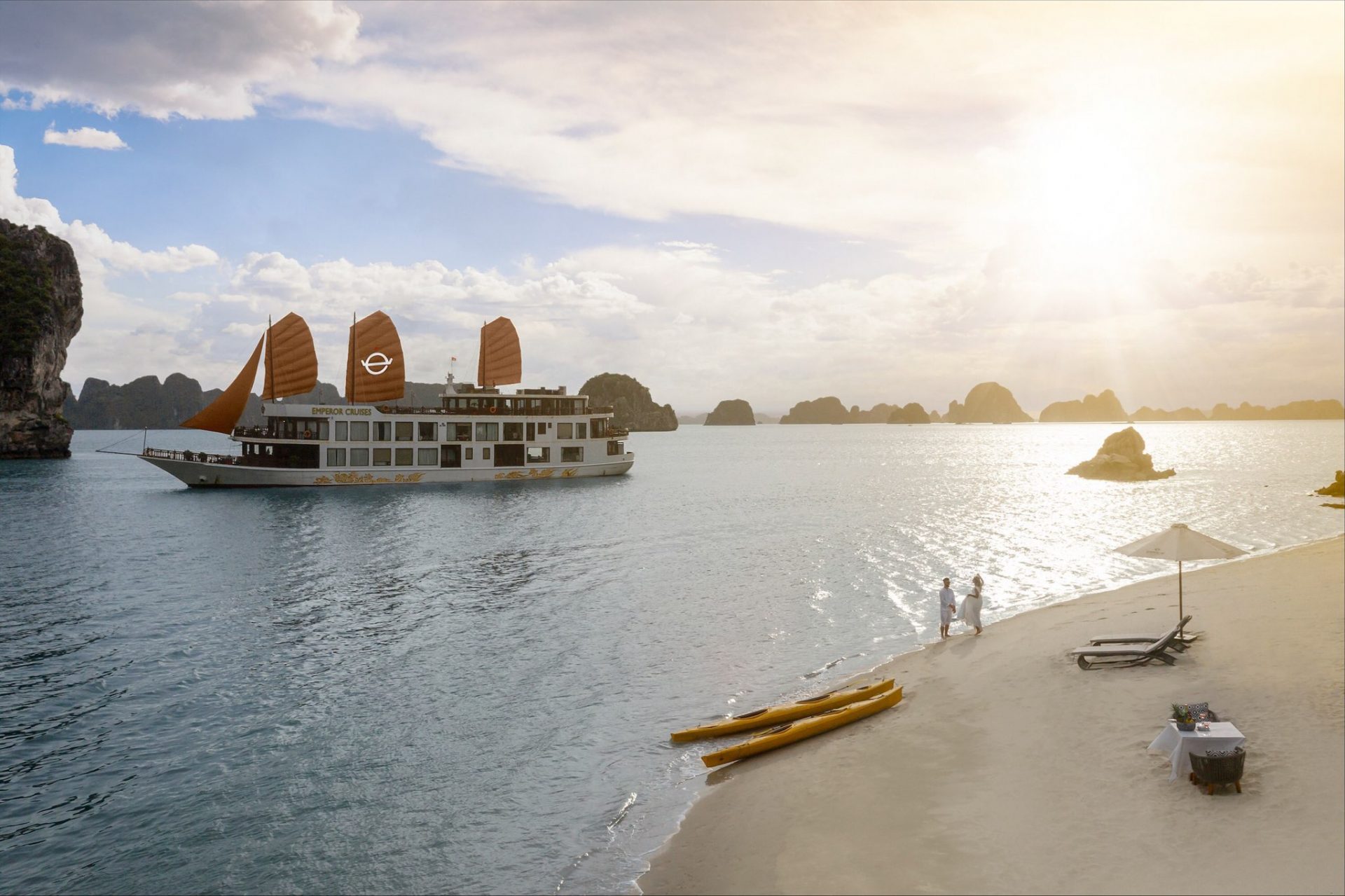
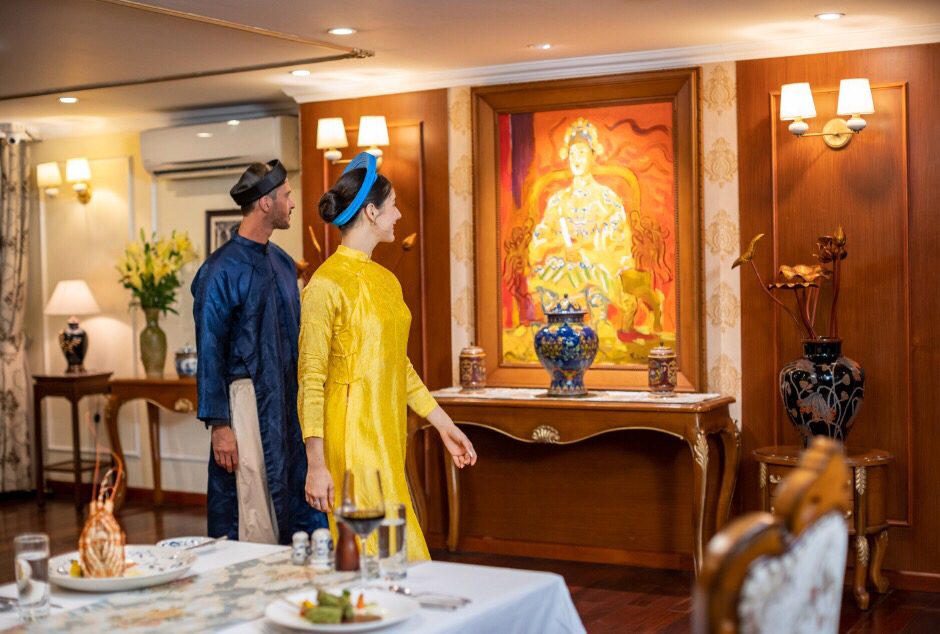
Amiral is also part of a larger portfolio. Lux Cruises Group, the cruise division of LuxGroup, describes itself as Vietnam’s first boutique cruise line and has built its brands around different chapters of Vietnamese history. Heritage Cruises draws inspiration from Bạch Thái Bưởi, the early twentieth-century shipping entrepreneur often remembered as the “King of Vietnamese Ships.” Emperor Cruises evokes the royal aesthetics of Emperor Bảo Đại and the elegance of the 1930s. Amiral Cruises brings the narrative forward into the modern era, focusing on leadership, diplomacy, and national identity.
Together, the three brands form an unusual kind of floating archive. Rather than treating Vietnamese waterways as neutral routes between destinations, Lux Cruises uses them as stages for storytelling. Halong Bay, Lan Ha Bay, Nha Trang Bay, the Saigon River, and future southern routes become chapters in a broader cultural journey. For travelers, this matters. In an age when luxury increasingly means access to meaning rather than excess alone, a cruise that helps decode the landscape can feel more memorable than one that simply passes through it.
The same philosophy underpins LuxGroup’s long-term “Vietnam Waterways 2045” vision, an effort to imagine Vietnam’s rivers, bays, and river-sea corridors as a unified tourism and cultural platform. It is an ambitious idea, but not an illogical one. Vietnam is a country shaped by water: deltas, bays, fishing villages, trading routes, imperial rivers, and coastal cities. Its waterways have carried commerce, migration, conflict, ritual, and daily life. Yet many of them remain secondary in the way international travelers experience the country.
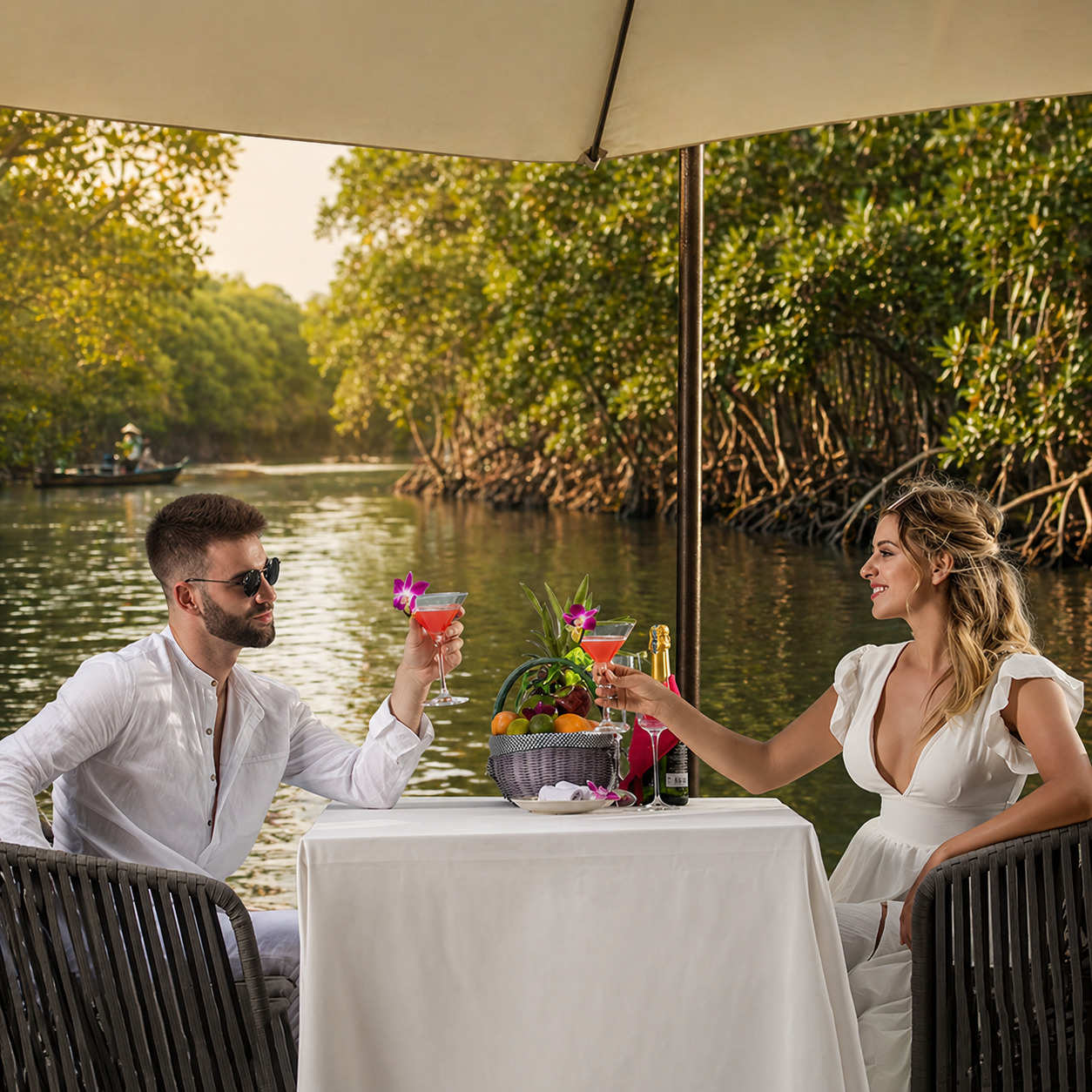
Amiral Cruises serves as a flagship expression of that vision in the south. Its immediate canvas is the Saigon River, but its ambitions extend toward a wider network of journeys, including day tours to the Cu Chi Tunnels and the Can Gio Biosphere Reserve. Smaller Amiral Explorers vessels are intended to reach narrower waterways, opening up more flexible itineraries and more intimate encounters with river communities. Longer-term plans include overnight Mekong Delta and coastal routes after 2030, suggesting that the brand sees the river not as a single product but as the beginning of a southern Vietnam waterway system.
Sustainability will be central to whether that vision succeeds. River tourism can easily become extractive if it treats waterways as scenery rather than living ecosystems. Amiral’s stated commitments include reducing single-use plastics, limiting environmental impact, protecting river ecosystems, supporting community engagement, and participating in conservation partnerships. These efforts sit within LuxGroup’s broader ESG framework, organized around the principles of Passion, Purpose, People, Planet, Profit, Place, Partnership, and Prosperity, with a stated goal of net-positive tourism impact by 2030.
For high-value travelers, these commitments are no longer peripheral. The modern luxury guest increasingly wants comfort without carelessness, beauty without waste, and access that benefits rather than burdens the destination. On the Saigon River, where the contrast between urban growth and ecological sensitivity is visible in real time, responsible operations are not only ethically important; they are part of the experience itself.
Recognition has followed. Lux Cruises Group has earned international attention, including honors at the Travel + Leisure Luxury Awards Asia Pacific 2025, where two of its vessels were ranked among the top river cruises in Asia. Lux Travel DMC, the group’s destination management arm, has also received sustainability recognition, while founder Dr. Phạm Hà has been associated with responsible tourism leadership. For Amiral, that wider credibility helps position the brand not as an isolated newcomer, but as part of a mature Vietnamese luxury travel ecosystem.
Still, the most persuasive argument for Amiral Cruises may be simpler than awards or expansion plans. It is the feeling of seeing Ho Chi Minh City from a different angle. From the water, the city becomes cinematic. The noise recedes. The skyline opens. The river bends past old and new, official memory and everyday life, polished towers and working boats. It reminds visitors that Ho Chi Minh City is not only a place to move through quickly, but a place to observe slowly.
In that sense, Amiral Cruises is doing more than adding another luxury experience to Vietnam’s largest city. It is helping restore the Saigon River to the center of the travel narrative. The river has always been there, carrying the city’s history in plain sight. Amiral’s achievement is to invite travelers to look again.