


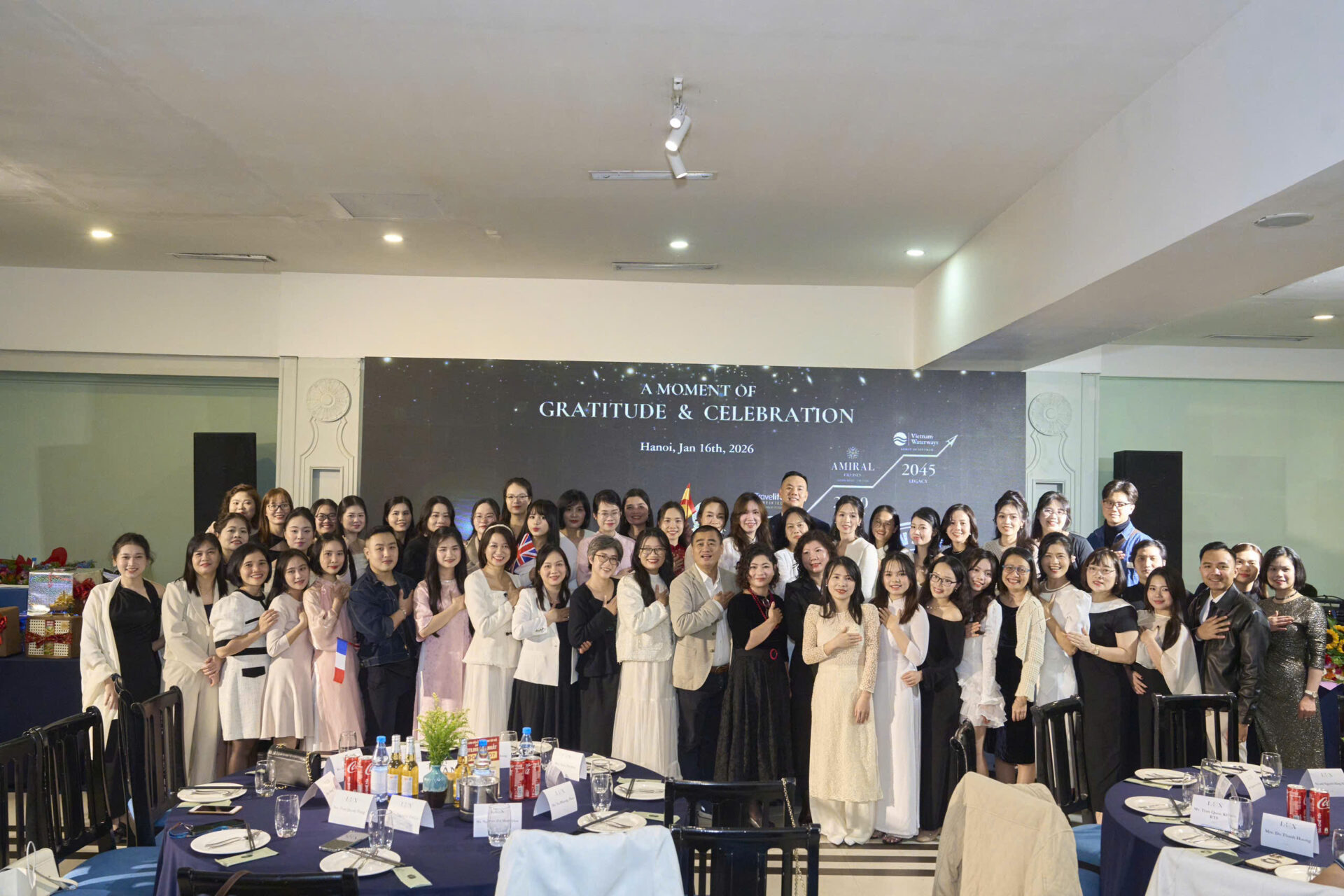
By Phạm Hà, Founding President & CEO, LuxGroup | Leadership & Strategy
In a world where capital moves faster than conviction and brands can be constructed overnight through visibility alone, trust remains stubbornly slow.
It cannot be accelerated.
It cannot be outsourced.
And it cannot be repaired by communication once it is broken.
Over more than two decades building luxury travel experiences across Vietnam and Asia, I have learned a lesson that many leaders only discover through crisis: most brand failures do not begin in the market. They begin inside the organization—when culture and brand drift out of alignment.
At LuxGroup®, we call our response People First®. Not as a philosophy, not as an HR slogan, but as a governance framework—one designed to keep brand promise, operating culture, and human behavior moving in step.
Because in luxury, scale without trust is not growth. It is exposure.
Trust as the Core Strategic Asset
In People First®, trust is not an outcome of success. It is the asset that makes success sustainable.
It operates across four concentric circles:
• Guests trust that the experience will be worthy, dignified, and true to its promise.
• Employees—our Luxers®—trust that the organization respects people, rewards fairness, and offers meaning beyond metrics.
• Partners trust that collaboration is transparent, long-term, and principled.
• Society trusts that luxury can carry culture, responsibility, and contribution—not just consumption.
This leads to a clear distinction:
Brand is the external architecture of trust.
Culture is the internal mechanism that preserves it.
When those two fall out of step, trust erodes quietly—until it collapses suddenly.
As I often tell our leadership teams:
“Luxury is not about how impressive we look. It is about how consistently we behave.”
People First® Is Not HR. It Is Leadership Logic.
People First® is frequently misunderstood as a human-resources initiative. That misunderstanding is itself a warning sign.
People First® is a leadership discipline—one that governs how strategy is designed, how systems operate, and how decisions are made under pressure.
Three realities make this unavoidable:
• Every brand strategy must pass through human behavior.
• Every guest experience is ultimately delivered by people, not positioning.
• Every reputational crisis begins with a tolerated behavioral exception.
Or more plainly:
“People are where brands begin—and where brands can collapse.”
The Three-Layer People First® Shield
1. Culture: Trust as Reflex, Not Rhetoric
Culture does not live in handbooks. It lives in reflexes.
The real culture of an organization is revealed:
• When a frontline employee chooses integrity over convenience,
• When a manager refuses to “let it slide,”
• When quality is defended even when it costs time or margin.
At LuxGroup®, we test culture with one question:
“How will our people act when no one is watching?”
Values only become culture when they are:
• Internalized as belief,
• Normalized as collective behavior,
• Reflexive under pressure.
As I often remind our teams:
“If a value disappears under pressure, it was never a value—only decoration.”
2. Systems: Trust by Design, Not by Hope
Strong culture cannot survive weak systems.
Many leaders unintentionally undermine their own values through KPIs, incentives, or processes that reward speed over substance. When systems force people to choose between performance and principles, the system—not the person—has failed.
People First® governance insists on one rule:
systems must protect culture, never bend it.
Our leadership reviews begin with a hard question:
“Did our system allow this behavior to happen?”
Blaming individuals is easy.
Redesigning systems is leadership.
3. Communication: Trust Made Visible, Not Inflated
In luxury, over-communication is often more dangerous than silence.
At LuxGroup®, we follow a disciplined rule:
“Never say what we do not yet live—and always speak truthfully about what we already live.”
Trust is not built by louder promises. It is built by quieter consistency.
We believe:
• Experience should exceed expectation without declaration.
• Restraint builds credibility.
• Guests—not brands—should become the storytellers.
As we often say internally:
“We prefer to surprise through delivery, not impress through language.”
Expectation Management Is Moral Leadership
In growth-driven markets, restraint is often mistaken for lack of ambition. In reality, it is respect—for guests, employees, and the brand itself.
My personal rule is simple:
• If we can deliver 7, we say 7.
• If we can deliver 8, we let guests discover 8.
• We never promise 9 when we are only ready for 7.
“When guests receive more than they expect, trust compounds,” I believe.
“When they receive less, no explanation fully repairs it.”
Managing expectations is not conservative leadership.
It is responsible leadership.
Three Non-Negotiables of Enduring Trust
Across markets and cycles, trust consistently anchors itself to three values that cannot be compromised:
1. Integrity – refusing to normalize what we know is wrong, even when it offers short-term advantage.
2. Transparency – honesty about limits, trade-offs, and mistakes.
3. Humanity – treating people not as resources, but as partners in purpose.
Organizations can survive operational errors.
They rarely survive moral ones.
Brand and Culture Are One Conversation
Every organization experiences moments of misalignment. Leadership is not defined by the absence of deviation—but by the courage to detect it early and correct it decisively.
Brand and culture are not parallel tracks. They are two sides of the same coin.
When they reinforce each other, trust grows quietly—and powerfully.
When they contradict each other, the market delivers its judgment without appeal.
After two decades in luxury travel, one truth remains clear to me:
Leadership is the discipline of ensuring that what we say never runs ahead of how we live.
Because trust does not belong to marketing, communications, or HR.
Trust belongs to leadership.