

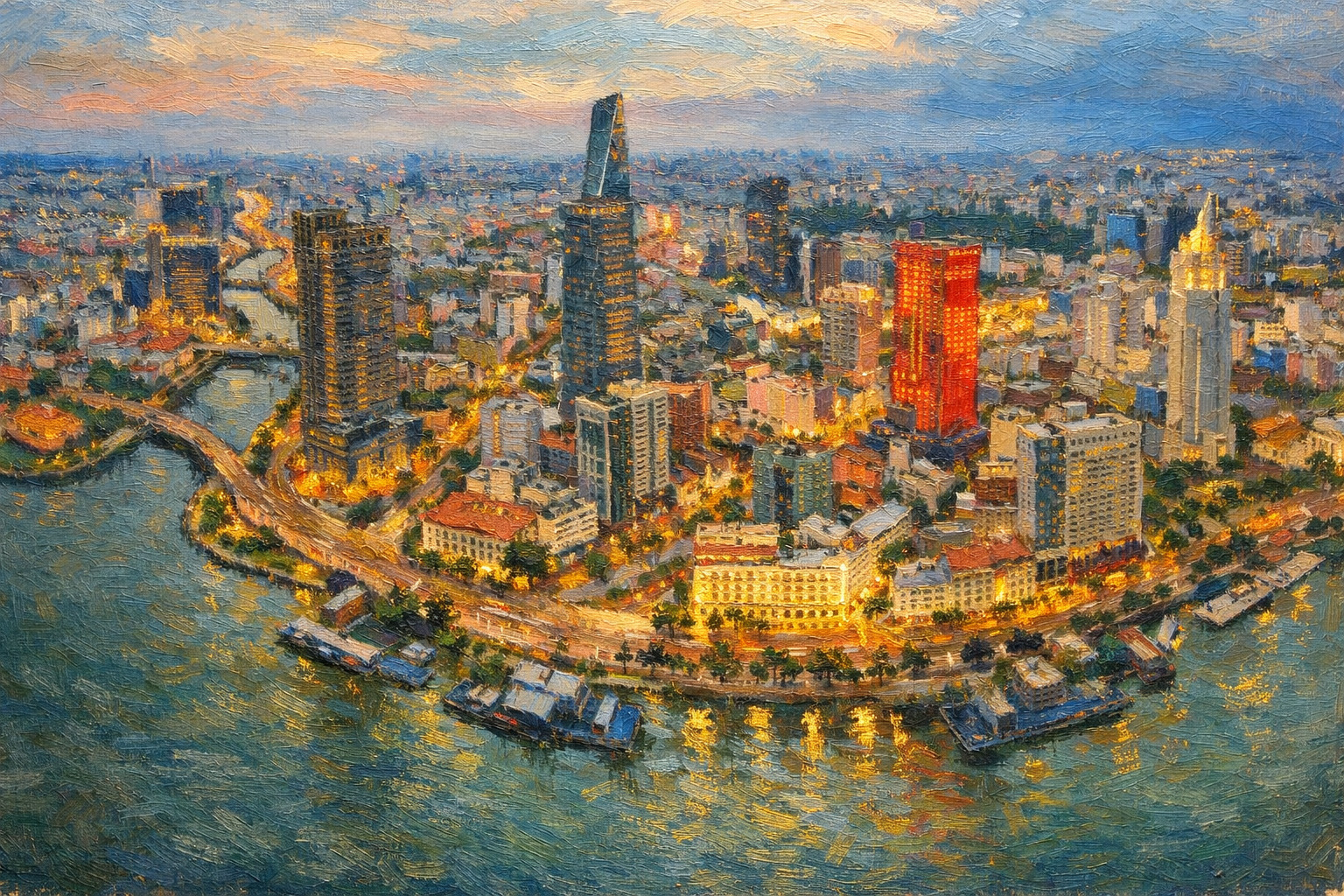
Ho Chi Minh City has long been regarded as the most dynamic city in the country—a place where “the lights never go out.” Yet in reality, after 10 p.m., much of the visitor experience begins to wind down. The city remains illuminated, but it lacks compelling reasons for people to stay.
The issue is not a lack of activity, but a misunderstanding of what a night economy truly is.
A night economy is not about extending operating hours. It is about creating experiences deep and distinctive enough that visitors are willing to stay longer—and spend more. People don’t stay up late because they have time; they stay because something is worth experiencing.
When a City Lacks a “Night Identity”
Ho Chi Minh City possesses nearly all the ingredients for a thriving night economy: rich culinary culture, vibrant nightlife, open-minded people, and a strong urban energy. Yet one critical question remains unanswered:
What is Saigon at night?
Without a clear identity, efforts to develop the night economy risk being reduced to simply extending business hours. Visitors may come, but they leave without lasting memories. And without memories, there is no reason to return.
Global experience shows that successful cities all have a clearly defined nighttime “signature.” However, this cannot be replicated. It must be built from a city’s intrinsic identity.
Ho Chi Minh City is a city of fusion, constant movement, and openness. This is the foundation for a distinctive nighttime identity. What is missing is the ability to translate that spirit into a cohesive and compelling narrative.
The Saigon River: An Untapped Strategic Asset
Among all its advantages, the Saigon River stands out as the city’s most distinctive asset. It is not merely infrastructure—it is memory, history, and the axis of urban development.
Yet within the night economy, its role remains underutilized.
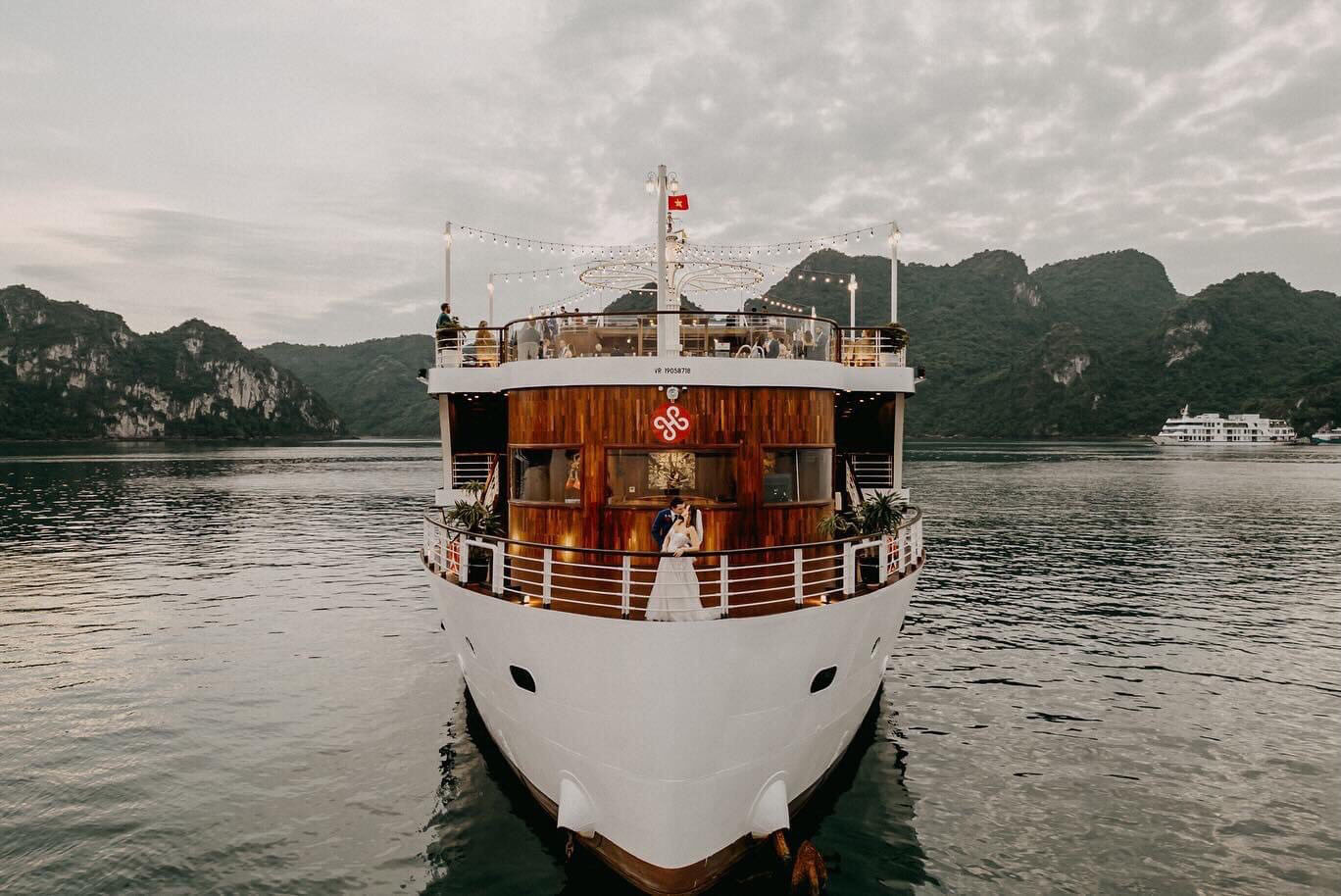
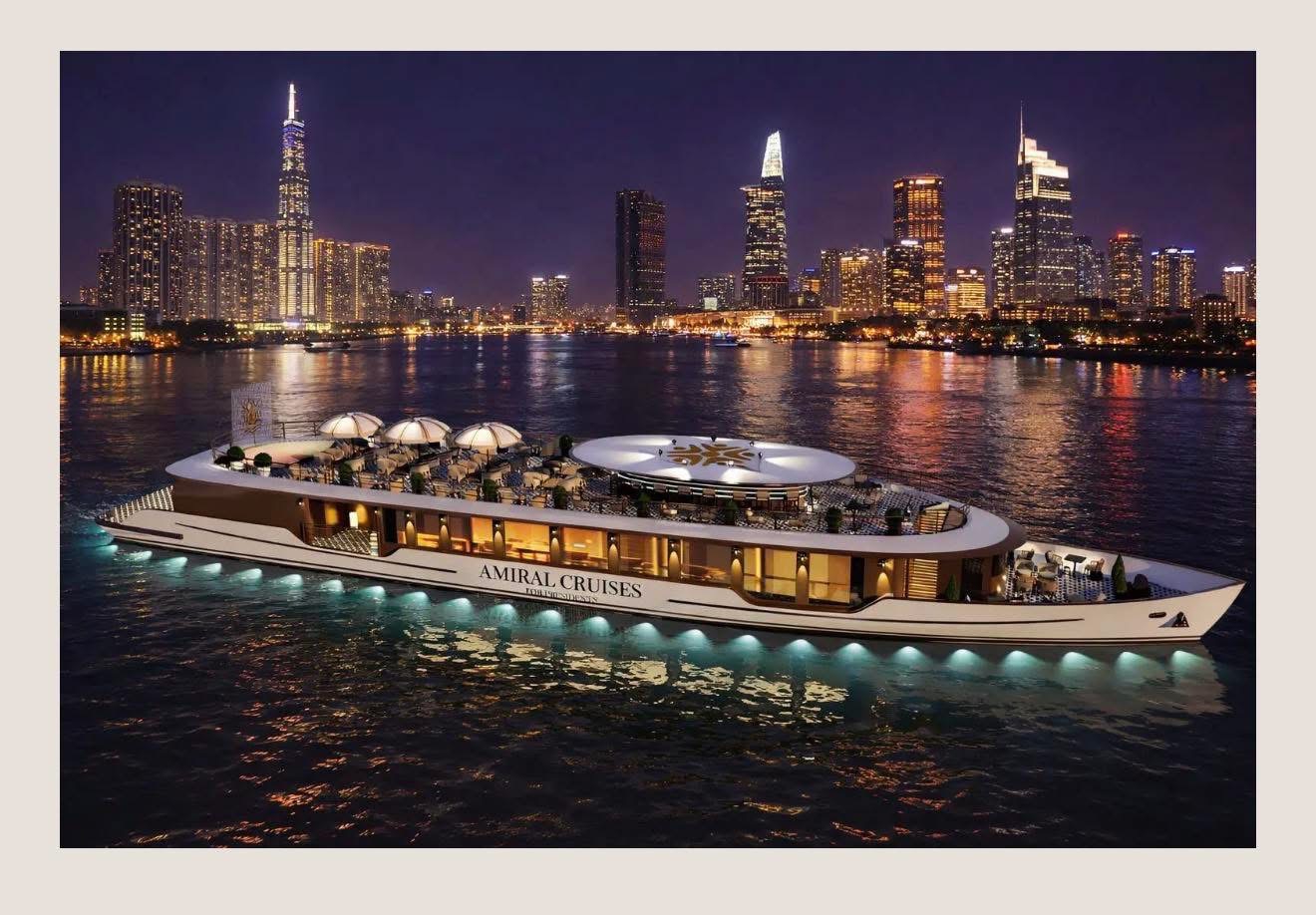
From the water, the city reveals a completely different dimension—quieter, slower, and more emotionally resonant. This is precisely the kind of experience high-value travelers are seeking today: not noise, but depth.
If developed strategically, the Saigon River could become the defining signature of Ho Chi Minh City’s night economy, through cultural journeys on water, storytelling-driven dining, and immersive performances in open urban spaces. In this context, tourism is no longer about sightseeing—it becomes storytelling through experience.
From Fragmented Products to an Integrated Ecosystem
Currently, Ho Chi Minh City’s night economy remains fragmented. Individual businesses develop their own offerings, but without an overarching structure or connection.
The result is a disjointed experience.
A visitor’s evening is not designed as a journey, but as a series of disconnected activities. This significantly reduces both emotional engagement and spending potential.
The solution lies not in creating more products, but in shifting the mindset—from individual offerings to an integrated ecosystem.
A complete night experience should be curated as a structured journey, where transportation, dining, culture, and entertainment are seamlessly connected. In doing so, visitors do not just spend money—they spend time. And time is the most valuable currency in modern tourism.
Planning for the Night, Not Extending the Day
A sustainable night economy cannot rely solely on private sector initiatives. It is fundamentally an urban planning challenge.
A city that wants to thrive at night must be designed for it, with appropriate mobility systems, dedicated spaces, coordinated safety infrastructure, and adaptive policies. Without these, nighttime activities will remain constrained by systems built for daytime use.
Night is not an extension of day. It is a different operating system.
A Multi-Core, Regionally Connected Model
Another limitation is the overconcentration of nightlife in the city center. District 1 alone cannot sustain the entire night economy.
A more sustainable approach requires a multi-core model, expanding into riverfront areas, new urban districts, ecological zones such as Can Gio, and regional connections like Vung Tau. This transforms the night economy from a few concentrated hotspots into a broader network of experiences.
Culture as the Starting Point
At its core, the night economy must begin with culture.
Ho Chi Minh City cannot replicate models from other destinations. It must tell its own story—a city defined by fusion, movement, and openness.
These three elements can form the DNA of Saigon at night:
- Fusion
- Movement
- Openness
Every experience—from cuisine to performance—should reflect this identity.
Beyond Economics: A Measure of Urban Maturity
The night economy is not just about tourism growth. It is a measure of urban maturity.
A city with a vibrant nighttime culture can retain talent, attract investment, foster creativity, and elevate its global positioning. These are critical drivers for long-term competitiveness.
Ho Chi Minh City does not lack light. But to become a world-class destination, that light must be accompanied by depth.
Not just brightness.
But soul.