

There is a version of Ho Chi Minh City that most people never truly encounter. It unfolds not in the rhythm of traffic or behind glass towers, but along the quiet current of the Saigon River. Here, the city reveals itself differently—layered, reflective, and deeply historical. Colonial facades, wartime landmarks, and modern ambition drift into a single panorama. It is this overlooked perspective that Amiral Cruises for Presidents seeks to reclaim—and reimagine—as one of Vietnam’s most compelling luxury travel experiences. 1
Launched in 2025 under the LuxGroup umbrella, Amiral enters the market not as a conventional cruise line, but as a carefully constructed narrative on water. Its ambition is not simply to carry guests along the river, but to transform the river itself into a living stage—where heritage, culture, and contemporary design converge into something quietly transformative. 1
A Boutique Proposition for a New Kind of Traveler
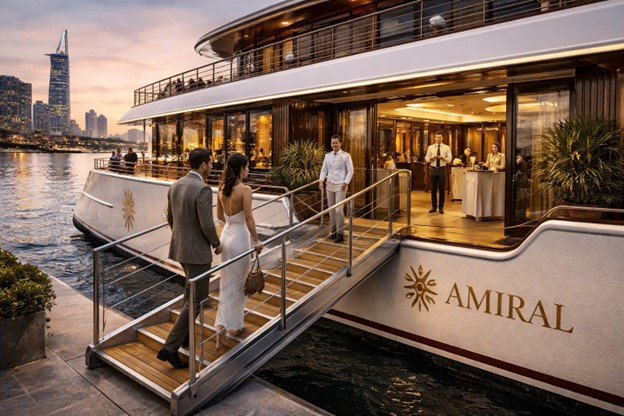
In an era where scale often defines luxury, Amiral takes a deliberate step in the opposite direction. This is boutique by design—intimate vessels, limited passenger capacity, and a highly personalized approach to hospitality. Every journey is curated rather than scheduled, designed to feel less like a tour and more like a private encounter with the city.
The positioning is precise. Amiral speaks to travelers who value depth over display: diplomats, executives, cultural explorers, and discerning guests seeking discretion as much as distinction. It is equally suited for high-level hosting—private celebrations, corporate gatherings, or moments that demand both intimacy and impact. 1
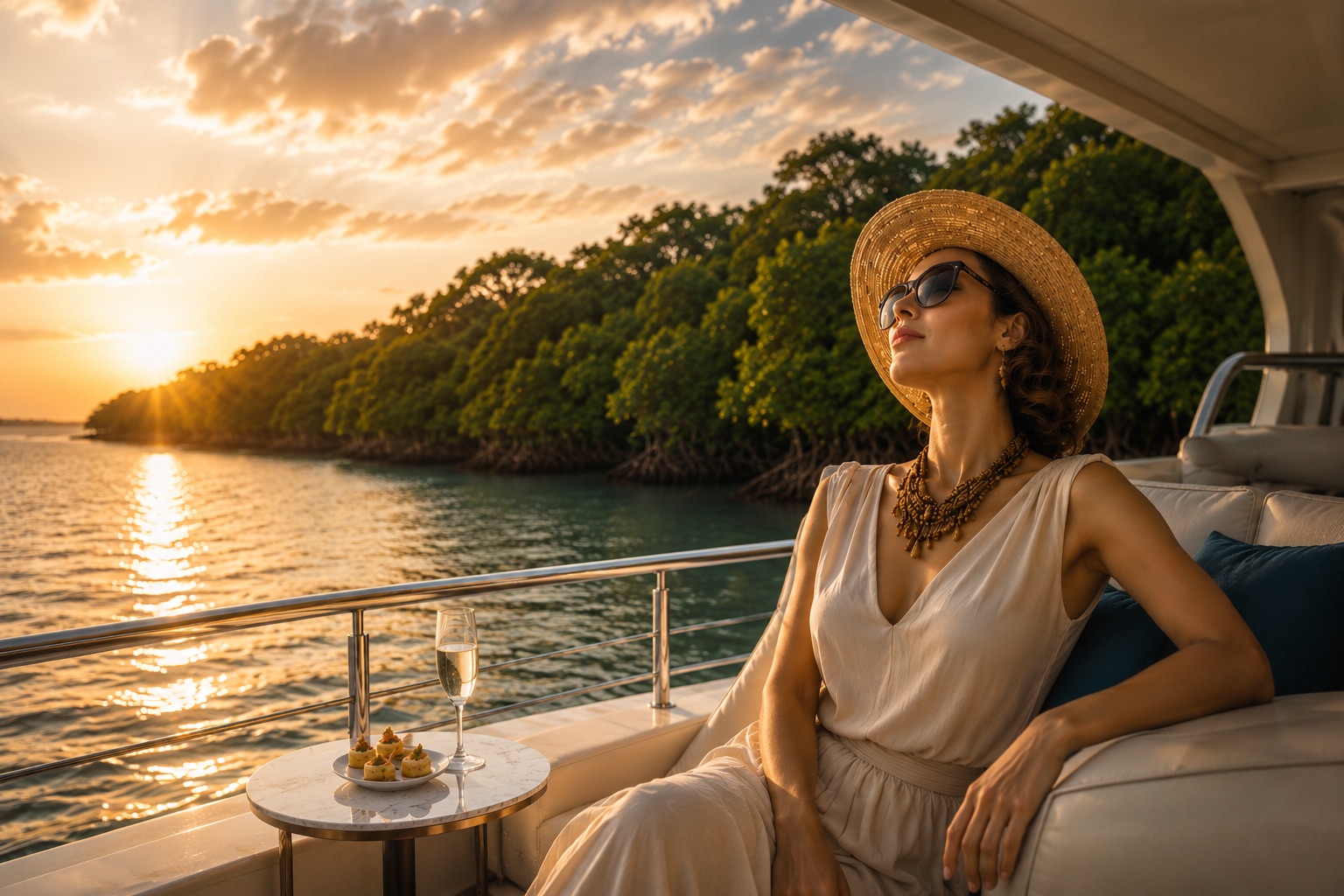
Rather than offering a checklist of attractions, the experience unfolds slowly. Guests are invited to observe the city not as a destination, but as a story in motion—one best understood from the gentle rhythm of the river.
Designed for the River, Inspired by History
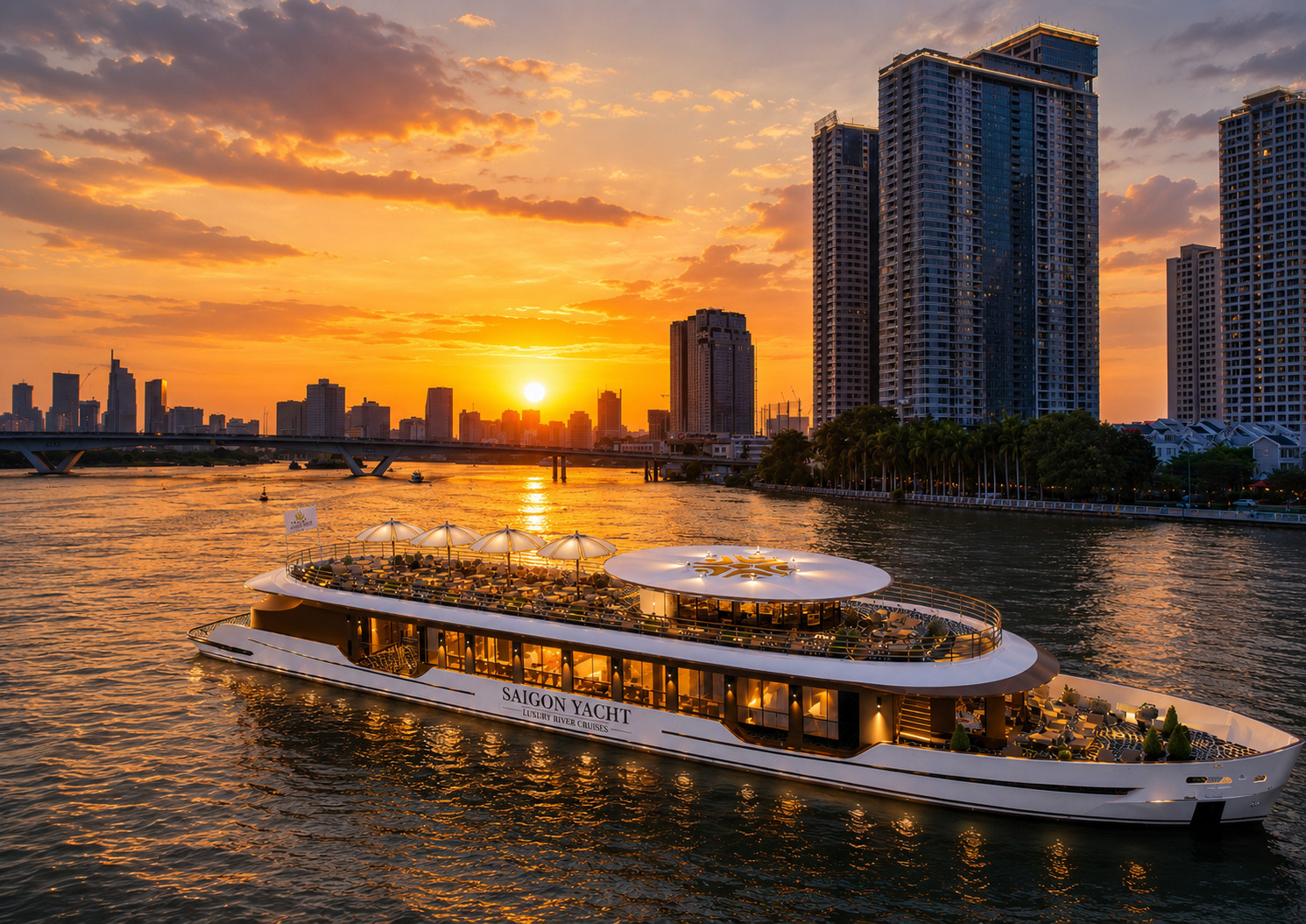
The vessels themselves are central to the story. Built specifically for urban river navigation, they feature low air drafts to pass beneath Saigon’s bridges and minimized wake to preserve the natural flow of the waterway. Open viewing decks encourage constant engagement with the surroundings, ensuring that the passing cityscape remains the centerpiece of the journey. 1
Visually, the design draws from early twentieth-century Art Deco influences—a subtle nod to the historical era that underpins much of Amiral’s storytelling. This aesthetic is paired with contemporary maritime engineering, creating a balance between nostalgia and innovation. The result is not simply a vessel, but a floating space that feels both timeless and purposefully modern.
There is also a broader ambition embedded in the design: to connect city and coast. Built to river–sea standards, the fleet hints at a future where these journeys extend beyond Saigon, linking urban experience with Vietnam’s southern coastline.
The River as a Stage for Memory
If design forms the physical framework, history provides the emotional core.
Amiral anchors its identity to one of the most symbolic moments in Vietnam’s modern history: the departure of Nguyễn Tất Thành—later known as Hồ Chí Minh—from Nhà Rồng Wharf in 1911 aboard the French ship Amiral Latouche-Tréville. By situating its story at this exact point on the Saigon River, the brand transforms geography into narrative, inviting guests to travel not only through space, but through time. 1
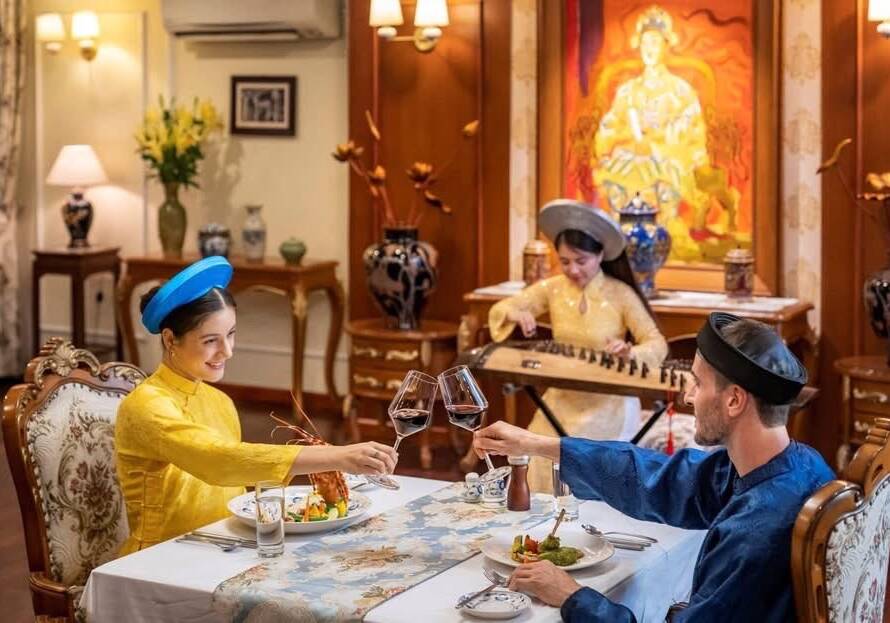
This storytelling takes its most vivid form in the evening experiences. As the city transitions into night, the river becomes a stage for the “River Show”—a curated performance blending music, light, and the performing arts to evoke the cultural rhythms of southern Vietnam. It is less spectacle than storytelling—designed to immerse rather than overwhelm.
What emerges is a rare synthesis: a luxury experience that does not detach itself from place, but instead deepens the traveler’s connection to it.
Three Brands, Two Centuries of Storytelling
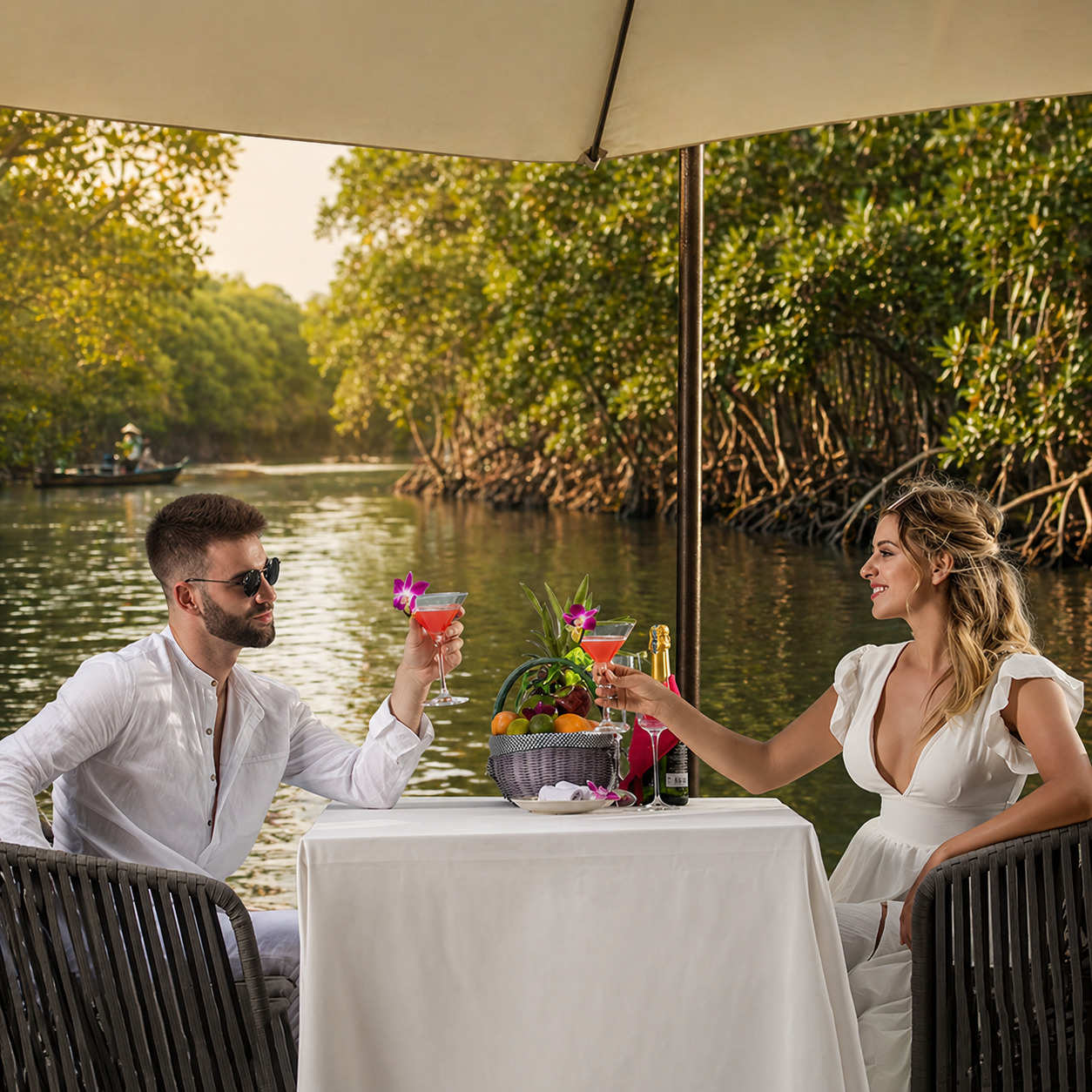
Amiral is not an isolated concept, but part of a larger narrative architecture developed by Lux Cruises Group. Alongside Heritage Cruises and Emperor Cruises, it represents the newest chapter in a trilogy of brands, each rooted in a distinct period of Vietnamese history.
Heritage Cruises draws inspiration from Bạch Thái Bưởi, the early twentieth-century entrepreneur often referred to as the “King of Vietnamese Ships.” Emperor Cruises evokes the refined world of Emperor Bảo Đại and the final years of Vietnam’s imperial era. Amiral carries that narrative forward into the modern age, linking the river to the figures and movements that shaped the nation’s identity. 1
Together, these three brands function as a layered storytelling platform spanning roughly two centuries—from commerce to royalty to leadership. Their itineraries stretch across Vietnam’s most iconic waterways, from Halong Bay and Lan Ha Bay in the north to Nha Trang and, increasingly, the southern rivers and coastal routes.
A Vision Larger Than a Cruise
At its core, Amiral is part of a broader strategic vision known as Vietnam Waterways 2045. Conceived by LuxGroup, the initiative aims to reposition Vietnam’s rivers, bays, and coastal corridors as a unified tourism system—one that can stand alongside aviation as a national symbol of connectivity and identity. 1
The idea is both simple and ambitious. Cities such as Paris, London, and Bangkok have long recognized the value of their rivers as central to the urban experience. In Ho Chi Minh City, however, the Saigon River—despite more than three centuries of history—has remained underdeveloped as a cultural and tourism asset.
Amiral positions itself as a flagship of this transformation in the south, demonstrating what river tourism can become when approached with intention, design thinking, and narrative depth.\
Sustainability as a Foundational Principle
Luxury, in this context, is not defined solely by aesthetics or service, but by responsibility.
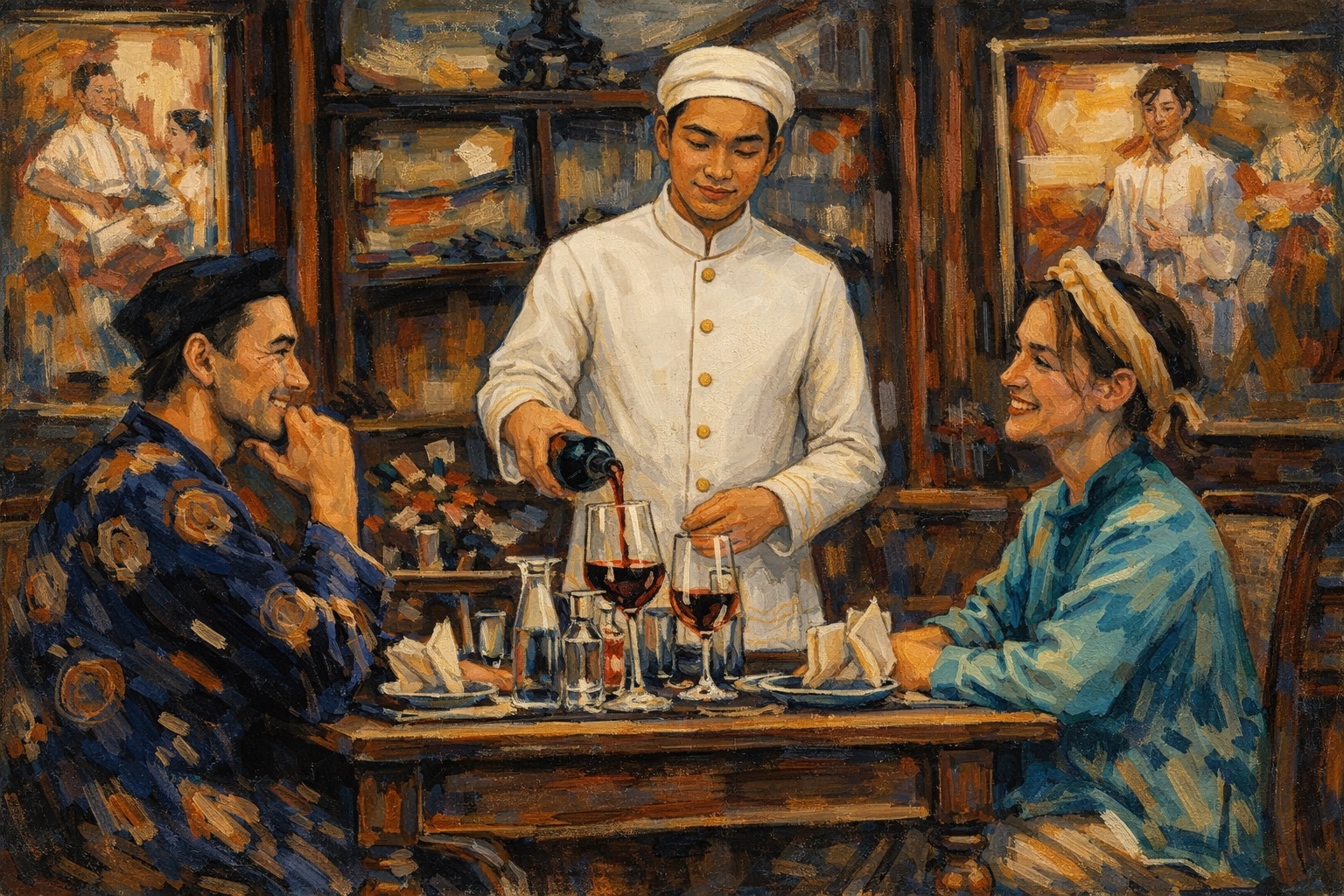
Amiral operates within LuxGroup’s broader ESG framework, which spans an eight-point philosophy including Passion, Purpose, People, Planet, Profit, Place, Partnership, and Prosperity. This approach translates into tangible practices: reducing single-use plastics, minimizing environmental impact on river ecosystems, and actively engaging with communities along its routes. 1
Supporting initiatives extend beyond the vessels themselves. The LuxGroup Foundation contributes to community and disaster-relief efforts, while the “History to Life” project collaborates with historians to ensure that cultural narratives are both accurate and meaningful. Environmental partnerships further reinforce a commitment to conservation and waterway clean-ups.
For today’s high-value traveler—one increasingly conscious of environmental and social impact—these elements are not optional. They are essential.
Recognition on the Global Stage
The broader Lux Cruises Group ecosystem has already begun to attract international attention. Recognition at the Travel + Leisure Luxury Awards Asia Pacific 2025, including rankings among the region’s top river cruises, underscores the growing relevance of boutique water-based experiences in Asia. 1
At the same time, Lux Travel DMC—another arm of the group—has been acknowledged for its sustainability initiatives, earning a Travelife certification and nominations across multiple World Travel Awards categories. Industry recognition from HR Asia further highlights the company’s focus on workplace culture and organizational excellence.
Media coverage across outlets such as Vietnam News, Nhân Dân, VnExpress, and TTG Asia reflects both domestic and international interest in the model Amiral represents.
A Blueprint for Urban River Tourism
Ultimately, Amiral Cruises offers more than a single product. It presents a blueprint—an example of how urban river tourism can evolve when it integrates heritage, design, gastronomy, and sustainability into a cohesive whole. 1
Beyond its signature sunset and dinner cruises, the brand extends into day journeys connecting Ho Chi Minh City with destinations such as the Cu Chi Tunnels and the Can Gio Biosphere Reserve. A smaller fleet under the Amiral Explorers line allows access to narrower waterways, enabling more flexible and intimate itineraries.
Looking ahead, expansion plans point toward overnight journeys linking the Mekong Delta and southern coastal regions, expected to unfold in phases after 2030. Yet the immediate focus remains clear: to establish the Saigon River as a destination in its own right.
The River Reimagined
In the end, what makes Amiral compelling is not its scale, but its perspective.
It redefines the Saigon River not as a backdrop, but as a narrative axis—a place where past and present intersect, where history is not preserved behind glass but experienced in motion. For travelers willing to slow down, to look more closely, and to engage more deeply, it offers something increasingly rare in modern travel: a sense of place that feels both authentic and alive.
And in doing so, it raises a larger question—not just for Vietnam, but for cities everywhere: what stories might emerge if we looked at them from the water?