

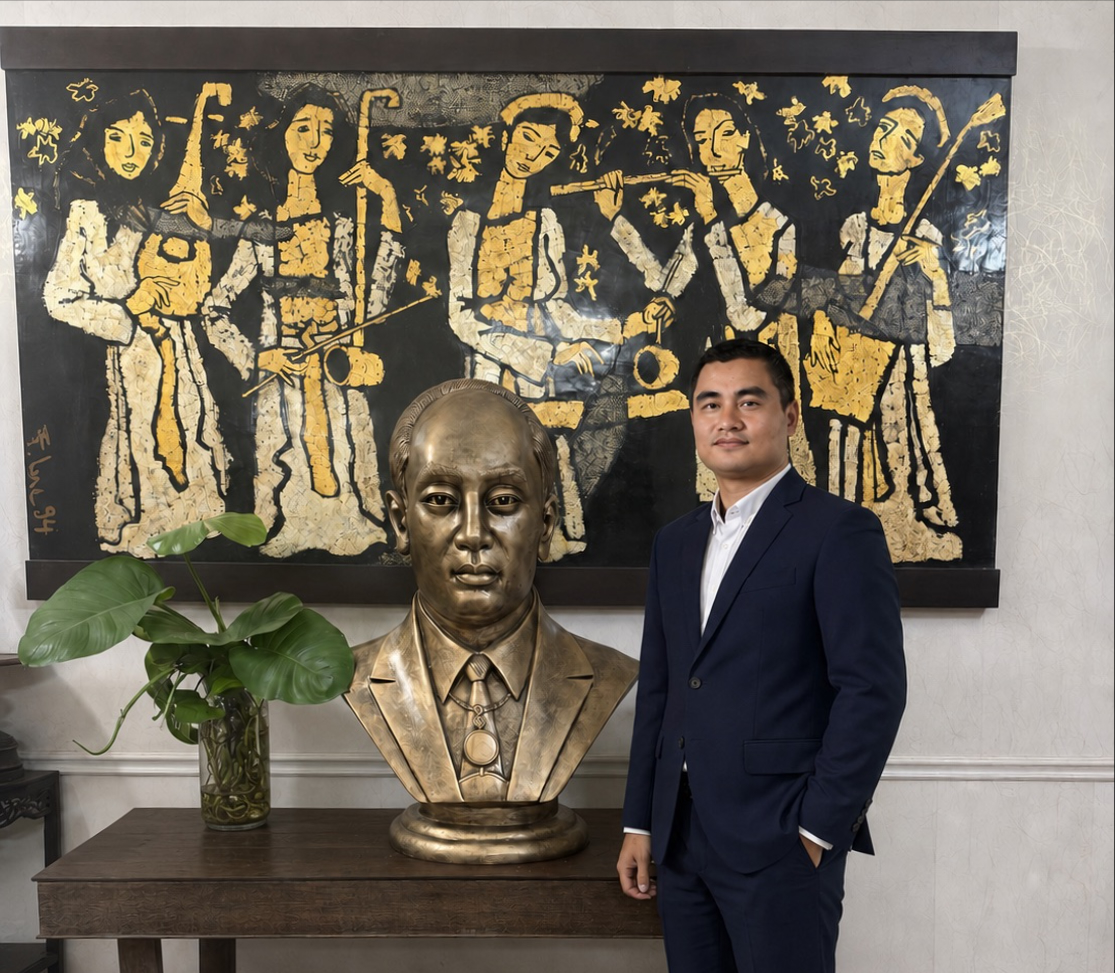
DR PHAM HA
Founder and CEO of LuxGroup®
Vice Chairman of the Vietnam Green Tourism Association
Vietnam is not short of tourism resources. What it still lacks is the capacity to transform those resources into distinctive products, memorable experiences, and sustainable economic value. According to Dr Pham Ha, Resolution No. 26-NQ/TW has established a new pathway for development. The decisive task now is to remove institutional bottlenecks, strengthen implementation capacity, and empower businesses to invest, innovate, and create.
Question 1. Resolution No. 26-NQ/TW is expected to usher in a new phase for Vietnam’s tourism industry. From the perspective of a private-sector group, how do you assess its strategic significance and new directions?
I believe that tourism, agriculture, and information technology are three areas in which Vietnam possesses clear national strengths and considerable competitive advantages.
Tourism is also one of the few economic sectors to have been guided by two dedicated resolutions—from Resolution No. 08-NQ/TW in 2017 to Resolution No. 26-NQ/TW in 2026. This demonstrates that tourism is no longer regarded merely as a service industry. It has become a strategic choice within Vietnam’s new growth model.
Resolution No. 26 does not simply open a new chapter. It establishes a new understanding of tourism’s value within the national economy.
Its most important breakthrough is the recognition of tourism as an integrated and inclusive service economy with the capacity to stimulate transportation, trade, agriculture, gastronomy, handicrafts, cultural and creative industries, the digital economy, the green economy, and the night-time economy.
Tourism is a unique economic sector. It allows us to export without physically sending goods across the border. It generates foreign currency while its products are consumed in Vietnam. It creates local employment without requiring people to leave their communities. A local meal, an overnight stay, a painting, a handicraft, a cultural performance, or a cruise can all become forms of “on-the-spot exports.”
More importantly, tourism’s value extends far beyond direct revenue. A visitor to Vietnam also uses aviation, transportation, telecommunications, banking, retail, cultural, and healthcare services. We must therefore calculate fully and accurately tourism’s direct, indirect, and induced contributions to the economy.
The Resolution sets ambitious goals. By 2030, tourism is expected to contribute directly 10–12 per cent of GDP. By 2045, that figure should reach 14–15 per cent, with Vietnam ranking among the world’s 30 most competitive tourism economies and welcoming approximately 70 million international visitors.
These ambitions require an entirely new level of institutional, managerial, financial, and operational capacity.
The Resolution also marks a fundamental transition: from counting visitor arrivals to measuring value; from extracting resources to designing experiences; from extensive to intensive growth; and from competing on low prices to competing through quality, identity, creativity, and sustainability.
After more than 20 years of building LuxGroup®, beginning with Luxury Travel in 2005, I am more convinced than ever that Vietnam does not lack resources. We possess extraordinary landscapes, culture, history, cuisine, and human warmth.
What we still lack is a sufficiently enabling policy environment, appropriate financial resources, stronger management capabilities, more creative products, and a consistent national tourism brand capable of transforming resources into distinctive experiences, lasting memories, and sustainable economic value.
The Tourism Law and related regulations should be reviewed and updated to support this new mission. Vietnam also needs a sufficiently empowered coordinating mechanism that clearly identifies the responsible authority, the accountable individuals, and the resources required for implementation.
The Resolution has opened the way. But for that road to lead to prosperity, we must build the capacity to deliver—with five elements made clear: the task, the responsible person, the deadline, the resources, and the measurable outcome.
Question 2. What changes in thinking and policy would create the strongest incentives for private enterprises to undertake long-term, large-scale, and market-leading projects?
Most Vietnamese tourism businesses are small, medium-sized, or micro-enterprises. They often lack collateral, long-term capital, market intelligence, technology, and access to development resources. Yet they possess professional expertise, entrepreneurial passion, local knowledge, and the ability to create culturally rich experiences.
This is a valuable national resource. With appropriate institutional, financial, technological, and market support, these enterprises can become “small giants”—not necessarily large in scale, but highly capable, specialised, creative, and rich in identity.
Tourism requires long-term investment. A cruise ship, a river route, a homestay, a heritage hotel, or a resort cannot be developed according to short-term thinking or administrative terms of office. Businesses can accept market risk, but it is much harder for them to accept uncertainty created by unstable policies or administrative procedures with no predictable conclusion.
What businesses need first is not preferential treatment, but confidence. That confidence comes from a transparent, consistent, and predictable investment environment—one that protects genuine investors who commit real capital, create real employment, and deliver real value.
Tourism development must also balance commercial use with conservation. We must protect the authenticity of our natural and cultural assets. Tourism should never become a convenient label for property developments that damage landscapes, restrict community access, or degrade the environment.
Resolution No. 36-NQ/TW of 2018 on the sustainable development of Vietnam’s marine economy identified marine tourism and services as priority areas. Yet the potential of river, coastal, and waterway tourism remains underdeveloped. Compared with aviation and road transport, both the infrastructure and regulatory framework for tourism waterways are still lagging.
Hanoi, Ho Chi Minh City, Nha Trang, Cat Ba, and many other riverine and coastal destinations lack an adequate network of high-quality, dedicated passenger ports and tourism piers. In many places, visitors are still received at mixed-use ports or facilities primarily designed for cargo.
A single waterway tourism project may be subject to planning, investment, construction, maritime, inland waterways, environmental, fire safety, cultural, and destination-management regulations. If every authority handles only one part of the process and no single agency assumes final responsibility, investment opportunities will be lost and valuable resources will remain underused.
Vietnam therefore needs a genuine “one-stop, one-agency, one-accountability” mechanism. It must also address regulatory overlaps and legal gaps affecting tourism piers, floating restaurants, urban cruises, river-to-sea itineraries, and night-time economy products.
Public authorities need to move decisively from an administrative-control mindset towards one of facilitation and service. When government serves businesses effectively, businesses can serve customers better and satisfy the increasingly sophisticated expectations of domestic and international travellers.
Incentive policies should also move away from rewarding size alone. A project that uses little land but creates high value, preserves culture, reduces emissions, extends visitor stays, and supports community livelihoods deserves appropriate recognition and support.
Businesses are not asking for privilege. They are asking for the right to compete fairly, the freedom to innovate, and the confidence to invest for the long term.
Question 3. What new role does Resolution No. 26 assign to the private sector?
The private sector should be recognised not only as a source of capital, but as a source of national capability.
Private enterprises can identify changing market demand, test new models, design products, build brands, and connect Vietnam with international customers. Businesses are the actors that transform resources into experiences, identity into value, ideas into products, and policy into employment.
LuxGroup® began in 2005 as a small tour operator under the Luxury Travel brand. From a company specialising in high-end journeys, we gradually developed an ecosystem comprising Lux Travel DMC®, Lux Travel DMC Asia®, Heritage Cruises®, Emperor Cruises®, Amiral Cruises®, LUX Hotels & Resorts™, LuxTransCo, Lux F&B, Lux Arts Collection®, the Pham Luc Art Museum®, Lux Cultural Shows®, and our Vị restaurant and café brands.
This is our journey towards building a House of Small Giants. Each brand has its own expertise and personality, but all share the same values, service standards, and ambition: to bring Vietnamese culture to the world through refined, authentic, and emotionally meaningful experiences.
Lux Travel DMC® designs distinctive journeys. Heritage Cruises® tells stories of Vietnamese commerce, enterprise, and maritime heritage. Emperor Cruises® translates Vietnamese culture, art, and refined living into boutique cruising experiences. Amiral Cruises® brings the stories of the Saigon River to life. Lux Arts Collection® and the Pham Luc Art Museum® connect fine art with tourism, while our Vị brands tell the story of Vietnam through cuisine.
Vietnam needs major corporations capable of developing large-scale infrastructure, but it also needs smaller enterprises with deep expertise, agility, creativity, and cultural character.
Scale is not the only measure of strength. A business does not have to be the biggest to become the best in its chosen field.
The Resolution should create mechanisms enabling private tourism enterprises to participate more meaningfully in policymaking, destination planning, international promotion, product development, and public-private partnerships. Businesses should not be consulted only after plans have been completed. They should be heard while challenges and opportunities are still being defined.
The State creates the institutional framework; businesses create the products; communities safeguard the soul of the destination. Only when these three forces move in the same direction can tourism truly become a spearhead economic sector.
Question 4. What criteria should guide the development and management of a highly competitive tourism destination or product?
Based on LuxGroup®’s experience, a competitive tourism product must bring together five elements: identity, quality, creativity, sustainability, and happiness.
The first is identity. Every product must answer a fundamental question: why should a traveller come here and choose this experience when it cannot be authentically replicated elsewhere?
Heritage Cruises Bình Chuẩn® does not merely sell an overnight stay in Lan Ha Bay. We tell the story of national entrepreneur Bach Thai Buoi, the historic Bình Chuẩn vessel, and the aspiration behind the call: “Vietnamese people travel on Vietnamese ships.” Guests do not simply admire the scenery; they enter a world of culture, history, art, and national pride.
Emperor Cruises® does more than provide boutique cruising in Nha Trang and Ha Long. It evokes the royal elegance, art, cuisine, and refined lifestyle of Vietnam. Each vessel is conceived as a floating hotel, a restaurant, a gallery, and a cultural ambassador on the water.
The second element is quality. Luxury does not reside solely in marble, crystal, or expensive objects. True luxury is found in presence, privacy, refinement, sincerity, and the ability to understand each individual guest. We call this heartware—the human soul of service.
The third element is creativity. A resource may be familiar, but the way its story is told must be new. A river can become a cultural stage; a meal can become a journey through memory; a ship can become a floating museum; and a hotel can become the keeper of a destination’s soul.
The fourth element is sustainability. A tourism product must respect the environment, recognise the destination’s carrying capacity, and create value for the local community. We cannot sacrifice landscapes, culture, and residents’ quality of life for short-term growth.
The final element is happiness. A good tourism product should create value simultaneously for guests, employees, communities, and investors.
High visitor numbers may be one measure of success, but they are not the whole of success. If the environment is damaged, residents do not benefit, employees feel no pride, and visitors leave dissatisfied, that growth cannot be considered sustainable.
Question 5. How does LuxGroup view the development of an integrated tourism ecosystem? Which models could create breakthroughs for Vietnamese destinations?
Travellers do not purchase a collection of disconnected services. They purchase a complete emotional journey.
LuxGroup® therefore develops an integrated ecosystem connecting travel design, transportation, cruising, accommodation, cuisine, art, museums, and cultural performances.
Lux Travel DMC® and Lux Travel DMC Asia® bring travellers to Vietnam. LuxTransCo connects their journeys on land. Heritage Cruises®, Emperor Cruises®, and Amiral Cruises® create experiences on the water. LUX Hotels & Resorts™ continues the story onshore. Lux Arts Collection® and the Pham Luc Art Museum® bring Vietnamese fine art into living spaces, while our Vị brands tell the country’s story through cuisine.
These are not separate pieces of a business portfolio. They all serve one purpose: enabling travellers to see, feel, taste, and connect more deeply with Vietnamese culture.
I believe particularly strongly in the potential of the waterway tourism economy. Vietnam possesses more than 3,000 kilometres of coastline, an extensive network of rivers, and a long history of maritime and river-based commerce. Vietnamese civilisation was formed along its rivers, yet many of our cities still turn their backs on the water.
Through our Vietnam Waterways® 2045 vision, LuxGroup® aims to help revive Vietnam’s thousand-year waterway heritage, develop a Vietnamese-branded fleet, and connect rivers, bays, cities, and historic trading ports from north to south.
In Ho Chi Minh City, Amiral Cruises® draws inspiration from the historic vessel Amiral Latouche-Tréville. On 5 June 1911, the young patriot Nguyen Tat Thanh—working under the name Van Ba as a kitchen assistant—departed from Nha Rong Wharf aboard that ship to begin his journey in search of a path to national liberation.
Amiral Cruises® does not attempt to recreate that history as a replica. Instead, we draw upon the spirit of the journey to tell the story of Saigon–Ho Chi Minh City from the river: a city of trade, cultural exchange, courage, and the aspiration to engage with the wider world.
The envisioned ecosystem includes daytime urban cruises, overnight voyages, gastronomy, art, sunset experiences, the Sông Show® live performance, and itineraries connecting the city centre with Cu Chi, Can Gio, the Mekong Delta, and eventually Cambodia.
If we know how to awaken our rivers, Vietnam will gain more than another tourism product. We will open a new economic, cultural, and creative space.
Question 6. What should businesses do to create new reasons for travellers to choose Vietnam, stay longer, spend more, and return?
Vietnam does not lack beautiful destinations. But natural beauty may generate a first visit; only distinctive experiences and genuine emotional connections inspire people to return.
If we want travellers to stay longer, we must give them more worthwhile things to do. If we want them to spend more, we must create more value worth paying for. If we want them to return, we must leave them with powerful memories—and continue creating new reasons to come back.
Instead of selling only a sightseeing excursion in Ha Long, we create an art and heritage journey aboard Heritage Cruises Bình Chuẩn®. Instead of merely taking guests around Nha Trang Bay, Emperor Cruises® tells stories of the culture, art, cuisine, and lifestyle of coastal Khanh Hoa.
With Amiral Cruises® in Ho Chi Minh City, the river is no longer simply a transportation route. It becomes a stage for history, music, cuisine, and urban memory. Guests can admire the sunset, enjoy dinner, watch a performance, listen to stories, and discover another dimension of Saigon from the water.
Through Lux Arts Collection® and the Pham Luc Art Museum®, Vietnamese art moves beyond the traditional gallery environment and enters hotels, restaurants, and cruise ships. A visitor does not simply look at a painting; they discover stories of land and people, war and peace, labour and nature, tradition and social change.
Through Vị Việt Nam, Vị Hội An, Vị Sông Sài Gòn, and other culinary brands in our ecosystem, a dish is never merely something to eat. It should tell a story about its ingredients, region, family memories, and cultural identity.
Every destination needs a year-round calendar of experiences encompassing art, gastronomy, festivals, wellness, sport, cruising, agriculture, handicrafts, education, and the night-time economy. Products must also be personalised for different generations, markets, and reasons for travel.
We should not simply ask how to keep visitors for longer. We should ask whether we have created enough value to make them reluctant to leave—and enough affection to make them long to return.
Question 7. How does LuxGroup incorporate local culture, history, and identity into its projects?
Our guiding philosophy is “Luxury is Culture®.”
In a world where five-star hotels, cruise ships, and high-end amenities increasingly resemble one another, culture is the one element that cannot be replicated.
International travellers do not cross thousands of kilometres to discover another version of Europe. They come to encounter Vietnam.
For every project, therefore, we do not begin by asking how many rooms we will build or how many guests we can accommodate. Our first question is: what is the soul of this place, and how should its story be told?
Heritage Cruises Bình Chuẩn® draws inspiration from national entrepreneur Bach Thai Buoi, the historic Bình Chuẩn vessel, and Vietnam’s waterway transportation heritage. Emperor Cruises® evokes the artistic beauty and refined royal lifestyle of Vietnam. Amiral Cruises® tells the story of Saigon–Ho Chi Minh City from the river, where past, present, and future meet.
Lux Arts Collection® brings Vietnamese fine art into the tourism experience, including the artistic legacy of painter Pham Luc. Art is not introduced merely to beautify a space. Each work tells a story about the land and its people, war and peace, labour and nature, culture, tradition, and the spirit of its time.
The Pham Luc Art Museum® helps make art more accessible to both the public and travellers. When art becomes part of a living journey, visitors no longer stand outside the heritage; they step inside its story.
Our Vị culinary brands continue this narrative through flavour. Every dish should preserve its regional identity, respect local ingredients, and express traditional memories in a contemporary language.
We do not use culture as a decorative layer. Culture must become the soul of the architecture, spaces, products, cuisine, art, and service style. Local people must also participate as the owners and custodians of their culture—not merely stand at the margins as tourism workers.
The best way to preserve heritage is not to place it behind glass, but to keep it alive, respected, economically meaningful, and capable of being passed to future generations.
Question 8. What breakthroughs does Vietnam need in transportation infrastructure and international connectivity?
For tourism to take off, it needs runways. To reach the open sea, it needs ports. To penetrate every region, it needs a seamless transport network.
First, Vietnam should continue to improve its visa policy to make it more open, convenient, and internationally competitive. Electronic visas must be genuinely simple. Permitted stays should reflect the needs of long-haul travellers, while visa exemptions should prioritise markets with high spending potential and longer average stays.
Second, Vietnam needs more direct air routes connecting Europe, North America, Australia, the Middle East, and India with Hanoi, Ho Chi Minh City, Da Nang, Cam Ranh, Phu Quoc, and emerging tourism centres. Aviation, however, cannot be the only answer.
Airports, railways, roads, seaports, and inland waterways must be integrated into a convenient end-to-end journey. Travellers arriving at an airport should be able to connect easily with city centres, railway stations, bus terminals, tourism piers, and interregional destinations. Infrastructure should be designed according to a human-centred philosophy, serving both people and the visitor experience.
Third, Vietnam must invest appropriately in cruise and waterway tourism infrastructure. Many ports were designed for cargo rather than passenger tourism. A high-value guest cannot be welcomed through a gateway lacking comfort, aesthetics, efficiency, and a sense of place.
For river tourism, we need planned networks of tourism piers, passenger terminals, riverside stops, supporting services, and clean transportation.
With appropriate piers and an enabling operating framework, Ho Chi Minh City could develop routes linking the city centre with Cu Chi, Can Gio, the Mekong Delta, and Cambodia.
Vietnam should develop local, interregional, river-to-sea, and eventually international waterway itineraries under Vietnamese brands and the Vietnamese flag. At the same time, the country needs dedicated passenger ports and services capable of persuading international cruise lines to include Vietnam regularly in their itineraries.
Travellers do not organise their journeys according to administrative boundaries. Our infrastructure, products, and destination marketing must therefore transcend those boundaries as well.
If every transportation project places people and tourism at its centre, travel will become more convenient, stays will become longer, and the competitiveness of our destinations will improve. This is essential if Vietnam is to become one of Asia’s leading tourism countries by 2030 and rank among the world’s 30 most competitive tourism destinations by 2045.
Question 9. How does LuxGroup intend to apply technology, modernise management, and advance sustainable development?
For LuxGroup®, digital transformation does not simply mean replacing paper with screens. It means moving from intuition-based management to data-driven management; from mass service to personalisation; and from reacting after an event to anticipating needs in advance.
We have pursued digital transformation since the company’s early years, continually digitalising our management, sales, operations, and customer-care processes. Our objective is to build a leaner organisation with less paperwork, connected data, and faster, more accurate decision-making.
In the next phase, LuxGroup® aims to develop an integrated customer-data system across the entire ecosystem. From Lux Travel DMC® and Lux Travel DMC Asia® to Heritage Cruises®, Emperor Cruises®, Amiral Cruises®, LUX Hotels & Resorts™, and the Vị restaurants, customer preferences and needs should be recognised and connected to create a seamless experience.
Artificial intelligence can support demand forecasting, itinerary design, scheduling, energy management, food-waste reduction, and service personalisation. We do not, however, believe that technology can fully replace people.
A machine may remember a guest’s birthday, but only a human being can turn that birthday into a cherished memory. Technology can provide speed, but hospitality must provide depth and emotion.
In sustainable development, LuxGroup® has achieved Travelife certification and follows our 5G strategic framework: Go Global – Go Green – Go Digital – Go Pride – Go Happiness.
We prioritise the reduction of single-use plastics, efficient water and energy consumption, waste management, reduced food waste, local sourcing, cultural preservation, and an increased share of tourism value retained within local communities. Employees must also receive training, enjoy opportunities for development, and feel proud of their work.
Our next ambition is to become Net Positive: not merely to minimise harm, but to return more value to nature, culture, and society wherever we operate.
Digital transformation makes a business smarter. Green transformation enables it to endure. But only by placing people at the centre can a business become trusted, loved, and remembered.
Question 10. In light of Resolution No. 26, what will be LuxGroup’s principal investment priorities in the coming years?
In the next phase, LuxGroup® will continue to invest selectively in areas where Vietnam possesses genuine competitive advantages: cultural tourism, waterway tourism, boutique cruising, culturally distinctive hotels and resorts, art, museums, gastronomy, and high-value experiences.
We will continue to develop our brand ecosystem. Lux Travel DMC® and Lux Travel DMC Asia® bring international visitors to Vietnam and Asia. Heritage Cruises® develops journeys through heritage. Emperor Cruises® pursues boutique cruising experiences. Amiral Cruises® opens new opportunities for river tourism and the night-time economy in Ho Chi Minh City.
LUX Hotels & Resorts™ develops culturally rooted accommodation. Lux Arts Collection® and the Pham Luc Art Museum® bring Vietnamese art into the visitor experience. Lux Cultural Shows® transforms history and heritage into performing arts, while our Vị brands tell the story of the country through cuisine.
Through the Vietnam Waterways® 2045 vision, we aspire to build a Vietnamese-branded fleet connecting rivers, bays, cities, and historic trading ports from north to south, gradually developing local, interregional, river-to-sea, and international itineraries.
This is more than a business plan. It is our desire to revive national pride in Vietnam’s waterway civilisation, commercial heritage, and maritime spirit.
LuxGroup® does not aim to become the biggest company. We choose to become the best in our selected fields: more specialised, more distinctive, greener, happier, and more authentically Vietnamese.
I hope Resolution No. 26 will usher in a new era in which private tourism enterprises are not merely encouraged to invest capital, but are trusted, empowered to innovate, and invited to participate in shaping policy.
Tourism must create economic value, but it cannot stop at revenue. It must also create decent employment, preserve culture, restore nature, nurture national pride, and deliver happiness.
The success of Vietnamese tourism should not be measured solely by how many millions of visitors arrive. It should be measured by the value they leave behind, the memories they take home, and their desire to return.
When the State opens the way through institutions, businesses create the products, communities protect local identity, and residents share in the benefits, tourism will become more than a spearhead economic sector. It will become a source of national soft power and a compelling introduction to Vietnam.
Placing customers at the centre, culture at the foundation, happiness at the heart, and sustainability as the path forward—that is how Vietnamese tourism can rise through the power of its own identity.