

When a company moves from being guided by its founder’s intuition to being governed by organizational systems, its greatest challenge is no longer generating opportunities. It is deciding which opportunities deserve its capital, talent, and management attention.
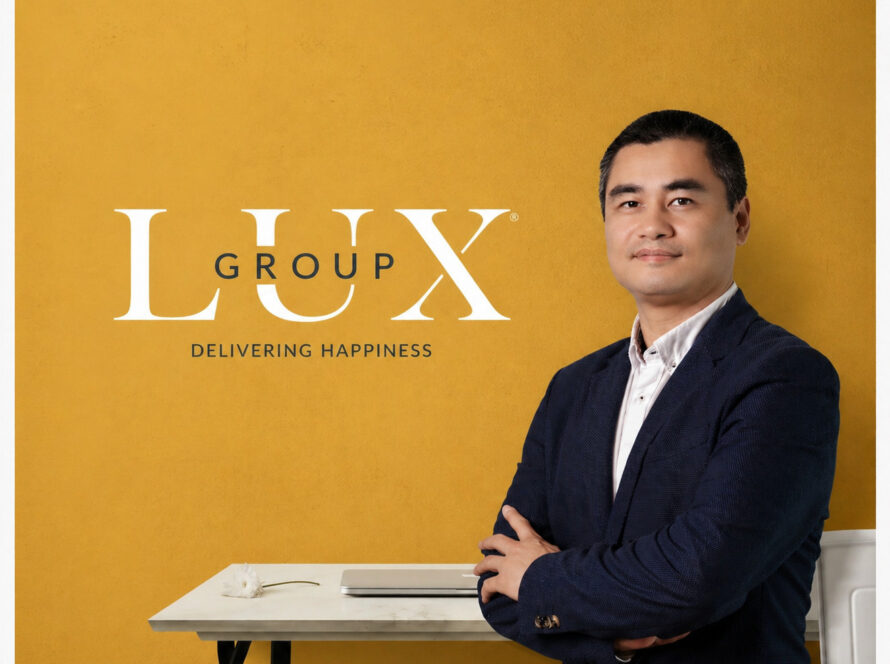
By Dr. Pham Ha, Founding President and CEO of LuxGroup®
Luxury Travel was founded in 2005 on a belief that was still relatively unfamiliar in Vietnam: luxury travel is not simply about expensive hotels, premium vehicles, or conspicuous service. True luxury lies in culture, privacy, depth of experience, and the ability to touch people emotionally.
From that original business, LuxGroup has evolved into a “House of Small Giants” spanning destination management, boutique cruising, hotels and resorts, gastronomy, transportation, art, and cultural experiences. The Group now employs approximately 300 people, serves more than 50,000 guests annually, and is entering a new phase of growth.
Growth, however, creates a paradox.
The more opportunities a company encounters, the easier it becomes to lose focus. The more brands it develops, the greater the risk of delivering an inconsistent customer experience. The more autonomy it gives its business units, the more likely they are to move in different directions. And when the founder remains the principal source of energy, ideas, and judgment, expansion can turn that leader into the organization’s primary bottleneck.
The most important question for LuxGroup is therefore no longer, “What else can we do?”
The better question is: “What should we do, what should we refuse to do, and how should we organize ourselves to grow without losing our soul?”
Strategy Is More Than a Plan
A complete business strategy can be understood through four dimensions: perspective, position, plans, and patterns of action.
Strategy as perspective answers why the company exists. At LuxGroup, that answer is expressed through Delivering Happiness®, the core belief Luxury is Culture®, the philosophy Touching Hearts®, and the HEARTS™ values: Humanity First, Excellence Always, Authenticity, Responsibility, Togetherness, and Sustainability.
This is LuxGroup’s strongest strategic asset. The company does not merely sell journeys, hotel rooms, or cruises. It creates experiences through which guests can understand and feel Vietnamese culture in a personal, refined, and emotionally meaningful way.
Strategy as position defines where and how the business chooses to compete. LuxGroup does not pursue mass tourism, compete primarily on price, or aspire to become the industry’s largest operator. Its ambition to be “not the biggest, but the best” requires the Group to protect scarcity, personalization, service quality, and cultural depth.
Strategy as plans appears in LuxGroup’s international B2B development, digital transformation, fleet expansion, People First®, Net Positive 2030, and the long-term Vietnam Waterways® 2045 vision. Each initiative offers potential, but all compete for the same limited pools of capital, talent, and management attention.
Finally, strategy as patterns of action emerges from how the company responds to real-world changes. LuxGroup has traditionally been quick to recognize opportunities, experiment with new products, and empower its small giants. This entrepreneurial capability is valuable, but without discipline, emergent strategy can become the pursuit of too many opportunities at once.
The Economic Engine Behind Luxury Is Culture®
A declaration becomes a strategy only when it explains how the business creates economic value.
LuxGroup’s economic engine can be described as follows:
Culture and authenticity create differentiated experiences. Differentiated experiences generate emotion and trust. Trust supports premium pricing, repeat business, and referrals. Stronger margins provide resources to reinvest in people, products, heritage, and sustainability.
Under this logic, Luxury is Culture® cannot remain merely a brand statement. It must influence how LuxGroup designs products, recruits people, selects partners, allocates capital, and rejects opportunities.
If a project generates revenue but diminishes cultural authenticity, it weakens the strategy. If a contract delivers volume but lowers service quality, it is not healthy growth. If a new brand consumes capital and attention without strengthening the Group’s common promise, it does not make the ecosystem more valuable.
This distinction is critical because diversified companies often confuse activity with strategic progress. Adding businesses may increase scale, but it does not automatically create coherence. Each LuxGroup company must therefore justify its place as a genuine small giant: it should possess distinctive capabilities, demonstrate sound economics, and contribute to the Group’s shared positioning.
The Strongest Lever and the Most Urgent Gap
LuxGroup uses four management levers to turn strategy into action.
Beliefs systems provide inspiration and direction. Diagnostic control systems use budgets, profit-and-loss statements, objectives, and performance indicators to monitor results. Interactive control systems help leaders engage employees, interpret market information, and adjust plans. Boundary systems define the behaviors and opportunities the company will not accept.
Among these four levers, LuxGroup’s beliefs system is its strongest; its boundary system requires the most urgent development.
The Group has articulated clearly who it wants to be, but it has not yet institutionalized everything it will refuse to become. Many limits remain dependent on leadership judgment, direct communication, or the experience of individual business units. That approach may work when a company is small, but it becomes fragile as the organization expands across brands, businesses, and locations.
Weak boundaries can produce three consequences.
First, business units may pursue short-term revenue by discounting too aggressively or accepting customers who do not fit the intended position. Second, the Group may invest in attractive projects beyond its differentiated capabilities. Third, standards concerning safety, ethics, data privacy, environmental responsibility, and cultural integrity may be applied inconsistently.
These are not merely compliance concerns. They are strategic risks because they can damage trust in the entire LuxGroup franchise.

Boundaries Do Not Eliminate Freedom
Some managers may worry that formal rules will create bureaucracy, slow decisions, and suppress entrepreneurial initiative. Effective boundaries, however, do not prescribe every action employees must take. They clarify only the lines that must not be crossed.
They create freedom within a defined framework.
LuxGroup needs two layers of boundaries.
The first consists of business conduct boundaries: non-negotiable rules concerning guest and employee safety, fraud, bribery, harassment, discrimination, conflicts of interest, data privacy, environmental harm, cultural misrepresentation, and unauthorized use of company assets.
The second consists of strategic boundaries. LuxGroup should not support initiatives dependent on deep discounting, mass-market volume, excessive financial leverage, inadequate returns, insufficient operating capability, weak brand fit, or compromises to quality, authenticity, sustainability, and reputation.
Every significant investment proposal should pass through a common strategic filter. The evaluation should consider brand alignment, customer value, financial return, cash requirements, execution capability, safety, sustainability, and reputational exposure.
Exceptions may still be appropriate. A changing market sometimes requires experimentation beyond existing boundaries. But exceptions should be approved through a transparent, evidence-based process rather than through informal influence or enthusiasm for a new opportunity.
From a Founder-Led Company to an Enduring Institution
Strengthening boundary systems should not make LuxGroup rigid. Its purpose is to reduce the organization’s dependence on the founder personally reviewing every significant decision.
In an early-stage business, founder intuition is a powerful advantage. During expansion, that intuition must be translated into principles, standards, decision rights, and accountability systems. Otherwise, growth itself reduces return on management: the productive organizational energy created by every hour of leadership attention.
A 120-day implementation program could begin by identifying major risks and governance gaps. The Group would then codify business conduct and strategic boundaries, define approval rights, establish exception procedures, and specify proportionate sanctions. Managers and employees would complete scenario-based training grounded in realistic LuxGroup situations. The framework would then be embedded in investment reviews, audits, incident reporting, performance discussions, and quarterly Board oversight.
Effectiveness should not be measured only by the number of violations. LuxGroup should monitor employee awareness, confidence in reporting channels, response times, consistency of sanctions, recurrence of violations, and the percentage of investments subjected to formal strategic review.
Managers also need to demonstrate that the boundaries apply regardless of seniority, location, or revenue contribution. Nothing weakens a control system faster than allowing a high-performing individual to ignore rules that others are expected to follow.

The Discipline to Protect What Makes LuxGroup Different
LuxGroup possesses an advantage that competitors cannot easily copy: the ability to transform Vietnamese culture into experiences with emotional and commercial value. That advantage will remain durable only if it is protected by discipline.
The Group’s next phase does not require an unlimited supply of new ideas. It requires difficult choices: which opportunities to pursue, which to postpone, and which to reject even when they promise short-term revenue.
Good growth does not make a company larger at any cost. It makes the business clearer about its identity, stronger in its capabilities, and more reliable in every customer experience.
LuxGroup does not have to choose between freedom and control. It needs enough control to protect creative freedom—and enough freedom for its strategy to continue learning, adapting, and growing.
A National Entrepreneur Dedicated to Vietnam’s Heritage and Global Tourism – LuxGroup
Completed executive and professional education through Harvard University and Harvard Business School, earning Certificates of Specialization in Leadership and Management, Strategy, Finance and Accounting, Business in Society, and Entrepreneurship and Innovation.