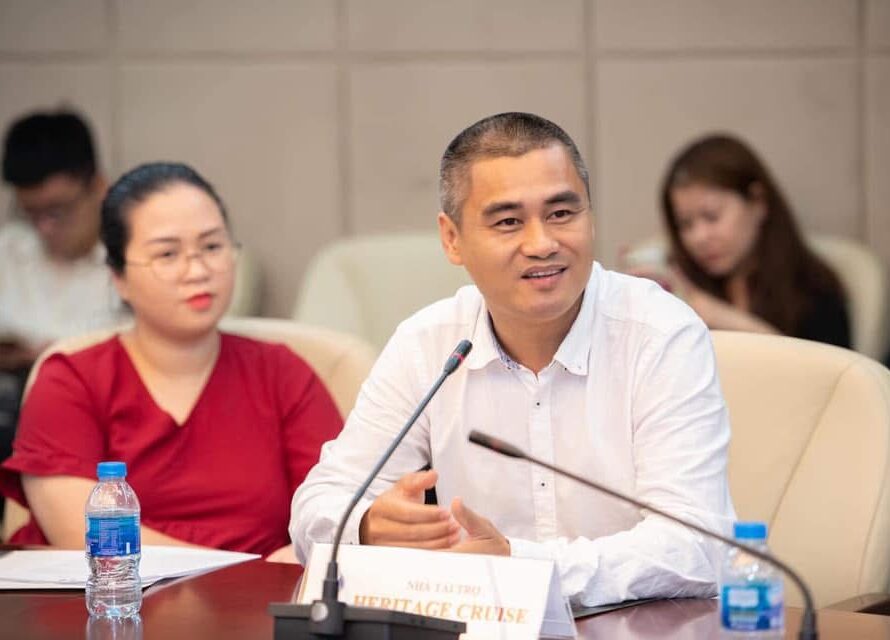


Dr. Phạm Hà, Founding President & CEO, LuxGroup®
In 1985, I travelled by ship from Hải Phòng to Sài Gòn. I remember arriving at Nhà Rồng Wharf. Years later, when I began to articulate the vision for Vietnam Waterways® 2045, that journey gave me a personal way to explain why the project mattered. I could picture guests discovering Vietnam from the water, learning how people settled along rivers, built trading ports, and made a living by the sea. But my memory could only take the idea so far. A guide would know which stories guests might remember. A captain would know where the itinerary needed more time. A local partner might question whether we were telling the right story at all.
That is the leadership problem I face as the founder and CEO of LuxGroup®. I can make an idea vivid enough for people to want to join it. I also have to make it safe for them to change it. As the business grows, those two abilities matter together. If my colleagues hear every idea as an instruction, the organisation may move quickly in the direction I set, while missing what others know. If every discussion stays open indefinitely, people stop knowing what they can act on.
Attracting gives people a reason to join
In Harvard Business School Online’s Power and Influence for Positive Impact, I recognised my default approach in two styles: attracting and bridging. Both are forms of pull influence. Attracting invites people toward a shared possibility. Bridging draws them into the work of deciding how to pursue it. In my self-assessment, bridging was my most frequently used direct style overall, followed by attracting. The scores describe habits. The more useful question is what those habits make possible for other people.
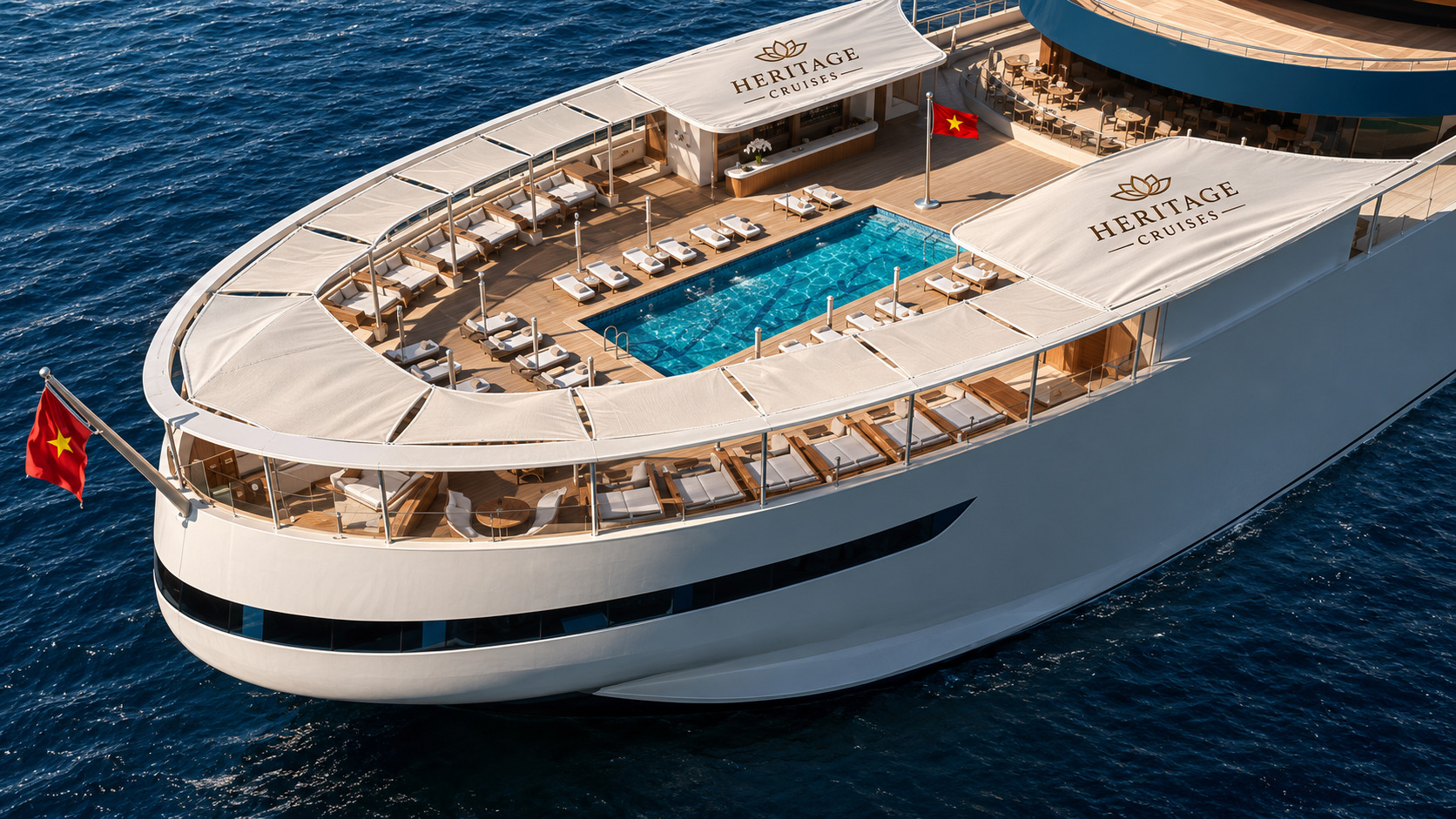
When I talk about Vietnam Waterways® 2045, I ask colleagues to imagine a guest standing on a vessel designed by Vietnamese people and seeing a familiar coastline from a different vantage point. From the founding legends and early river settlements to the trading ports and coastal communities of today, the story is larger than any one itinerary. On Heritage Cruises Bình Chuẩn®, guests can already encounter one part of that story through Phạm Lực’s paintings. A voyage can give someone time to look at a work of art and wonder what it reveals about the country they are travelling through. That is what I mean when I say, Luxury is Culture.
A vision becomes useful when people can find their own work in it. A guide can propose how to tell the story of a port. A chef can ask which regional dish belongs on that route and whose knowledge should inform it. A local partner can suggest who should tell the story and what visitors might misunderstand. My job is to make the opportunity clear enough that people can see where their contribution matters. The first sign that attracting has worked is that someone puts forward an idea of their own.
Bridging gives people room to change the plan
Imagine that sales wants to announce a departure date while operations is unsure the crew can deliver the new itinerary. The easy response for a founder is to restate the vision and ask everyone to rally around it. But enthusiasm will not resolve a staffing constraint. A better opening is to ask sales what it would lose by waiting and ask operations what it can confidently deliver by the proposed date. A smaller pilot, a narrower route, or a different departure date may emerge from that conversation.
Bridging only works if people know their answers can matter. When the founder asks, “What do you think?”, colleagues may hear, “Do you agree with me?” I can reduce that ambiguity by saying, “We are committed to testing the concept. The route and launch date are open. I want the team to recommend both, and I want to hear what would make you advise against launching.” It is easier to disagree when people know which questions are genuinely open. It also helps to say afterwards what changed because of their input.
This approach can feel slower in the meeting. The time is well spent if it brings a problem forward while the team still has options. The cost of missing that information often shows up later, when marketing has made a promise operations cannot keep, or when a local partner sees a finished itinerary and realises that the story has been told without them. Early involvement gives people a chance to improve the plan while it can still be improved.
Give pull influence a clear point of decision
My own development priority is to know when to shift styles. With direct reports, I am comfortable inviting ideas and connecting the work to a larger purpose. I can be more consistent about explaining why a decision was made and giving specific feedback while there is still time to act on it. Where the team needs a decision, I should say who owns it, what evidence matters, and when it is due. Where safety requires immediate action, a clear instruction is the responsible response. Where emotions run high, a pause can help if we agree on why we are stopping and when we will return.
One place to practise is a routine check-in about a reversible operating decision. I can ask the person closest to the work to propose a change, explain what trade-offs they considered, and decide within an agreed budget or operating limit. My part is to ask enough questions to understand their reasoning and to be explicit about the boundary. At the next check-in, we can discuss what happened and what they would do differently. If I take back the decision simply because they choose an option I would not have chosen, I teach them to wait for me next time.
Measure influence by what the team can do without you
LuxGroup® describes its ambition as a House of Small Giants. For me, that ambition has a practical test: can each business develop leaders who bring people together, make sound decisions within their remit, and learn from the results? In a project such as Vietnam Waterways® 2045, teams should be able to bring a route to life, challenge a weak assumption, and decide what to test next. The group can set standards for safety, capital, and guest experience while leaving room for local judgment. Those boundaries make it possible to delegate work and the authority to do it.
I still draw on the memory of arriving at Nhà Rồng when I explain why Vietnam’s waterways matter to me. The story can open a conversation. What I look for after telling it is a guide who proposes a better way to tell the story of a place, a captain who explains why a route should change, or a team that comes back from a pilot with evidence that overturns my first idea. Attracting gives people a reason to come aboard. Bridging gives them a hand in setting the course. The measure of my influence is whether they can keep making good decisions when I am no longer in the room.