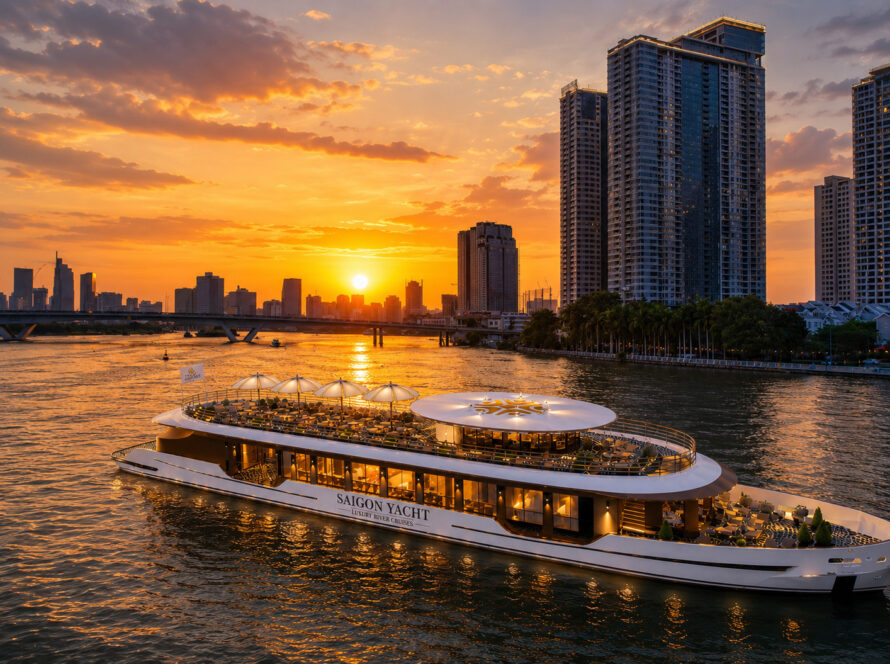



What expanding LuxGroup® into boutique cruising and managing storm disruptions taught me about leading when the stakes are personal.
By Dr. Phạm Hà, Founder, Chairman and CEO of LuxGroup®
A guest may spend months planning a trip to Vietnam. Hạ Long Bay is the experience they most look forward to. They book a two-night cruise and arrange flights, hotels and transfers around it. Then a typhoon approaches.
Forecasts can change. An official decision restricting departures may reach operators late. In the meantime, we face a difficult choice: warn guests while the risk is still uncertain, or wait for confirmation and risk leaving them too little time to change their plans?
This is more than an operational problem. It is a question of responsibility: Who bears the consequences if we wait too long?
I believe leadership is service. But service means more than delivering a beautiful journey when everything goes to plan. It also means telling the truth when the news is disappointing, protecting people when commercial interests are under pressure, and taking responsibility for how we respond to events beyond our control.
A vision needs conditions for delivery
When LuxGroup® expanded from private travel into boutique cruising, we saw an opportunity to share Vietnam’s maritime heritage with more guests. That vision gave the new business a clear purpose.
Yet an inspiring purpose can draw a leader’s attention towards the opportunity and away from the conditions required to deliver it. A vessel demands substantial investment. Operating on the water carries serious safety obligations. The guest experience depends on many teams, from sales and operations to the crew on board.
If I could revisit that decision, I would still pursue the opportunity. What I would change is the process. I would define financial, operational, service and sustainability thresholds earlier. I would ask our finance and operations teams, as well as frontline Luxers, to challenge my assumptions before we invested. Then I would review progress against those thresholds at agreed milestones.
The question I would put to the team is: At what pace can LuxGroup® expand into boutique cruising while protecting guest safety, service quality and the destinations we visit?
That framing does not weaken the ambition. It makes us examine whether we have the capacity to fulfil it.
Be transparent before you have certainty
During COVID-19, we could not give Luxers or guests a reliable date for when travel would resume. That uncertainty affected people’s work, income and long-awaited plans.
The experience changed my understanding of transparency. A leader does not need to have every answer before speaking. We do need to explain what we know, what remains uncertain and when people can expect another update. Luxers need honest information to care for guests. Guests need it to make decisions about their journeys. Many of our customers chose to postpone rather than cancel.
The same principle applies when a typhoon threatens a Hạ Long Bay cruise. Once there is a credible risk, we should warn guests before they travel to the port wherever possible, even if we cannot yet say whether the sailing will be cancelled. The warning must give them enough information to consider their options without presenting a changing forecast as a certainty.
Early communication may cause concern about a trip that ultimately goes ahead. Late communication may deprive guests of the ability to choose. I would rather give people information and time than preserve a temporary sense of reassurance for the business.
Consider everyone who bears the cost
I find it useful to examine such decisions through three lenses: economic, legal and ethical.
Economically, changing or cancelling a sailing creates costs for guests, the business and our suppliers. But proceeding in the face of serious safety concerns could cause far greater harm, including a lasting loss of trust.
Legally, a sailing must comply with maritime safety requirements and any departure restrictions issued by the authorities. We must also examine our booking terms and handle notifications, changes and refunds accordingly.
Ethically, guests need clear information to make informed choices. Crew members need safe working conditions. We have a duty to explain uncertainty honestly, even when the explanation may cost us bookings. Good practice means warning people early and preparing workable alternatives.
These lenses also remind me that the decision affects more than the guest waiting at the port. It affects Luxers, suppliers and the destination. I would struggle to call a decision successful if it protected our revenue by transferring all the cost and inconvenience to others.
Make it safe for people to speak up
Commercial pressure rarely arrives as a direct instruction to disregard safety. It is usually subtler: the team has worked hard to prepare this sailing; guests will be disappointed if we cancel; perhaps we should wait a little longer because the forecast might improve.
In that environment, employees may go along with a group decision despite their doubts. Someone may follow a manager’s direction without questioning it. Another person may assume a colleague has already warned the guests. Important information can fail to reach the people who need it.
A leader is responsible for reducing those risks. The captain and operations team need clear roles in assessing conditions. Frontline Luxers should be encouraged to share what guests are asking and what they see in practice. Everyone should know who makes the sailing decision, who communicates it and who supports guests when plans change.
The principle applies to investment decisions, too. As a founder, I must invite challenge, particularly from people whose expertise or proximity to the work gives them a perspective I lack. If colleagues feel safe only when they agree with me, I will hear less of the truth precisely when I need it most.
Turn responsibility into a plan
For a cruise threatened by a typhoon, I want a response that the team can carry out and later evaluate.
First, operations monitors forecasts and official notices while the captain assesses safety. When a credible risk emerges, guests and travel partners receive an initial warning and a stated time for the next update. We document the sailing decision against agreed safety criteria. If departure cannot proceed safely, we notify guests immediately and help them rebook, obtain a refund or consider a suitable alternative.
If an official restriction arrives after guests have reached the port, our responsibility does not end with a cancellation message. We should explain the decision in person and help them address accommodation, onward travel and the rest of their itinerary.
Afterward, I would review how long it took us to contact guests once the risk became credible; how many were reached before they travelled to the port; and how quickly we resolved rebooking or refund requests. Feedback from guests and crew would help us understand what those figures cannot show.
The question a leader must keep asking
Difficult decisions do not always offer an outcome that satisfies everyone. Cancelling a cruise may take away the experience a guest has travelled far to enjoy. Waiting may allow the sailing to go ahead, but it may also leave that guest unable to rearrange their trip. A leader has to weigh both possibilities and accept responsibility for the choice.
At LuxGroup®, our purpose is to deliver happiness through culture, travel and hospitality. That promise matters most on the days when we cannot deliver the experience as planned. We can still keep our promise to care for people, speak honestly and help them through the disruption.
When I face a hard decision, I want to ask: Who will bear its consequences? Have I listened to the people closest to the issue? Am I clear about what I do not know? Years from now, will I be able to explain openly why I acted as I did?
Leadership is service. Service means taking responsibility for people, for our promises and for the consequences of our decisions—even when events do not unfold as we hoped.