

Reawakening the River That Built Thang Long to Shape the Future of the Capital
For more than a thousand years, the Red River has been far more than the largest river in Northern Vietnam. It is the birthplace of Thang Long, the ancient imperial capital, a vital trade artery, a cultural landscape, and a silent witness to every chapter of Hanoi’s history.
From bustling river wharves, traditional craft villages, and vibrant riverside markets to the steamships that once navigated the waterways of Tonkin during the era of Bach Thai Buoi, the Red River stood at the center of economic and cultural life. Yet paradoxically, the river that helped create Hanoi has never fully emerged as a tourism brand commensurate with its historical significance, cultural richness, and natural beauty.
As Hanoi advances ambitious plans to redevelop both banks of the Red River and position the river economy as a new driver of growth, many experts believe the city has a unique opportunity to redefine the role of the river in its twenty-first-century development strategy.
Speaking with Hanoi Moi Newspaper, Dr. Pham Ha, Founding President and CEO of LuxGroup®, who has spent many years pioneering cultural, heritage, and waterway tourism in Vietnam, argues that the Red River is not only one of the country’s most underutilized tourism assets but also has the potential to become a new symbol of Hanoi’s future if guided by long-term vision and century-scale thinking.
“If Hoan Kiem Lake is the heart of Hanoi, then the Red River is the source that gives the city its soul. The future of Hanoi should not only look toward its streets, but also toward the river that gave birth to a thousand years of Thang Long civilization.”
— Dr. Pham Ha
Question 1: From the perspective of Vietnam’s waterway tourism sector, how do you assess the untapped potential of cultural and scenic tourism along the Red River? Why has such an iconic river yet to develop a tourism brand worthy of its significance?
Dr. Pham Ha: I believe the Red River is one of the most strategically important yet underappreciated tourism assets not only in Hanoi but in Vietnam as a whole.
Looking back at history, Hanoi was born from the river. Long before modern boulevards, public squares, and urban districts emerged, the Red River served as the city’s gateway to trade, its economic lifeline, and the cultural backbone of Thang Long. When the French redesigned Hanoi in the late nineteenth century, they deliberately oriented much of the city toward the river. Ports, warehouses, railway stations, wholesale markets, and major commercial streets all developed in close connection with river commerce.
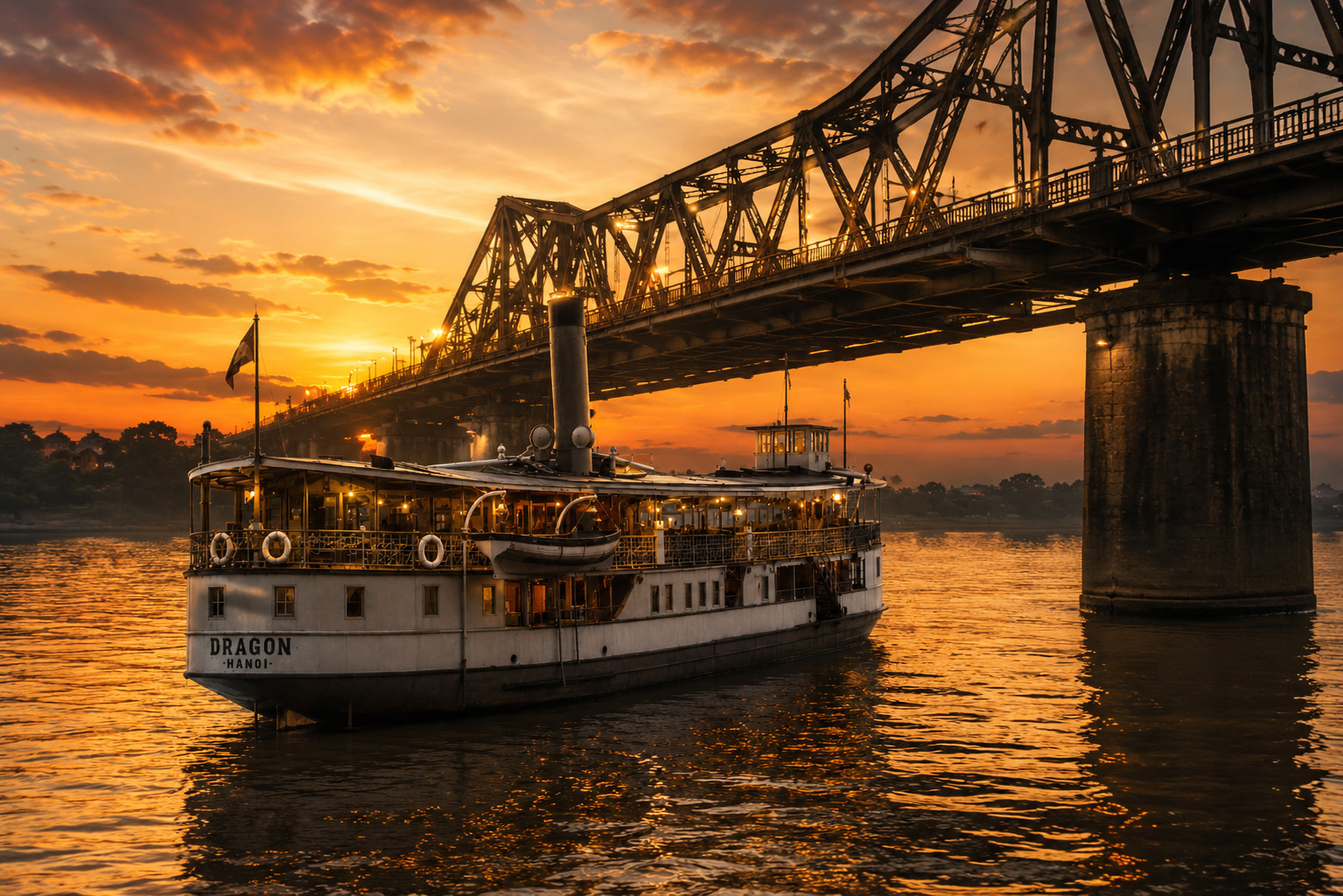
In the early twentieth century, entrepreneur Bach Thai Buoi built his famous shipping fleet, creating a vibrant era of river trade throughout Tonkin. From Hanoi, vessels connected Hai Phong, Nam Dinh, Ninh Binh, Viet Tri, Yen Bai, and the northern highlands. Historic postcards reveal a bustling river city comparable to many European cities of the same period. Some French visitors even described Hanoi as a “Little Paris on the Red River.”
Throughout history, great civilizations have emerged along great rivers. The Nile shaped Egypt, the Thames helped build London, the Seine defines Paris, and the Hudson contributed to the rise of New York. The Red River has played a similar role for Hanoi. It is not merely a river but a living current of history, culture, and national identity stretching back more than a millennium.
To understand Hanoi, one must first understand the river. The Red River is the cultural lifeline of Thang Long–Hanoi, where traditional craft villages, folk beliefs, performing arts, commerce, and community life have flourished for centuries. Some international scholars even regard the Red River Civilization as one of Asia’s most distinctive cultural landscapes.
Yet for decades, the river has largely been viewed through the lenses of flood control, water management, and transportation. While Paris transformed the Seine into the heart of urban tourism, London elevated the Thames into a national icon, and Bangkok successfully branded the Chao Phraya as a global tourism destination, Hanoi has yet to create a compelling tourism ecosystem around its own river.
In my view, the challenge is not a lack of resources but a lack of vision. We have not yet told the story of the Red River Civilization through the language of modern tourism. Once the river becomes a stage for culture, gastronomy, heritage, history, and contemporary creativity, it can emerge as one of Hanoi’s defining symbols in the twenty-first century.
Question 2: Many global cities thrive on river economies and cruise tourism. What major investments and developments are needed to transform the Red River into a new destination for river cruising and the nighttime economy?
Dr. Pham Ha: In my view, Hanoi needs a comprehensive river economy strategy with a vision extending at least fifty to one hundred years into the future, rather than a collection of isolated short-term projects.
The first priority is infrastructure. The river should be approached as a green boulevard running through the heart of the city. Hanoi needs modern marinas, international-standard piers, public passenger terminals, waterfront plazas, pedestrian promenades, cycling routes, and seamless transportation links connecting the Old Quarter, West Lake, and cultural attractions along the riverbanks.
I am particularly excited by the prospect of linking West Lake and the Red River into a continuous day-and-night tourism corridor. Visitors could move effortlessly between lakeside experiences, river cruises, cultural attractions, dining venues, and entertainment districts in a single twenty-four-hour journey.
The second priority is product development. Travelers today do not buy boats; they buy stories. Hanoi needs cultural cruises that bring a thousand years of Thang Long history to life, journeys that connect visitors with riverside craft villages, and experiences that celebrate the entrepreneurial legacy of Bach Thai Buoi and the rich trading history of the Red River.
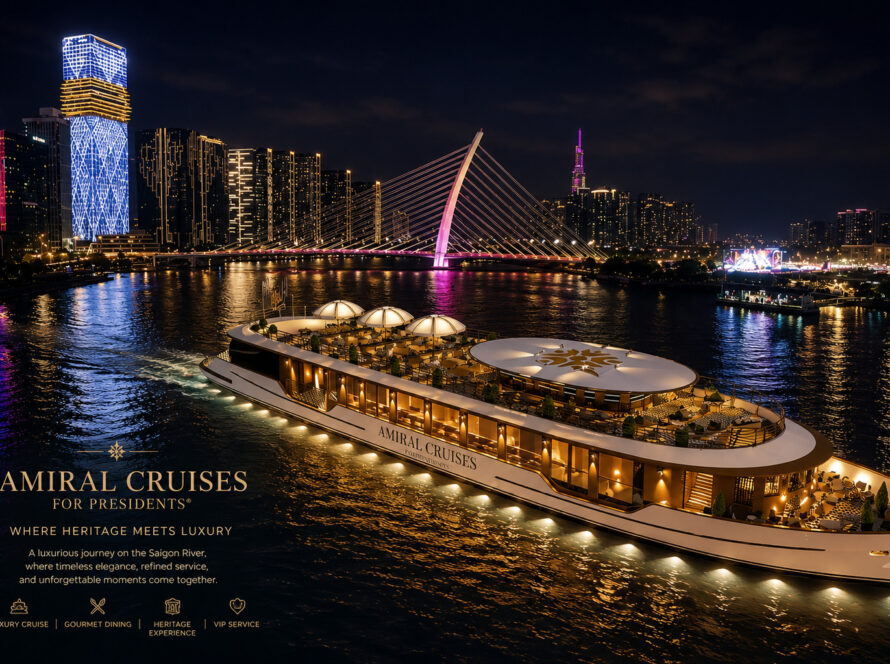
I can envision fine-dining cruises beneath Long Bien Bridge, contemporary artistic performances inspired by Red River Civilization, river journeys to Bat Trang pottery village, and sunrise or sunset cruises becoming signature experiences of the capital.
The third priority is the nighttime economy. From 6 p.m. until 6 a.m., the Red River has the potential to become Hanoi’s largest cultural and entertainment zone. Its location away from densely populated residential areas provides opportunities for cultural festivals, light shows, open-air performances, night cruises, creative markets, and international events while maintaining harmony with urban life.
The ultimate objective is to create an ecosystem where visitors can explore, learn, dine, celebrate, create, and spend throughout the evening and into the night. That is the foundation of a successful experience economy and a thriving nighttime economy.
Question 3: If the public spaces and mid-river islands along the Red River are developed thoughtfully, how could they transform tourism flows and visitor behavior in Hanoi?
Dr. Pham Ha: I believe this could become one of the most transformative tourism projects of the twenty-first century in Hanoi.
Today, most international visitors spend the majority of their time around Hoan Kiem Lake, the Old Quarter, and a handful of traditional heritage sites. While these attractions remain invaluable, the range of experiences available to visitors is still relatively limited.
If the mid-river islands and waterfront areas are developed into large-scale cultural, ecological, and creative parks, Hanoi would gain an entirely new destination within the city itself. It would become a place not only for sightseeing but also for recreation, sports, cultural engagement, artistic expression, and community interaction.
I am particularly hopeful that the areas surrounding both ends of Long Bien Bridge can evolve into a living museum of Northern Vietnamese culture. Traditional craft villages could be recreated, artisans could demonstrate their skills, and local cultural performances could take place daily. Meanwhile, Long Bien Bridge itself could be elevated into a twenty-four-hour cultural landmark rather than remaining merely a transportation structure.
Such a transformation would fundamentally reposition Hanoi. Instead of serving primarily as a gateway to Ha Long Bay, Ninh Binh, or Sapa, the capital would become a complete destination in its own right, offering a sophisticated blend of culture, nature, heritage, creativity, and entertainment.
Global tourism trends are shifting from sightseeing to meaning-making. High-value travelers increasingly seek authentic, sustainable, and immersive experiences. The Red River offers Hanoi a unique opportunity to meet that demand.
I believe international visitors could realistically extend their average stay by one to two additional days, while overall tourism spending and destination value would increase significantly. More importantly, Hanoi’s image could evolve from that of a heritage city into a globally recognized creative river city.
Question 4: From a tourism business perspective, what are the main policy obstacles preventing greater investment along the Red River? How might the current administrative reforms help address them?
Dr. Pham Ha: Based on my experience, investors do not lack capital. What they need is confidence.
The greatest obstacle today is the lack of coordination in planning and governance along the Red River corridor. Waterway tourism projects typically involve multiple authorities responsible for planning, transportation, construction, environmental protection, culture, and tourism. This complexity often leads to lengthy approval processes and significantly increases investment risk.
At the same time, river tourism infrastructure—whether cruise vessels, marinas, waterfront developments, or cultural attractions—typically requires investment horizons of twenty to thirty years or more. Investors need confidence that long-term plans will remain stable, transparent, and predictable.
I am optimistic that the current two-tier administrative model can help reduce bureaucratic overlap, accelerate decision-making, and provide greater autonomy at the local level. Combined with one-stop approval mechanisms and pilot policies designed specifically for the river economy, Hanoi could unlock a new wave of private-sector investment in waterway tourism, waterfront development, and the nighttime economy.
More than a century ago, French planners recognized the strategic value of the Red River when they designed Hanoi to face the water. Today, Vietnam possesses greater resources, technology, expertise, and international experience than ever before.
What Hanoi needs is not simply a five-year plan or a ten-year strategy. It needs a one-hundred-year vision for the Red River.
If we think boldly and act decisively, the Red River can become a defining symbol of Hanoi’s future—just as the Seine defines Paris, the Thames defines London, and the Chao Phraya defines Bangkok.
The story of Hanoi began with the river. Its next chapter may well depend on rediscovering it.
“The future of Hanoi should not only face its streets. It must also embrace the river that gave birth to a thousand years of Thang Long civilization.” — Dr. Pham Ha