

Chairman and CEO of LuxGroup® on Politburo Resolution No. 26-NQ/TW, dated 22 August 2026
“For Vietnamese tourism to take off, we need not only more visitors, but greater value from every journey.”
1. Resolution No. 26-NQ/TW aims to make tourism a spearhead economic sector by 2030, with a focus on high-quality tourism and attracting high-spending, longer-staying visitors. What are your thoughts on this ambition amid intensifying competition among destinations?
Dr Pham Ha:
As Vietnam enters a new era, agriculture, technology and tourism are three areas in which the country possesses strong competitive advantages. Tourism, in particular, is an “export industry at home”: it generates foreign currency, creates employment, stimulates multiple sectors and connects Vietnamese culture with the world.
The Politburo’s adoption of a dedicated resolution demonstrates the strategic importance attached to tourism. The breakthrough in Resolution No. 26-NQ/TW lies not only in its 2030 targets—45–50 million international arrivals, 160 million domestic trips, US$80–90 billion in tourism receipts and a direct contribution of 10–12% to GDP—but, more importantly, in its shift from volume-led growth towards quality, added value, sustainability and competitiveness.
Instead of asking only, “How many visitors does Vietnam receive?”, we should ask four deeper questions: How long do they stay? How much do they spend, and on what? How much value remains within the Vietnamese economy and local communities? And what story will they tell about Vietnam when they return home?
If visitor numbers rise while stays remain short, spending remains low, products remain repetitive and value leaks out of the domestic supply chain, we cannot call that a high-quality tourism economy.
Beautiful scenery alone is no longer sufficient. Many countries offer attractive beaches, mountains, hotels and infrastructure. Today’s competition is about destination governance, connectivity, convenience, depth of experience and the strength of the national brand.
Vietnam should not compete with Thailand, Singapore or Indonesia by copying them or charging less. We must compete through what belongs uniquely to Vietnam: our historical depth, cultural diversity, river civilisation, craft villages, arts, cuisine and, above all, our people.
High-end travellers are not simply people who buy expensive products. They value time, privacy, authenticity, personalisation and meaningful experiences. Luxury tourism, therefore, is not about applying gold plating to an ordinary product. It is about creating experiences that are rare, profound, personal and emotionally resonant. At LuxGroup®, we express this through our philosophy: “Luxury is Culture®.”
To encourage longer stays and higher spending, Vietnam must move beyond selling fragmented services and build a complete ecosystem encompassing aviation, visas, transport, accommodation, cruising, cuisine, arts, shopping, wellness, MICE and the night-time economy.
Hanoi, Ho Chi Minh City and Da Nang should not develop as three isolated “islands”. They should serve as gateways distributing visitors across their surrounding regions. The Resolution’s ambitions will be achievable when Vietnam attracts not only more visitors, but creates greater value from every visitor, every night stayed and every resource employed.
2. The Resolution emphasises high-quality, smart, green, creative and culturally distinctive tourism with strong added value. Drawing on LuxGroup’s experience, particularly its Lux Cruises heritage fleet, how should Vietnam’s culture, history and heritage be incorporated into tourism products?
Dr Pham Ha:
What resonates with me most is the Resolution’s recognition of culture as the foundation of tourism, with identity and experience quality as sources of competitive advantage. This is how Vietnam can move beyond competing on price.
However, culture should not be reduced to a short performance, decorative costumes or several dishes bearing local names. Culture must become the soul and structure of the entire experience.
A credible cultural tourism product should answer five questions: Whose story is being told? What is its essential historical and cultural value? How will visitors see, hear, touch and participate in it? How will the local community benefit? And how will the experience contribute to heritage conservation?
At LuxGroup®, we do not begin by asking, “What kind of ship should we build?” We begin by asking, “What story about Vietnam should this ship tell?”
Heritage Cruises’ Heritage Bình Chuẩn® was inspired by the patriotic entrepreneur Bạch Thái Bưởi and the historic Bình Chuẩn vessel—a symbol of Vietnamese aspirations to master their own waterways and commercial destiny. Its name, architecture, art, library, cuisine and storytelling all convey a sense of heritage, maritime history and national pride.
Emperor Cruises® interprets the aesthetics and lifestyle of the Nguyễn dynasty through a contemporary language. We do not reconstruct the past as an artificial period stage. We distil its refinement, grace, privacy and appreciation of art into an experience relevant to today’s traveller.
With Amiral Cruises for Presidents®, we tell the story of Ho Chi Minh City from its river. One hundred and fifteen years ago, the vessel Amiral Latouche-Tréville departed Nhà Rồng Wharf carrying a young kitchen assistant who was setting out to find a path towards national liberation. A journey along the river and out to sea became the beginning of a far greater historical journey.
Our Sông Show® – The River Remembers uses earth, water, fire, humanity and time as layers of artistic language. The river is presented not merely as scenery, but as a witness to trading vessels, generations of settlers, departures and homecomings.
Selected works by artist Phạm Lực, presented through Lux Arts Collection® and aboard the vessel, will allow guests to approach history emotionally, rather than through information alone. The ship then becomes more than transport or a restaurant: it becomes a living museum and cultural stage.
To do this responsibly, businesses must invest in research and collaborate with historians, artists, artisans, conservation specialists and local communities. Every story must have a credible foundation and be interpreted engagingly without distorting history.
I often say: A resource becomes a product through creativity; a product becomes an experience through storytelling; and an experience creates lasting value only through emotion and responsibility.
Tourism contributes to heritage conservation only when the communities that own that heritage participate in—and benefit from—its development.
3. LuxGroup is expanding its experience ecosystem through Amiral Cruises for Presidents®. How should tourism businesses innovate to meet increasingly diverse international demand while creating products with a distinct Vietnamese identity?
Dr Pham Ha:
Innovation does not mean following every international trend. It means identifying unmet needs and using new technologies, design approaches and business models to transform local resources into new value.
Today’s international travellers are highly diverse. Some seek privacy; others are interested in history, art, cuisine, wellness or nature. Multigenerational families require tailored journeys, while MICE groups increasingly want to combine business objectives with authentic local experiences. The “one product for everyone” model is no longer sufficient.
I believe tourism businesses must innovate in six areas.
First, move from products to experiences. A dinner cruise should not be merely a menu and a table. It should be a journey with an opening, a climax and a conclusion—combining scenery, music, art and storytelling.
Second, move from service delivery to emotional design. Guests may forget the name of a dish, but they remember being addressed by name, listened to and served at their own pace. Our philosophy is: Present, personal, unrushed.
Third, innovate through data. Artificial intelligence can help businesses understand behaviour, personalise journeys, forecast demand and manage capacity. Yet technology cannot replace hospitality: AI may help us understand guests faster, but only people can touch people’s hearts.
Fourth, green development must go beyond reducing single-use plastic. Businesses should measure energy, water, waste, emissions, supply-chain impact, local livelihoods and cultural conservation. LuxGroup® follows its 5G strategy—Global, Green, Digital, Pride and Happiness. Lux Travel DMC Asia® is Travelife Certified, while the wider ecosystem is working towards Net Positive 2030.
Fifth, innovate through collaboration. No single company can create an entire destination experience. Tour operators, transport providers, hotels, cruise companies, artisans, farmers, artists, museums and communities must work together.
Sixth, innovate without losing identity. We may adopt international technology, standards and management practices, but the content must retain a Vietnamese soul.
Amiral Cruises for Presidents® is being developed as an urban river experience combining cuisine, art, history, entertainment, events and MICE. Its purpose is not simply to transport guests along the Saigon River, but to help them understand how the city was born, traded and developed from the water.
In the future, these journeys could connect Ho Chi Minh City with Củ Chi, the Mekong Delta and Cambodia. If properly planned, river tourism can redistribute visitor flows, reduce pressure on roads, extend stays and broaden the tourism economy.
This is also the foundation for LuxGroup®’s Vietnam Waterways® 2045 vision: creating an integrated water-based tourism ecosystem under a Vietnamese brand.
Vietnamese identity does not come from adding a traditional motif to a modern product. It comes from building the entire product upon Vietnamese history, aesthetics, knowledge and ways of life.
4. LuxGroup was recognised by HR Asia as one of the Best Companies to Work for in Asia 2025. As the Resolution calls for higher-quality tourism human resources, what roles do people and corporate culture play? How is LuxGroup developing employees with professional expertise, language skills and the ability to communicate Vietnamese culture?
Dr Pham Ha:
In tourism and hospitality, people do not simply operate the product—people are the product.
A beautiful ship can be rebuilt, a luxury hotel can be copied and a technological process can be purchased. Genuine care, cultural understanding and the ability to tell a story with pride, however, cannot be created overnight. That is the difference between true hospitality and the mechanical delivery of a service.
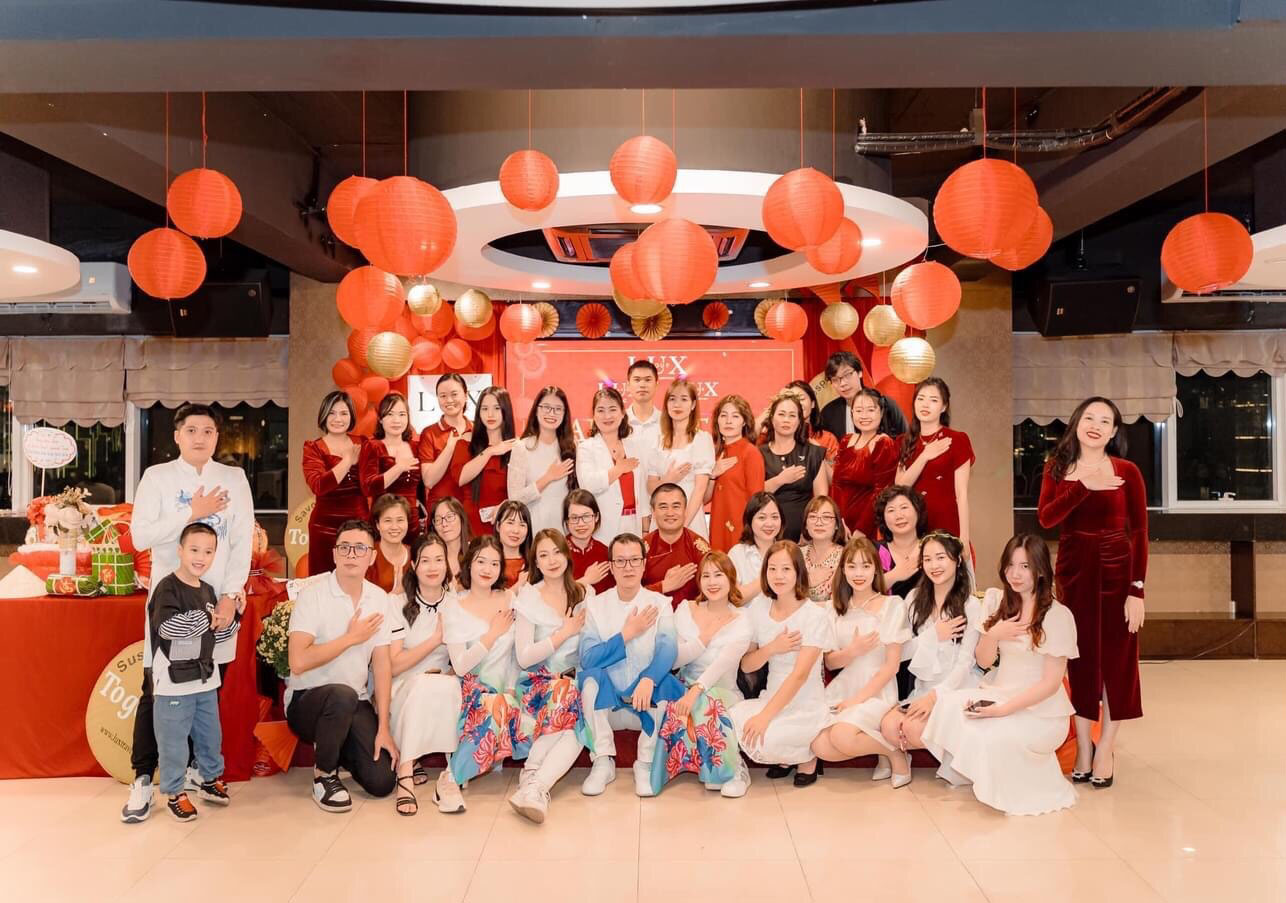
Being named among the Best Companies to Work for in Asia 2025 was meaningful recognition. More important, however, is our responsibility to create an environment in which every Luxer is respected, continuously learning, empowered and able to see the value they create.
LuxGroup® follows its People First® philosophy in pursuit of Delivering Happiness®. We cannot ask employees to make guests happy if they themselves do not feel valued by the organisation. Loyal guests begin with an engaged team.
We develop our people across four levels:
- Professional capability: service standards, safety, operations and problem-solving.
- Global communication: languages, cultural intelligence and understanding international guests.
- Culture and storytelling: knowledge of history, cuisine, art, waterways and destinations, enabling employees to bring heritage to life.
- Self-leadership: ownership, responsibility, continuous learning and the authority to resolve guest issues.
Our people development is anchored in HEARTS™: Human First, Excellence Always, Authenticity, Responsibility, Togetherness and Sustainability. These values form the heart of our organisation and are translated into our service philosophy, Touching Hearts®.
LuxGroup® combines classroom learning, workplace practice, field visits and lessons from guest feedback. Our goal is for every Luxer to become not simply a service provider, but a cultural ambassador for Vietnam.
At the national level, Vietnam needs genuine cooperation among government, educational institutions and businesses. The output of education becomes the input of business. Students should learn through practical work while still at school; businesses should help design curricula, provide internships and assess capabilities; and the State should establish professional standards and promote lifelong learning.
Vietnam does not lack intelligent, kind and ambitious young people. When properly trained, inspired and empowered, they will become the greatest competitive advantage of Vietnamese tourism.
Hardware creates comfort; software creates service; but “heartware”—the human heart—creates loyalty.
5. What policies and forms of cooperation do you expect to help businesses invest in premium tourism products, expand internationally and strengthen Vietnam’s competitiveness?
Dr Pham Ha:
A far-reaching resolution creates change only when it is translated into clear institutions, defined responsibilities, adequate resources and measurable results.
Vietnam must first define its essential competitive advantage. Is it culture, nature, cuisine or people? I believe our strength lies in the combination of all four—and in our ability to tell Vietnam’s story consistently through the modern language of tourism.
I would highlight eight priorities.
First, establish a “one-stop, single focal point” mechanism. A river tourism project may involve transport, construction, culture, environmental authorities, fire safety, port management and local government. A one-stop mechanism does not mean lowering standards; it means assigning one coordinating authority and making requirements, timelines and responsibilities transparent.
Second, complete the legal framework for emerging models, including overnight cruises, night-time berths, the night-time economy, performances aboard vessels, seaplanes, wellness tourism and digital platforms. Controlled regulatory sandboxes could be introduced in major tourism centres.
Third, plan waterway tourism as an integrated system. Building more vessels is not enough. Vietnam needs ports, piers, routes, destinations, overnight berths, transport connections and supporting services.
Fourth, continue reforming visa and aviation policies. Visas should be convenient, stable and competitive, while more direct flights are needed from high-spending, longer-staying markets.
Fifth, modernise national tourism promotion. Instead of spreading resources thinly, Vietnam should define its priority markets, customer segments, flagship products, messages and performance indicators. Big data and AI should be used to understand travellers and measure conversion.
Vietnam must answer one question consistently: “What will the world remember us for?” A national tourism brand is not merely a logo or slogan. It is a promise delivered through visas, airports, transport, public cleanliness, service quality and environmental stewardship.
Sixth, establish meaningful public–private cooperation. The State should create plans, infrastructure, standards, data systems and the national brand. Businesses should invest in products, technology and markets. Communities should contribute local knowledge, participate in the value chain and share in its benefits. Private businesses must be recognised as part of national capability, not merely as policy implementers.
Seventh, quantify green tourism standards. Energy, water, waste, emissions, local procurement, working conditions and conservation contributions should be measured. Genuine green investment should be supported through appropriate credit, land and tax policies.
Eighth, move beyond tourism planning based on administrative boundaries. Visitors do not care when they cross from one province into another; they care whether their journey is seamless, convenient and compelling. Each locality needs a distinctive product, but it must form part of an interregional journey and a unified national brand.
Implementation should therefore be measured not only through arrivals and revenue, but also by average length of stay, visitor spending, return rates, satisfaction, value retained locally, quality employment, emissions per visitor and contributions to cultural and natural conservation.
Only when we measure correctly can we manage effectively.
Resolution No. 26-NQ/TW has opened a new development space for Vietnamese tourism. To create a strong “formation of cranes” capable of taking flight, Vietnam needs an enabling State, innovative local authorities, pioneering businesses and participating communities that share in the benefits.
Our ambition should not merely be to become a destination with large visitor numbers. Vietnam should become a destination that is loved and respected—one that creates high value and possesses an identity that cannot be replaced.
When culture becomes soft power, people become our competitive advantage and businesses are empowered to pioneer, tourism can truly become a spearhead of Vietnam’s economy in the new era.