

How a Bronze Portrait of Bạch Thái Bưởi Found Its Way Home
Some encounters in life appear accidental. In reality, they are often the culmination of years of preparation, conviction, and providence.
Vietnamese people have a saying: “A treasured artifact finds its worthy guardian.” I have always believed that objects carrying the soul of a nation’s history are never acquired by money alone. They ultimately belong to those who possess the love, understanding, and sense of responsibility to preserve them for future generations.
My journey to bring home the original bronze portrait of Bạch Thái Bưởi—Vietnam’s pioneering entrepreneur and patriotic businessman—was one such journey.
I have never considered myself simply an art collector. What I seek is not rarity for its own sake, but stories that deserve to be told again. More than twenty years of building cultural tourism experiences, creating story-driven cruises, and preserving Vietnam’s heritage have led me to many extraordinary encounters. None, however, has moved me as profoundly as my pursuit of this remarkable sculpture.
The story began in 2019, while I was designing and launching Heritage Bình Chuẩn Cruises, a boutique cruise inspired by Bình Chuẩn, the first modern Vietnamese-built ship commissioned by Bạch Thái Bưởi in the early twentieth century. Coincidentally, I was born exactly one hundred years after him, and Heritage Bình Chuẩn was launched exactly one century after his legendary vessel.
The deeper I researched his life, the more I realized that Bạch Thái Bưởi represented far more than entrepreneurial success. He demonstrated that business could become an act of patriotism. He transformed commerce into a vehicle for national confidence, proving that Vietnamese entrepreneurs could compete on equal terms and build enterprises worthy of their own country.
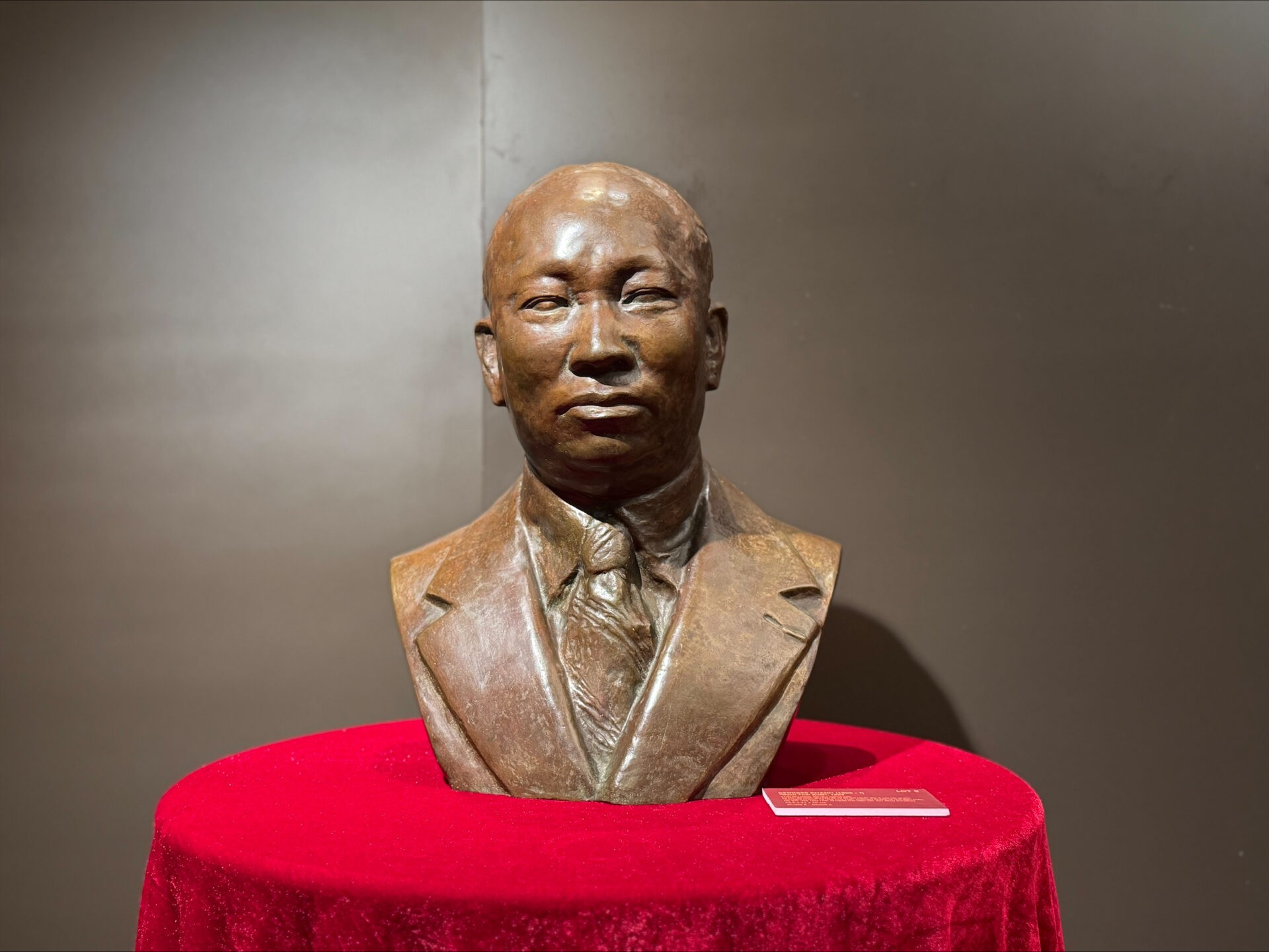
During my research, the late collector Dương Phú Hiến introduced me to an exceptionally rare bronze portrait of Bạch Thái Bưởi. On June 27, 2019, I held the sculpture in my hands for the first time. Present that day were descendants of the Bạch family, all of whom understood that we were looking at more than an artwork—we were looking at a piece of Vietnam’s entrepreneurial history.
I wanted to acquire it immediately, yet the timing was not right.
Soon afterward, Mr. Hiến passed away. I believed that opportunity had disappeared forever. Although I continued telling Bạch Thái Bưởi’s story aboard Heritage Cruises, I always felt that history and I still had an unfinished appointment.
Then, in early 2025, fate intervened once again. At an exhibition of celebrated Vietnamese painter Phạm Lực, I met collector Trần Ngọc Lâm. He had recently experienced Heritage Bình Chuẩn and admired the large bronze tribute to Bạch Thái Bưởi displayed aboard the ship.
During our conversation, he revealed that he owned the original bronze portrait created in 1934 by Georges Khánh, a graduate of the École des Beaux-Arts de l’Indochine. I immediately knew it was the very sculpture I had encountered years earlier.
We did not begin by discussing price.
We began by discussing purpose.
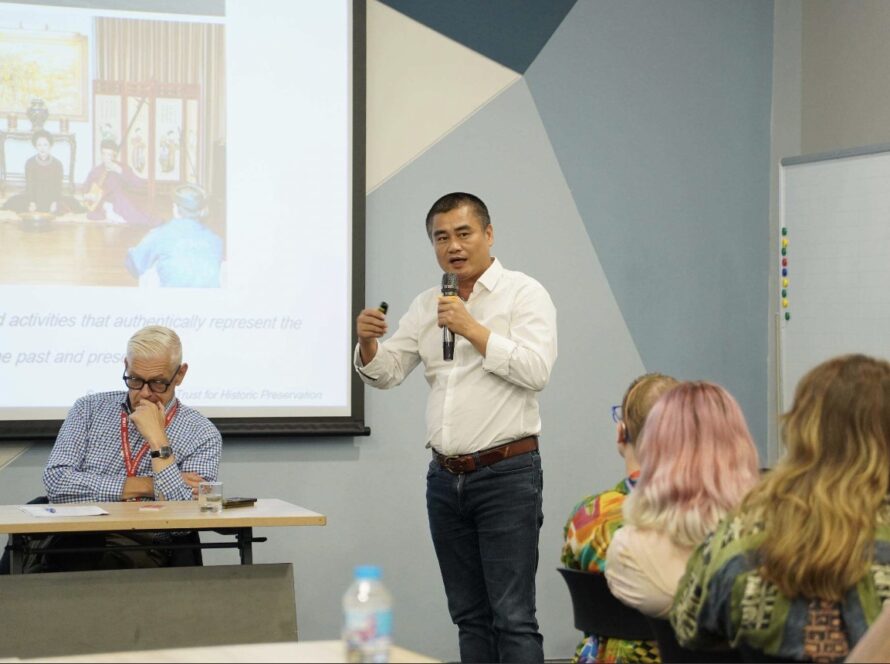
On July 22, 2025—the anniversary of Bạch Thái Bưởi’s passing—we spent hours talking about entrepreneurship, history, and responsibility. Before I left, he said something I have never forgotten:
“I am not looking for someone to buy this sculpture. I am looking for someone who can continue its story.”
That sentence changed my understanding of collecting forever.
A heritage object does not simply need an owner.
It needs a steward.
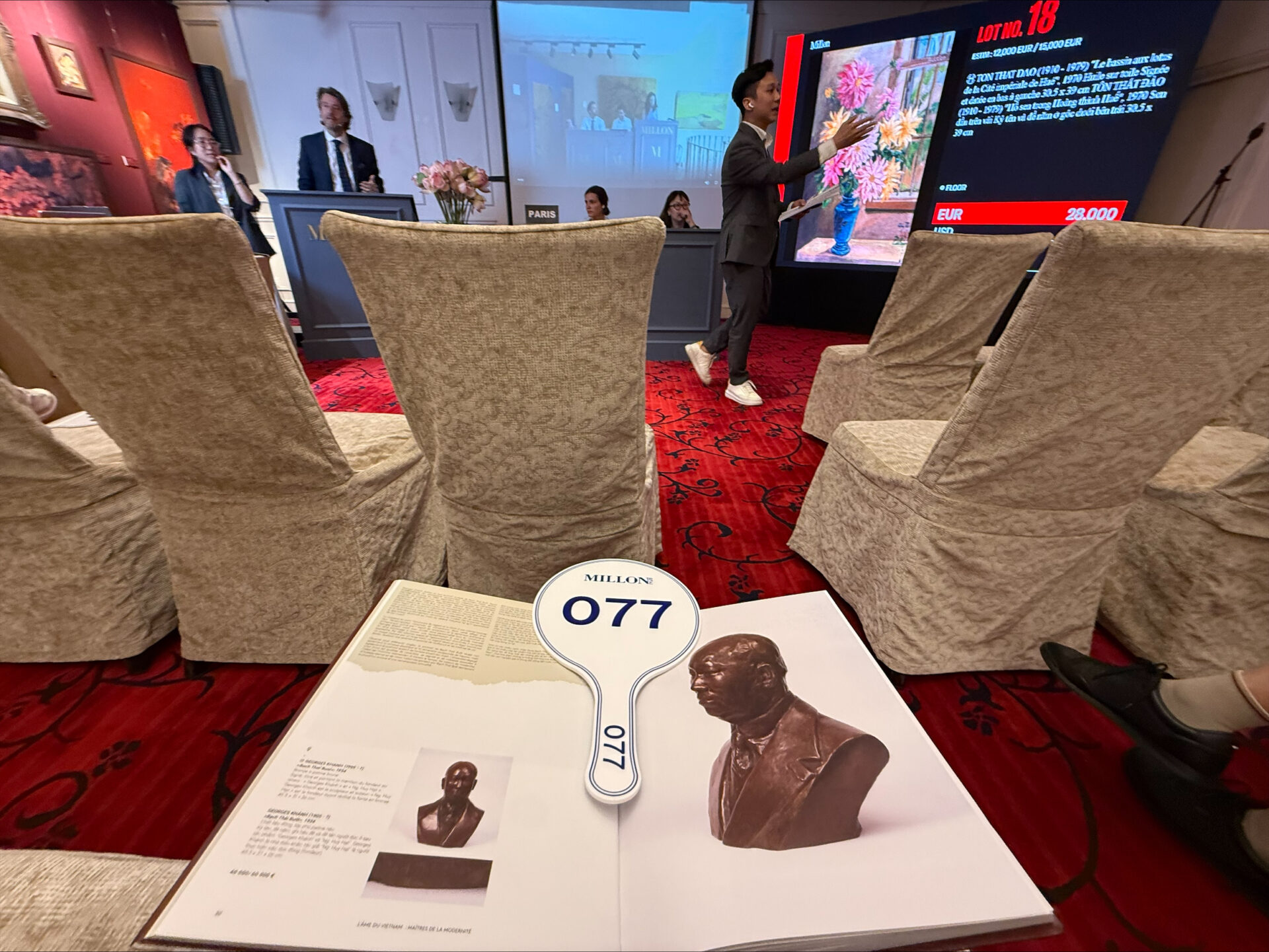
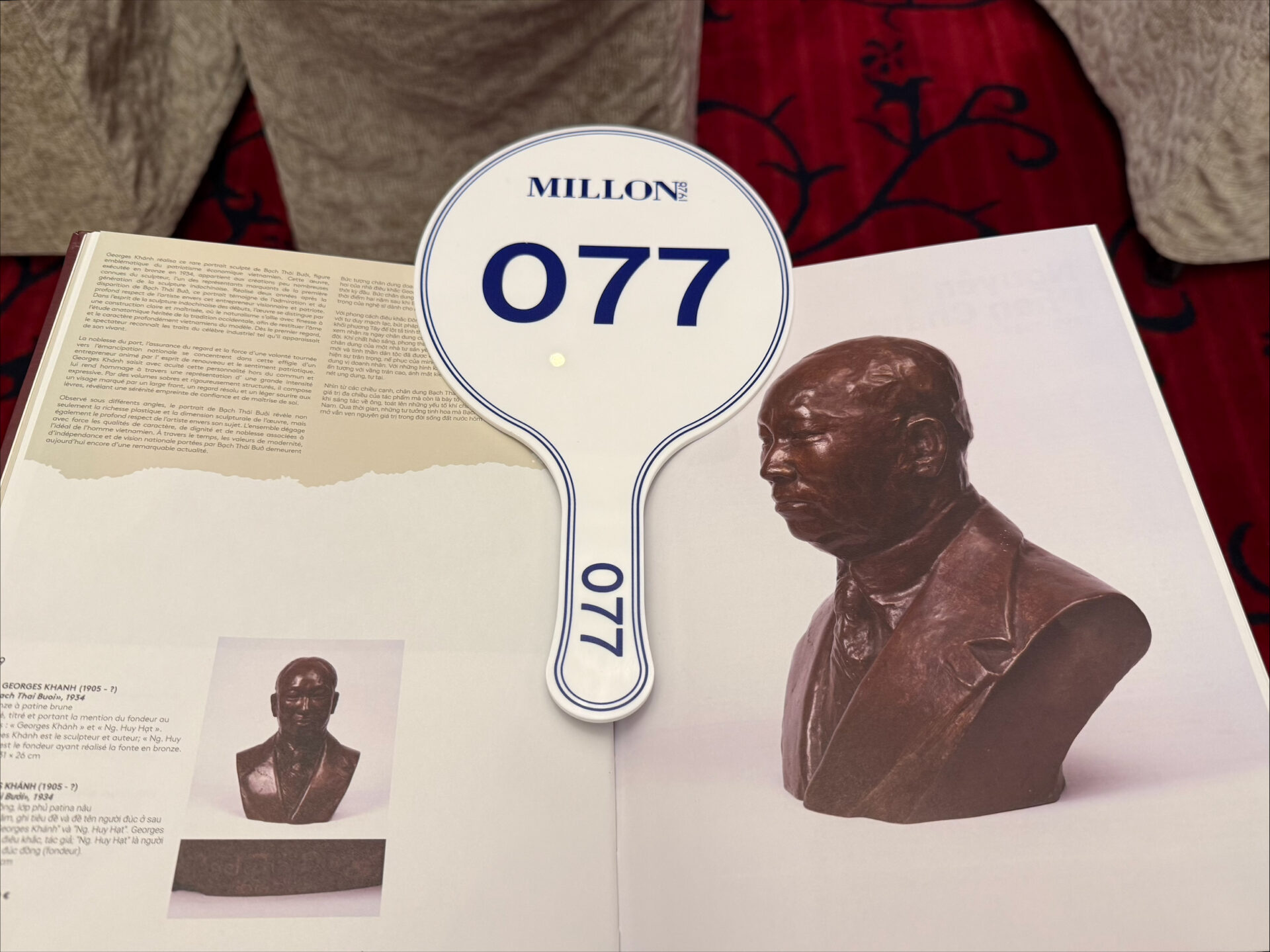
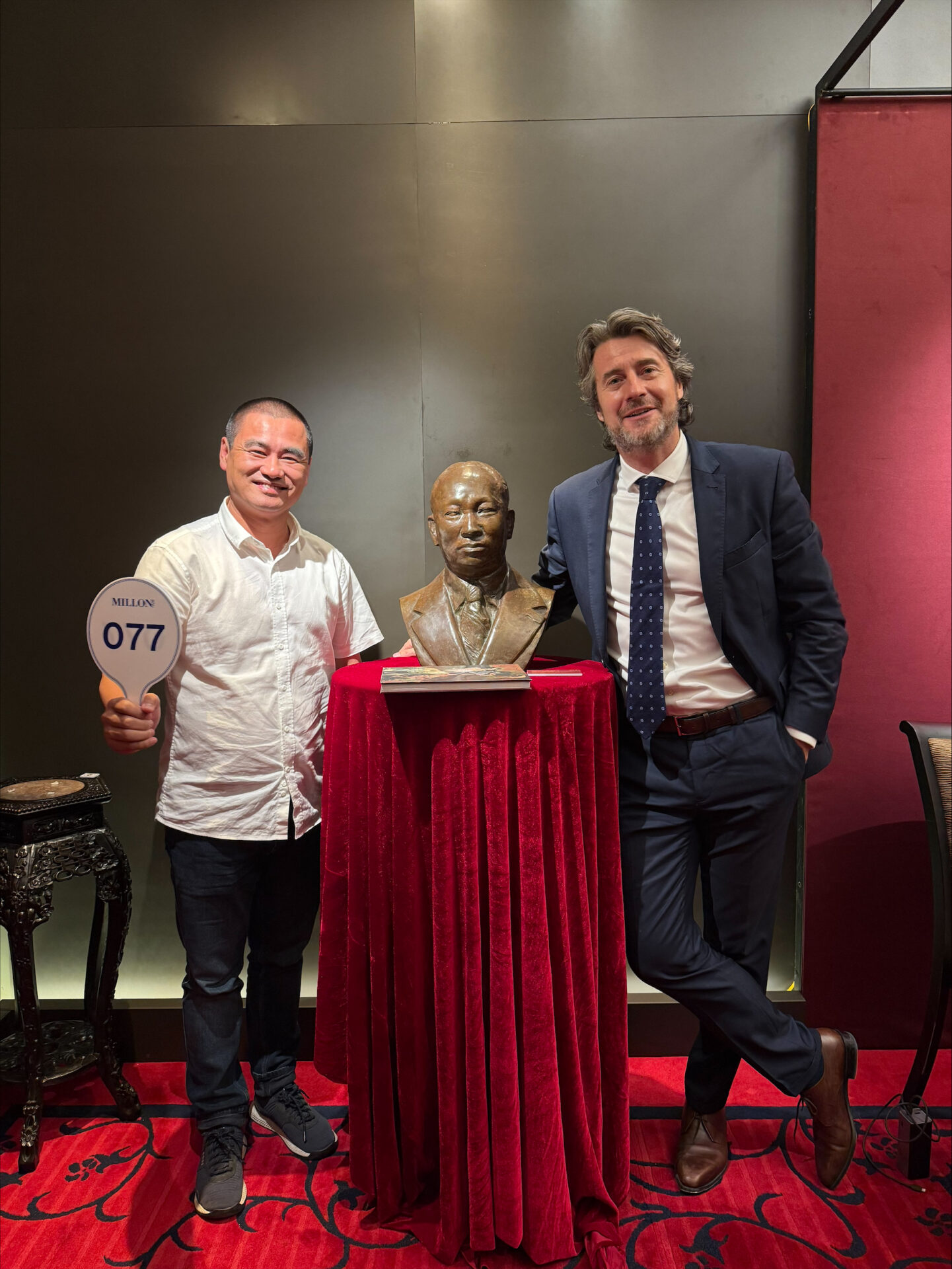
Exactly one year later, on June 27, 2026, Facebook unexpectedly reminded me of the photograph taken seven years earlier when I first held the sculpture. On that same day, I opened the catalogue for Millon’s Vietnamese Art Auction in Paris.
There it was.
Lot No. 9.
“Bạch Thái Bưởi,” created by Georges Khánh in 1934.
I knew immediately that if I missed this opportunity, it might never come again.
I registered for the auction not because I wished to own a rare work of art, but because I could not accept seeing such an important piece of Vietnam’s entrepreneurial heritage remain abroad.
When the auctioneer’s hammer finally came down, my first thought was not about the price I had paid.
It was simply:
“At last, I’ve brought him home.”
Created only two years after Bạch Thái Bưởi’s death, the bronze portrait is one of the earliest and rarest sculptural representations of a Vietnamese entrepreneur. More than an artistic masterpiece, it embodies the spirit of an entire generation that believed business could serve both prosperity and national dignity.
After the auction, Alexandre Millon congratulated me, remarking that the sculpture deserved to stand in a museum.
I thanked him sincerely.
Yet I quietly thought that the finest place for this sculpture was not behind glass, but where thousands of visitors each year could encounter its story and rediscover the ideals it represents.
Today we speak constantly about innovation, digital transformation, artificial intelligence, and sustainability. Yet every nation’s future is ultimately built upon its memory.
We often discuss financial capital, technological capital, and human capital.
There is another form of capital that deserves equal attention:
Heritage capital.
Financial capital creates growth.
Technology creates productivity.
Heritage creates identity.
Innovation helps us move faster.
Memory reminds us why we are moving at all.
Bạch Thái Bưởi did not merely build ships.
He built confidence.
He proved that entrepreneurship could become an expression of national purpose.
A century later, that lesson remains remarkably relevant.
As LuxGroup develops Heritage Cruises, Emperor Cruises, Amiral Cruises, and pursues the vision of Vietnam Waterways 2045, we are not attempting to recreate history.
We are simply continuing a journey that pioneers like Bạch Thái Bưởi began.
The Vietnamese proverb says:
“A treasured artifact finds its worthy guardian.”
I believe it has an unwritten second half.
A worthy guardian is not the wealthiest person. A worthy guardian is the one who understands the artifact’s meaning and accepts the responsibility of passing that meaning on to future generations.
That, ultimately, is the highest calling of entrepreneurship—not merely to create wealth, but to preserve memory, inspire society, and leave a legacy that endures far beyond business itself.