

More than carrying guests across the water, Amiral Cruises opens a journey through time—connecting central Ho Chi Minh City with Cu Chi, Can Gio, Vung Tau, the Mekong Delta and Cambodia through culturally immersive boutique experiences.
There are many ways to discover Saigon.
You can walk along its illuminated boulevards, explore its lively neighbourhoods or look down upon the constantly moving city from the top of a skyscraper.
But there is another way—slower, deeper and more evocative.
It begins by returning to the river.
From the deck of an Amiral cruise, Saigon is no longer merely a skyline of rising towers. It becomes a story unfolding across the water, where the past, present and future are reflected in every bend of the Saigon River.
Amiral Cruises’ itineraries are designed around cultural values and meaningful experiences, linking central Ho Chi Minh City by water with the Cu Chi Tunnels, the Can Gio Mangrove Biosphere Reserve, Vung Tau, the Mekong Delta and, eventually, Cambodia.
This is more than a journey from one place to another.
It is a journey from the city into nature, from the present into history, and from simply seeing a destination to understanding the spirit of the land.
According to Dr Tran Ngoc Chinh, Chairman of the Vietnam Urban Planning and Development Association, the Saigon River winds through Ho Chi Minh City like a “ribbon of silk”.
Amiral—a name born from history
The name Amiral Cruises was not chosen by coincidence.
On 5 June 1911, the young Nguyen Tat Thanh left Saigon from Nha Rong Wharf aboard the Amiral Latouche-Tréville, beginning his journey to seek a path towards national liberation.
It was not merely a ship leaving a port. It marked the beginning of a historic journey that would help transform the destiny of Vietnam.
Exactly 115 years later, on 5 June 2026, the Amiral Cruises brand was officially launched.
If the Amiral Latouche-Tréville once carried a young Vietnamese man from the Saigon River into the wider world in search of a future for his country, Amiral Cruises today carries international travellers back to the river to discover Vietnam more deeply.
One ship marked the beginning of a journey in search of the future.
A new brand has been created to retell the past, bring the present to life and connect heritage with tomorrow.
Amiral, therefore, is more than the name of a cruise brand. It is a tribute to a historic milestone, to the wharf that witnessed a defining departure and to the river that has carried generations of human stories.
Beginning at Nha Rong Wharf, Amiral Cruises continues telling the story of the river: the people who lived along its banks, the trading ports that once flourished here, the meeting of Eastern and Western cultures, and the heritage that remains visible within a city continually reinventing itself.
Amiral was born from the river’s memory, carries the stories of its people and looks towards the future of its heritage.
Amiral Cruises does not simply carry guests across the water. It takes them through layers of time.
It connects not only destinations, but also past and present, heritage and creativity, Vietnam and the world.
Every river holds a memory.
Every ship has a journey.
And every meaningful journey deserves to begin with a story.
The river does more than flow through the city
The Saigon River has long played an essential role in the city’s economy, transportation system and urban landscape. Yet it does more than move goods, connect regions or define the physical shape of the metropolis.
The river carries memory.
Its waters have witnessed early settlers, merchant ships, encounters between East and West, and the transformations that have shaped a city with a history spanning more than three centuries. Every wharf, riverside building and bend in the river can reveal another chapter of that story.
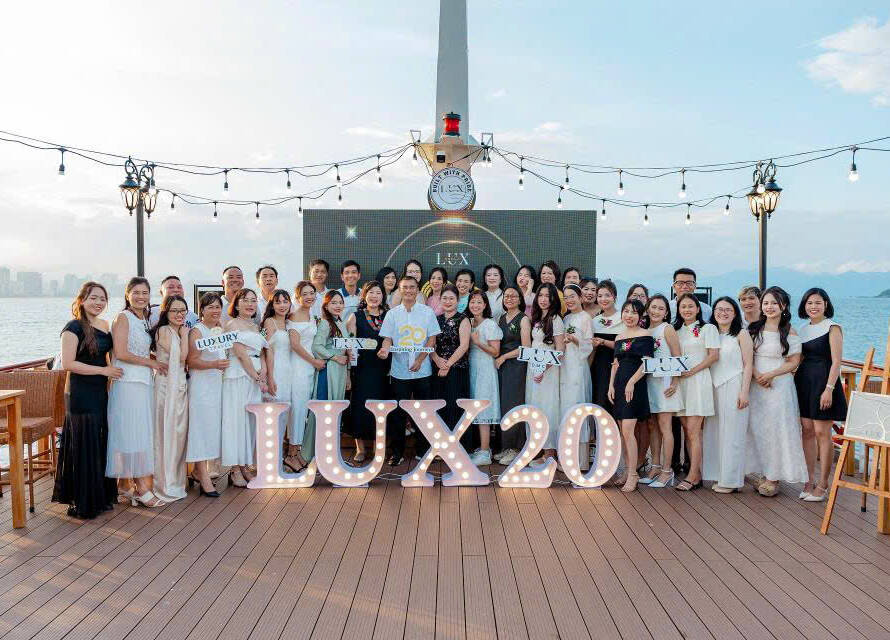
According to Pham Ha, Founder and Chairman of LuxGroup, few cities in the world possess a river that meanders through and remains as closely connected to the urban structure as the Saigon River.
“The river does more than connect Ho Chi Minh City with neighbouring areas and regions. It carries within it the history, culture and evolution of a city that has always looked towards the future,” he told Doanh Nghiep Viet Nam.
In support of Ho Chi Minh City’s vision for water-oriented urban development, LuxGroup has chosen to invest in the Saigon River, using its landscapes, history and riverside life as the foundation for meaningful tourism experiences.
“We will develop short, medium and longer journeys in the future. Our ambition is not merely to take visitors along the river, but to help them understand how the river helped create the city,” said Ha.
LuxGroup plans to invest approximately US$38 million, equivalent to nearly VND1 trillion, in developing a fleet of 10 boutique vessels for river and coastal journeys across southern Vietnam.
It is an investment in a fleet, but more importantly, it is an investment in telling the story of Ho Chi Minh City from the river.
Culture as the soul of the experience
Unlike mass-market cruise models, Amiral Cruises follows a boutique approach, limiting each journey to fewer than 100 guests.
Smaller does not mean less.
Fewer guests create greater privacy.
Slower travel enables deeper appreciation.
Less noise allows culture to be heard.
A deliberately intimate scale enables Amiral Cruises to personalise its service, refine every detail and position culture at the heart of the experience rather than using it merely as decoration.
According to Ha, Amiral Cruises is being developed around the philosophy:
“Slow travel in a vibrant city.”
That apparent contradiction is precisely what makes the experience compelling.
As cities move faster, travellers increasingly need space to slow down.
As itineraries become more crowded, experiences must become more meaningful.
And when people can take thousands of photographs, the rarest luxury is a moment powerful enough to remain in the memory.
Instead of encouraging guests to visit as many places as possible, Amiral Cruises invites them to experience each place more deeply.
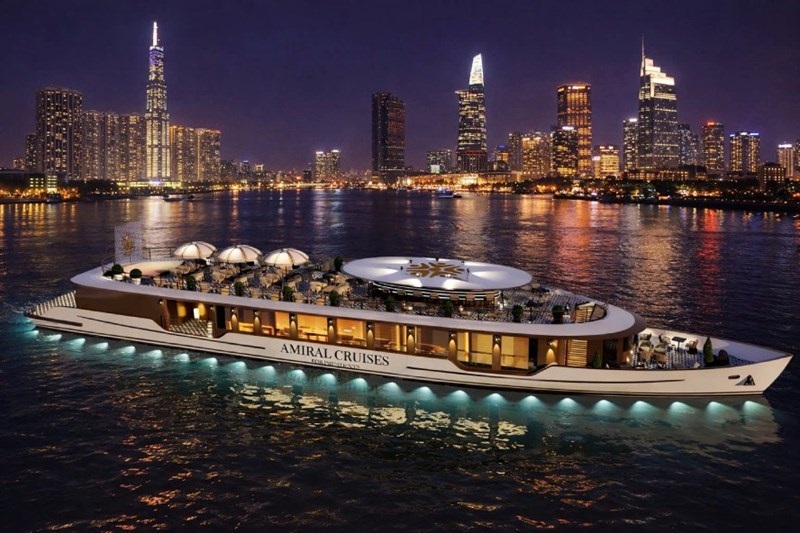
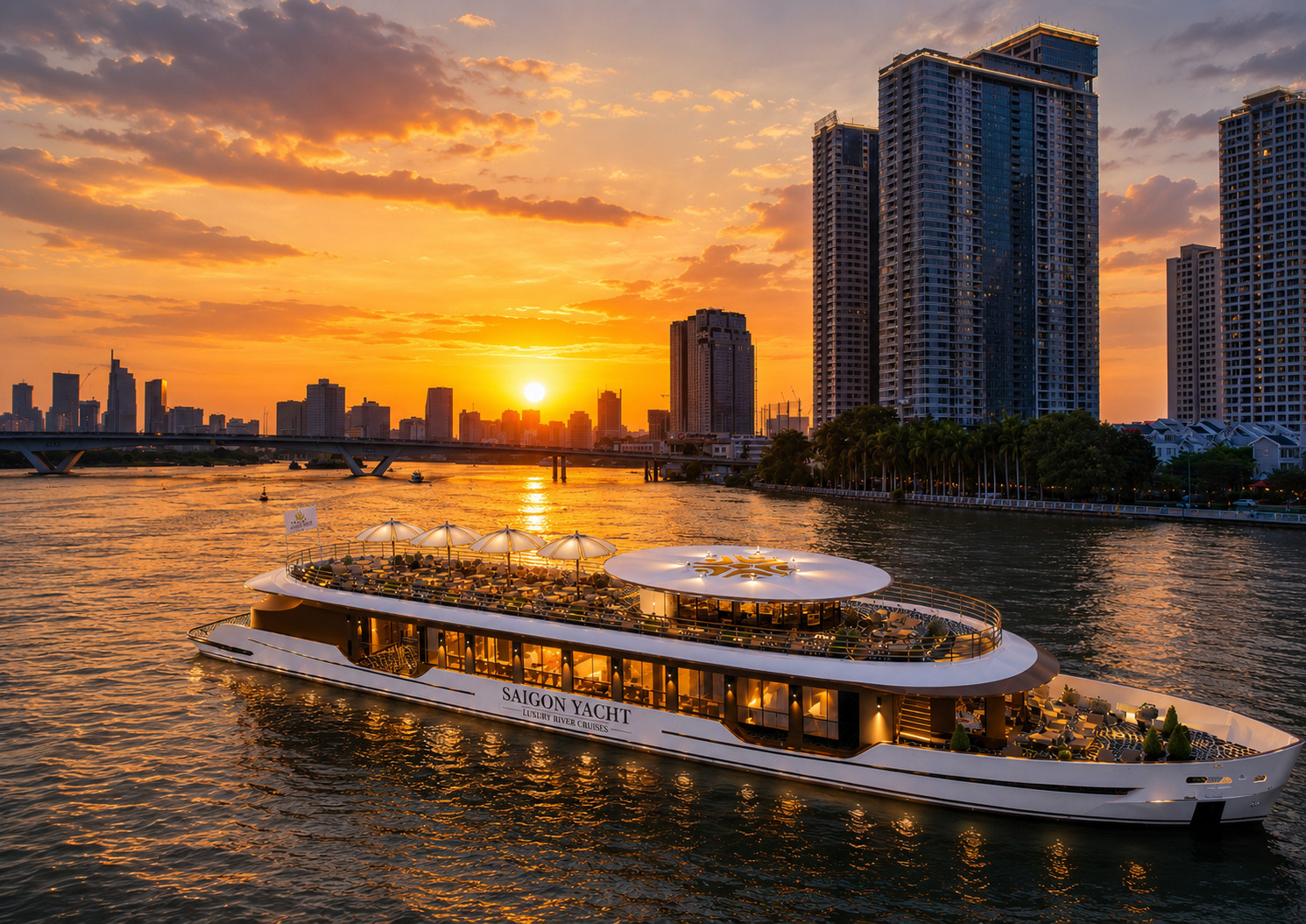
On board, guests may enjoy sunset cocktails, listen to jazz in the river breeze, discover refined cuisine and watch the illuminated skyline ripple across the water.
A signature cultural performance, Sông Show, is being created as an artistic storytelling experience connecting past and present. Through music, imagery and live performance, it will evoke more than 300 years of the city’s river heritage.
Guests will not simply see Saigon.
They will hear Saigon.
They will taste Saigon.
They will feel Saigon.
And when the voyage ends, they will carry home a Saigon of their own.
From a cruise to an interconnected value chain
“We are not simply offering transportation to a destination. We are creating a river tourism product through both cultural and economic perspectives,” Ha explained.
Along the journey, guests will witness not only the transformation of Ho Chi Minh City, but also an interconnected chain of history, culture, ecology, art, cuisine and local identity.
A voyage may begin amid a modern urban centre, pass historic landmarks, enter the mangrove forests of Can Gio, continue towards the coastline of Vung Tau, follow the waterways of the Mekong Delta and eventually reach Cambodia.
Places that may appear separate on a conventional itinerary become connected by a single, continuous current.
That current is the river.
With its artistic architecture and refined interiors, Amiral Cruises is conceived as more than a means of transportation or a floating entertainment venue. Each vessel is envisioned as a moving work of art, harmonising with the urban riverscape while expressing the cultural heritage of the Saigon River.
Amiral Cruises does not merely travel along the river; it tells the river’s story.
It does not merely connect destinations; it connects layers of memory.
It does not merely create a voyage; it creates a new way of experiencing the city.
A multidimensional journey
Amiral Cruises is scheduled to welcome guests from Bach Dang Wharf in November 2026. Its itineraries will progressively connect central Ho Chi Minh City with the Cu Chi Tunnels, the Can Gio Mangrove Biosphere Reserve, Vung Tau, the Mekong Delta and Cambodia.
During 2027–2028, LuxGroup plans to introduce a 50-cabin overnight vessel accommodating approximately 100 guests on one- to three-night journeys. Departing from the historic Nha Rong–Khanh Hoi port area, the itineraries will connect Saigon, Can Gio, Vung Tau, the Mekong and Cambodia.
In the longer term, the company aims to establish a river, coastal and maritime tourism network linking southern Vietnam with Con Dao and other island destinations.
“This connectivity creates a multidimensional experience in which the city, history and nature converge within one continuous journey, rather than appearing as a series of disconnected destinations in a conventional itinerary,” Ha said.
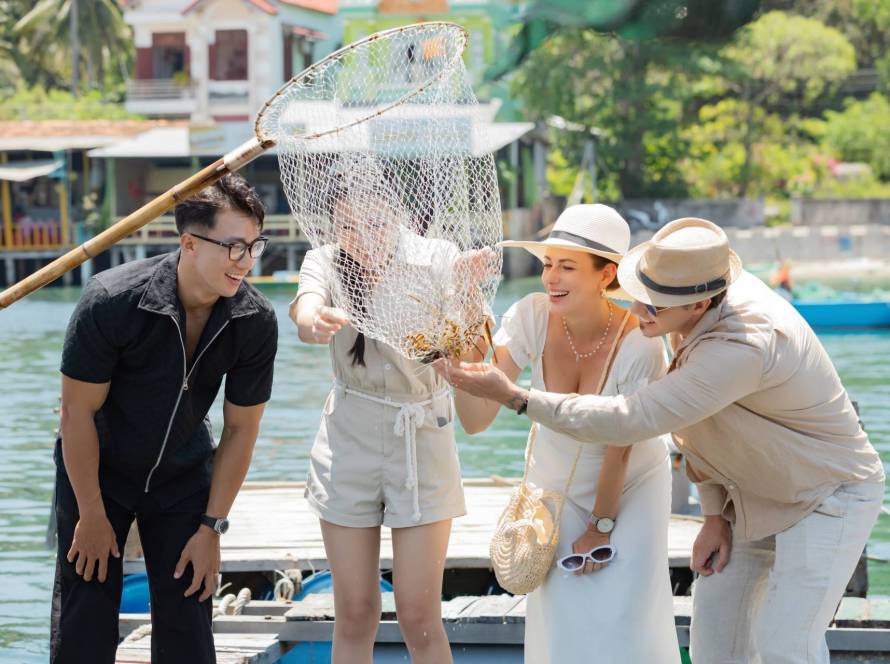
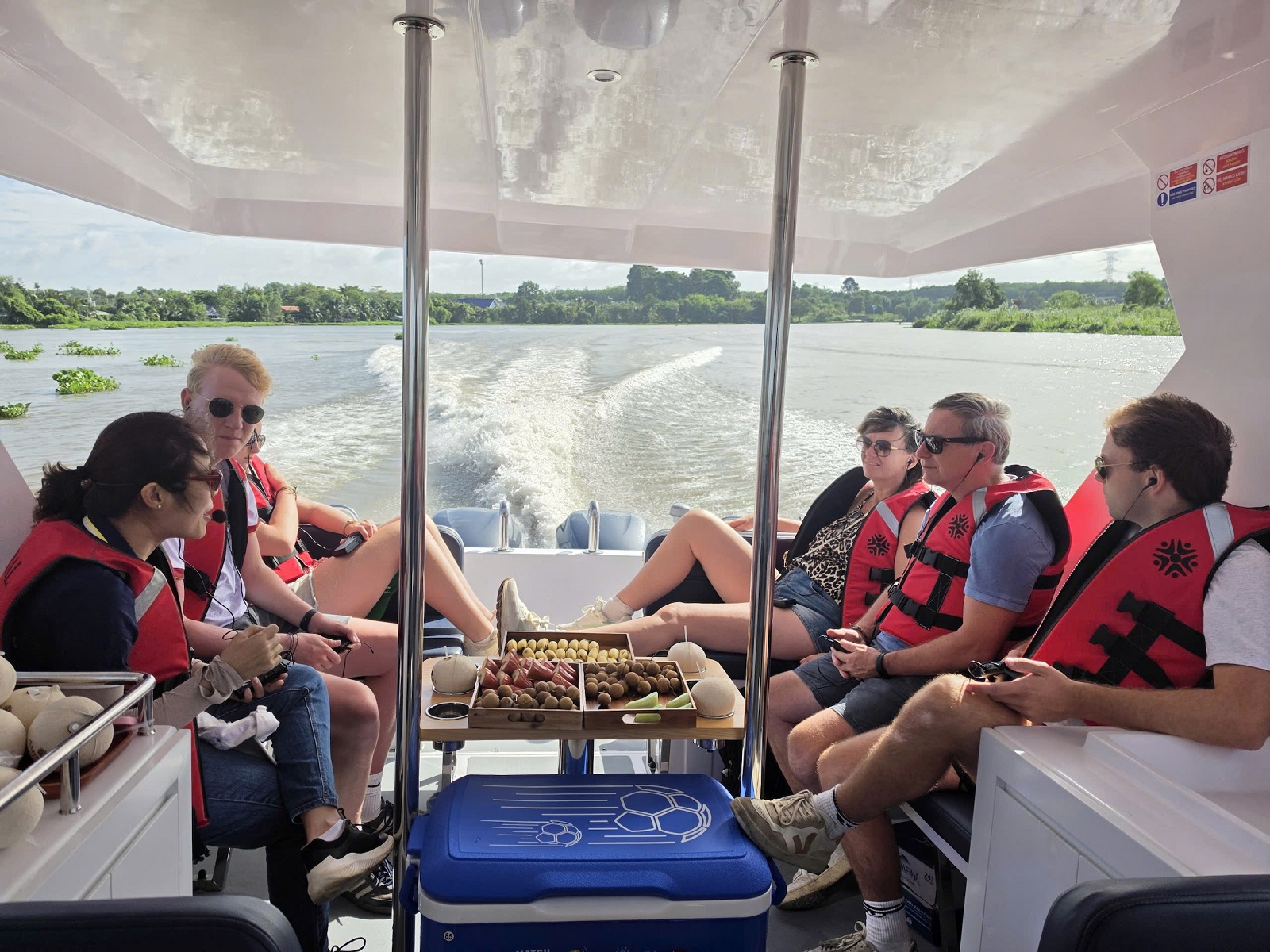
LuxGroup currently operates Amiral Explorers, a fleet of 35-seat speedboats offering daytime journeys from central Ho Chi Minh City to the Cu Chi Tunnels by river.
The route allows international visitors to leave the city centre by water, observe the changing landscapes along the riverbanks and arrive at one of Vietnam’s most significant historical destinations.
Distance is not measured only in kilometres.
It can also be measured through changes in scenery, rhythms of life and the layers of history encountered along the way.
Opening another gateway to Ho Chi Minh City
Nguyen Thi Thanh Thao, Head of Tourism Resource Development Planning at the Ho Chi Minh City Department of Tourism, welcomed both the service quality and the cultural narrative developed by the company.
“This product will contribute to diversifying Ho Chi Minh City’s river tourism portfolio while expanding the choices available to mid-range and premium travellers within the city’s new development landscape,” she said.
According to Thao, Ho Chi Minh City has already established a wide range of river tourism experiences, including short sightseeing routes along the Saigon River, speedboats, river buses, floating restaurants and evening cruises.
Medium-distance routes connect the city with Can Gio, Cu Chi and Vung Tau, while longer journeys lead towards the Mekong Delta and Cambodia. These routes continue to attract both domestic and international visitors.
The city currently offers more than 90 tours, routes and tourism products associated with its river corridors. Its diverse fleet includes river buses, speedboats, wooden vessels, restaurant cruises, boutique yachts and overnight riverboats.
In the coming years, Ho Chi Minh City aims to develop additional riverside entertainment areas, night-time economy activities, shopping centres and visitor experiences.
Returning the river to its rightful place
For many years, the Saigon River has often been treated as scenery behind the city.
But a river that helped give birth to a city should not remain in the background.
The river can become the city’s new frontage.
It can expand the possibilities for tourism, the night-time economy and regional connectivity.
It can also become a pathway into the cultural depth of Ho Chi Minh City.
For Amiral Cruises, every voyage begins not with the question:
“How many places can our guests visit?”
It begins with another:
“What will remain with them after the journey ends?”
Perhaps it will be a sunset over the river.
A jazz melody as the city begins to glow.
A 300-year-old story retold upon the water.
Or the moment travellers realise that, within a metropolis in constant motion, another Saigon—quieter, deeper and more reflective—is waiting to be discovered.
Saigon is not shaped only by its streets.
It is also shaped by its river.
And sometimes, to understand a city, we must leave its streets, step aboard a vessel and listen to the memories flowing through it.