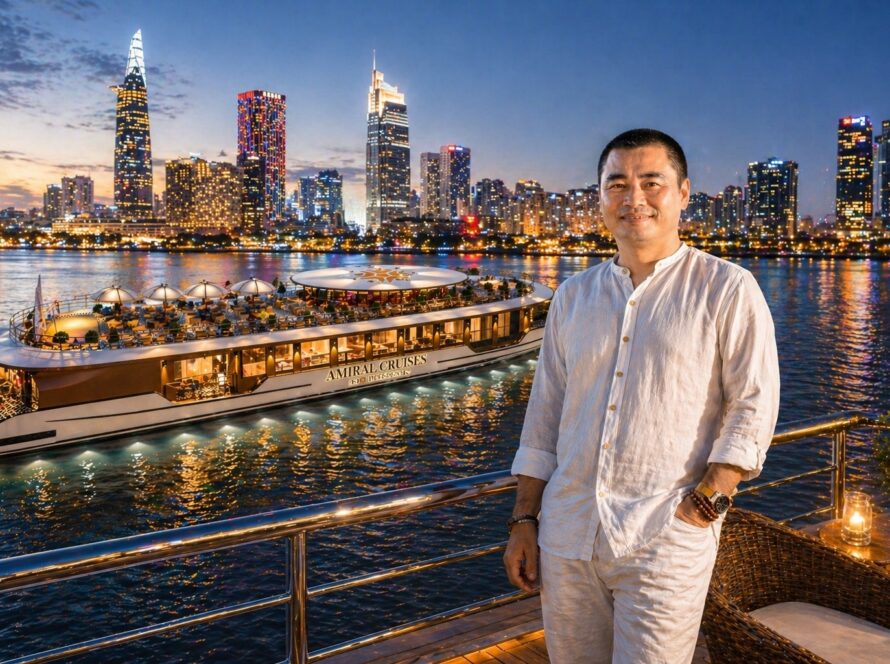



Vietnam climbed seven places in the 2026 Travel & Tourism Development Index, yet a significant gap remains between its resource advantages and its capacity to deliver services. According to Dr. Phạm Hà, reaching the world’s top 30 tourism economies requires substantive improvements in institutions, workforce capabilities, products, destination management, and promotion.
Dr. Phạm Hà — Founder, President & CEO, LuxGroup®; Vice President, Vietnam Green Tourism Association
Ranking Gains Encourage a Closer Look at Competitiveness
According to the World Economic Forum’s TTDI 2026 report, Vietnam recorded the second-largest improvement in its score between 2024 and 2026, rising by 6.3%. How do you assess the significance of this result?
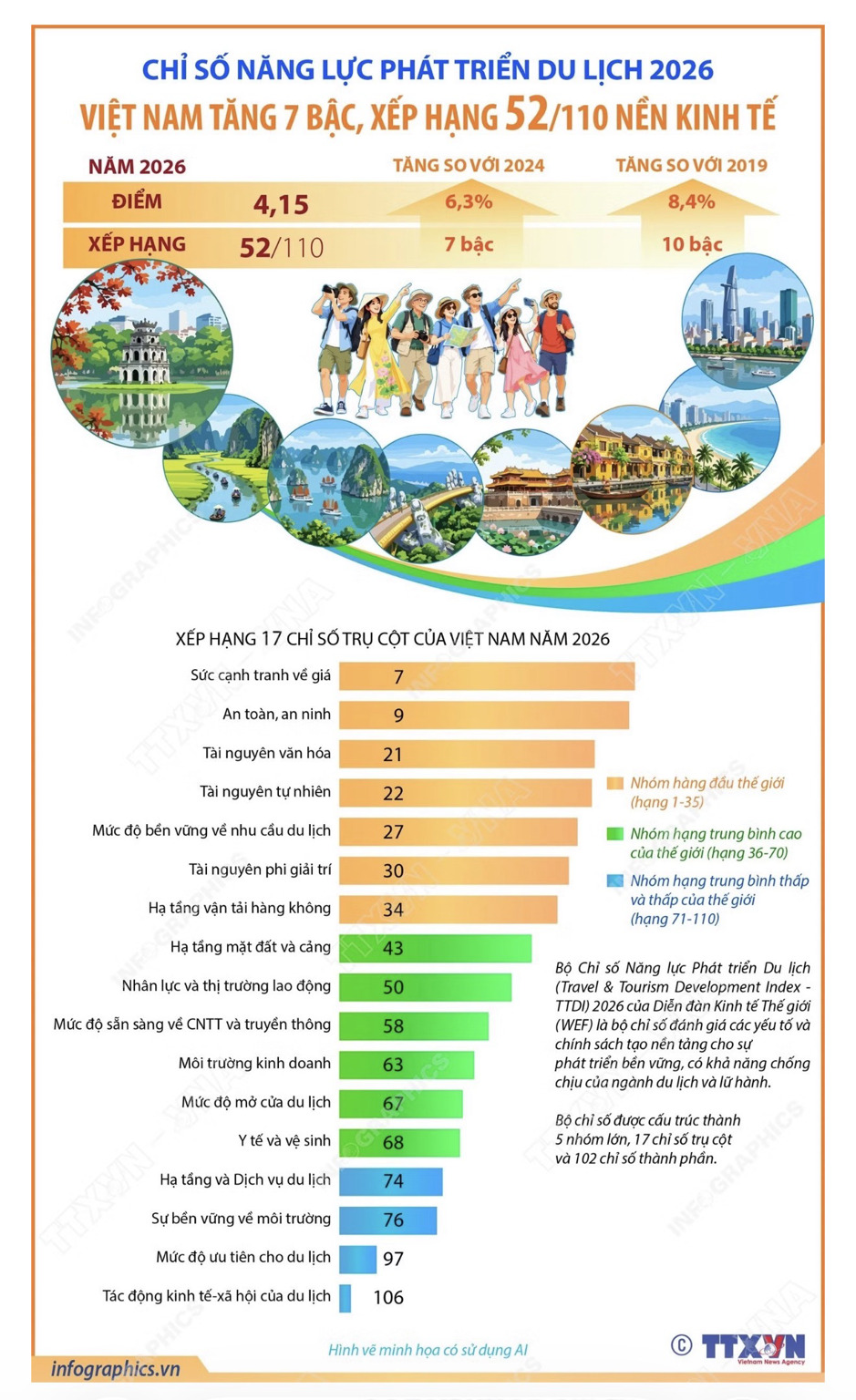
I regard this as a positive result with implications for market confidence and investment prospects. Vietnam scored 4.15, ranking 52nd among 110 economies, up seven places from 2024. Its 6.3% improvement was second only to Albania, indicating encouraging progress in the conditions supporting tourism development.
For airlines, tour operators, and international investors, this result provides an additional reference point when assessing Vietnam’s prospects. For domestic businesses, it offers encouragement to continue investing in quality, brands, and products for the long term.
However, we should distinguish the pace of improvement from overall competitive standing. Ranking second for score improvement shows that we are progressing quickly; ranking 52nd overall shows that a considerable gap remains.
Looking closely at the individual pillars, I see an uneven pattern of development. Vietnam ranks seventh for price competitiveness, ninth for safety and security, 21st for cultural resources, and 22nd for natural resources. These are favourable foundations for attracting visitors.
Meanwhile, tourism infrastructure and services rank 74th, environmental sustainability 76th, prioritization of travel and tourism 97th, and tourism’s socioeconomic impact 106th. These positions warrant serious analysis to identify the underlying issues and select appropriate solutions.
We must also exercise caution: a low pillar ranking does not establish that it has failed to improve. Assessing progress requires comparisons of scores, underlying indicators, and methodologies across editions. Nevertheless, the current rankings highlight areas that need further investment.
In my view, the central message is that Vietnam must translate its resource and price advantages more effectively into quality experiences, productivity, and social benefits.
Price competitiveness helps broaden market access. Over the long term, we need to increase perceived value so that visitors choose Vietnam for experiences worth paying for, while businesses have the resources to pay employees well, invest, and protect destinations.
The 106th-place ranking for socioeconomic impact deserves particular examination at the indicator level. It cannot simply be interpreted as evidence that tourism contributes little to the economy. It does, however, call for closer attention to job quality, opportunities for local participation, and how benefits are distributed.
After more than two decades in tourism, I have learned that visitor trust is built through specific things: accurate information, services delivered as promised, convenient transport, clean surroundings, and thoughtful care. Improvements in the index must translate into improvements in those experiences.
Increasing Visitor Spending Through Worthwhile Products and Convenient Journeys
Based on TTDI 2026, which foundations should Vietnam build on, and which factors should it improve to attract international visitors, enhance their experiences, and increase spending?
Vietnam should express its cultural identity, natural resources, and hospitality through a professional service system. An attractive resource creates lasting economic value when it is easy to access, interpreted with depth, and properly protected.
Five priorities need to advance together.
The first is institutions and implementation capacity. Vietnam’s rankings for the business environment at 63rd, tourism openness at 67th, and prioritization of travel and tourism at 97th provide grounds for a closer review of the conditions supporting the sector.
Businesses need clear planning, consistent procedures, predictable processing times, and coordination among public authorities. Supportive policies must be reflected in project implementation and everyday service operations.
From LuxGroup’s experience in developing river and sea tourism, I see that every journey requires connections among vessels, terminals, land transport, attractions, and multiple regulatory bodies. There should be a clearly designated coordinating authority, with published technical requirements and processing timelines. This would help businesses plan capital requirements, design products, and remain accountable for their investment commitments.
The second priority is workforce quality. Ranking 50th for human resources and the labour market indicates room for further development. Training should reflect operational needs: languages, cultural knowledge, digital skills, safety, problem-solving, and the ability to serve different visitor groups.
Managers also need development in finance, quality management, product development, and impact measurement. Training must be accompanied by appropriate pay, career pathways, and good working conditions. Retaining capable people is part of competitiveness.
The third priority is developing richer products and improving the infrastructure supporting visitor experiences. The gap between resource rankings and tourism infrastructure and services is striking. A beautiful destination needs convenient connections, understandable information, sanitation, accessibility, and services that visitors can readily book.
To encourage longer stays and higher spending, we need to give visitors more reasons to devote their time: culinary experiences, art, heritage, wellness, distinctive shopping, and itineraries connecting multiple destinations.
At LuxGroup, we pursue Luxury is Culture®—luxury rooted in culture. Across Heritage, Emperor, and Amiral, our direction is to bring landscapes, history, painting, cuisine, and hospitality into a coherent experience. High quality must be evident in the content, the service, and safe operations.
The fourth priority is promotion supported by a clear brand strategy. We need to define the values Vietnam wants to be remembered for, the visitor segments it prioritizes, and the products that fulfil that promise. The national brand needs a consistent direction, while each region and product category should retain its own expression.
In each source market, promotion should connect with air access, bookable services, and distribution partners. Performance should be measured through bookings, length of stay, spending, customer acquisition costs, and repeat visits.
The fifth priority is management based on data and higher environmental standards. Vietnam ranks 58th for information and communications technology readiness and 76th for environmental sustainability. Both capabilities need investment.
Data on demand, capacity utilization, seasonality, and destination carrying capacity can guide product adjustments, resource allocation, and destination management. AI can support analysis, but data quality, privacy, and the accountability of decision-makers must be safeguarded.
Green tourism requires measurement of electricity and water consumption, waste, and ecosystem impacts. Certification should be accompanied by real improvements. I want every unit of visitor spending to enhance the experience while generating additional income for employees and value for local communities.
The Top 30 Ambition Requires a Measurable Implementation Programme
How can TTDI 2026 create momentum for implementing Resolution 26-NQ/TW, particularly in promotion, investment attraction, and competitiveness?
Resolution 26-NQ/TW sets targets for 2030 of welcoming 45–50 million international visitor arrivals, serving 160 million domestic visitor trips, and contributing directly between 10% and 12% of GDP. By 2045, the targets are a direct contribution of 14–15% of GDP and a position among the world’s top 30 countries for tourism competitiveness.
These are substantial ambitions requiring commensurate resources and effort. From the current position of 52nd, the gap to the top 30 remains considerable. Competing destinations are also improving, so Vietnam must strengthen its capabilities continuously and coherently.
In my view, TTDI should be used as a tool for setting priorities. Each weaker pillar needs a plan with a lead authority, a budget, a timetable, and measurable outcomes. Progress should be reviewed regularly so that measures can be adjusted when they fail to produce results.
In tourism promotion, ranking gains can reinforce confidence. But messages must be linked to specific products and improvements. Promotion creates expectations; service quality carries the responsibility of meeting them.
In investment attraction, priority should go to projects that complete the value chain and address bottlenecks: transport connections, tourism terminals, environmental infrastructure, cultural spaces, technology, and training. Each project should be assessed for operational viability, economic performance, environmental impacts, and community benefits.
In strengthening competitiveness, we must track both visitor numbers and value added. GDP contribution depends on productivity, connections with domestic suppliers, job quality, and the value generated within Vietnam. Growth in arrivals must be matched by service capacity and the carrying capacity of destinations.
I propose a monitoring system covering indicators such as average visitor spending, length of stay, satisfaction, value added, employment, resource use, and residents’ feedback. The data must be sufficiently reliable to inform investment, promotion, and policy adjustments.
Businesses have a responsibility to raise governance standards, invest in their teams, honour promises to visitors, and proactively reduce harm. Government should create a transparent, enabling environment, while associations support training, standards, and collaboration.
The ambition to reach the top 30 must take shape through the quality of management, products, and service every day. When these capabilities advance together, tourism growth can build a stronger foundation for Vietnam’s prosperity and international standing.
Sidebar: TTDI 2026—Ranking Gains, but Uneven Development Capacity
Vietnam scored 4.15, ranking 52nd among 110 economies and climbing seven places from 2024. Its strongest advantages include price competitiveness, ranked seventh; safety and security, ninth; cultural resources, 21st; and natural resources, 22nd.
However, tourism infrastructure and services at 74th, environmental sustainability at 76th, prioritization of travel and tourism at 97th, and socioeconomic impact at 106th remain comparatively weak. This gap highlights the need to strengthen the capacity to turn resources into quality experiences and tangible community benefits.
Human resources and the labour market at 50th, ICT readiness at 58th, the business environment at 63rd, and tourism openness at 67th also require continued attention.
The chart alone does not establish which pillars failed to improve from 2024. The socioeconomic impact ranking should not be interpreted as a ranking of tourism’s GDP contribution.
Ranking gains are encouraging. Reaching the top 30 requires coordinated improvements in institutions, people, products, environmental performance, and management based on reliable data.