

Reflections from Harvard and the Future Journey of LuxGroup
Dr. Pham Ha
Founder & CEO, LuxGroup
Learning to Lead, Leading to Learn
After more than two decades of building LuxGroup from a small entrepreneurial venture into one of Vietnam’s leading luxury travel, hospitality, and cruise groups, I have come to believe that learning is a lifelong journey with no final destination. The further we travel, the more we realize that experience is a valuable teacher, but new perspectives are what allow us to keep growing in a world defined by constant change.
Recently, I completed the HarvardX course Exercising Leadership: Foundational Principles, taught by Professor Ronald Heifetz of Harvard Kennedy School. This was not a course about management techniques or operational excellence. Instead, it was an invitation to explore the deeper meaning of leadership, challenging participants to reflect on purpose, responsibility, and the ability to create meaningful change in the communities and organizations they serve.
One statement from the course stayed with me more than any other:
“Leadership is the practice of mobilizing people to tackle tough challenges and thrive.”
Simple in words, profound in meaning, this definition captures what leadership has meant throughout my own journey and the evolution of LuxGroup.
Leadership Is Not Power
In conventional thinking, leadership is often associated with position, authority, and hierarchy. We assume that CEOs are leaders, presidents are leaders, and chairpersons are leaders simply because of the titles they hold. Yet Harvard challenges this assumption with a powerful question: If authority automatically creates leadership, why do so many organizations fail despite having leaders with significant power?
The course helped me understand that authority is merely a tool, while leadership is the capacity to create transformation. A title may be granted, but influence must be earned. One can possess authority without inspiring meaningful change. Conversely, many individuals without formal power become extraordinary leaders because they mobilize others around a shared purpose.
When I founded Luxury Travel in 2005, I had neither significant capital nor market power. What we did have was a vision and the determination to pursue it. Looking back, I realize that leadership began long before authority arrived.
The Biggest Challenges Are Rarely Technical
One of Ronald Heifetz’s most influential concepts is the distinction between technical problems and adaptive challenges. Technical problems can be solved through expertise, knowledge, systems, and established processes. Adaptive challenges, however, require people to rethink assumptions, change behaviors, and develop entirely new capacities.
Building a cruise ship is a technical challenge. Designing a travel product is a technical challenge. Implementing a new technology platform is a technical challenge. Yet transforming a company into a House of Brands, cultivating a culture centered on “Luxury is Culture,” or preparing the next generation of leadership are adaptive challenges.
These challenges do not come with instruction manuals. No consultant or expert can solve them for us. They demand learning, experimentation, resilience, and collective growth. In reality, it is these adaptive challenges—not the technical ones—that determine the long-term success and sustainability of an organization.
People Do Not Resist Change
One of the most memorable lessons from the course is a statement that fundamentally reshaped my understanding of organizational transformation:
“People do not resist change. They resist loss.”
People rarely fear change itself. What they fear are the losses associated with change. They fear losing competence, status, familiarity, influence, relationships, or a sense of security.
Throughout LuxGroup’s development, I have witnessed this repeatedly. Every major transformation was accompanied by uncertainty and resistance. Not because people disliked innovation, but because they were concerned about what they might lose in the process.
Leadership, therefore, is not about forcing people to change. It is about recognizing the losses that change creates, respecting those concerns, and helping people navigate the transition with confidence and dignity.
Get on the Balcony
Perhaps the most famous concept in the course is “Get on the Balcony.” Professor Heifetz uses the metaphor of a dance floor and a balcony. On the dance floor, we see only the people and activities immediately around us. On the balcony, we gain perspective and observe the entire system.
As business leaders, we often spend so much time responding to daily demands that we lose sight of the larger picture. We become immersed in operations and forget to examine the underlying dynamics shaping the organization.
One of the greatest lessons I took from Harvard is the importance of moving constantly between action and reflection, execution and observation, participation and perspective. Effective leadership requires both. Without stepping onto the balcony, we risk solving the wrong problems and missing the deeper forces driving change.
Trust Is the Most Valuable Asset
The course defines trust through a remarkably simple equation:
Trust = Values + Competence
People trust us when they believe we share their values and possess the competence to deliver on our promises.
Values without competence are insufficient. Competence without values is equally dangerous. Sustainable trust requires both integrity and capability.
In the luxury travel and hospitality industry, trust is the foundation of everything we do. Guests do not simply purchase journeys; they purchase confidence, reassurance, and peace of mind. Partners do not invest only in products; they invest in relationships.
After more than twenty years in business, I have become convinced that LuxGroup’s greatest asset is not its ships, hotels, offices, or technology. Our greatest asset is the trust we have earned from guests, partners, communities, and colleagues.
Conflict Is Not the Enemy
In many cultures, particularly across Asia, conflict is often viewed negatively. We tend to associate harmony with success and disagreement with dysfunction. Harvard offers a different perspective: conflict is an essential source of learning and innovation.
Meaningful progress rarely emerges from environments where everyone thinks alike. New ideas are born from different perspectives, competing priorities, and constructive tension. When managed effectively, conflict becomes a catalyst for growth.
The role of leadership is not to eliminate disagreement. Rather, it is to orchestrate conflict in ways that generate learning, creativity, and adaptation. Leaders must create environments where diverse voices can be heard, respected, and transformed into better solutions for the future.
What Matters Most Is What We Leave Behind
Toward the end of the course, Professor Heifetz invites participants to reflect on two lists. The first contains ambitions—the things we hope to gain throughout our lives: success, recognition, influence, wealth, and achievement. The second contains aspirations—the things we hope to give: meaning, contribution, impact, and legacy.
This exercise resonated deeply with me.
When we look back on our lives, it is unlikely that we will measure our success solely by what we accumulated. Instead, we will reflect on the lives we touched, the opportunities we created, and the values we helped bring to life.
For me, that means seeing colleagues grow into leaders, helping travelers discover the beauty of Vietnam, elevating Vietnamese hospitality on the global stage, and contributing to a more sustainable future for tourism. Those are the outcomes that endure long after titles and achievements fade.
The Journey Ahead
LuxGroup is entering a new chapter of growth and transformation. From travel to cruising, from entrepreneurship to institution-building, and from today’s achievements toward the vision of Vietnam Waterways 2045, we understand that the challenges ahead will not simply be technical.
They will be adaptive.
They will require us to learn continuously, embrace uncertainty, challenge old assumptions, and develop new capabilities. They will require us to listen more carefully, collaborate more deeply, and remain humble enough to evolve.
As I conclude this Harvard learning journey, I do so with renewed conviction that leadership is not about standing ahead of others and asking them to follow. Leadership is about creating the conditions for people to move forward together.
Ultimately, the greatest achievement of any leader is not what they build for themselves, but what they enable others to build for the future.
That is the journey we continue every day at LuxGroup.
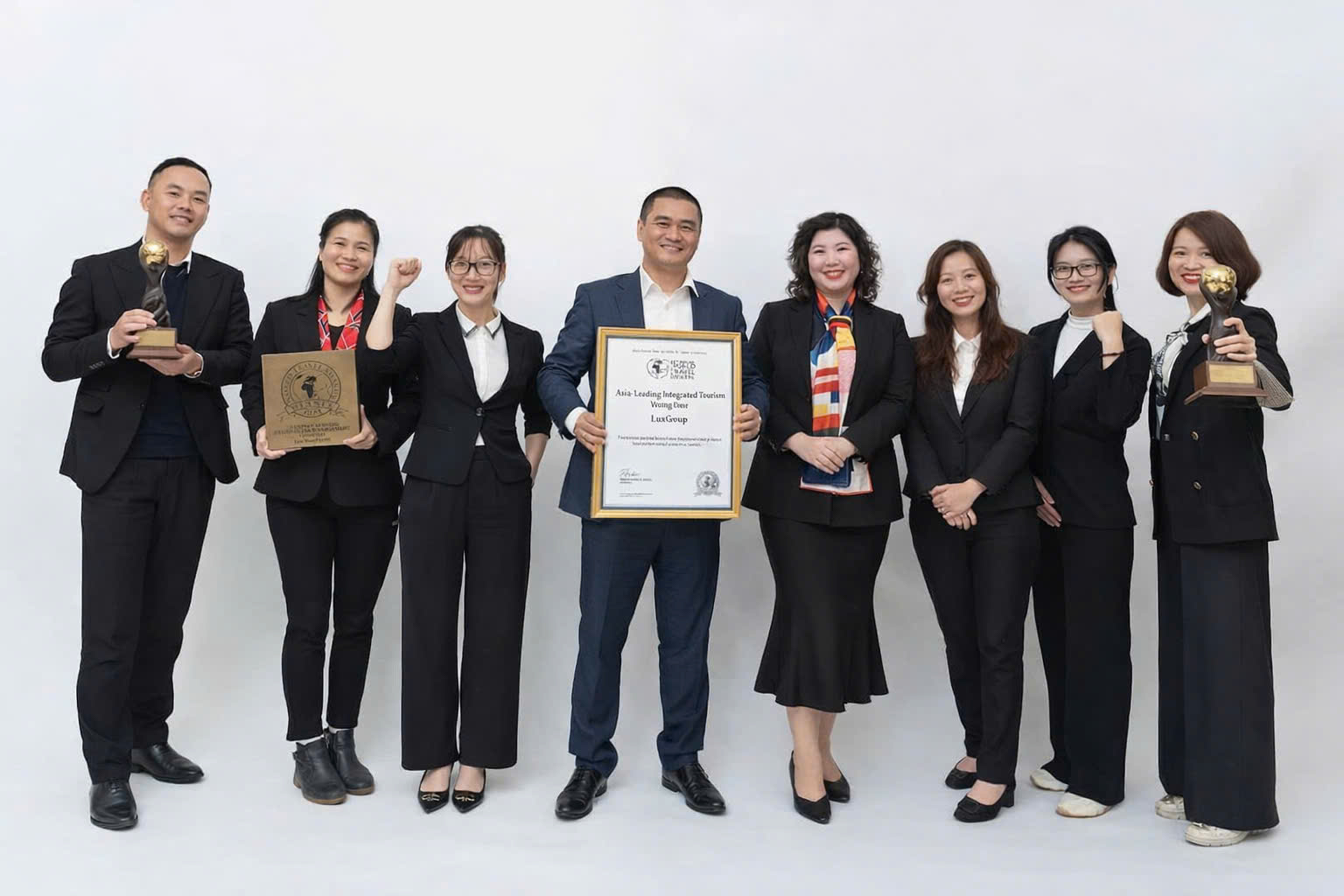
Luxury is Culture.
Delivering Happiness.
Creating Legacy.