



Pham Ha, Chairman and CEO of LuxGroup
When visitors depart, what remains? A cleaner river, a craft with a new generation of apprentices, or merely revenue and photographs? Regenerative tourism begins by facing that question.
A ship leaves the pier carrying the pleasure of its guests. On shore, a vendor counts the day’s earnings. Beneath the surface, the river receives what never enters an account book. We know how to count revenue. We seldom measure the health of a river, the value that stays with residents, or whether anyone still wishes to carry a cultural tradition forward.
Vietnamese tourism needs a more mature measure of success. A destination cannot keep giving up its landscapes, culture and hospitality without being replenished.
What does regeneration mean?
The established term in international research is regenerative tourism. It describes tourism designed to help nature, culture, communities and livelihoods recover and flourish. Some writers use generative tourism to stress the creation of conditions and capacities that allow local life to keep growing. The ideas are related, but regenerative tourism is the more precise name for the approach discussed here.
Other familiar terms answer different questions. Responsible tourism asks how each traveller and business behaves: Do they respect residents, pay fairly, reduce waste and accept responsibility for their effects? Sustainable tourism asks whether economic, environmental and social needs can be balanced over time. Net zero is specifically a climate goal: cut greenhouse gas emissions deeply, then balance the remainder with credible carbon removals. A business could reach a carbon target while still damaging a community’s water supply.
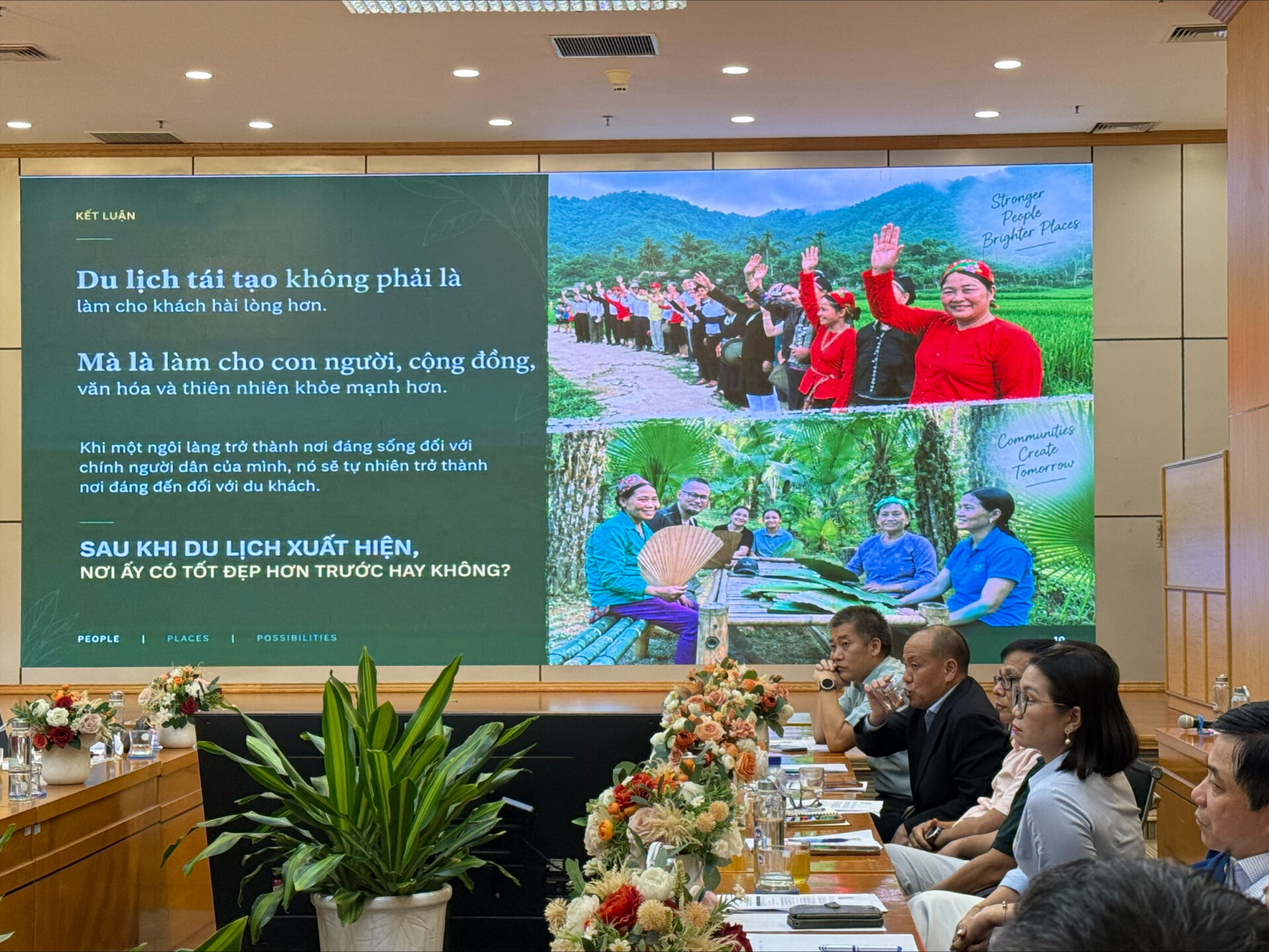
Positive impact needs evidence: a recovering landscape, apprentices learning from artisans, better incomes and a stronger voice for residents. Regenerative tourism seeks such outcomes. It is an ambition to pursue and verify, not a title a company can award itself.
My understanding is simple: “Regenerative tourism means caring for and developing what we have inherited, leaving the next generation a place that has not been harmed and is better than it is today.” “Better” need not mean another building. It might mean a restored riverbank, a family home whose character survives, or a young person proud to tell the story of their hometown.
A place worth living in is a place worth visiting
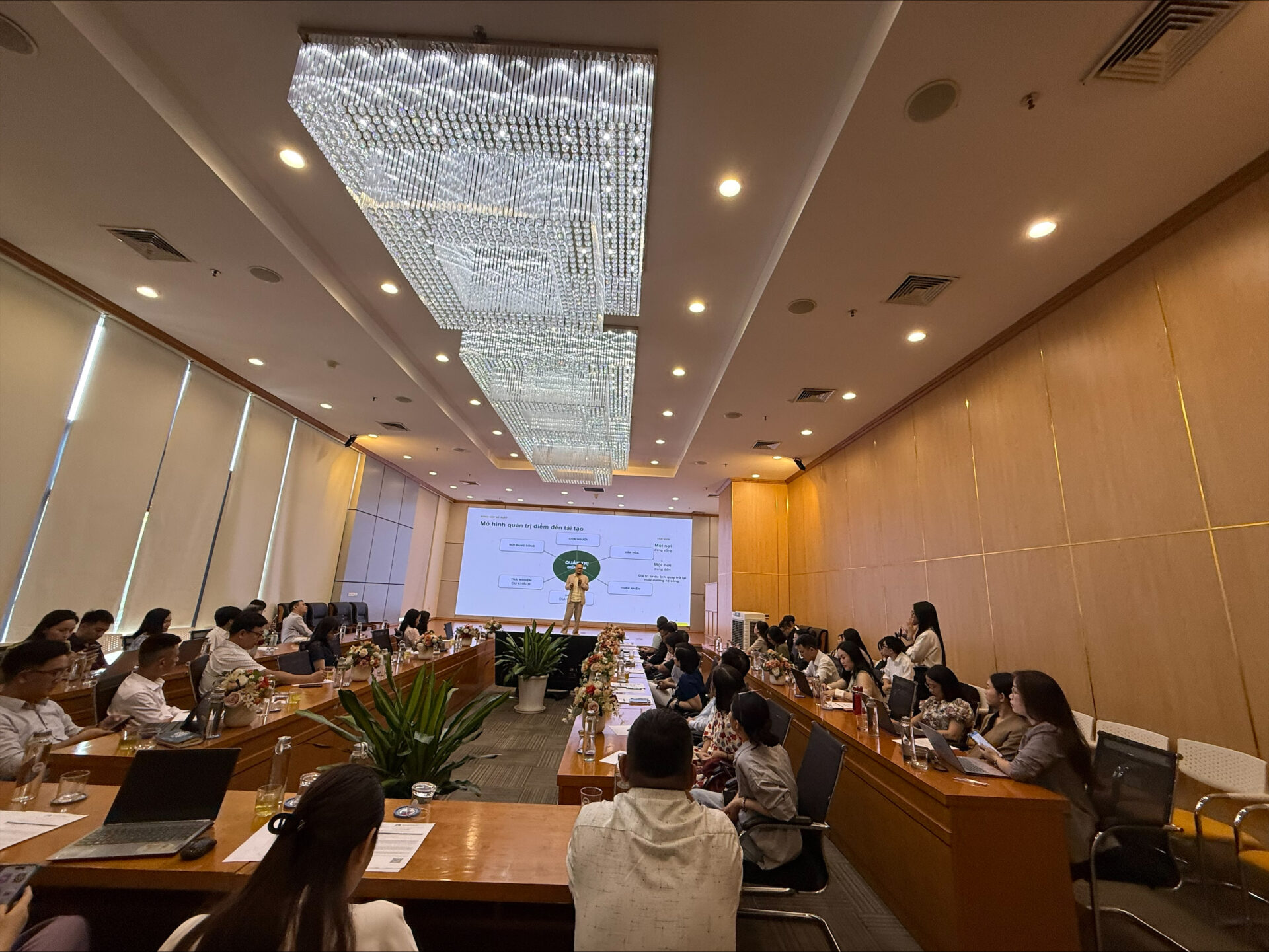
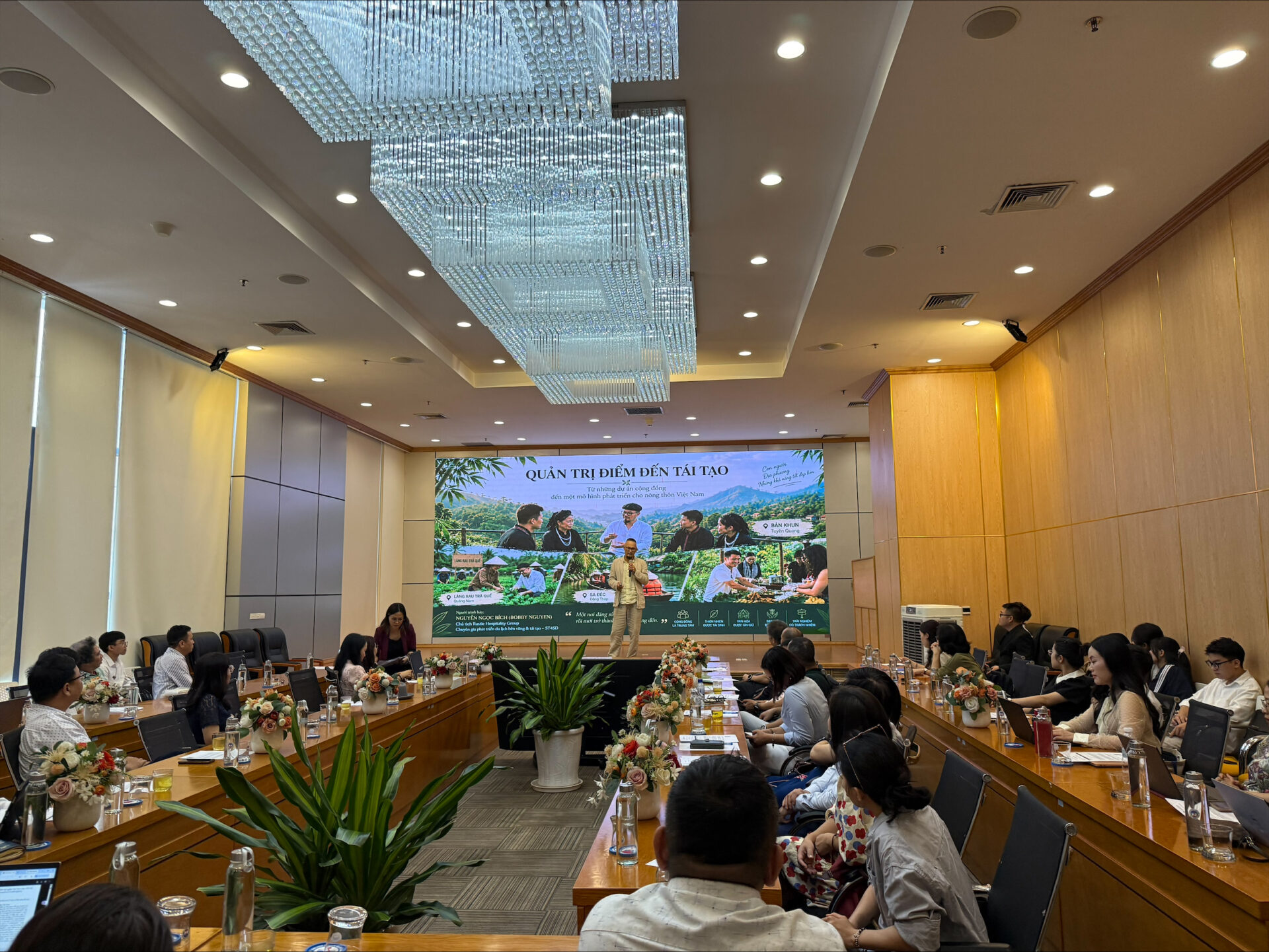
At a conference on regenerative tourism held at the National Economics University on 24 September 2026, Hoang Thi Ngoc Quynh argued for measuring the health of ecosystems, the vitality of culture and the value retained locally. Nguyen Ngoc Bich stressed community ownership: a place must remain good to live in if it is to be good to visit. Associate Professor Pham Truong Hoang described regeneration as a maturation of sustainable tourism.
These ideas meet a practical test in a craft village. Thousands may visit, but if artisans are paid only to perform while souvenirs are manufactured elsewhere, what exactly is being preserved? A traditional song can fill a theatre every night and still fade from the lives of the people who inherited it. Heritage lives when residents continue to practise it, teach it and value it as their own.
Residents therefore need a voice before a tour route, pier or performance schedule is settled. They know the tides, fishing seasons and limits of their neighbourhood. Genuine consultation may mean changing operating hours or carrying fewer guests. In return, a business earns something advertising cannot buy: trust.
Culture is particularly vulnerable when it becomes a product. A meal loses part of its meaning if the person who cooks it has no say in how the recipe is told. A traditional house becomes a backdrop if its occupants must rearrange their lives around the camera. Regeneration asks whether tourism gives people the means and freedom to keep these practices alive on their own terms. Customs can evolve, as living cultures do; the people who inherit them must remain their authors.
The quality of growth matters as much as its volume. A small group staying longer, paying a fair price for local services and travelling outside the peak season may contribute more than a large group arriving all at once and leaving a costly burden behind. The useful question is not simply how many people came. It is how much value remained after they left.
Stories carried on the water
At Lux Cruises Group, we see each stretch of water as an archive of memory. Heritage Cruises Binh Chuan in Lan Ha Bay evokes the maritime enterprise of Bach Thai Buoi, bringing art and seafaring history aboard. Emperor Cruises tells Vietnamese cultural stories through cuisine, design and the paintings of Pham Luc. Amiral on the Saigon River recalls Nha Rong Wharf, a historic departure and the lives unfolding along both banks. Such journeys invite guests to look beyond the scenery.
But a story beautifully told does not, by itself, regenerate a place. Landscapes, local customs and ways of living need care beyond the ship. Are craftspeople paid fairly? Are more young people learning to interpret their heritage? Are the piers and waterways better cared for each year? Binh Chuan, Emperor and Amiral give us places to answer those questions with evidence and action, rather than guest sentiment alone.
There is a business case for doing this well. When a local supplier earns a fair, reliable income, that supplier can improve quality and invest in the future. When a community helps shape the experience, guests encounter a place with a living identity rather than a performance assembled for their arrival. The destination becomes distinctive because its people and ecology thrive. This takes longer than buying a ready-made attraction, but it is harder for competitors to copy.
Start with what is close at hand: buy from local producers, pay artists properly, manage wastewater and rubbish, set itineraries according to a pier’s capacity, and protect residents’ access to the riverfront. A clean-up day has value. It is not proof that a river is recovering.
Measure what remains
Before claiming positive impact, a company needs a baseline: water and fuel use, waste, local purchasing, job quality, residents’ views, and the condition of landscapes and cultural assets. It can then set targets, fund the work and report honestly on what it has yet to achieve. A modest measured result is more credible than a perfect promise without data.
Local authorities can pilot this approach in a few destinations, establish visitor capacity and give communities and businesses a shared role in oversight. Incentives and promotion should follow verified results, not just visitor counts or the number of new structures. Researchers can help design the measures. Residents can answer the most important question: Is life here getting better?
Restoring a landscape, sustaining a craft and training people all require patient capital. The long-term returns of a tourism business depend on the long-term vitality of the place where it operates. We often promise travellers beautiful memories. Regenerative tourism asks us to make another promise to those who stay: after every journey, the place they call home remains more liveable.