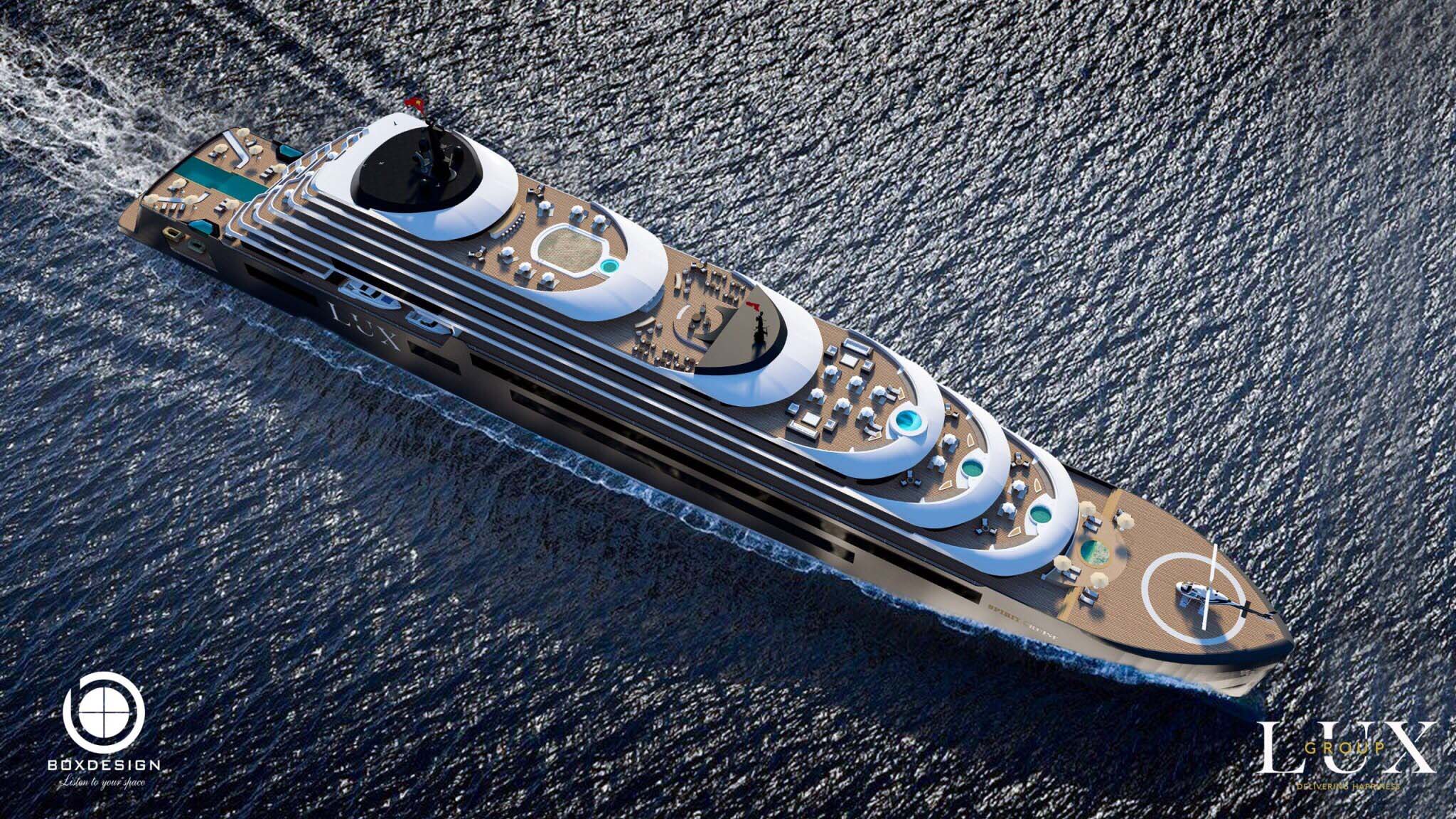


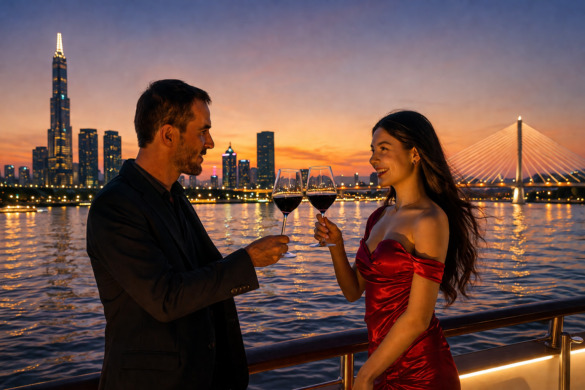
As travelers seek authenticity, culture, and meaningful experiences, Ho Chi Minh City’s historic river is emerging as the gateway to a new era of luxury travel in Vietnam.
By Dr. Pham Ha
There are cities you visit.
And there are cities you understand only from the water.
Ho Chi Minh City belongs firmly to the latter.
For more than three centuries, the Saigon River has shaped the destiny of southern Vietnam. Long before skyscrapers defined the skyline and before international airports connected the city to the world, the river served as the original gateway—a living artery through which people, cultures, goods, and ideas flowed.
Today, the Saigon River is quietly reclaiming that role.
As luxury travel evolves beyond traditional notions of opulence, this historic waterway is emerging as one of Asia’s most intriguing destinations for travelers seeking deeper connections, richer cultural encounters, and more meaningful journeys.
The transformation reflects a broader shift taking place across the global travel industry.
A New Definition of Luxury
For decades, luxury travel was largely defined by exclusivity, size, and status. Bigger suites, finer linens, private transfers, and lavish amenities represented the pinnacle of the experience.
Those expectations have not disappeared, but they are no longer enough.
Today’s affluent travelers increasingly seek authenticity over excess. They value emotional connections, cultural immersion, wellness, sustainability, and personal transformation. They are less interested in collecting destinations and more interested in understanding them.
The question has shifted from Where have you been? to How did it make you feel?
In this new era of travel, rivers possess a unique advantage.
Unlike highways or air routes, waterways slow us down. They encourage observation rather than consumption. They reveal stories hidden between destinations and create moments of reflection rarely found in modern life.
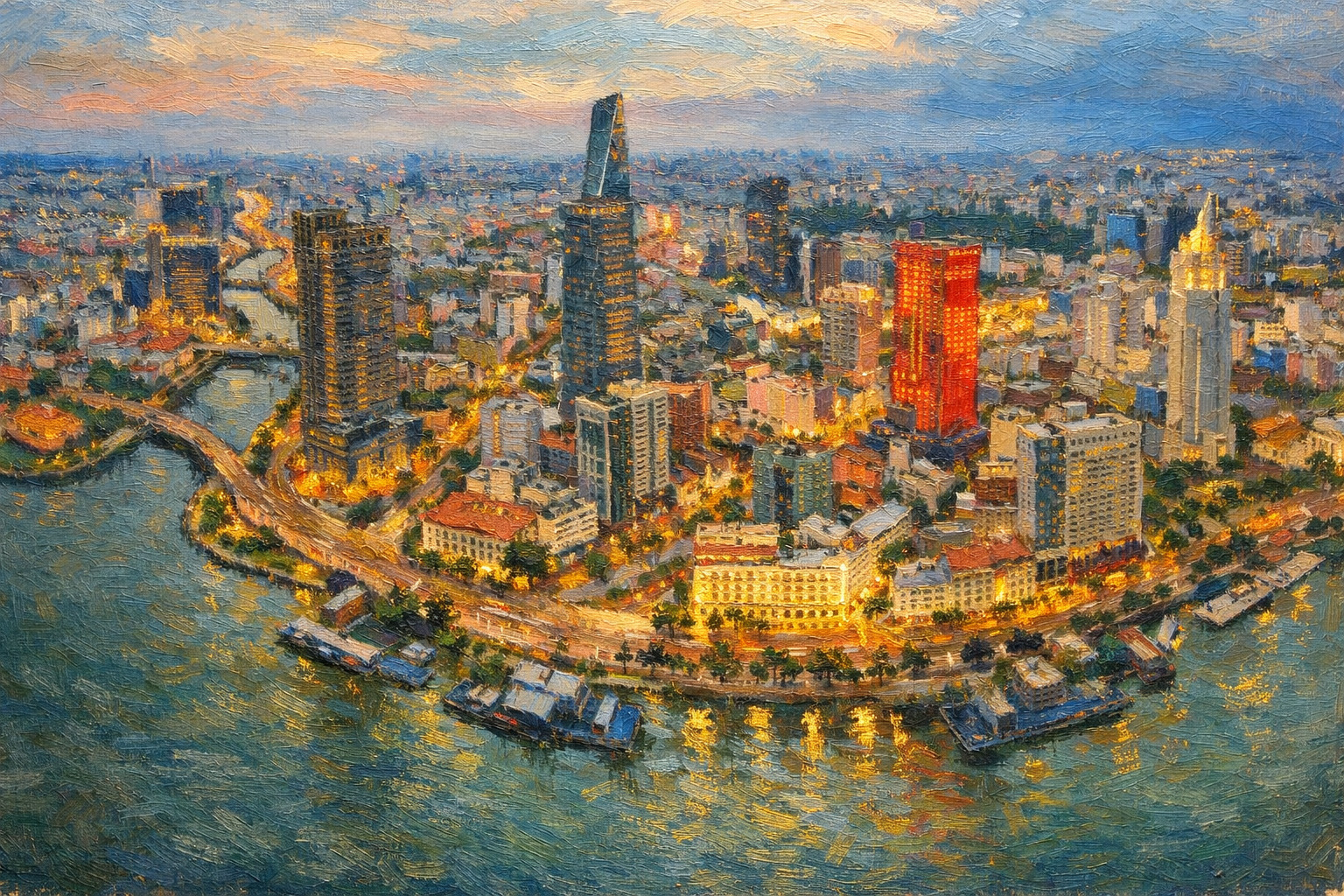
The Saigon River offers exactly that.
The Story of Vietnam, Told Through Water
A journey along the Saigon River unfolds like a living history book.
Near the historic Nhà Rồng Wharf, travelers encounter one of the defining moments of Vietnamese history. It was here, in 1911, that a young Nguyễn Tất Thành—later known to the world as Hồ Chí Minh—departed Vietnam on a journey that would shape the nation’s future.
Further along the river, colonial architecture reflects centuries of international trade and cultural exchange. Traditional riverside communities continue rhythms of life largely unchanged by time, while contemporary developments and glittering towers showcase Vietnam’s remarkable rise as one of Asia’s fastest-growing economies.
Few destinations allow travelers to witness such dramatic contrasts from a single vantage point.
The river becomes more than scenery.
It becomes context.
More than transportation.
It becomes interpretation.
Beyond Sightseeing: The Rise of “Storyliving”
One of the most significant trends shaping luxury travel today is the movement from sightseeing to what many industry observers describe as “storyliving.”
Travelers no longer want to observe destinations from behind glass.
They want to participate.
They want to engage with local communities, discover regional cuisines, understand traditions, and experience the emotional texture of a place.
Along the waterways south of Ho Chi Minh City, that might mean wandering through a bustling market in Cần Giuộc, sharing tea with local families, tasting fruit picked moments earlier from Mekong orchards, or exploring hidden canals accessible only by small boats.
These encounters cannot be replicated elsewhere.
They create memories rooted in human connection rather than simple observation.
And increasingly, connection has become the ultimate luxury.
Where the City Meets the Mekong
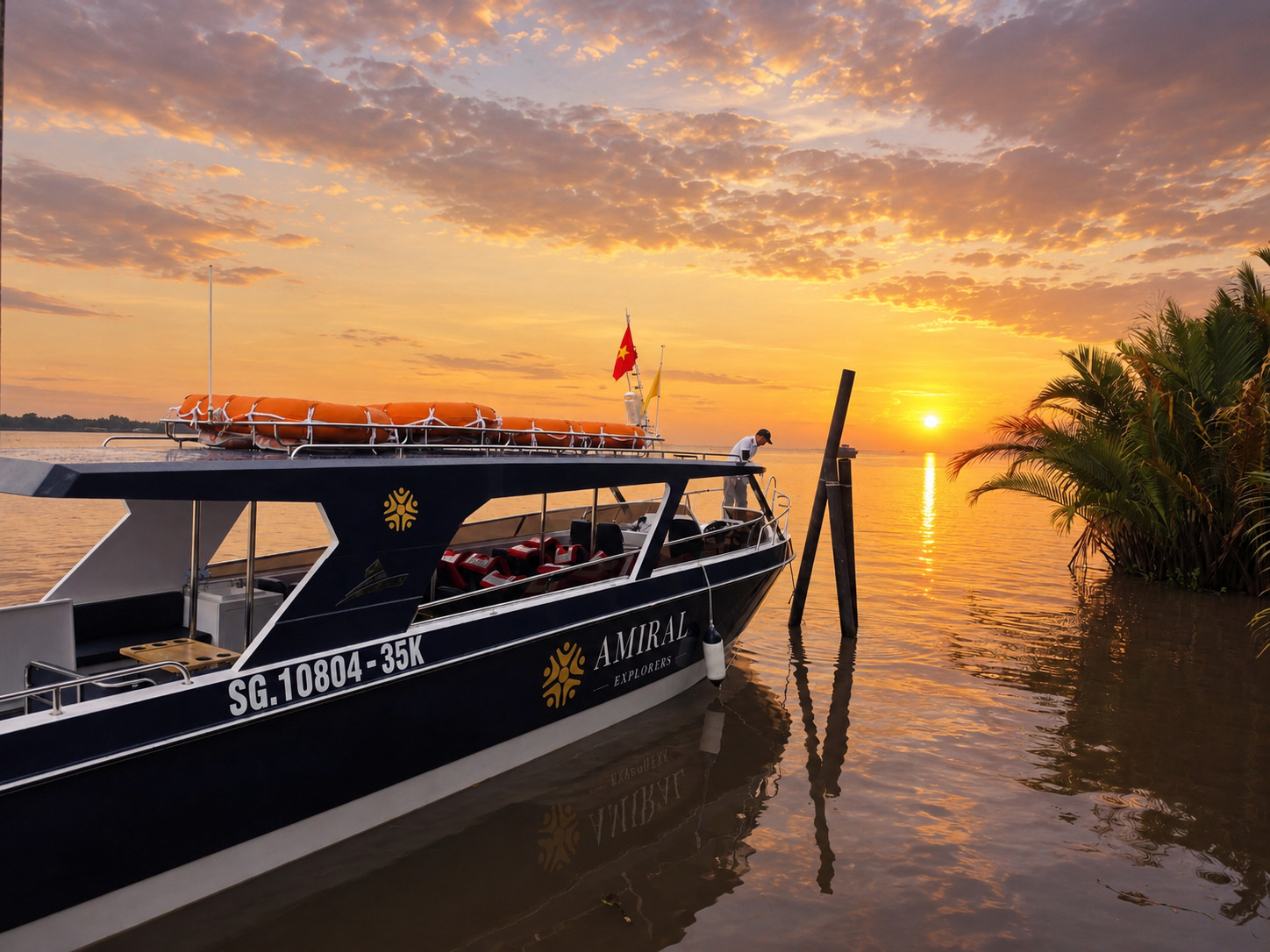
One of the Saigon River’s greatest strengths is its seamless connection to the Mekong Delta.
Within just a few hours, travelers can transition from the energy of Vietnam’s largest metropolis to one of the most productive and culturally rich river systems on Earth.
The transformation feels almost cinematic.
Glass towers gradually disappear behind the horizon.
Traffic noise fades.
Coconut groves emerge.
Fishing boats replace cargo ships.
Life slows to the gentle rhythm of the water.
For international visitors accustomed to heavily developed tourism corridors, the experience offers something increasingly difficult to find: genuine discovery.
The journey itself becomes part of the destination.
The Quiet Luxury of the River
Perhaps the Saigon River’s greatest appeal lies in its alignment with one of the defining movements in contemporary travel: quiet luxury.
Unlike traditional luxury, which often emphasizes visibility and status, quiet luxury values authenticity, craftsmanship, personalization, and emotional richness.
It celebrates experiences that feel meaningful rather than performative.
The Saigon River embodies this philosophy naturally.
Luxury here is not found in spectacle.
It is found in watching sunrise illuminate the water.
In conversations with local residents.
In discovering stories hidden behind familiar landmarks.
In sharing meals inspired by regional traditions.
In feeling genuinely connected to a destination rather than merely visiting it.
These experiences cannot be manufactured.
They can only be discovered.
Why the World Is Looking at Vietnam
Vietnam’s appeal continues to grow among global travelers, and for good reason.
The country combines exceptional hospitality, extraordinary cuisine, rich cultural heritage, dramatic landscapes, and remarkable value compared with many established luxury destinations.
Yet one of its greatest untapped assets remains its waterways.
With more than 3,260 kilometers of coastline, thousands of rivers, and one of the world’s most significant delta systems, Vietnam possesses a natural foundation for a new generation of water-based travel experiences.
The Saigon River stands at the forefront of this evolution.
Not simply as a river cruise destination.
But as a cultural corridor connecting travelers to the stories, traditions, and people that define modern Vietnam.
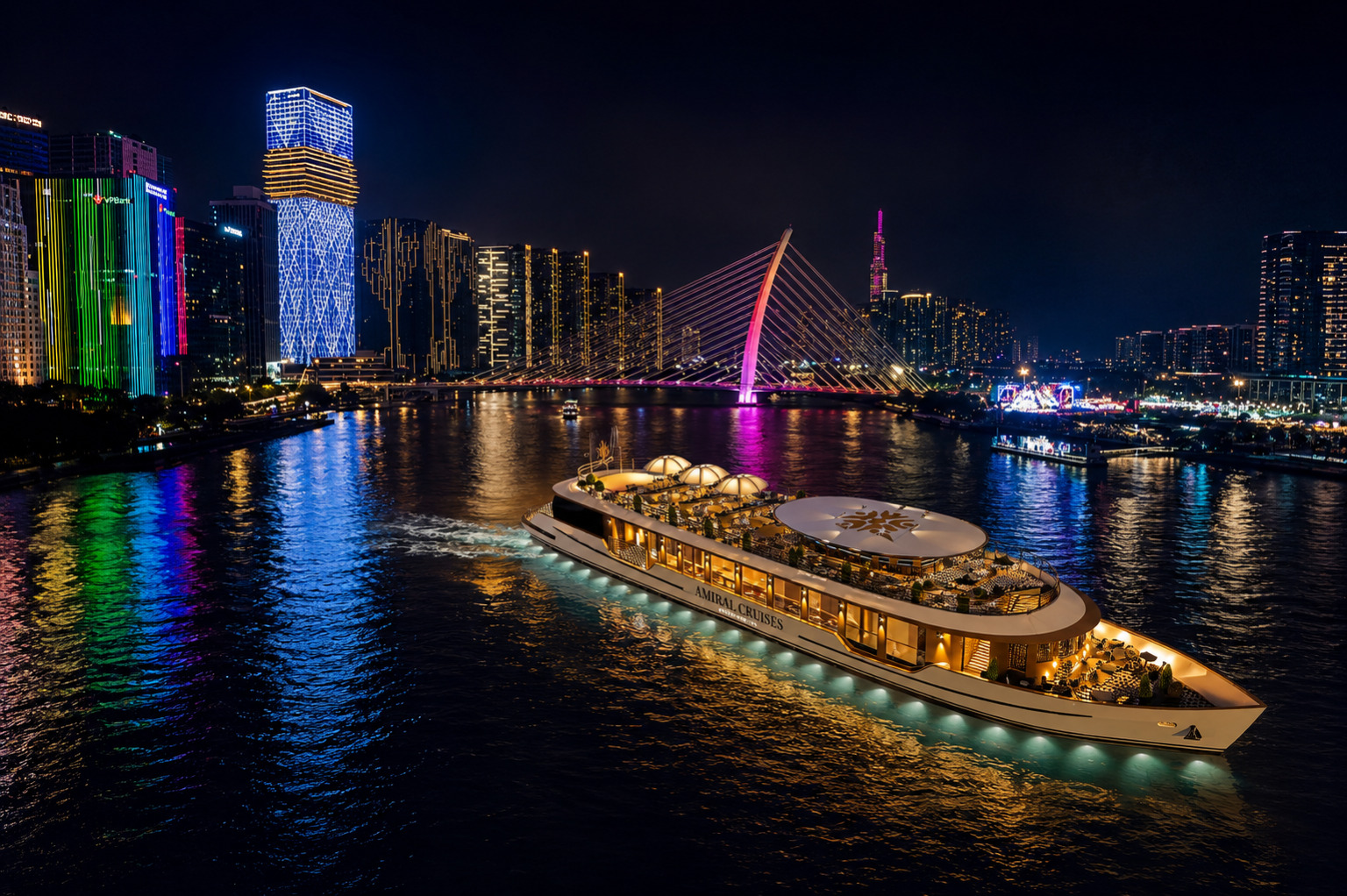
Looking Toward Vietnam Waterways 2045
The opportunity extends far beyond Ho Chi Minh City.
Across the country, rivers have shaped civilizations, inspired culture, and connected communities for centuries.
From the Red River in northern Vietnam to the Perfume River in Huế, from the Thu Bồn River in Hội An to the vast waterways of the Mekong Delta, each river tells a different chapter of the Vietnamese story.
Together, they form the foundation of a compelling vision for the future of tourism.
A future where waterways connect destinations rather than divide them.
Where cultural heritage is preserved through storytelling.
Where local communities benefit directly from tourism.
Where travelers move more slowly, more consciously, and more meaningfully.
A future where rivers once again become pathways of discovery.
The Saigon River is not merely part of that future.
It is where that future has already begun.
Because rivers do more than carry people.
They carry memory.
They carry identity.
They carry culture.
They carry time.
And for those willing to listen, the Saigon River still has many stories left to tell.
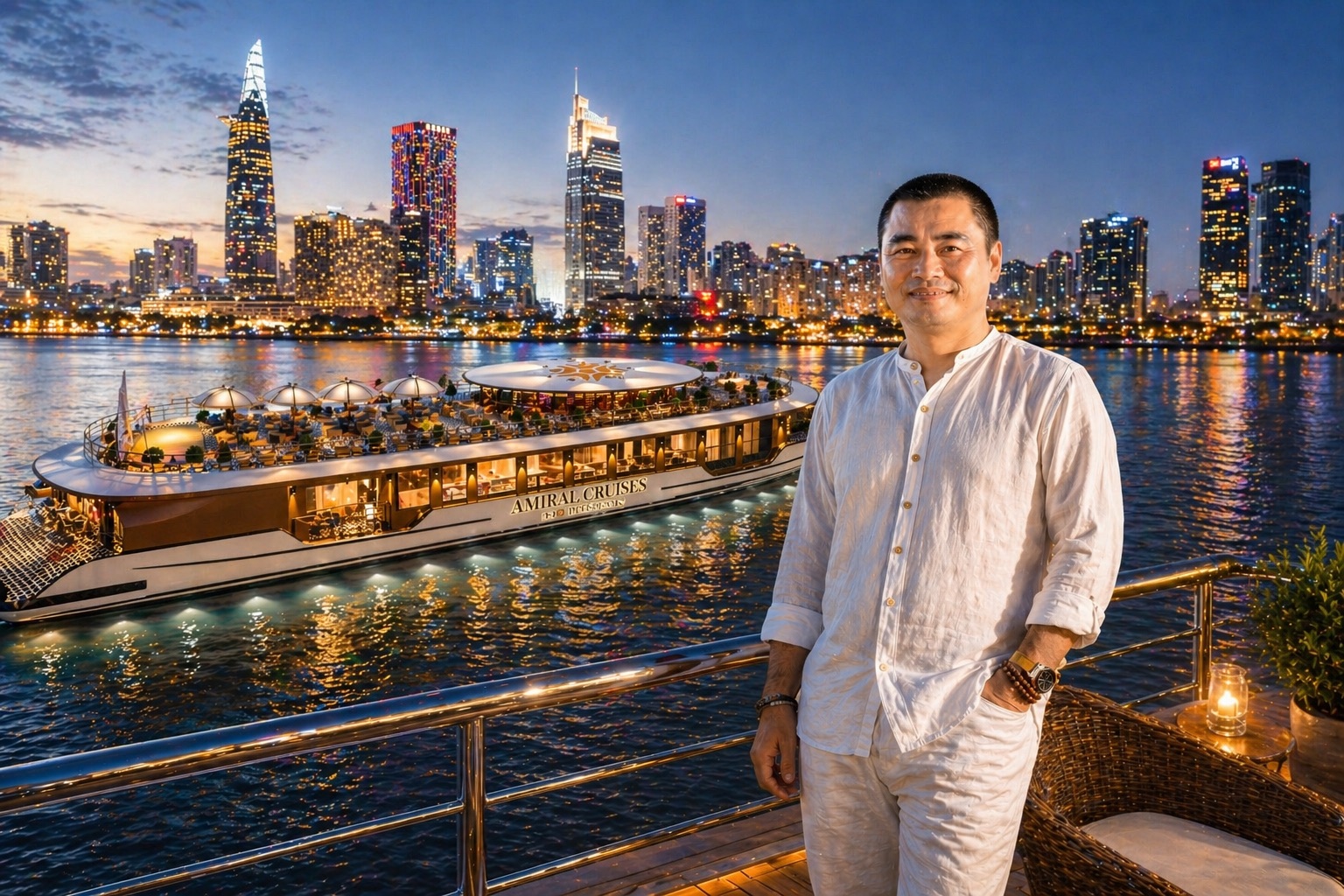
About the Author
Dr. Pham Ha is the Founder and CEO of LuxGroup®, Founder of Amiral Cruises for Presidents®, and the visionary behind Vietnam Waterways 2045™, an initiative promoting sustainable, culture-led tourism through Vietnam’s rivers and coastlines.
“The future of luxury travel is not about seeing more places. It is about feeling more connected to them.”